China's DeepSeek Is Building Its Own AI Chip to Break Free From Nvidia
Reuters reports DeepSeek is designing its own AI inference chip to cut reliance on Nvidia and Huawei. Here's what's known, and why it matters for China's AI push.
News Report

What Happened
DeepSeek, the Chinese startup that stunned the industry in January 2025 with a frontier-grade model built on a fraction of the usual budget, is now trying to build the hardware underneath it. On July 7, 2026, Reuters reported — citing people familiar with the matter — that DeepSeek has been quietly developing its own AI chip for about a year, with the goal of loosening its reliance on Nvidia and Huawei silicon.
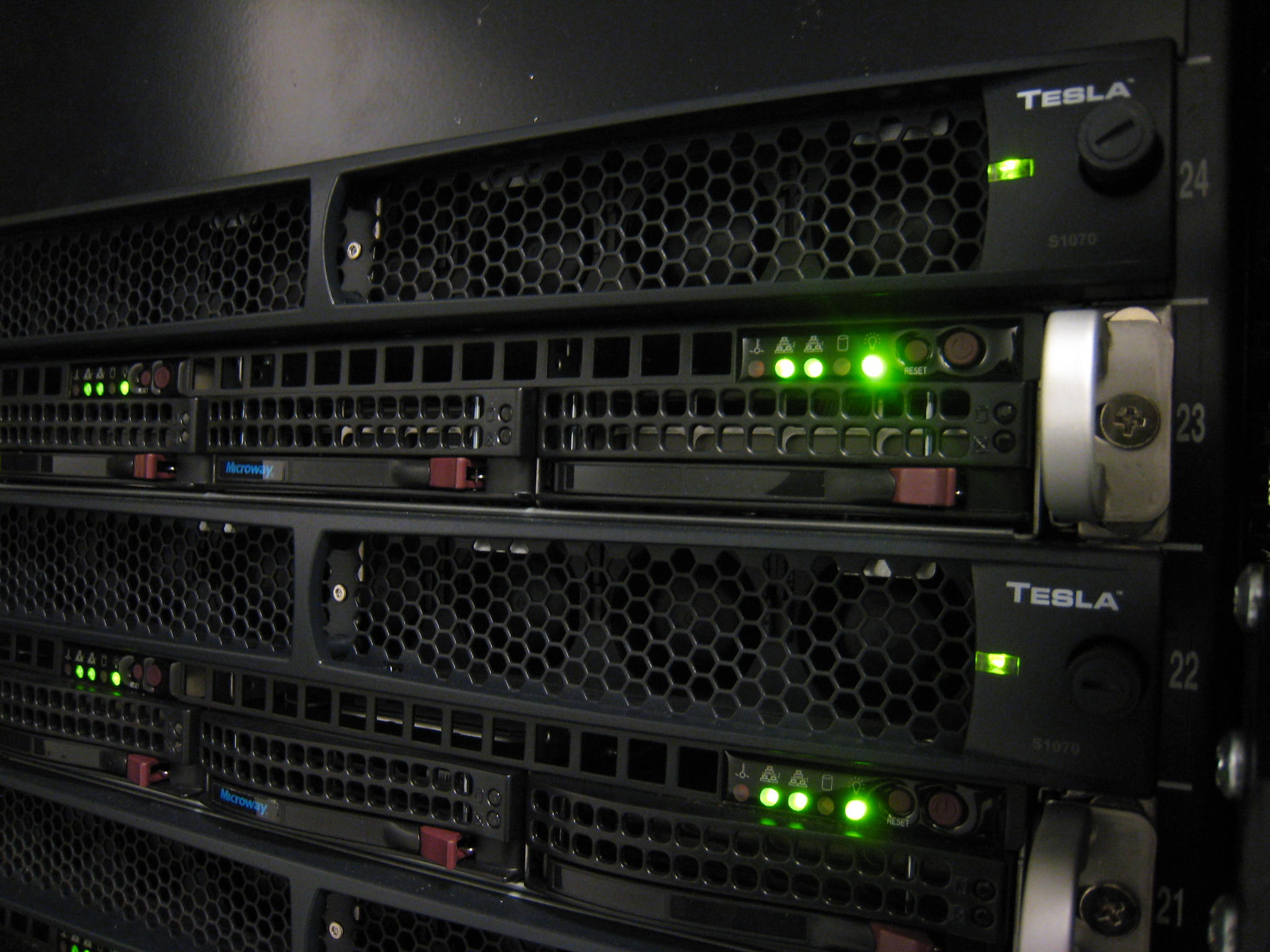
The project is still in its early stages. According to the report, DeepSeek has contacted outside partners and held discussions with chip-design, foundry and memory companies, while trying to recruit experienced semiconductor engineers onto its own teams. There is no chip in production yet, no announced specifications, and no launch date — but the intent marks a significant escalation for a company best known, until now, purely as a model lab.

An Inference Chip, Not a Training Chip
The distinction matters. DeepSeek's chip is reportedly aimed at inference — the stage where a finished model actually answers user queries — rather than at training, the far more demanding process of building a model in the first place. Training still requires the most powerful accelerators money can buy, and for now that means Nvidia. Inference is different: it is the recurring, high-volume cost that a model incurs every single day it is in service, and it is far more amenable to a specialized, hard-wired chip.

That focus is deliberate and pragmatic. Designing a chip to serve models cheaply is a more attainable near-term target than designing one that can train them, and it attacks the biggest ongoing expense in running a popular AI service. Every query DeepSeek can serve on its own silicon is one it does not have to run on hardware it may struggle to buy. It is the same logic OpenAI followed with its Broadcom-built "Jalapeño" inference chip — start where the volume, and the savings, are largest.
Why DeepSeek Wants Its Own Silicon
DeepSeek's hardware history explains the urgency. The company vaulted to global attention in January 2025 with R1, a reasoning model trained largely on Nvidia H800 chips — a China-market part that Washington subsequently restricted. Cut off from the newest Nvidia hardware, DeepSeek leaned increasingly on Huawei's Ascend processors, reportedly using them for its V4 model released in April 2026.
Depending on either supplier is uncomfortable. Nvidia's most capable chips are throttled by U.S. export rules and are perpetually scarce and expensive. Huawei's Ascend line is improving fast but remains supply-constrained and a generation or more behind Nvidia's best on raw performance. By designing its own inference chip, DeepSeek would gain something neither vendor can guarantee: control over its own compute supply, tuned to exactly the models it runs, and insulated — at least partly — from decisions made in Washington or at a rival's headquarters.
The Manufacturing Problem
Designing a chip is only half the battle; someone has to manufacture it. This is where U.S. export controls bite hardest. Washington bars Chinese chip designers from using the most advanced overseas foundries — the leading-edge production lines at TSMC in Taiwan that turn a design into working silicon at the smallest, most efficient process nodes.

That leaves DeepSeek reliant on domestic manufacturing, principally China's SMIC, whose most advanced nodes trail the global frontier and face their own capacity and yield constraints. A homegrown inference chip can still be competitive if it is well-matched to DeepSeek's software — efficiency often comes from design and integration as much as from raw process technology — but manufacturing on trailing-edge nodes caps how far the approach can be pushed and how many chips can realistically be produced.
The Money Behind It
Chip development is enormously expensive and slow, and DeepSeek is better funded than it once was. The company recently raised roughly $7.4 billion from Chinese investors, giving it the kind of capital base that a serious silicon effort demands. That war chest does not remove the technical and manufacturing hurdles, but it means the project is not a hobbyist experiment — it is a funded, staffed initiative with partners already engaged across design, foundry and memory.
It also fits Beijing's broader strategic priorities. China has spent years pushing for semiconductor self-sufficiency in the face of tightening U.S. restrictions, and a domestic AI champion building its own accelerators aligns neatly with that national goal. Success would be read not just as a corporate win but as a data point in China's larger effort to build an AI stack that does not depend on American hardware.
Part of an Industry-Wide Shift
DeepSeek is far from alone. Across the industry, the biggest AI players are all racing to design their own chips and reduce their dependence on Nvidia's GPUs, which still power the overwhelming majority of AI workloads and whose price and scarcity define the economics of the whole field.

OpenAI unveiled Jalapeño, its first custom inference chip co-designed with Broadcom. Anthropic has been weighing building its own accelerators, reportedly exploring a partnership with Samsung. Inside China, Alibaba and Baidu are developing their own AI silicon as well. The common thread is unmistakable: once a lab's models are popular enough that inference becomes a dominant cost, owning the chip that serves them becomes one of the most strategic moves it can make. DeepSeek is simply the latest — and, given the export-control backdrop, one of the most constrained — to reach that conclusion.
The Long Road Ahead
None of this is imminent. Building a competitive AI chip typically takes years and vast sums of money, and DeepSeek is only about a year into the effort with nothing yet in production. Even a successful design has to clear the manufacturing gauntlet, prove its efficiency against Nvidia and Huawei parts in real workloads, and be produced in enough volume to actually matter to DeepSeek's serving costs.
The realistic near-term picture is a modest, inference-focused chip built on domestic manufacturing that supplements — rather than replaces — DeepSeek's existing Nvidia and Huawei hardware. That would still be meaningful: it would cut costs on the highest-volume workloads and reduce exposure to supply shocks. But anyone expecting DeepSeek to break free from Nvidia overnight is reading the timeline wrong.
Why It Matters
DeepSeek's chip ambition is a small story with a large backdrop. A single startup designing an inference accelerator is, on its own, an incremental development. But it sits at the intersection of the two forces reshaping the AI industry in 2026: the scramble for custom silicon as inference costs balloon, and the widening U.S.–China technology divide that is pushing Chinese firms to build an end-to-end stack of their own.
If DeepSeek can design an efficient inference chip and get it manufactured domestically at scale, it would be a marker of just how far China's semiconductor efforts have come despite the restrictions arrayed against them. If it stumbles on manufacturing — the far likelier near-term outcome — it will underline how much those export controls still bite. Either way, the company that proved a frontier model could be built on a shoestring is now testing whether it can build the chips to run one. The original report was published by Reuters.
Read the original source
Head to the original source for the full announcement and complete details.
Read Original Source