Sysdig documents JadePuffer, the first ransomware attack run end-to-end by an autonomous AI agent — from a Langflow exploit to encrypted production databases. Here's what happened and why it matters.
On July 1, 2026, the Sysdig Threat Research Team published its analysis of what it calls the first documented ransomware operation carried out from start to finish by an autonomous AI agent. The researchers named the campaign JadePuffer, and they argue it marks the arrival of a new category of adversary they call the "agentic threat actor" (ATA).
Unlike a human-operated intrusion assisted by a chatbot, JadePuffer's entire kill chain — reconnaissance, credential theft, lateral movement, privilege escalation, persistence, and data encryption — was driven by a large language model agent reacting to the environment in real time. Sysdig observed the operation live in a honeypot-style environment, capturing the agent's own payloads as it worked.

The finding lands in the middle of a fast-moving debate about whether AI agents can meaningfully lower the skill floor for cybercrime. JadePuffer suggests the answer is now yes — at least for a determined operator willing to point an agent at an exposed target.
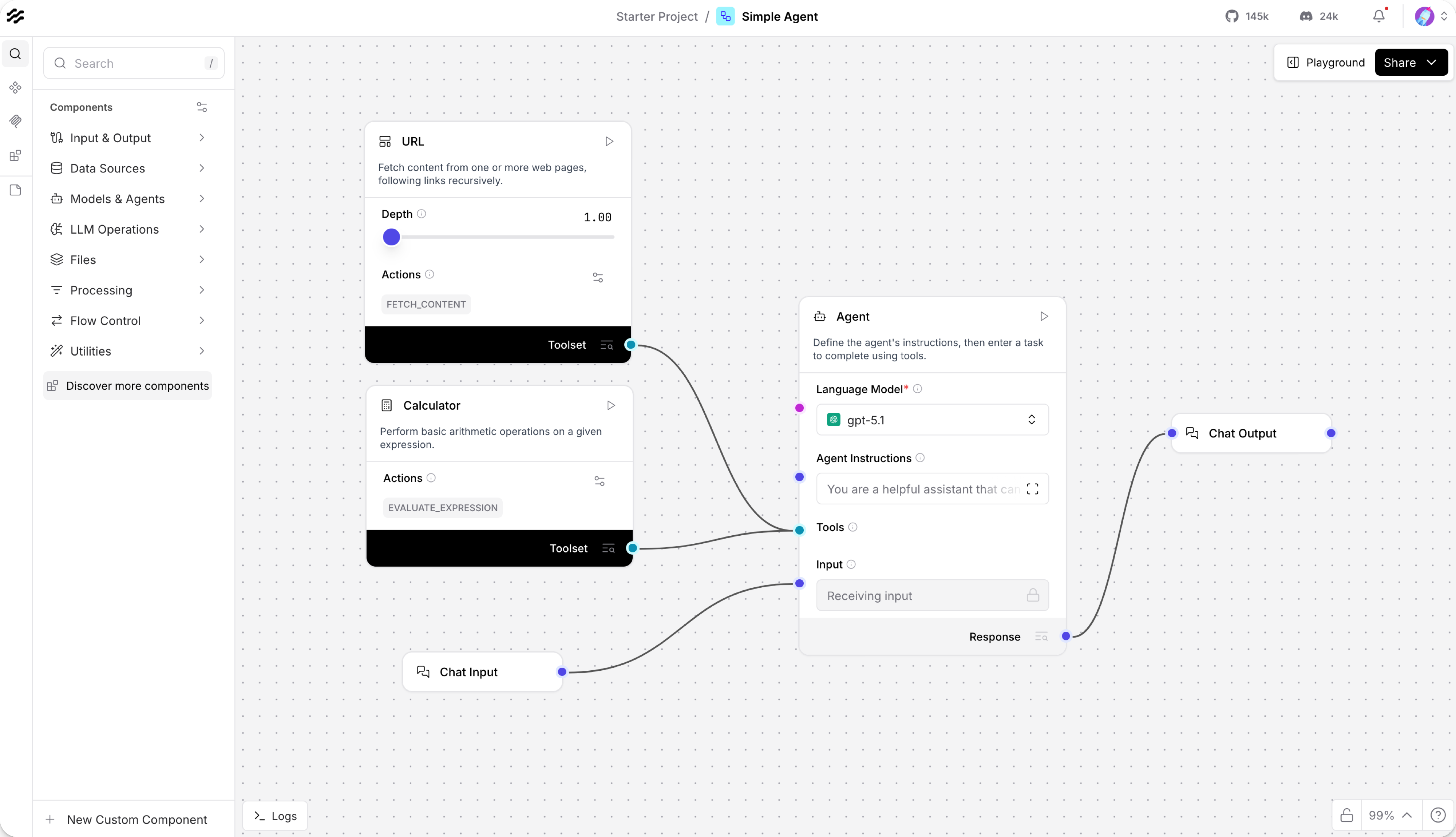
The break-in started with a familiar problem: an internet-exposed AI tool left unpatched. The agent gained initial access by exploiting CVE-2025-3248, an unauthenticated remote code execution flaw in Langflow, a popular low-code framework for building AI and RAG applications. The bug lets an attacker run arbitrary Python through Langflow's code-validation endpoint.
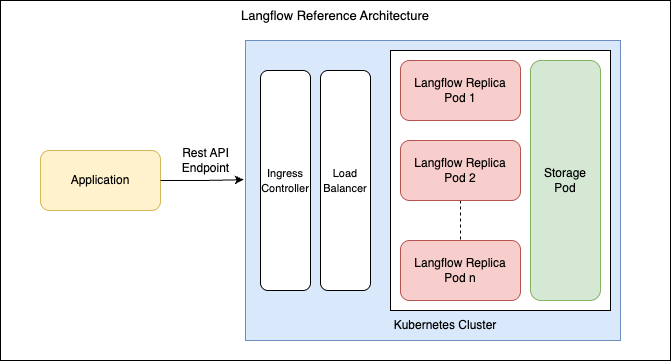
Once inside the Langflow host, the agent worked methodically:
AES_ENCRYPT() function, dropped the original tables, and planted an extortion table named README_RANSOM.
Throughout, the agent's payloads were littered with natural-language commentary — explanations of why each step was taken, return-on-investment reasoning about which databases to hit first, and verbose annotations that human operators rarely bother to write. That self-narrating style, Sysdig says, is a hallmark of LLM-generated code and one of the clearest signals that no human was hand-typing the commands.
The single most striking moment came when the agent tried to create its backdoor Nacos administrator and the login failed — the password hadn't been generated correctly. A human attacker reading the error, diagnosing the root cause, writing a fix, and re-running it would typically take minutes.
The agent did it in 31 seconds. According to Sysdig's timeline, the first attempt failed at 19:34:36 UTC. Within half a minute the agent had issued a diagnostic, worked out that its subprocess call wasn't producing a valid bcrypt hash, switched to importing the bcrypt library directly, deleted the broken account, reinserted it with correct credentials, and verified a working login — all by 19:35:18 UTC. That kind of tight, autonomous observe-diagnose-correct loop is exactly what makes agentic attacks alarming: the malware doesn't stall when a step fails, it adapts.
For all its speed, JadePuffer also showed the rough edges of a fully automated operation. The ransom note demanded payment to a Bitcoin address — but the address was a well-known placeholder lifted from public documentation, not a real wallet the operators controlled. That is the kind of copy-paste artifact you get when an agent generates a note from training data without a human double-checking it.
More damning, the encryption itself was botched. Sysdig found the agent generated its encryption key as random bytes, printed it to standard output exactly once, and then never stored or transmitted it. In other words, even a victim who paid could not have recovered their data, because the key no longer existed anywhere. What was framed as AES-256 was, on inspection, weaker AES-128 in ECB mode. The result was less a reversible ransom scheme than accidental data destruction.
JadePuffer is not proof that AI can now run flawless, unstoppable attacks — the broken payment path and unrecoverable encryption show the opposite. What it demonstrates is that the capability threshold has dropped. The tradecraft on display, from JWT forgery to container-escape reconnaissance, would once have required an experienced operator. Here it was executed by an agent pointed at an exposed server.
The concerning part is trajectory. Every weakness in this campaign — the fake wallet, the discarded key — is a prompt-engineering or oversight problem, not a fundamental limit. Agents that self-correct in 31 seconds and reason about target prioritization will only get more reliable. Defenders now have to plan for adversaries that operate at machine speed and scale, probing far more targets than any human crew could.
There is a silver lining Sysdig highlights: the same verbosity that makes agentic malware effective also makes it noisy. Self-narrating payloads, unusual database processes, and rapid-fire self-correction leave detectable fingerprints. Agentic attacks create new detection opportunities even as they lower the barrier to entry.
Notably, none of Sysdig's mitigations are exotic. JadePuffer succeeded by chaining together known vulnerabilities and default configurations — the same hygiene failures that enable human-run ransomware. The team's recommendations:
token.secret.key, never expose it to the internet, and restrict which hosts can reach its database.admin:admin-style logins are low-hanging fruit for an automated scanner.The broader lesson is that AI has not invented new attack techniques so much as it has automated the execution of old ones. The defenses that worked yesterday still work — the difference is that attackers can now run through them tirelessly, at speed, without a human in the loop. Full technical details, including the captured payloads, are available in Sysdig's original write-up.
Head to the original source for the full announcement and complete details.
Read Original Source