Wise Review: The Cheapest Way to Send Money Abroad?
Wise review: real mid-market exchange rates, transparent fees, a multi-currency account and debit card — plus the pros, cons, and who it is best for.
Expert Review

1. What is Wise?
Wise is an international money-transfer and multi-currency account service founded in 2011 as TransferWise by Estonian entrepreneurs Kristo Käärmann and Taavet Hinrikus. The company rebranded to Wise in 2021 and listed publicly on the London Stock Exchange the same year. Today it serves more than 16 million customers around the world and moves billions in cross-border payments every month.
Its core idea is simple but disruptive: instead of hiding a markup inside a poor exchange rate the way most banks do, Wise converts your money at the real mid-market rate — the same rate you see on Google — and charges a small, transparent fee that is shown upfront before you send. For anyone who regularly moves money between countries, that difference in cost can be substantial.
2. Key Features
Wise is built around cost transparency and everyday cross-border convenience. The features that matter most to real users:
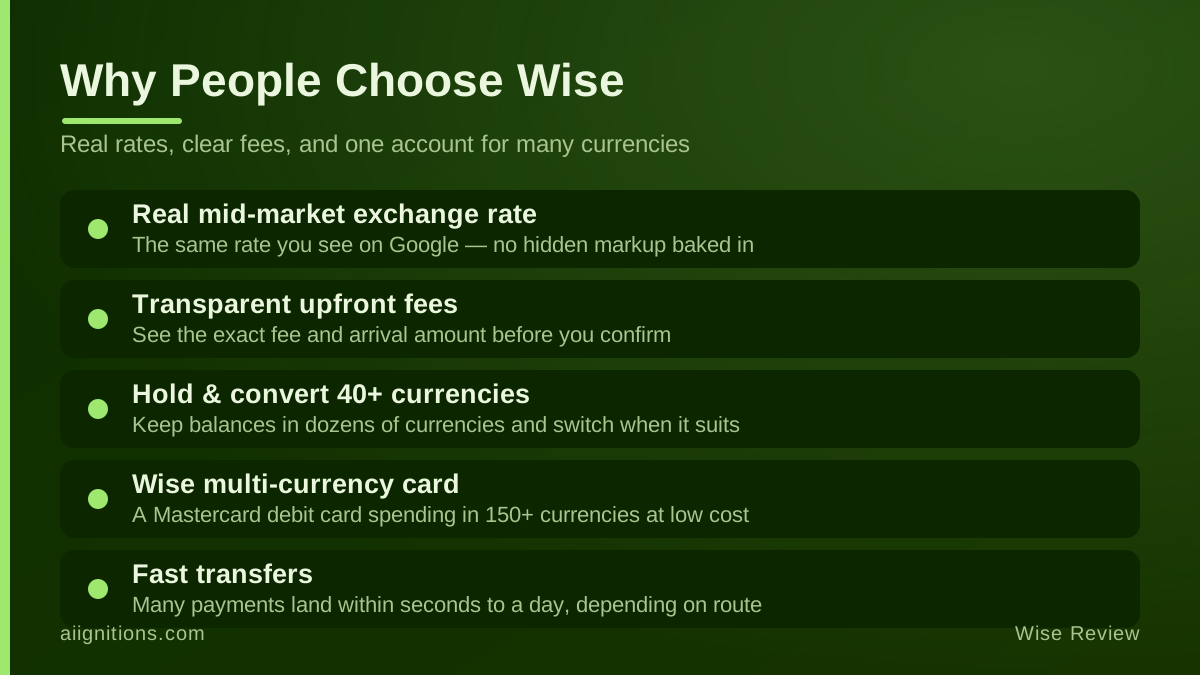
- Real mid-market exchange rate: No marked-up rates. You get the true rate and see the fee separately, so you always know what you are paying.
- Transparent upfront fees: Every transfer shows the exact fee and the amount that will arrive before you confirm.
- Hold and convert 40+ currencies: Keep balances in dozens of currencies and switch between them whenever the rate suits you.
- Wise multi-currency card: A Mastercard debit card that spends in 150+ currencies with low fees and free ATM withdrawals up to a monthly cap.
- Fast transfers: Many payments arrive within seconds to a day, depending on the route and how you pay.
- Local account details: Receive money like a local in currencies such as USD, EUR, GBP, and AUD.
3. Products & Accounts
Wise is best understood as a small suite of products that share one account rather than a single transfer form. The main ones include:
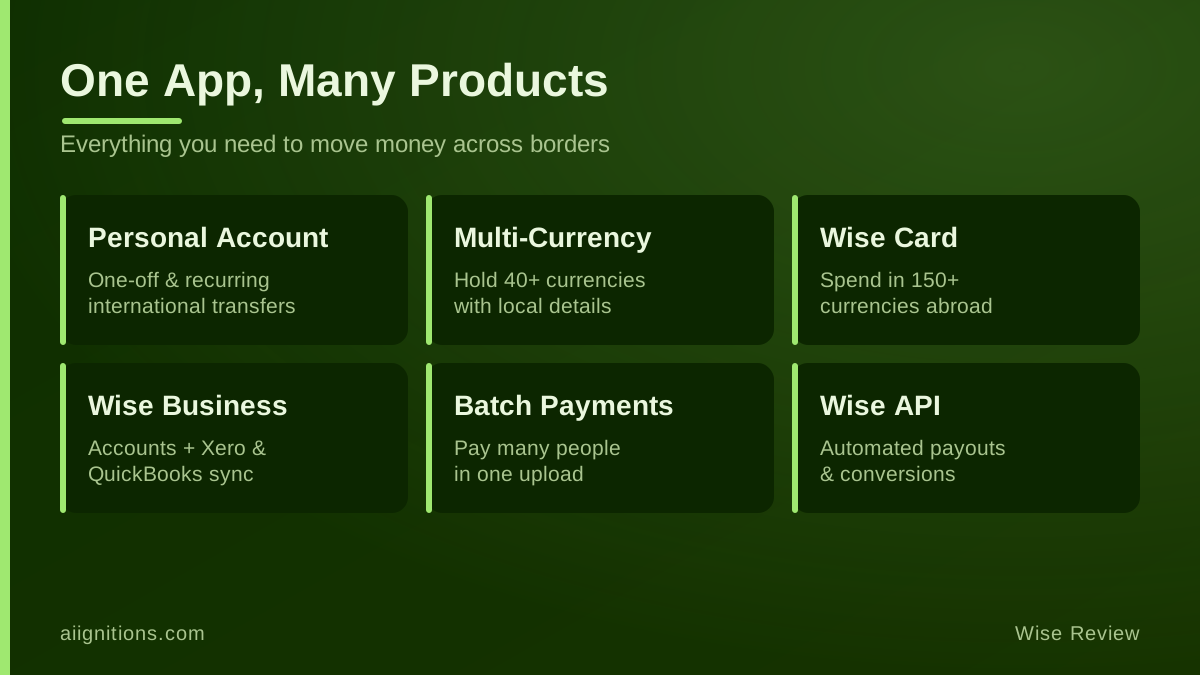
- Personal account: The starting point for one-off and recurring international transfers, bank-to-bank.
- Multi-currency account: Hold 40+ currencies and get local account details in several of them to receive money like a local.
- Wise card: A Mastercard debit card for spending abroad in 150+ currencies with automatic conversion at the real rate.
- Wise Business: A multi-currency business account with batch payments and accounting integrations such as QuickBooks and Xero.
- Batch payments: Pay dozens of contractors or suppliers in one upload — useful for payroll and marketplaces.
- Wise API: Automate payouts and conversions programmatically, the backbone of Wise Platform for partners.
In some regions Wise also lets you hold balances in interest-earning assets, so idle money can generate a modest yield while remaining spendable.
4. Fees & Exchange Rates
This is where Wise earns its reputation. Currency conversion always happens at the mid-market rate, and the fee is a small percentage shown upfront — often somewhere between about 0.33% and 1% of the amount, depending on the currencies and route. Receiving money into your local account details is generally free.
- No exchange-rate markup: Unlike most banks, Wise does not bake a hidden margin into the rate.
- Upfront, itemized fee: You see the fee and the exact arrival amount before confirming.
- Card and ATM costs: The physical card has a small one-time issue fee, and ATM withdrawals are free up to a monthly limit before a small charge applies.
Fees vary by route, so the table below shows representative rates rather than fixed prices. It is also worth being clear that Wise is not a bank — your balances are safeguarded in separate accounts but are not covered by deposit insurance.

5. Security & Trust
Wise is regulated in every major market it operates in — by the Financial Conduct Authority (FCA) in the UK, registered with FinCEN in the US, and licensed by equivalent authorities elsewhere. It uses two-factor authentication, device management, and standard account-security controls, and customer funds are safeguarded in separate accounts held apart from the company's own money.
Being a publicly listed company adds a layer of transparency and financial disclosure that many money-transfer apps lack. One thing to understand clearly, though: Wise is an electronic money institution, not a bank. That means your balance is safeguarded rather than covered by a deposit-insurance scheme such as FDIC in the US or FSCS in the UK. In practice safeguarding is designed to return your money if Wise ever failed, but it is a different protection from bank deposit insurance, and it is worth knowing the distinction before you park large sums there.
6. Pros & Cons
No service is perfect. Here is the balanced picture:
Advantages
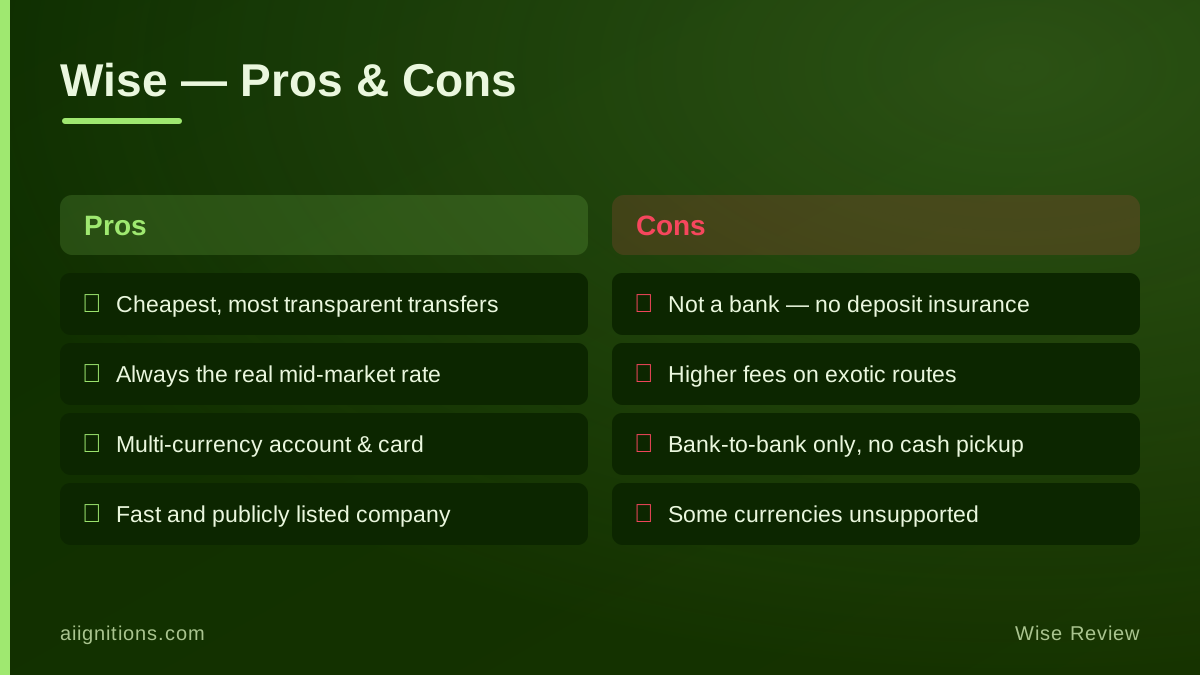
- The cheapest, most transparent transfers for most common routes.
- Always the real mid-market rate with no hidden markup.
- A genuine multi-currency account and debit card in one app.
- Fast, and backed by a trusted, publicly listed company.
Disadvantages
- Not a full bank — balances are safeguarded, not deposit-insured.
- Fees can climb on exotic or low-volume currency routes.
- Bank-to-bank only — no cash pickup and no physical branches.
- Some currencies and countries are not supported.
7. Verdict: Who Should Use Wise?
Wise is one of the easiest recommendations in personal finance. If you regularly send money across borders, get paid in another currency, travel often, or run a business with international suppliers, it will almost certainly save you money compared with a traditional bank — and the transparency means you always know exactly what a transfer costs. Freelancers, expats, and frequent travelers get the most out of the multi-currency account and card.
The caveats are worth remembering. Wise is not a replacement for a full bank account: there is no deposit insurance, no branches, and no cash pickup, and a handful of exotic routes carry higher fees. But for the core job of moving and holding money internationally at the real exchange rate, Wise remains the benchmark that other services are measured against.