iPhone Duo and iPhone 18 Pro: What Apple's First Foldable Changes for App Developers
Apple announced the iPhone Duo foldable and iPhone 18 Pro on September 9. What the 7.6-inch inner screen, Split View, iOS 27.1 and new aperture APIs mean for app developers.
News Report

What Apple announced
Apple used its September 9 event to show two new phones. The iPhone Duo is its first foldable: a 5.4-inch phone that opens like a book into a 7.6-inch display, starting at $1,999 for 256GB. Pre-orders open October 16 and it goes on sale October 23 in more than 70 countries and regions, according to Apple's newsroom. The iPhone 18 Pro and iPhone 18 Pro Max start at $1,199 and $1,299, open for pre-order on September 12 and ship September 18, per Apple. MacRumors puts the Pro increase at $100 over last year.
The phone missing from the stage was the standard iPhone 18. Apple is splitting the generation, and MacRumors' release schedule expects the base model and the iPhone 18e in spring 2027. iOS 27 reaches compatible iPhones on September 14.
For buyers, the Duo costs $100 more than Samsung's Galaxy Z Fold 8, which launched in July at $1,899 with the same 7.6-inch inner size, per 9to5Google. For developers, the price matters less than the screen. Every iPhone app will be opened on it on day one, adapted or not.
The inner screen reports itself as an iPad
Open the Duo and your app gets regular size classes in both directions, the same signal an iPad sends. Closed, the outer screen behaves like any other iPhone. Apple's Prepare your app for iPhone Duo tech talk is blunt about one consequence: the inner display does not honor an app's supported interface orientations. A portrait-only app gets rotated anyway.
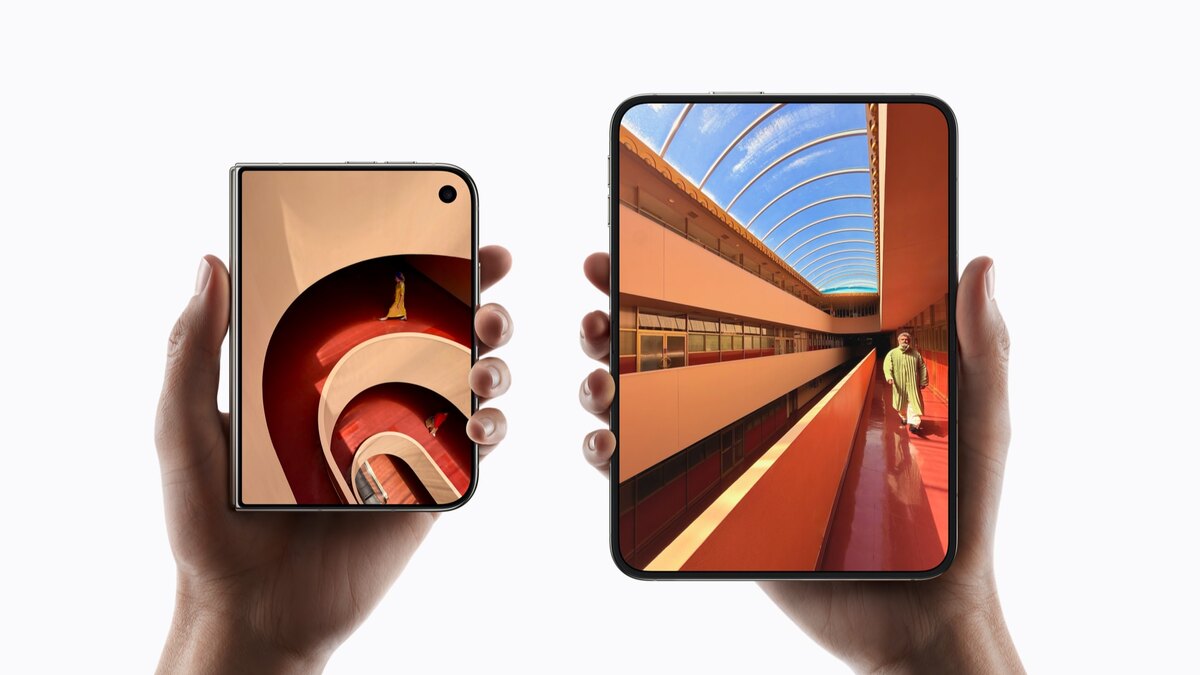
Three habits break at once. Code that branches on orientation instead of size class picks the wrong layout. Width math that doubles the left safe-area inset comes out wrong, because the inner screen's insets are asymmetric. And UIScreen.main cannot tell you which of two screens you are on, so Apple points apps to the window scene's own screen. Standard containers such as NavigationSplitView and UISplitViewController adapt without extra work, and tab bars can move into a sidebar.
A smaller change catches login screens. The Duo swaps Face ID for Touch ID in the side button. An app that prints "Sign in with Face ID" instead of reading the device's biometry type will show the wrong prompt.
A 1.42 ratio, and where 16:9 video loses
Working from the panel resolutions, developer Blake Crosley puts the inner display at 1878 × 2670 pixels, or 626 × 890 points, an aspect ratio of 1.42. The outer screen works out to 466 × 678 points at 1.45. That near-square shape is bad news for video. A 16:9 frame played in landscape on the inner screen renders at 890 × 501 points, leaving 125 points of black bars. About a fifth of the screen goes unused.
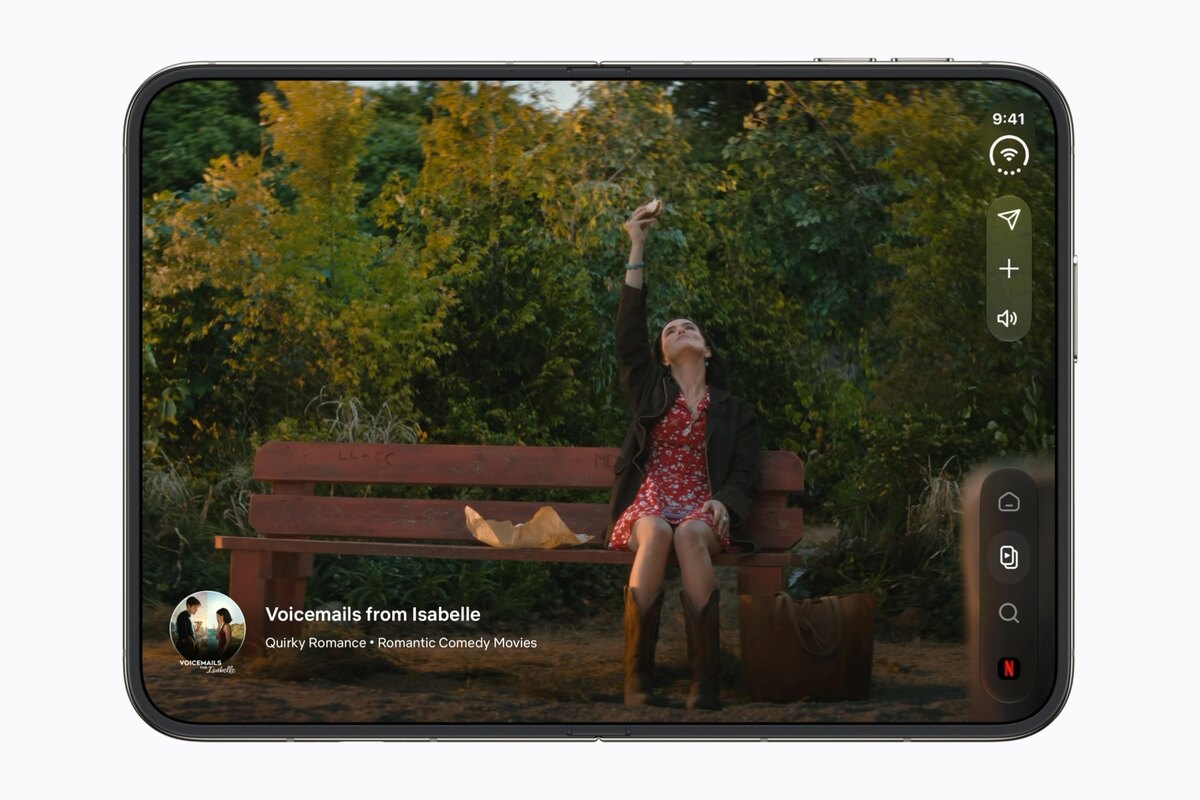
Samsung's Fold 8 sits closer to 4:3, so teams already shipping for Android foldables have met this shape. Most iOS teams have not. Apps that draw their own full-screen chrome get a new tool in the iOS 27.1 SDK, ReservedRegion in SwiftUI and UIViewReservedRegion in UIKit, which let a custom bar claim space without colliding with system UI.
Split View, and why your SDK decides the layout
iOS 27 lets two apps sit side by side on an iPhone for the first time, on the Duo's inner display. The Dynamic Island moves to the side and system controls dock vertically. How your app fills its half depends on the SDK that built it. Built with the iOS 27 SDK, it extends to the left of the status bar area. Rebuilt with the iOS 27.1 SDK, it reaches the screen edge and lays standard navigation and toolbar buttons out vertically.
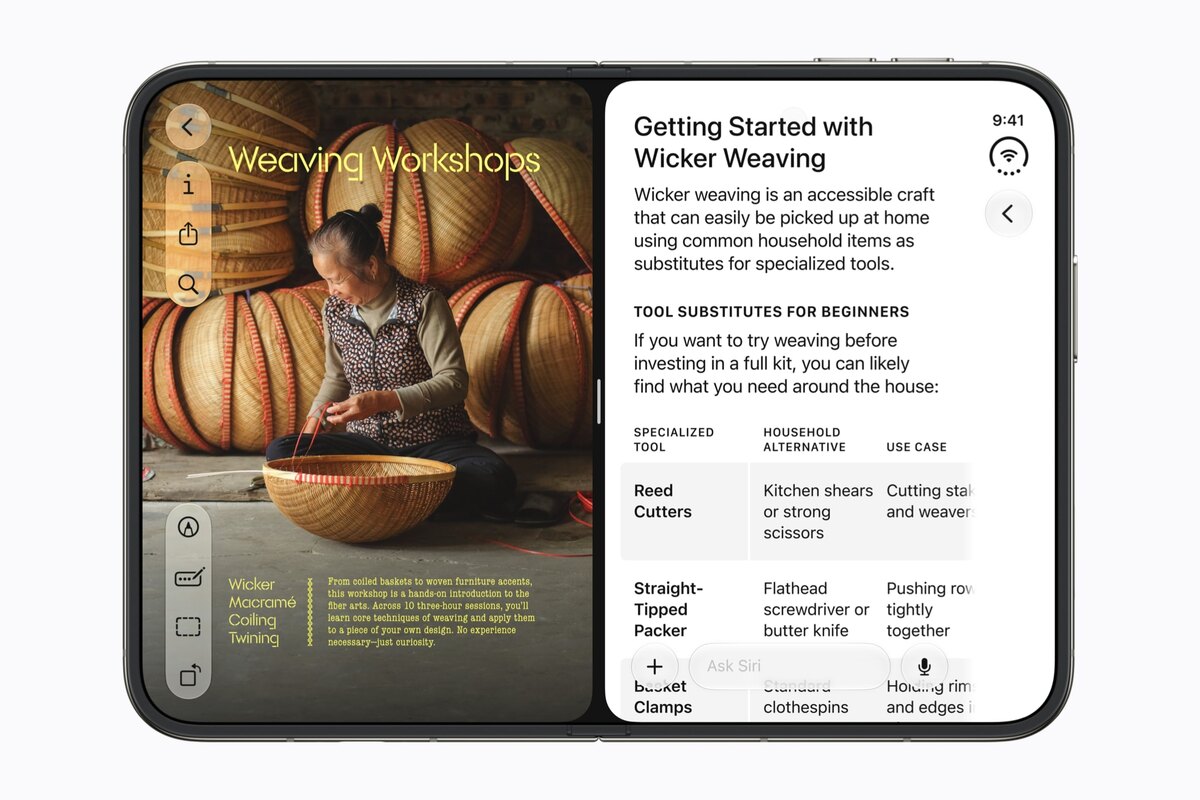
That second tier is the catch. iOS 27 ships September 14, but the Duo arrives on iOS 27.1, and Apple's developer site dates the Xcode 27.1 beta, the one with an iPhone Duo simulator, to later this month, MacRumors reports. Developers saw the device on September 9 and cannot run their app on a simulated one yet. Real hardware reaches them the same day it reaches customers.
iPhone 18 Pro gives camera apps a real aperture
The 18 Pro's 48MP Fusion Main camera gets a variable aperture, six laser-cut blades moving between f/1.48, f/1.8, f/2.8 and f/4. Apple says developer APIs allow "even more control across the aperture range." Until now, an iPhone camera app that wanted shallow depth of field faked it in software. On the 18 Pro it can stop the lens down, and the depth of field in the file is optical.

Apple's Duo announcement lists no variable aperture for its 48MP main camera. Camera apps that expose aperture controls should check the device's capabilities, not its model name.
A20 Pro, Siri AI and the daily caps
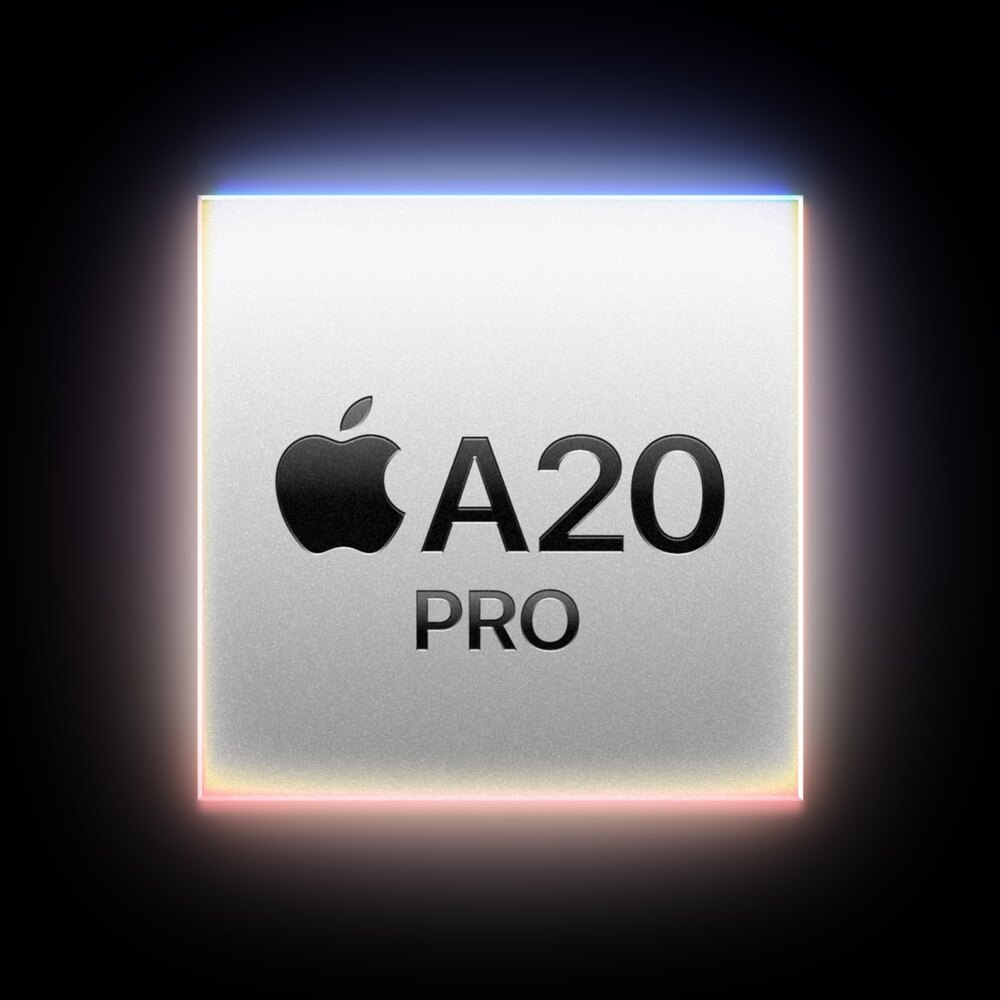
Both phones run the A20 Pro, built on a 2-nanometer process. Its dual 16-core Neural Engine has 32 cores and, by Apple's figure, double the AI processing of the A19 Pro, alongside 50 percent more memory bandwidth. That second number matters more for local models than the core count, because memory bandwidth is what limits how fast a model generates tokens.
The cloud side comes with limits. Siri AI launches in beta on September 14 in English, with French, Japanese, Korean, Portuguese and Spanish due in October and no EU availability at launch. Apple's fine print, reported by MacRumors, sets daily usage limits on features that run on server models, including Siri AI, Image Playground and the AFM 3 Cloud models in Shortcuts. Expanded access will cost extra later. Apple has not said how much, or what the limits are. Anyone building Shortcuts on those cloud models should treat the cap as a failure case to design for.
What happens before October 23
The calendar is tight. iPhone 18 Pro pre-orders open September 12, iOS 27 lands September 14 and the Pro ships September 18. The Xcode 27.1 beta with the Duo simulator is due later in September, Duo pre-orders start October 16, and the Duo ships on iOS 27.1 on October 23.
Two jobs do not need to wait for the beta. Replace orientation checks with size-class checks, and stop reading UIScreen.main. Both changes build against the iOS 27 SDK today and are correct on every iPhone. Then decide, before launch day, if your video player crops or letterboxes on a 1.42 screen. The dates here are as of September 10, 2026; the iOS 27.1 release date is inferred from the Duo's on-sale date, not announced.
Read the original source
Head to the original source for the full announcement and complete details.
Read Original Source