Meta Puts Its Own AI Chip Into Production: 'Iris' Enters Manufacturing in September
Meta will start manufacturing its custom 'Iris' AI chip in September 2026 — the 4th-gen MTIA accelerator co-designed with Broadcom and made by TSMC. Here's what it means.
News Report

What Happened
Meta is preparing to manufacture its own AI chip at scale for the first time. According to an internal memo reported in mid-July 2026, the company will begin production of an accelerator code-named Iris in September, marking the moment Meta moves from designing custom silicon to actually deploying it across its data centers in volume.
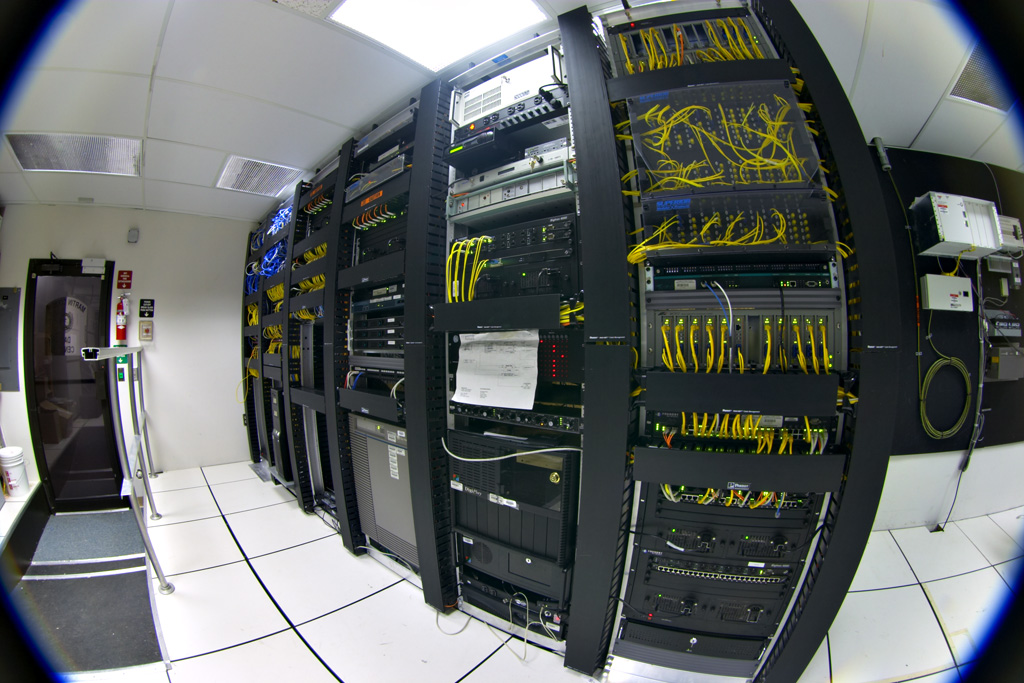
Iris is the fourth generation of Meta's in-house MTIA program — the Meta Training and Inference Accelerator line the company has been building quietly for years. What makes this milestone different from earlier MTIA parts is scale and intent: internal testing reportedly took just six weeks and turned up no major issues, and Meta now plans to lean on Iris as a core piece of its infrastructure rather than a side experiment.

What Iris Actually Is
Iris is a purpose-built AI accelerator — a chip designed specifically to run the machine-learning workloads that dominate Meta's business, rather than a general-purpose processor. Those workloads are enormous: the recommendation and ranking systems behind Facebook, Instagram and Threads, the content-moderation models that police billions of posts, and the fast-growing generative-AI features Meta is stitching across its apps and its Ray-Ban smart glasses.

The MTIA family Iris belongs to started as a way to serve Meta's ranking and recommendation models more cheaply than renting general-purpose GPUs for every inference. Each generation has widened that remit. Iris represents the point where Meta believes its own silicon is mature enough — after a testing cycle that flagged no serious problems — to carry a meaningful share of the company's real production traffic, not just pilot workloads.
The Broadcom and TSMC Partnership
Meta is not doing this alone. Iris was co-designed with Broadcom, the same custom-silicon powerhouse that helped Google build its TPUs and OpenAI design its "Jalapeño" inference chip. The finished design is manufactured by TSMC, the Taiwanese foundry that fabricates the most advanced chips for essentially every major player in the industry.

That division of labor matters. Broadcom brings the hard-won expertise of turning a customer's requirements into a working, manufacturable accelerator — the intellectual property, packaging and networking know-how that a social-media company does not have in-house. Meta reportedly formalized this arrangement earlier in 2026, expanding its Broadcom partnership through 2029 to cover multiple future MTIA generations. In other words, Iris is not a one-off; it is one step on a roadmap Meta has already committed to fund for years.

Why Meta Wants Its Own Silicon
The logic is the same one driving every hyperscaler toward custom chips: cost and control. Meta buys Nvidia and AMD GPUs by the hundreds of thousands, and those chips are expensive, supply-constrained and priced by vendors with enormous pricing power. Every workload Meta can move onto a chip it designed itself is a workload insulated from GPU scarcity and from the margins Nvidia commands.
A chip tailored to Meta's exact models can also be more efficient than a general-purpose GPU for those specific jobs. When you know precisely which recommendation and ranking models a chip will run — and you run them at the scale of billions of users — you can strip out everything a general accelerator carries for flexibility and optimize hard for your own workloads. At Meta's volume, even a modest efficiency gain per inference translates into vast savings in silicon and, just as importantly, in power.
It Augments Nvidia, Not Replaces It
It would be a mistake to read Iris as Meta breaking up with Nvidia. The chip is explicitly designed to augment, not replace, the large volumes of Nvidia and AMD GPUs Meta already runs. Training the largest frontier models still demands the most capable GPUs money can buy, and Meta continues to buy them at scale.

Where custom silicon like Iris fits best is inference — the recurring, high-volume work of serving finished models to users every day — and the ranking and recommendation workloads that are Meta's bread and butter. The realistic picture is a mixed fleet: Nvidia and AMD GPUs handling training and the most demanding jobs, with Iris absorbing a growing slice of the steady, predictable inference traffic where a specialized chip pays off most. That blend is exactly how Google and Amazon already operate their own accelerators alongside Nvidia hardware.
The 14-Gigawatt, $145 Billion Backdrop
The scale of Meta's ambition is easiest to grasp in power terms. The company is targeting roughly 7 gigawatts of compute infrastructure by the end of 2026 and aims to double that to 14 gigawatts by 2027 — figures that put Meta's build-out on the order of a small national grid's worth of electricity dedicated to AI. Feeding that expansion is an AI infrastructure budget of up to $145 billion in 2026 alone.
At those numbers, controlling your own silicon stops being a nice-to-have and becomes a financial necessity. When you are spending well over a hundred billion dollars a year on compute, shaving even a few percentage points off the cost and power draw of your most common workloads is worth billions. Iris is Meta's bet that owning the chip is cheaper, over time, than renting the equivalent capacity from Nvidia — and a hedge against the GPU shortages that have defined the AI build-out.
Part of a Broader Custom-Silicon Race
Meta is joining a race already well underway. Google has run its own TPUs for years; Amazon's Trainium and Inferentia chips have grown into a datacenter-silicon business measured in the tens of billions; OpenAI unveiled its Broadcom-built "Jalapeño" inference chip; and Chinese labs from DeepSeek to Alibaba and Baidu are designing accelerators of their own. The common thread is unmistakable.
Once a company's AI workloads are large and predictable enough, the economics tip in favor of designing the chip that runs them. Meta arguably has the most predictable workloads of anyone — the same ranking, recommendation and moderation models running continuously across a handful of enormous apps. That makes it close to an ideal candidate for custom silicon, and it explains why the company is willing to commit to a multi-generation MTIA roadmap with Broadcom stretching to 2029.
Why It Matters
Iris entering production is a concrete signal that the era of hyperscalers building their own AI chips has fully arrived — and that Nvidia's near-monopoly on AI compute, while still dominant, is being steadily chipped away at the edges by its own biggest customers. Meta is not abandoning Nvidia, but every workload it can move onto Iris is revenue Nvidia does not capture and a supply risk Meta no longer carries.
For Meta, the payoff is measured in the cost and power efficiency of a fleet racing toward 14 gigawatts. For the industry, Iris is another data point in a clear trend: the companies that spend the most on AI are the ones most determined to stop paying full price for it. Whether Iris meets its efficiency targets in real production will take time to judge — but the direction of travel, from renting compute to building it, could hardly be clearer. The reporting on the internal memo was published in mid-July 2026; Meta's own announcements are collected in its newsroom.
Read the original source
Head to the original source for the full announcement and complete details.
Read Original Source