Schneider Electric Agrees to Buy PTC, Maker of Creo and Windchill, for $22.6 Billion
Schneider Electric agreed to buy PTC for $205 a share, $22.6B in cash. The terms, the market reaction and what it means for Creo, Windchill and Onshape users.
新闻报道

What happened
On Monday, October 5, Schneider Electric announced a definitive agreement to acquire PTC, the Boston company behind the Creo CAD software, the Windchill PLM system and the browser-based Onshape. Schneider will pay $205 per share in cash for all of PTC. That values PTC's equity at about $22.6 billion (roughly €20.1 billion) and the whole business, debt included, at an enterprise value of $23.7 billion. It is the largest acquisition in Schneider's history, according to Euronews via Yahoo Finance.
Both boards approved it unanimously. Nothing changes hands yet. The deal still needs a vote of PTC shareholders at a special meeting plus regulatory approval, and Schneider expects to close by the third quarter of 2027. Until then PTC is an independent, listed company.
The price and how Schneider pays for it
The $205 offer is a 42.3% premium on PTC's last close before the announcement and 46.1% over its 30-day volume-weighted average price, per Schneider's release. On paper that is 21 times PTC's expected 2027 adjusted EBITA. Schneider says the multiple falls to 13x once synergies are fully in: €250 million a year of cost savings by year three, plus about €800 million of hoped-for extra revenue.
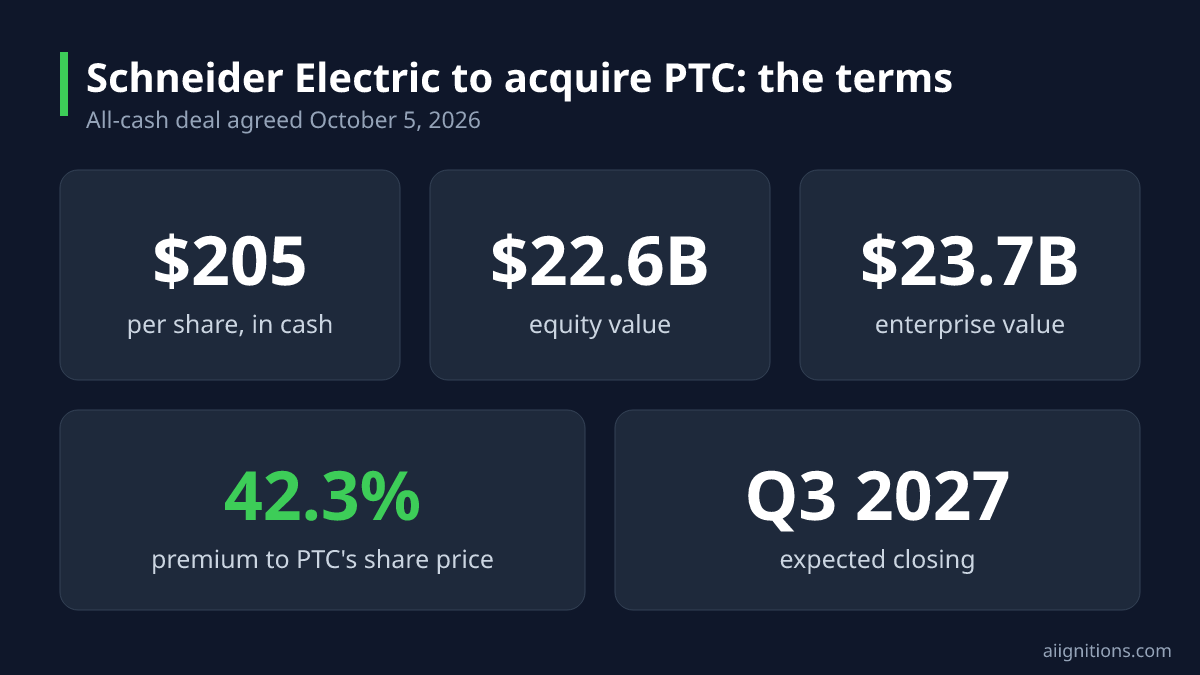
Watch the currencies. The offer is in dollars; the financing and the synergy targets are in euros. Schneider needs about €22 billion in cash, covered for now by a fully committed bridge loan from Morgan Stanley and Société Générale. That loan is to be replaced by €5-6 billion of new shares, sold in an accelerated bookbuild, and €16-17 billion of new debt spread across several currencies. New shares dilute existing holders. That goes some way to explaining what happened to Schneider's stock.
How the market took it
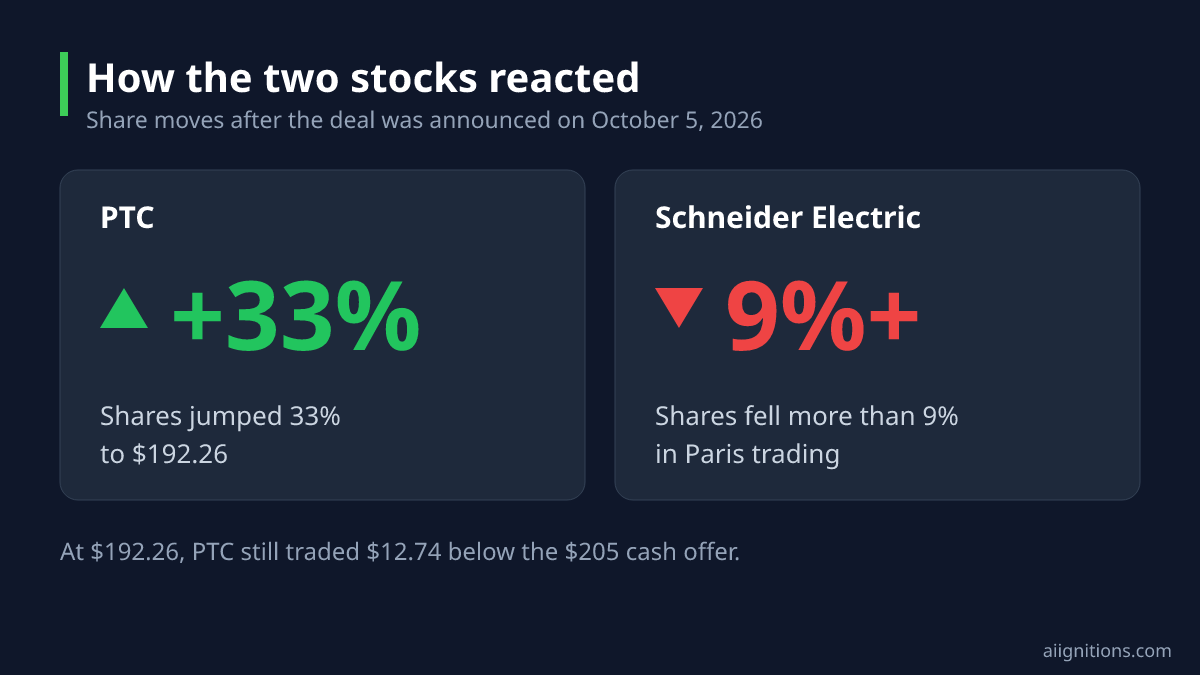
The two stocks moved in opposite directions. PTC closed Monday at $192.26, up about 33% - a big jump, but still almost $13 short of the offer, the gap traders leave when they price in a year of regulatory risk. Schneider fell more than 9% in Paris morning trading, and its US over-the-counter shares dropped 10% to $61.50, according to the Boston Globe. One headline put Schneider's loss at €15 billion of market value in a day. That is about three-quarters of what it agreed to pay.
Jefferies analysts offered the most useful reading. Fear that AI will eat into software businesses has pushed valuations down across the sector, and PTC had slid to 13.1 times next-12-months earnings (FactSet data). That let Schneider buy at a decade-low valuation. The same fear, the analysts warned, could keep weighing on Schneider's own shares as software becomes a bigger part of it.
Why an equipment maker wants a CAD company
Schneider is best known for switchgear, drives, building controls and data-centre power gear, sold through about 1 million partners in more than 100 countries. For several years it has also been buying the software that runs plants. It took full ownership of UK industrial-software firm AVEVA in 2023, and in June 2026 agreed to buy industrial-data company Cognite for a reported $3.1 billion, a deal that has not closed either. AVEVA and Cognite cover how a plant operates. PTC covers how a product is designed, built and serviced.
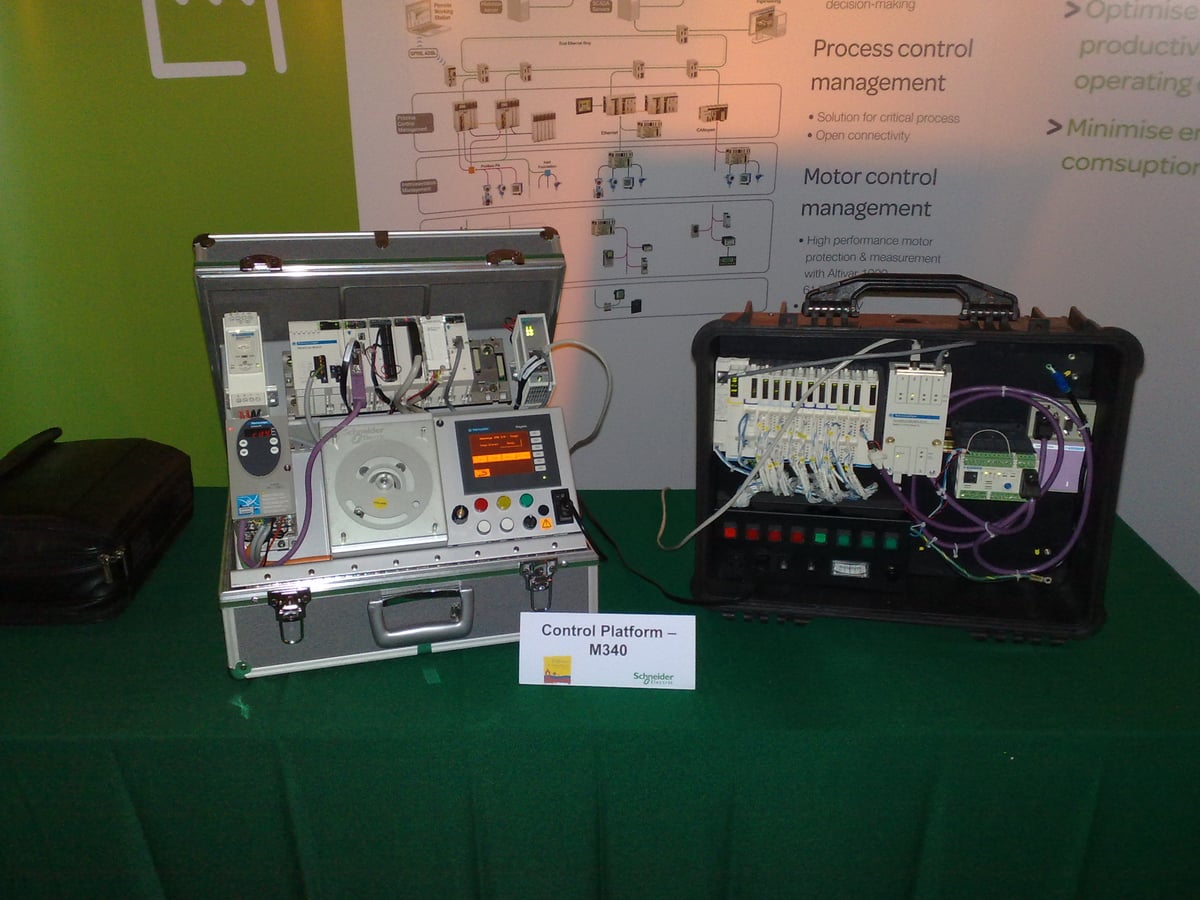
Put together, Schneider describes "a unified digital thread" running "from design and build to operate and maintain" - one data trail that industrial AI agents can read end to end, instead of a CAD model in one vendor's system and sensor readings in another's. Oppenheimer's Ken Wong told the Boston Globe the edge is physical: Schneider sells the equipment itself and can put software and sensors onto it.
"Together, we are creating the industry's most complete Software & AI powerhouse and highest-quality portfolio bridging the physical and digital worlds," said Olivier Blum, Schneider's CEO. On a pro forma basis, counting Cognite and PTC, software and services would make up about 24% of group revenue, with more than 15,000 software employees and over 50,000 software customers. PTC brought in about $2.74 billion in fiscal 2025, at an adjusted EBITA margin of around 40% in calendar 2025.
What it changes for Creo, Windchill and Onshape users
PTC has more than 30,000 customers. For them, nothing changes before the close, and neither company has published a product roadmap for what follows. The deal covers Creo and Windchill, the SaaS products Onshape and Arena, Codebeamer for application lifecycle management, and ServiceMax and Servigistics for service parts and field service. ThingWorx and Kepware are not part of it. PTC sold both to TPG in March 2026, and Schneider's figures exclude them.
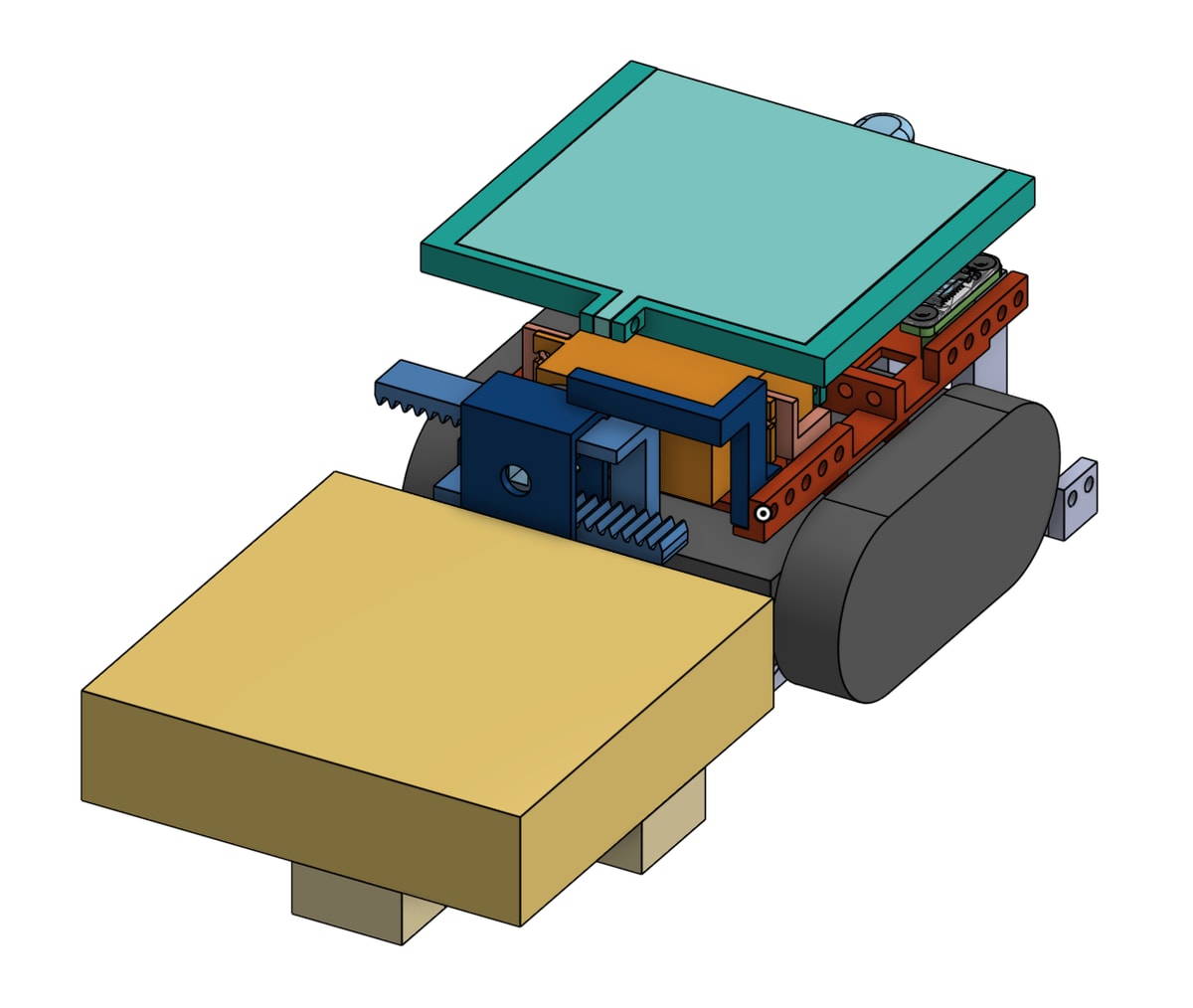
The practical question for an engineering team is neutrality. Today PTC sells CAD and PLM to manufacturers regardless of whose motors, controllers or power gear end up in their products and factories. Under an owner whose core business is selling that equipment, a company standardised on Siemens or ABB hardware has reason to ask, in writing, that Windchill integrations and data exports stay open. PTC President and CEO Neil Barua framed the deal around growth instead, saying PTC gains "substantial scale and resources to accelerate innovation" and can expand "into more geographies and end markets".
Rivals feel it unevenly. The PLM analysis site Beyond PLM argues that Siemens, which already sells both automation hardware and its own PLM software, faces the most direct pressure from a rival now built the same way. Dassault Systèmes may pick up customers who would rather not sit through an integration, but faces a bigger competitor afterwards. Autodesk, the other large design-software vendor, completed its own purchase of maintenance-software maker MaintainX in August 2026.
What happens next
Schneider has pulled its third-quarter revenue release forward to October 16, 2026, the first chance for investors to question management about the price. PTC shareholders then vote at a special meeting that has not been dated yet, with their board recommending a yes. Regulatory reviews run until the expected close in the third quarter of 2027.
Schneider expects the deal to add a low single-digit percentage to adjusted earnings per share (before purchase-price accounting) in the first full year it consolidates PTC, and a mid-to-high single-digit percentage once synergies are fully realised. It expects return on capital employed to exceed its cost of capital by year five, and it is keeping its share buyback programme running through 2030. Figures here were checked on October 7, 2026 against Schneider's release and the coverage linked above.
Image credits: Schneider Electric headquarters photo by Wilmotte & associés architectes, CC BY-SA 4.0; Modicon PLC photo by Molainas, public domain; Onshape model by Jellyfish513, CC0; all via Wikimedia Commons.