Aha! Review: Roadmaps Pricing, Elle AI Credits and the New Aha! Builder
Aha! review: Roadmaps from $59/user, why Premium bills every viewer, how few Elle AI credits you get, Builder's GitHub sync and who should skip it.
Expert Review

A roadmap tool that now hands engineers code
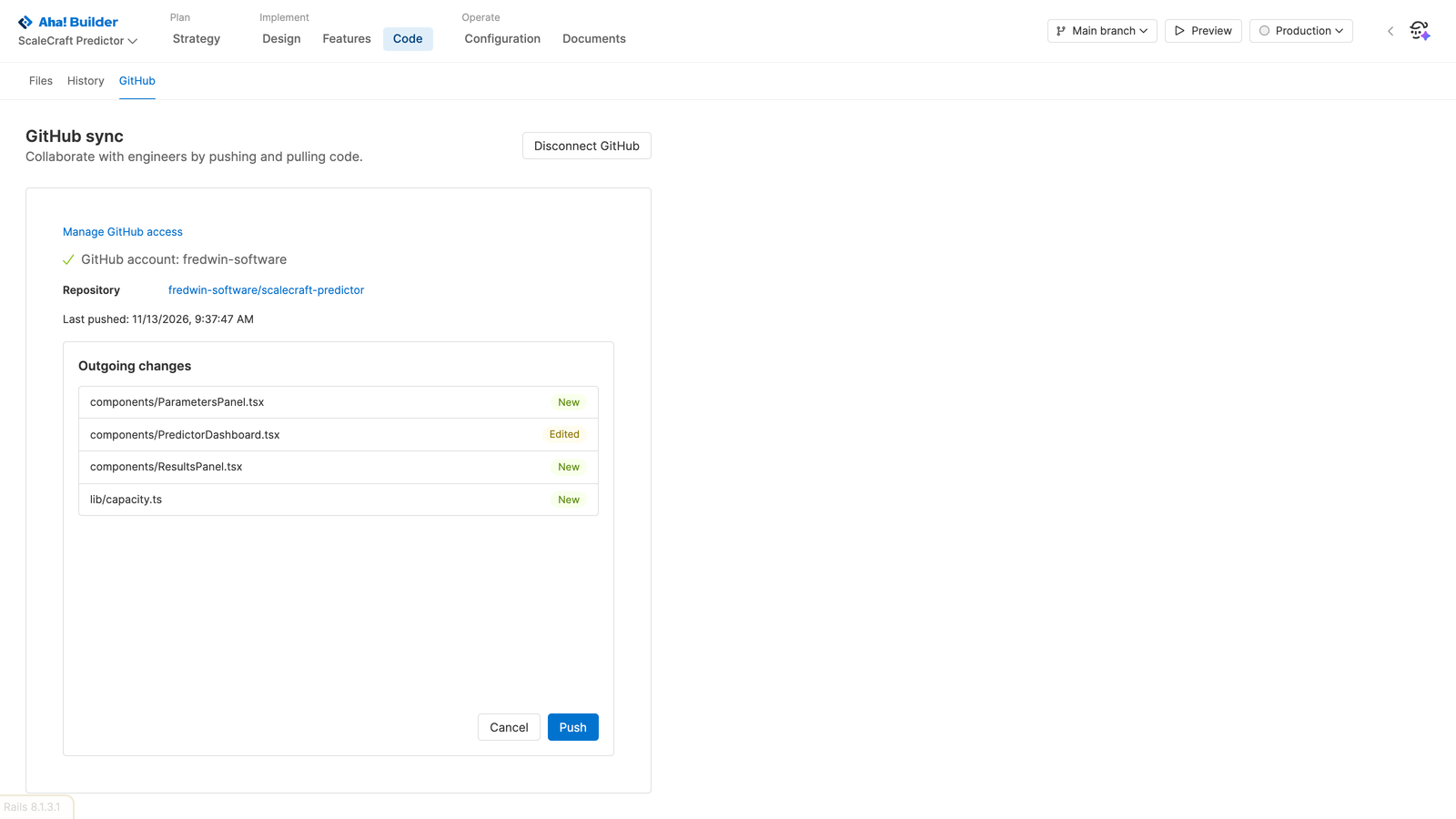
On November 23, 2026, Aha! shipped a feature that would have sounded strange from a roadmapping company a year ago: a product manager can push a working prototype to a GitHub repository, commit message and all, and an engineer pulls it from there. It lives inside Aha! Builder, an AI app builder that only became generally available on April 29, 2026.
That is a long way from where Aha! started. Brian de Haaff and Chris Waters founded it in Menlo Park in spring 2013 to do one job: tie product strategy to the roadmap. The company says it is still self-funded, fully remote and run without a sales team, and that it passed $100M in annual recurring revenue in early 2022. Those are Aha!'s own claims, and they fit a product built for people who configure carefully and pay by the seat.
This review covers what most buyers actually pay for - Aha! Roadmaps, the Elle AI assistant and the new Builder - with every price checked on aha.io on November 26, 2026.
What Aha! Roadmaps does well, and where it drags
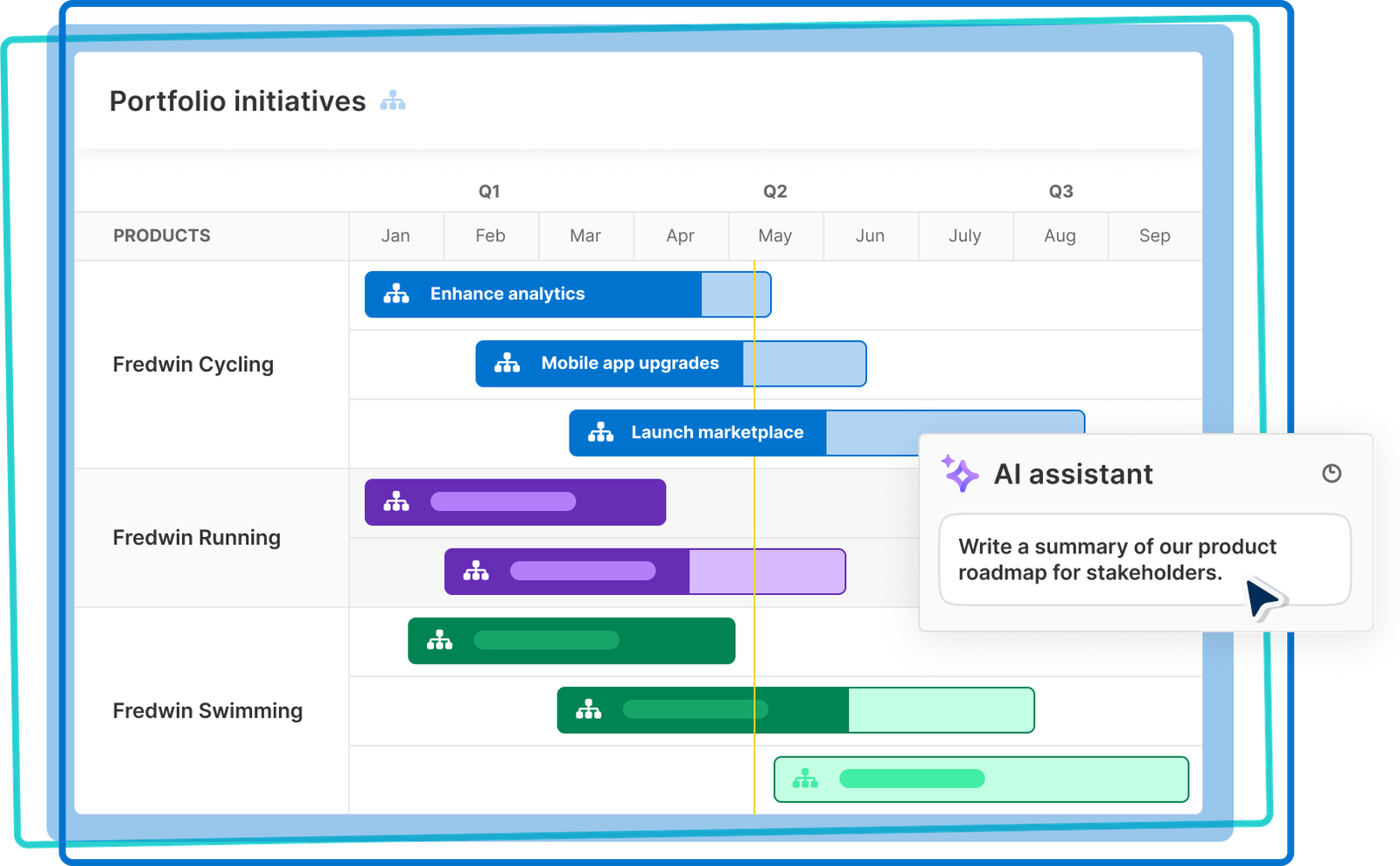
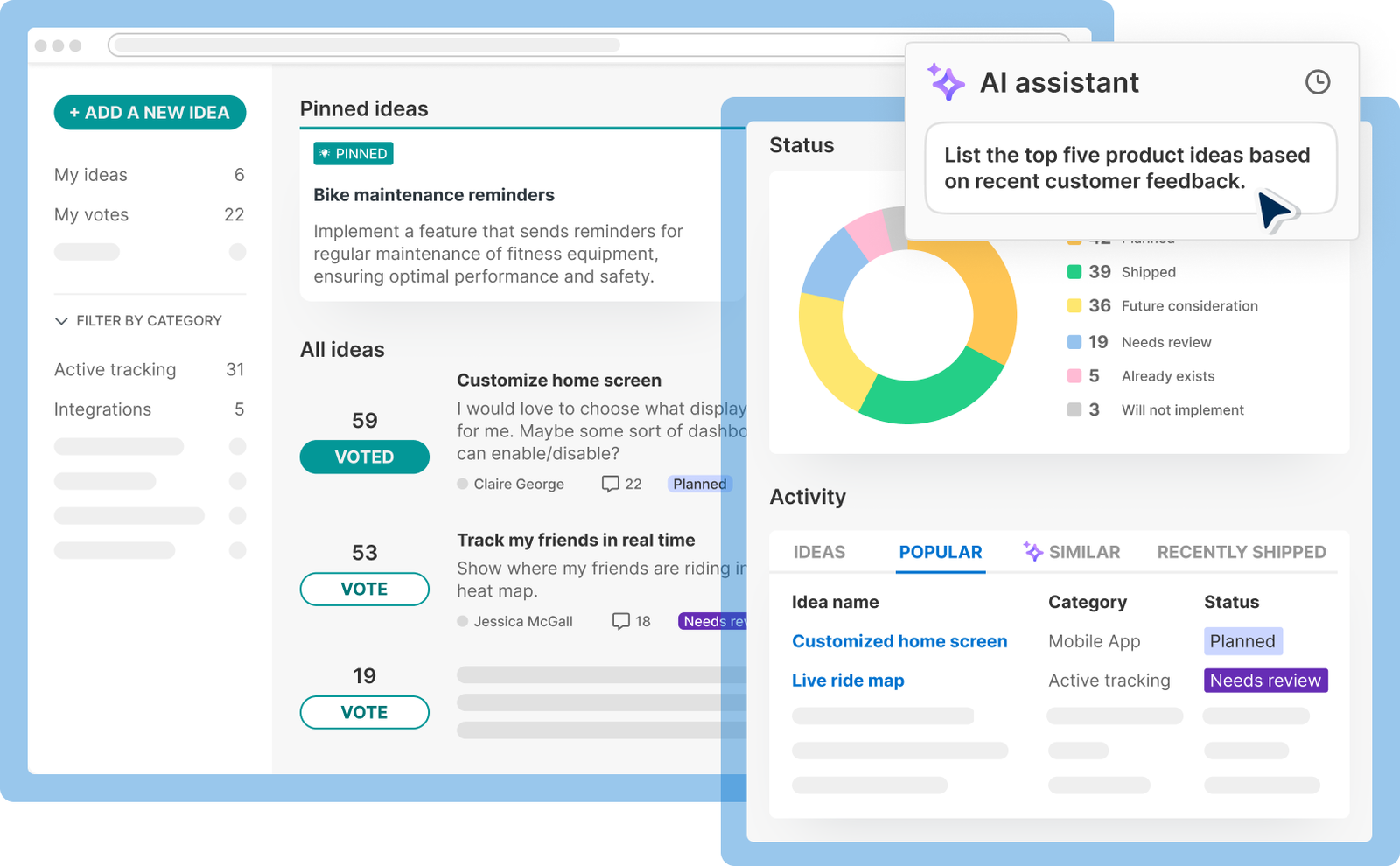
The core idea is thirteen years old: write goals and initiatives first, then link every feature on the roadmap back to one of them. When a VP asks why a feature exists, the answer is a click away instead of a meeting. Around that sit an ideas portal for collecting customer requests, a scoring model for ranking features, Gantt-style release planning with cross-team dependencies and delivery-risk alerts, and what Aha! counts as 75+ prebuilt reports.
Jira, Azure DevOps, Rally, Slack and Google Analytics come with every Roadmaps plan, so the roadmap stays in step with engineering's tickets. Salesforce and Zendesk need the Ideas Advanced add-on on an annual plan. Aha! advertises "40+ tools" on its plan cards and "more than 30" in its FAQ; plan around the lower number.
The weak spot is weight. On G2, where Aha! holds 4.4 out of 5 across roughly 365 reviews, the learning curve is the most-cited complaint. Reviewers describe too many roadmap types to choose from ("we had to learn by trial and error"), custom dashboards that take ages to build, pages that slow down as the portfolio grows, and custom field types such as notes that automations cannot use. Budget weeks of admin setup before the first stakeholder roadmap looks right.
Pricing, and the seat rule that catches small teams
No Aha! product has a free plan. Roadmaps comes in three tiers, priced per user per month.
| Plan | Billed annually | Month to month | Who needs a paid seat |
|---|---|---|---|
| Premium | $59 | $74 | Every user, including people who only look |
| Enterprise | $99 | $124 | People who set strategy, build roadmaps or manage work; reviewers and viewers are free |
| Enterprise+ | $149 | Annual only | Same as Enterprise, plus OKRs, capacity planning, Power BI, audit reporting and full backup export |
Read the last column twice. On Premium, the sales director who opens the roadmap once a quarter costs the same $59 as the product manager who lives in it. Take four PMs sharing a roadmap with 20 colleagues who only view or comment: Premium bills 24 seats, $1,416 a month, while Enterprise bills four, $396. The cheaper plan costs more than three and a half times as much. Contributors and workspace owners need paid seats on every tier.
The ideas portal is the one place headcount is free on every plan: customers who submit and vote on ideas never need a seat. Everything else stacks per user. Discovery Advanced adds $40 (three-user minimum), Ideas Advanced and Knowledge Advanced $20 each, and Develop or Teamwork Advanced $18 on Enterprise, all at annual rates. The pricing page also states plainly that prices rise 3% every year. Invoice billing needs an annual plan.
The trial is 30 days of Enterprise features, integrations included, with no credit card. If you do not buy, the account expires, so export before day 30. Young startups (under 18 months old, fewer than 10 employees, under $1.5M raised) can apply for a startup pack: a heavily discounted plan for up to five users, for 12 months. Aha! does not publish its price.
Elle, and the AI credits that run out
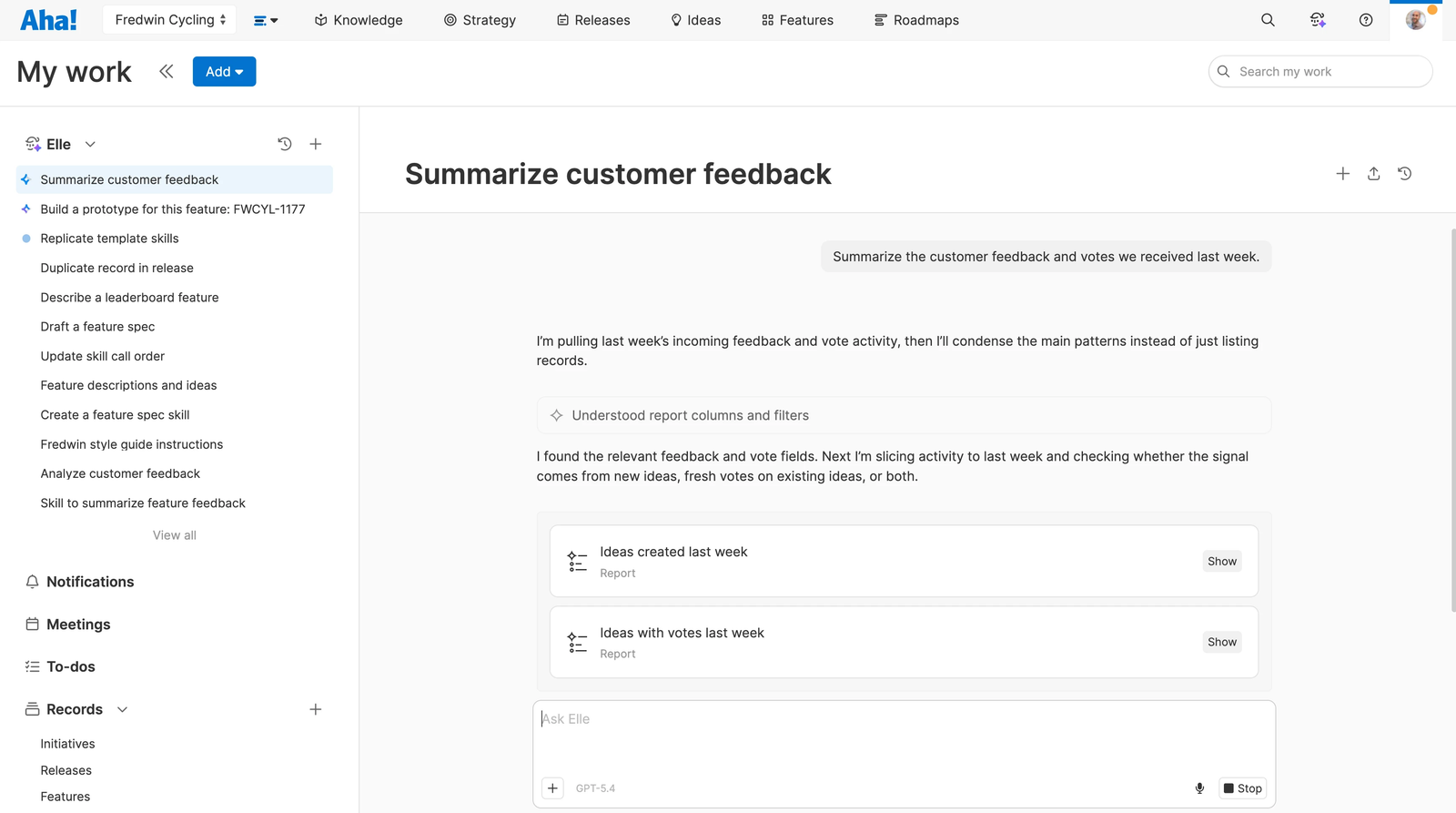
Elle launched in July 2025 and was free during early access. Since October 22, 2025, it runs on credits. A simple prompt costs one; heavier jobs such as transcribing a meeting cost three or more. Roadmaps Premium includes 15 credits per user per month, Enterprise and Enterprise+ 25. Credits pool across the account, which helps, but unused ones do not roll over, and reviewers and viewers cannot prompt Elle at all.
Do the arithmetic before you plan a workflow around it. Five PMs on Enterprise share 125 credits a month, which is about one simple prompt per PM per working day. On Premium it is less than one. Extra packs cost $39 for 250 credits and do not expire while the account is active, and Aha! notes that its credit counts are "subject to change". The trial gives 50 credits to whoever signs up, plus 10 for each extra user who logs in, up to five.
What those credits buy grew fast in 2026: a research agent in March, an MCP server in May that puts Aha! data in front of Claude, ChatGPT or Copilot, connectors to GitHub, Linear, Jira, Sentry and Slack in August, scheduled tasks and a Mac and Windows desktop app in September. Since November, Elle also captures feedback from sales calls and support tickets on its own.
On data: Aha! uses AWS, Google and OpenAI as model suppliers, says account data is never used for training, and contractually bars those three from training on your inputs and outputs. Processing happens in your account's region or the US. An admin can switch AI off for the whole account under Settings → Account → AI control.
Aha! Builder: a second product with a second bill
Builder is not part of Roadmaps. It is sold on its own: Pro $59, Team $99 and Scale $149 per user per month billed annually, or $74 and $124 month to month (Scale is annual only). You describe an app - vision, personas, capabilities, navigation, style - and Elle generates the interface, the database and the code, then hosts the result on Aha!-managed AWS with authentication and a feedback widget built in. Builder credits are separate from the Roadmaps allowance: 100, 150 or 200 per user per month by plan.
The limits that matter are buried in the plan table. Every plan includes one deployed application per account. Zip export and share links that open without an Aha! account work on all plans, but the November feature branches and GitHub sync are Team and Scale only, so the "hand engineering the code" pitch starts at $99 per builder. People giving feedback on a prototype or using a production app cost nothing. Builder's own trial runs 14 days on Scale.
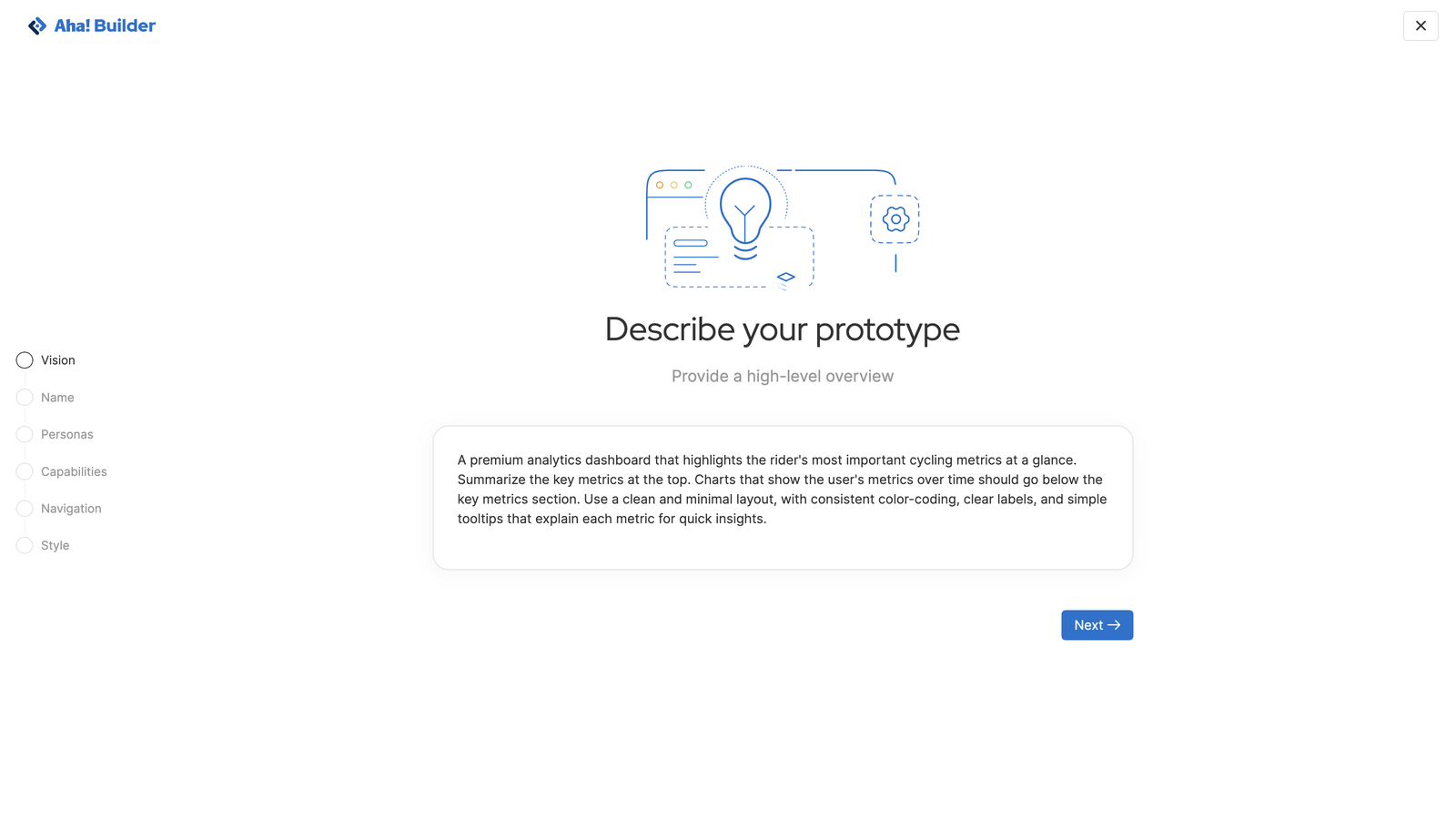
If your PMs already prototype in Figma Make or a general AI app builder, Builder's edge is the link back to Roadmaps: prototype feedback lands in the ideas portal next to the feature it belongs to. Without Roadmaps, that edge shrinks to one more AI builder with a one-app cap.
Support, security and leaving
Support is a real strength. Aha!'s customer success team works 24/7, says it typically answers in under two hours, and charges nothing for it on any plan; Enterprise+ adds a product concierge. Aha! is ISO 27001 certified and keeps data in Virginia or Ireland, though some administration, analytics and support data always stays in the US. Accounts created on or before March 2022 defaulted to the US region, so older EU customers should check theirs.
Leaving is less pleasant. Almost everything exports to Excel or CSV through list reports, but rich-text formatting is stripped on the way out, and the full JSON backup is reserved for Enterprise+ at $149. On Premium or Enterprise, moving years of formatted feature specs to another tool means rebuilding them by hand or working through the REST API. And once an account is cancelled, the terms say its data cannot be recovered. Export first.
Verdict: who should buy Aha!, and who should skip it
Buy Aha! Roadmaps on Enterprise if you run several products, have stakeholders who need to see the roadmap without editing it, and want every feature traced to a goal in reports a board will read. Free viewers, round-the-clock support and the Jira and Azure DevOps sync make $99 a seat defensible at that scale. Add Builder Team only if your PMs genuinely hand prototypes to engineering. The GitHub sync is the reason to pay for it.
Skip it if you are a small team that wants a clean roadmap to share. Premium bills every viewer, Elle's 15 credits per user cover less than a prompt a day, and the setup effort is sized for a portfolio, not one product. A Jira-native team gets most of the idea-to-delivery loop from Jira Product Discovery without leaving Atlassian. A team whose real problem is organising customer feedback should read our Productboard review, and anyone who wants a simple visual roadmap will be happier with a lighter tool such as ProductPlan. Either way, start with the 30-day trial: it is full Enterprise, it needs no card, and within a week it will show whether your team will actually maintain all those links.
Ready to try Aha!?
Visit the official website to see the latest plans, pricing, and special offers.
Get Started - Aha!* Affiliate link - we may earn a commission at no extra cost to you.