Productboard Review: Spark AI, Credit Pricing and Who Should Skip It
Productboard review: Spark AI agent, $19 and $59 per-maker plans, how far AI credits go, Enterprise-only SSO and SCIM, export limits, and when Jira Product Discovery is the better buy.
Expert Review

What changed at Productboard this year
For most of its life Productboard was a place to file customer feedback, link it to features and draw a roadmap from the result. In 2026 the company reworked the product around an AI agent called Spark, and it changed how every customer pays. Spark went into public beta on 27 January 2026 and is now generally available. It replaces two older add-ons, Pulse and Productboard AI, which Productboard's help centre now lists as "Unavailable for purchase" and a "Legacy tool to be retired."
The price change came at the same time. Every account is moving to what Productboard calls v13 pricing: four tiers, a per-maker seat price and a monthly pool of AI credits. Contract customers switched on 8 September 2026. Self-serve customers switch at their first renewal on or after 1 October 2026, and the separate Pulse and AI add-on lines drop off the invoice when they do. New AI Terms and a new subprocessor list followed on 15 November. Prices and limits below were checked on Productboard's own pages on 26 November 2026.
Spark, the AI agent
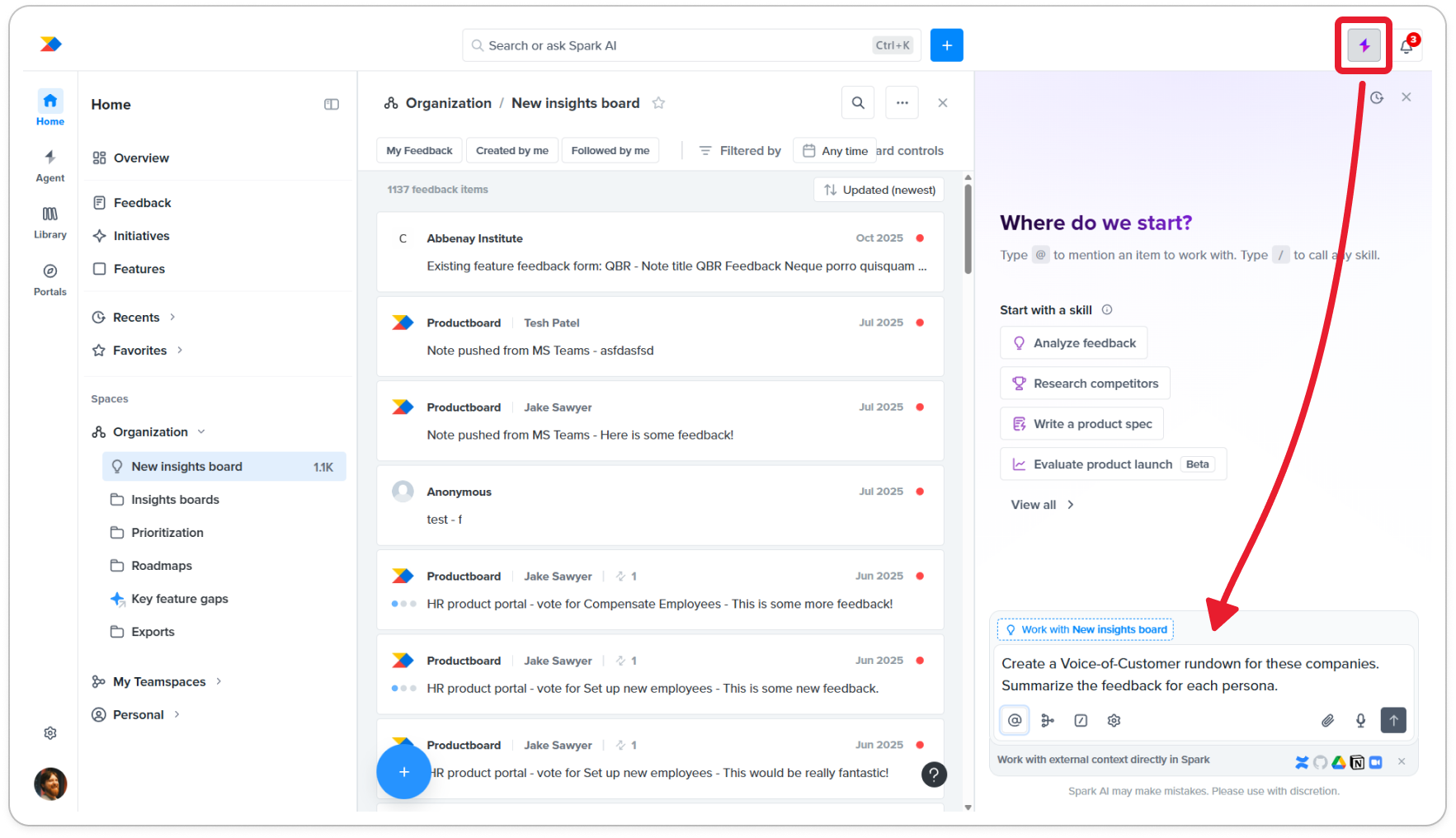
Productboard describes Spark as "an AI agent that understands your product, customers, and market." In practice it is a chat workspace with memory. You can connect it to a GitHub, GitLab, Bitbucket or Azure DevOps repository, and through MCP connectors to tools like Amplitude, Linear, Slack and Notion. It keeps an Agent Knowledge library of findings, topics and customer signals. On top of the chat sit skills (reusable prompts you can write yourself), scheduled tasks and custom instructions.
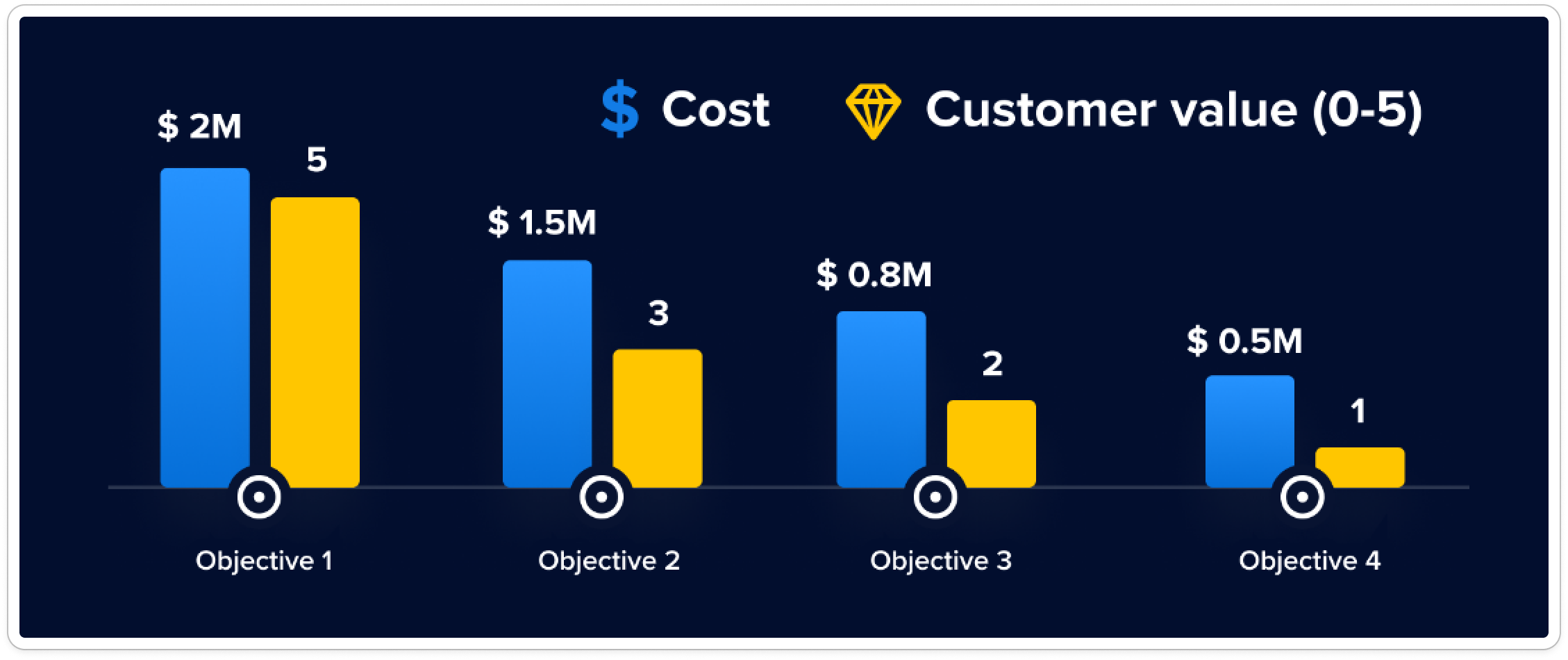
The tasks it is built for are the dull half of product management: competitor research, product briefs, specs grounded in your codebase, stakeholder updates, and summaries of customer feedback.
Which model does the work is not disclosed. The subprocessor list (last updated 15 November 2026) names OpenAI, Anthropic and Google Vertex AI as AI providers, plus Braintrust for AI evaluation and FoundryLabs as a sandbox provider. No page says which of them handles a given task, so assume it can change without notice.
On training, the AI Terms say Productboard "will not use Customer Property to train or fine-tune any proprietary AI models," and the third-party providers may not train on it either. Read one more clause before you sign, though. You grant Productboard a "royalty-free, worldwide, transferable, sublicensable, irrevocable, perpetual license" to use AI-generated content for quality monitoring, statistical analysis and diagnostics. That is not training, but it is a permanent licence to your outputs, and legal teams will want to know.
Feedback inbox and portals
The older core still matters, and it is still what Productboard does better than most. Feedback arrives from Slack, Microsoft Teams, Zendesk, Gong, Intercom and email into one inbox. Each note gets linked to a feature, so a roadmap item carries the customer quotes that justified it. Both paid plans include those integrations plus Amplitude, Mixpanel, Figma and Miro, API access and automations.
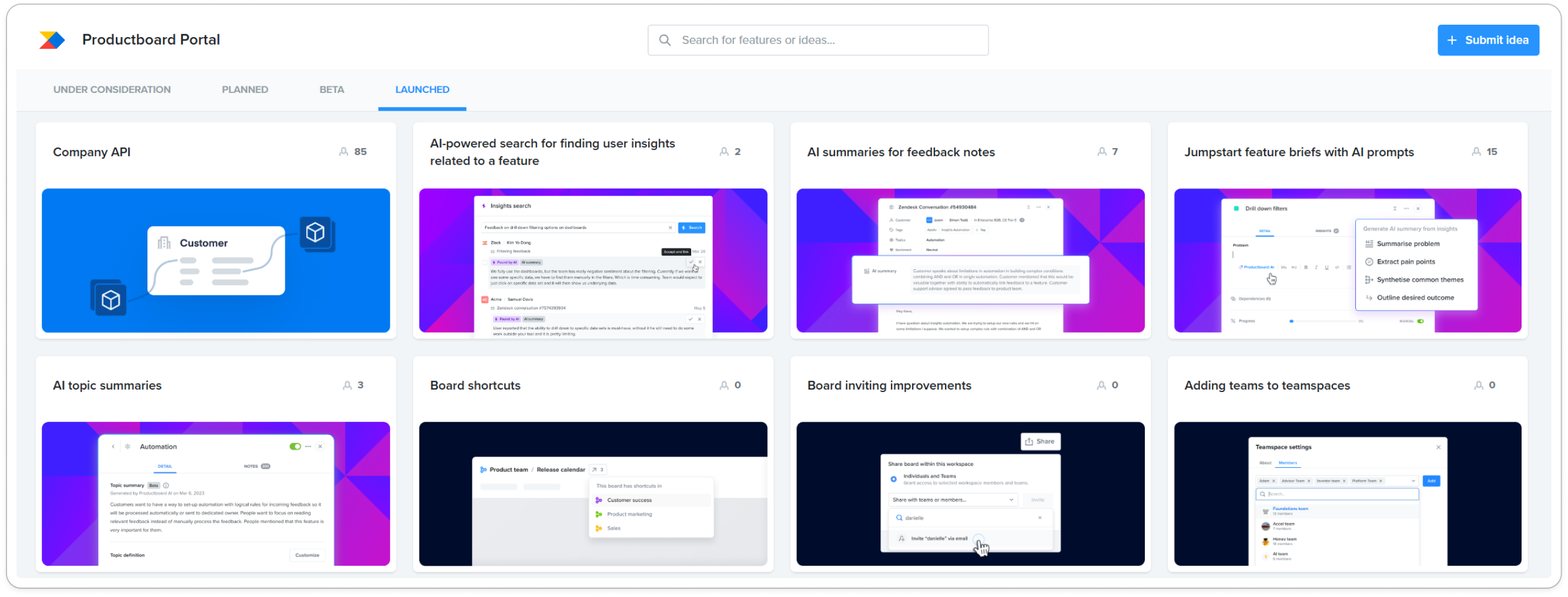
Portals are available on every plan. Customers can vote on and submit ideas without a Productboard account, which keeps them off your seat count. The catch is branding: removing the Productboard name from the portal is an Enterprise feature, and Business gets two product portals.
Pricing
Productboard's own pages disagree on what a new customer can buy. The help-centre pricing FAQ, updated 13 November 2026, lists four plans with prices. The public pricing page shows only Business and Enterprise, without a price on either, and sends Business buyers to "Request demo." The figures below come from the help centre:
| Plan | Price per maker, billed annually | AI credits per month |
|---|---|---|
| Free | $0 | 50 |
| Plus | $19 (about $25 billed monthly) | 250 per maker |
| Business | $59 (about $75 billed monthly) | 500 per maker |
| Enterprise | Custom | 1,500 base + 800 per maker |
You pay for makers, the people with full edit rights on boards. Contributors (sales, support, engineering, design) can add insights and comment on roadmaps, and viewers can only look at timelines, boards and portals. Business caps contributors at 25. Enterprise does not cap them. Productboard does not say outright that viewers are free on the new plans, so ask before you budget for a large read-only audience.
The seat minimum is the other open question. The pricing page says Business and Enterprise need at least five makers. PricingSaaS, a third-party price tracker, logged a change in late July 2026 lowering the Business minimum to two makers for online purchases. Get the number in writing. Removing seats mid-term won't save you money either: the change only takes effect at renewal, with no refund for the rest of the billing cycle.
The trial runs 14 days with 500 credits per maker and needs no credit card. When it ends, the account drops to the Free plan unless you upgrade.
How far the credits go
Credits are pooled across the workspace rather than held per person, so a five-maker Plus team gets 1,250 credits a month to share. All credits, including ones you bought, expire on your monthly renewal date. What happens when they run out depends on how you pay. On self-serve plans "all AI features stop working until credits reset." On contract plans the overage is billed as extra bundles at the end of the month.
Productboard publishes typical credit costs for Spark tasks, and they are the most useful numbers on the site. The medians: a roadmap-planning run is 53 credits, competitive research 33, a spec 29, a product brief 25, a customer-feedback analysis 23, and a stakeholder update 16. A spec can cost anywhere from 3 to 77, and codebase analysis from 10 to 109.
So the Free plan's 50 credits do not cover one median roadmap-planning run. You get about one spec plus one stakeholder update a month. A five-maker Plus team could run around 23 roadmap-planning sessions a month. Top-ups cost $5 for 50 credits monthly or $60 for 600 a year. Both work out to 10 cents a credit, so a typical roadmap-planning run costs about $5.30 at top-up rates. Suggestions on individual entities use no credits.
What Enterprise keeps to itself
Business covers the day-to-day work. Enterprise is where the governance features are, and some of them are things a mid-size company assumes it gets by default. SAML SSO is Enterprise-only, as are SCIM provisioning, audit logs, IP allow-listing and custom roles. Google SSO and MFA are on both paid plans. Objectives work on every plan, but nesting them into a hierarchy needs Enterprise. So do required fields, a white-labelled portal and AI Themes.
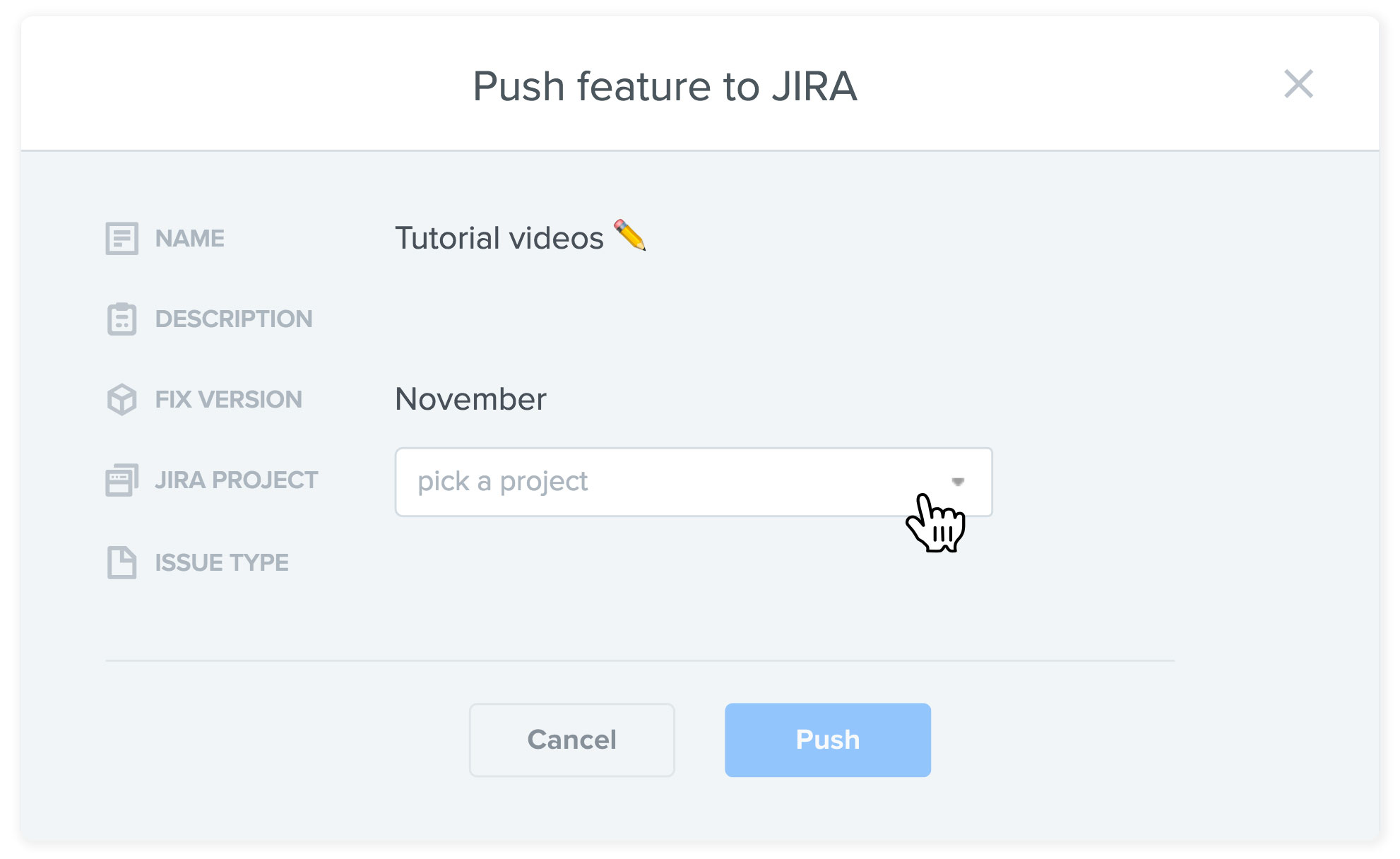
Integrations are counted, too. Free and Plus get one Jira integration, Business gets five and Enterprise is unlimited. Azure DevOps follows the same pattern at five on Business, and Jira on your own servers needs Enterprise. A company with six Jira instances is an Enterprise customer whether it wanted to be or not.
Support, cancellation and export
There is no cancel button. You end a subscription by emailing [email protected]. Support advisors work Monday to Friday, and Business and Enterprise get prioritised email support, with faster responses and onboarding help reserved for Enterprise. Productboard publishes no response-time targets for any plan.
Leaving takes more work than joining. Makers and admins can export features and notes as CSV and roadmaps as PNG, and the public API covers the rest. But the help centre is blunt about a full export: "There is currently no way to do this efficiently." You collect the data piece by piece. Worse, feedback that came in through Slack, Zendesk and Intercom exports without its body text, so years of customer quotes come out as titles and links. TrustRadius reviewers list that lack of export alongside per-user cost as their main complaints. Capterra reviewers, who rate it about 4.7 out of 5, mostly gripe about price once contributor accounts multiply and about search that only finds a feature if you type its exact name.
Verdict: who should buy it, and who should skip it
Buy Productboard if you have five or more product managers, feedback scattered across Slack, Zendesk and Gong, and engineering in Jira or Azure DevOps. The link from customer quote to feature to roadmap is still the best in this category. Spark adds an agent that drafts specs against your codebase. On Business at $59 per maker billed annually, five makers cost $3,540 a year before any credit top-ups.
Skip it if you are a small team or already run on Jira. Jira Product Discovery is free for up to three creators and $10.50 per creator a month on Standard, so five creators cost $630 a year at the monthly rate against $1,140 for Productboard Plus. You lose Spark and the feedback inbox but keep ideas and voting inside Jira. Also skip it if you need SAML SSO or SCIM and cannot get an Enterprise quote approved, because no other Productboard plan has them. And if leaving cleanly matters, remember that the export will strip the body text from much of your feedback.
Ready to try Productboard?
Visit the official website to see the latest plans, pricing, and special offers.
Get Started - Productboard* Affiliate link - we may earn a commission at no extra cost to you.