Ecwid Review: The Free Plan Is Gone, and Variations Cost $49 a Month
Ecwid review, checked October 2026: $5 Starter replaced the free plan, Venture $29-$35, Business $49-$65 for variations and subscriptions, Lightspeed Payments fees, export limits and who should pick Shopify instead.
Expert Review

What changed: no free plan, three price rises
For a decade the first thing anyone said about Ecwid was "free forever". That sentence is no longer true. Ecwid's pricing page still showed a "Free Plan Forever" in February 2025; by mid-March 2025 it had been replaced by a $5 Starter plan, and the help centre now says that a new account chooses "between four paid plans". Prices on the paid tiers have gone up twice since, most recently on March 2, 2026.
Ecwid itself has not changed shape. It is still a shopping cart you paste into a site you already run (WordPress, Wix, Joomla, Weebly or a hand-coded page), or run on its own one-page Instant Site. Lightspeed, the Canadian point-of-sale company, bought it in 2021 for about $500 million, and the terms on ecwid.com now redirect to Lightspeed's service agreement. What has changed is the bill, and that is what this review is about. Everything below was checked in October 2026 against Ecwid's pricing page and help centre.
| Plan | Sept 2024 | Mar 2025 to Feb 2026 | Since Mar 2, 2026 |
|---|---|---|---|
| Free / Starter | Free $0 | Starter $5 | Starter $5 |
| Venture | $25 ($21 annual) | $30 ($25) | $35 ($29) |
| Business | $45 ($39) | $55 ($45) | $65 ($49) |
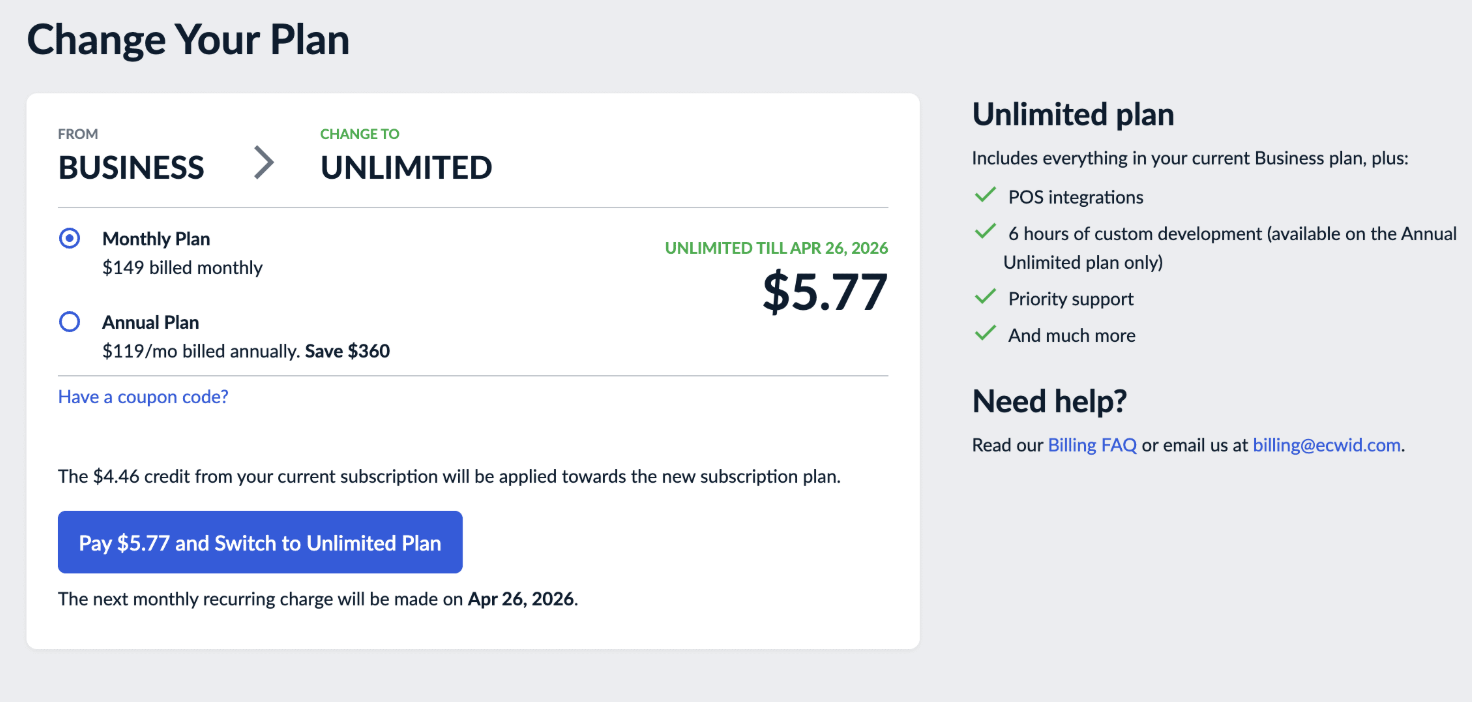
| Unlimited | $105 ($89) | $130 ($105) | $149 ($119) |
On monthly billing that is roughly 40% more for every paid tier in eighteen months. Venture went from $25 to $35, Business from $45 to $65, Unlimited from $105 to $149.
Pricing and plan limits
Prices are the same figures in USD, EUR and GBP, before tax. Ecwid charges no setup fee and no transaction fee of its own on any plan; your payment processor still takes its cut.
| Plan | Monthly | Billed annually | Products |
|---|---|---|---|
| Starter | $5 | $5/mo | 10 |
| Venture | $35 | $29/mo ($348/yr) | 100 + digital goods |
| Business | $65 | $49/mo ($588/yr) | 2,500 |
| Unlimited | $149 | $119/mo ($1,428/yr) | Unlimited |
The page advertises "save 16%" on annual billing, but the real discount differs per plan: about 17% on Venture, 25% on Business and 20% on Unlimited. If you are going to land on Business anyway, annual billing saves $192 a year.
Starter deserves a plain description. Ten products (it was five in October 2025), two categories, no custom domain (you get a company.site address), no CSV export and no REST API. It is a trial with a $5 entry fee, not a plan to run a shop on. Storage and bandwidth are unlimited on every tier, and digital files can be up to 25 GB each from Venture up.
The real price is the Business plan
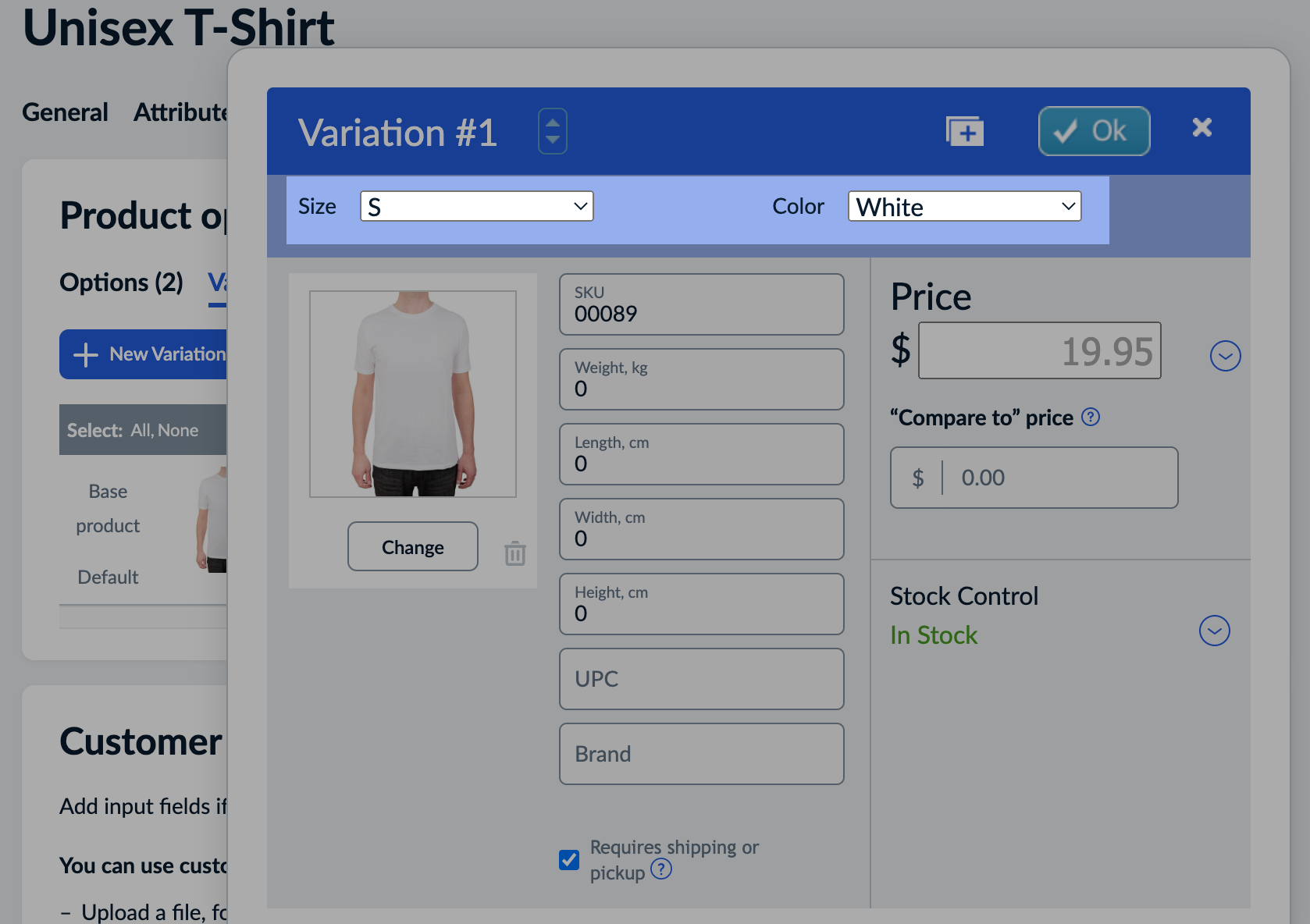
Venture looks like the sensible middle tier until you read the plan availability notes in the help centre. Product variations, the thing that lets one T-shirt come in small, medium and large with its own stock count per size, are "Business, Unlimited" only. So are recurring subscriptions, abandoned cart recovery emails, product reviews, customer group discounts, wholesale pricing, a multilingual storefront and creating or editing orders by hand.
That list covers most of what a clothing, coffee or cosmetics shop needs in its first month. For those stores Ecwid costs $49 a month on an annual plan or $65 month to month. Venture at $29 suits a narrower set of sellers: one-size products, digital downloads, or a small catalog sold mainly through Facebook and Instagram, which Venture includes.
Staff accounts sit behind the same gate. Business gives you two, Unlimited removes the cap, and Venture and Starter have none, so a second person working the store means sharing a login. Amazon, eBay and Walmart listing also starts at Business, and the help centre warns that those marketplace apps carry "additional monthly fees" after their trial.
Embedding vs the Instant Site
Embedding is still where Ecwid is unusual. You add a code snippet or the WordPress plugin, and the catalog, cart and checkout appear inside pages you already rank with. Your blog, theme and hosting stay put. Shopify can do a buy button, but a whole store living inside an existing WordPress or Wix site is Ecwid's home ground, and it works on every plan including Starter.
One condition is easy to miss: if the store is embedded on your own site, you supply the SSL certificate. Most hosts include one now, but a decade-old static site may not.
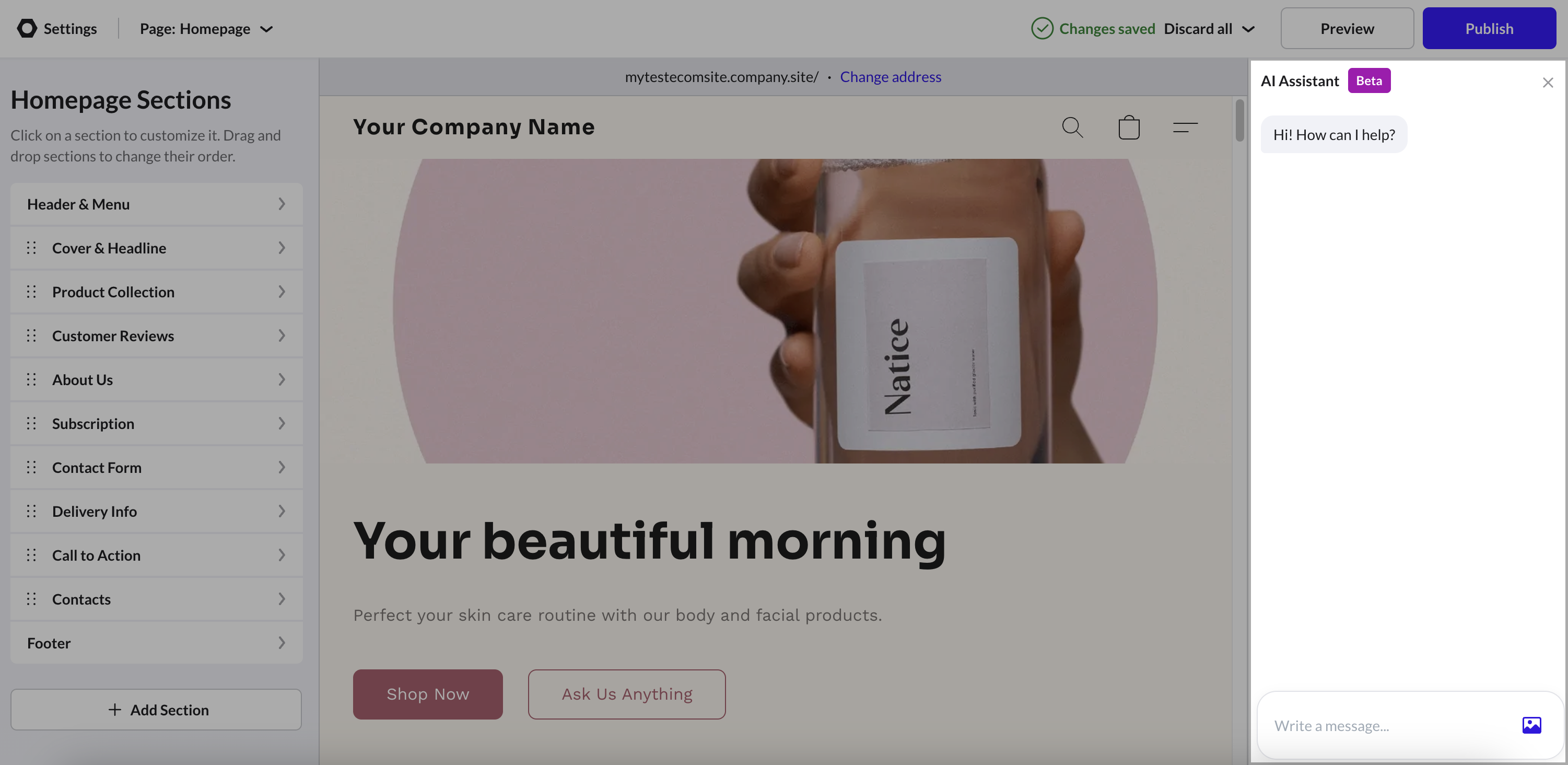
The Instant Site is the fallback for people with no site at all. It gets 3, 10 or 100 extra pages depending on plan, and 2026 has been busy for it: premium themes in January, an AI text assistant in beta in May, a blog in June and compact product pages in July. It is still a single-store page builder, though, not a rival to a full theme system. If the Instant Site is your only reason to pick Ecwid, compare it against Shopify first.
Payment fees and POS
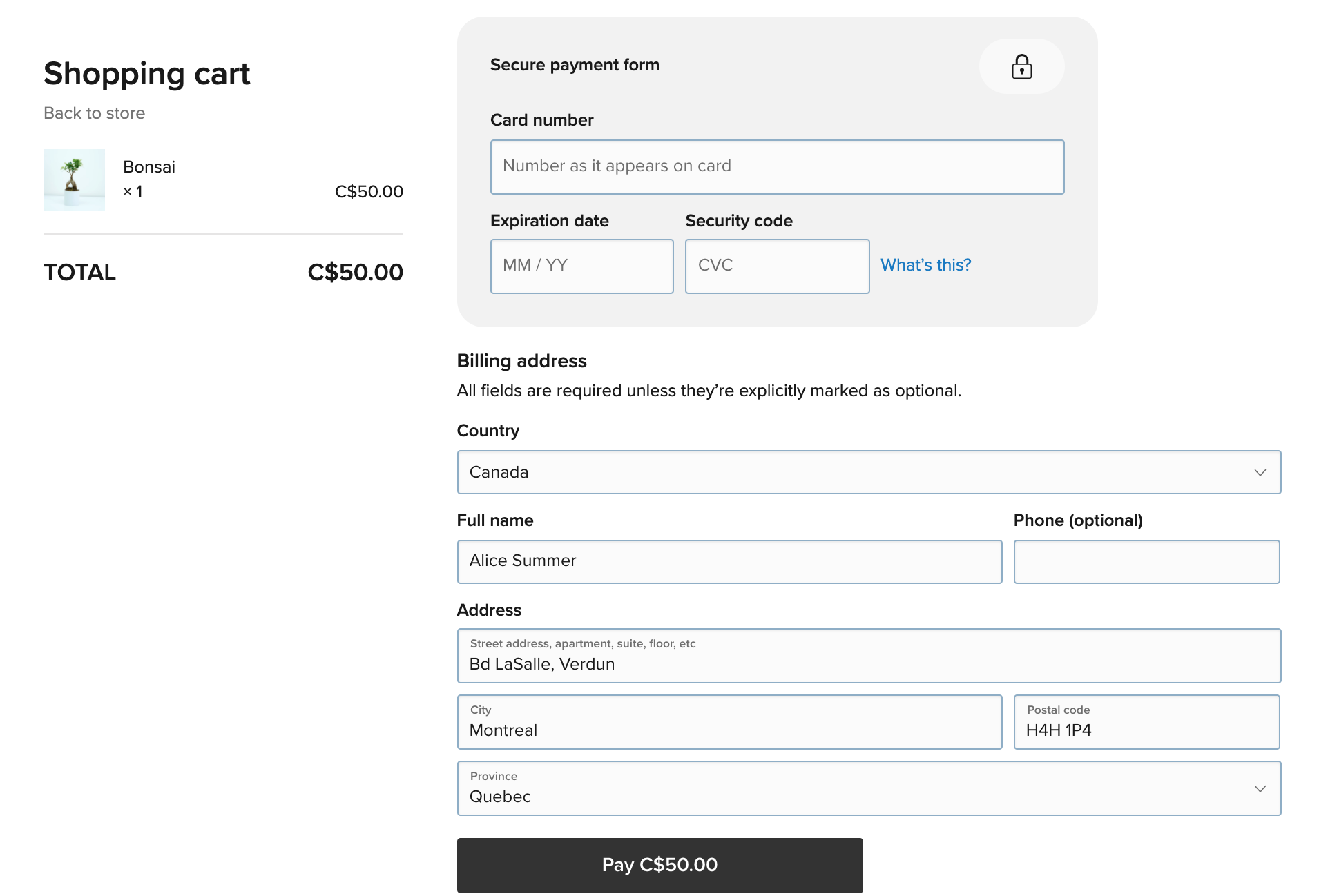
With no Ecwid transaction fee, your cost per sale is whatever the processor charges. Ecwid's own processor, Lightspeed Payments, runs in seven countries:
| Country | Online card rate |
|---|---|
| United States | 2.9% + $0.30 |
| Canada | 2.9% + C$0.30 |
| United Kingdom | 1.9% + £0.25 |
| Ireland, Netherlands, Belgium | 1.9% + €0.25 |
| Australia | 2.31%, no fixed fee |
Payouts arrive "within 1 business day". Outside those seven countries you connect Stripe, PayPal or another gateway. PayPal Checkout and Venmo cost 3.49% plus a fixed fee in the US, so a $40 order paid through PayPal costs about 24 cents more in percentage alone than on Lightspeed Payments in the US, before PayPal adds its fixed fee.
POS is where Ecwid's own pages disagree. The pricing card ties "POS integration" to Unlimited. The help centre is more precise: Lightspeed Retail (X-Series) connects from Business, while Square and Clover sync only on Unlimited at $119 to $149 a month. If you already run a Lightspeed till, Business is enough. A Square shop pays the top price to keep stock in sync.
Export and leaving
Getting your data out is better than average, with one catch. From Venture up you can export the catalog, orders, customers, gift cards, abandoned carts and redirects to CSV, and the product export carries "all the available details on all the products and categories". The REST API is also Venture and up. Starter can do neither, so ten products typed into a $5 store stay there unless you upgrade or copy them by hand.
If you only need to stop selling for a season, there is a Suspension plan at $12.50 a month. The storefront stays browsable but customers cannot place orders, which keeps your URLs and catalog alive through a slow winter without paying for Venture.
Support and what users complain about
The help centre says email and live chat are open on every plan, chat "24 hours, Monday-Friday". The pricing card shows only email for Starter. Phone support exists as a call-back on Business and Unlimited, 2PM to 10PM Pacific, weekdays, English only. Ecwid publishes no response times for any tier, and nothing covers weekends.
Ratings split depending on who you ask. Capterra shows 4.6 out of 5 from 582 reviews, with ease of use also at 4.6. Trustpilot, which draws more recent and angrier reviewers, sits at 2.8 from 435. The same three complaints keep coming back there: price rises, the lost free plan, and a sense that things slipped after the sale ("it went south when Lightspeed purchased", a five-year customer wrote in April 2026). The sharpest one is about tax. "Useless if you sell to the EU. Doesn't handle VAT properly," a June 2026 reviewer wrote. Ecwid added French B2B e-invoices in September 2026, which helps one market, but EU sellers should test invoicing on a paid month before moving a catalog.
A Capterra reviewer put the value problem bluntly back in 2024: "To match the cheapest Shopify I have to take Ecwid's most Expensive plan." That overstates it today, since Business covers most of the gap, but the direction still holds.
Verdict
Buy Ecwid if you already have a WordPress, Wix or custom site that brings traffic and you want a cart inside it without moving anything. It also fits a small catalog with no size or colour options on Venture at $29 a month, anyone selling digital files up to 25 GB, and shops that already run Lightspeed Retail at the till. No transaction fee and a full CSV export make it a low-risk place to start.
Skip it if your products come in variants or you want subscriptions, because that puts you on Business at $49 to $65 a month, and at that price Shopify gives you a bigger app and theme ecosystem. If your site is already WordPress and the monthly bill is what bothers you, WooCommerce costs nothing for the plugin itself. EU sellers who need clean VAT invoicing should test Ecwid hard first. And Starter is not a free plan with a price tag: at ten products, two categories and no export, treat the $5 as the cost of a demo.
Ready to try Ecwid?
Visit the official website to see the latest plans, pricing, and special offers.
Get Started - Ecwid* Affiliate link - we may earn a commission at no extra cost to you.