Shopify Review: A Complete Look at the E-Commerce Platform
Shopify review: the all-in-one e-commerce platform for building an online store — store builder, Shopify Payments, Shop Pay, multichannel selling, AI tools, pricing, pros and cons.
Expert Review

What is Shopify?
Shopify is an all-in-one, hosted e-commerce platform that lets anyone build and run an online store without managing servers, writing code, or stitching together separate tools. From a single admin you design a storefront, list products, take payments, manage inventory, and fulfill orders. Because it is fully hosted, Shopify handles the hosting, security, updates, and the underlying infrastructure — so you can focus on selling rather than on keeping a website online.
Founded in 2006 after its creators tried to sell snowboards online and found the existing software lacking, Shopify has grown into one of the largest commerce companies in the world, powering millions of businesses across roughly 175 countries. It serves the full spectrum of sellers: a first-time maker testing an idea, a fast-growing direct-to-consumer brand, and enterprise retailers running high-volume, omnichannel operations on Shopify Plus. Over the years it has expanded far beyond a simple store builder into integrated payments, point of sale, a vast app ecosystem, and a growing layer of AI that helps write, design, and run the business.
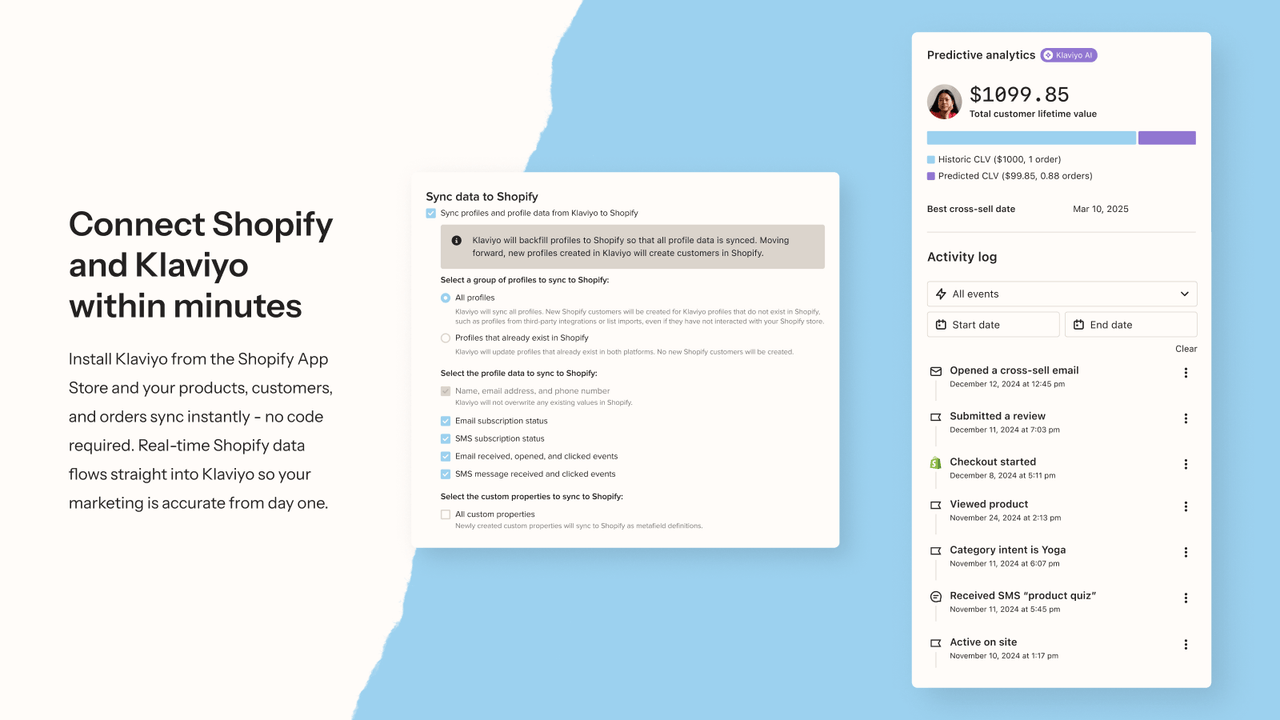
Benefits of Using Shopify
- Fastest way to launch: pick a theme, add products, connect a payment method, and you can have a real, sellable store live in an afternoon — no developers or hosting setup required.
- Fully hosted and secure: Shopify manages hosting, SSL, PCI compliance, and platform updates, so your store stays fast and secure without you patching anything.
- Everything in one place: storefront, checkout, payments, inventory, orders, shipping, and marketing all live in one admin, replacing a patchwork of disconnected tools.
- Huge app ecosystem: with thousands of apps in the Shopify App Store, you can bolt on almost any capability — reviews, subscriptions, email, upsells — without custom code.
- Sell everywhere: the same catalog powers your website, in-person POS, social media, and marketplaces, keeping inventory and orders in sync across every channel.
- Scales with the business: from a $5 starter plan to enterprise-grade Shopify Plus, the platform grows with you, adding lower fees, reporting, and controls as volume rises.
Key Features of Shopify
-
Online store builder and themes
Shopify's store builder uses a visual, drag-and-drop editor so you can lay out pages without touching code. The Online Store 2.0 architecture introduces flexible sections and blocks you can add, reorder, and customize on any page, plus metafields for richer product content. A library of free and paid themes gives you a professional, mobile-responsive starting point, and everything can be tailored to your brand's colors, fonts, and layout.

-
Integrated payments and Shop Pay checkout
Shopify includes Shopify Payments, its built-in payment processor, so you can accept credit cards and digital wallets out of the box without a third-party gateway. Its checkout is a major strength: Shop Pay offers an accelerated, one-tap experience for returning shoppers, remembering their details across any Shop Pay-enabled store. That speed measurably lifts conversion, which is why checkout is one of the platform's most valued assets.
-
Product, inventory, and order management
From the admin you create products with variants (size, color, material), track stock levels across multiple locations, and organize your catalog with collections and tags. When orders come in, Shopify centralizes fulfillment, shipping labels, tracking, refunds, and customer communication. Real-time inventory keeps quantities accurate across every sales channel, so you avoid overselling and always know what is in stock.
-
Multichannel selling and the App Store
Shopify is built to sell wherever customers are. Shopify POS takes the same catalog into physical stores and pop-ups; social and marketplace channels connect your products to Instagram, TikTok, Facebook, Google, and more; and it all reports back into one dashboard. When a native feature is missing, the Shopify App Store — with thousands of apps — adds subscriptions, reviews, loyalty, email marketing, and other capabilities in a few clicks.
-
Shopify Magic and Sidekick AI
Shopify has woven AI across the platform. Shopify Magic generates product descriptions, page copy, email subject lines, and other text tuned to your store, while AI image editing helps clean up product photos. Sidekick is a conversational AI commerce assistant built into the admin that can answer questions about your business, help set up and edit your store, and surface insights from your data — reducing the manual work of running and growing a shop.
Pricing of Shopify
Shopify is a monthly subscription, and choosing annual billing is noticeably cheaper than paying month to month. Plans range from a bare-bones tier for selling through links to full-featured plans and enterprise Shopify Plus. Note that a small transaction fee applies on every sale unless you use Shopify Payments, and higher plans come with lower credit-card processing rates.
- Starter: around $5/month — for selling through social media, chat, and shareable product links rather than a full standalone online store. A cheap way to start taking orders.
- Basic: roughly $29/month billed annually (about $39 month to month) — a complete online store with unlimited products, 24/7 support, and up to 10 inventory locations. The usual starting point for new merchants.
- Shopify (Grow): around $79/month billed annually — lower card rates, professional reports, and more staff accounts for a growing business processing steady volume.
- Advanced: roughly $299/month billed annually — the lowest standard card rates, custom report building, calculated third-party shipping rates, and duties at checkout for teams selling at scale.
- Plus: enterprise pricing from about $2,300/month — Shopify Plus adds high-volume capacity, deep checkout customization, more automation, and priority support for large brands.
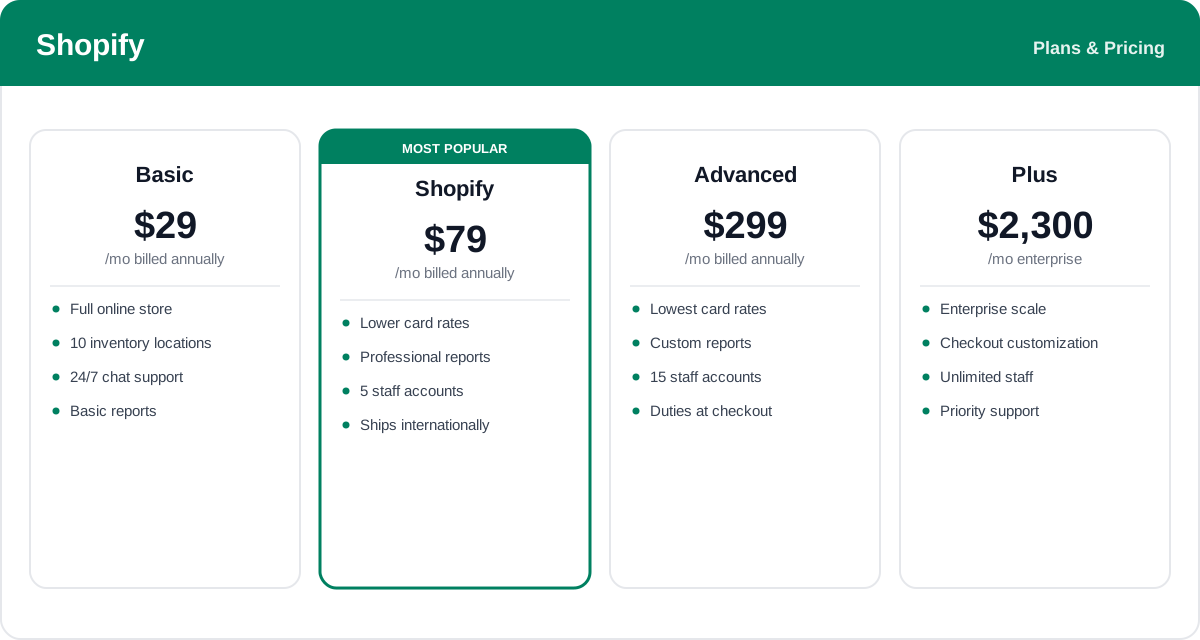
Prices, fees, and plan details change over time and vary by region and billing period — check the official Shopify pricing page for current rates and exactly what each plan includes.
Real-World Use Case Analysis
New and Solo Merchants
Launching a first store fast: a maker, side-hustler, or small shop can pick a theme, add a handful of products, and be live the same day. Shopify Payments handles the money, Shop Pay speeds up checkout, and the Starter or Basic plan keeps costs low while the business finds its footing — no developer or hosting bill required.
Scaling DTC Brands
Growing a direct-to-consumer business: a brand doing real volume leans on lower card rates, professional reporting, and apps for subscriptions, reviews, upsells, and email. Multichannel selling pushes the same catalog to Instagram, TikTok, and Google, while inventory stays synced — so marketing spend turns into orders without operational chaos.
Enterprise and Omnichannel Retail
Running high-volume, in-store and online: larger retailers use Shopify Plus and Shopify POS to unify their website, physical locations, and marketplaces on one system. Checkout customization, automation, and enterprise-grade capacity let them handle traffic spikes and complex catalogs while keeping a single, accurate view of inventory and customers across every channel.
Pros and Cons of Shopify
Advantages
- The fastest, easiest way to launch a professional online store — no coding or hosting to manage.
- Fully hosted, secure, and PCI-compliant, with Shopify handling updates and infrastructure.
- Best-in-class checkout, and Shop Pay's accelerated one-tap flow measurably improves conversion.
- Massive app ecosystem plus multichannel selling (POS, social, marketplaces) from one catalog.
- Built-in AI (Shopify Magic and Sidekick) speeds up copy, design, and day-to-day store management.
- Scales smoothly from a $5 plan to enterprise Shopify Plus as the business grows.
Disadvantages
- Monthly subscription plus paid apps and premium themes can stack up into a meaningful ongoing cost.
- Transaction fees apply on every sale unless you use Shopify Payments, cutting into margins.
- Some built-in features are intentionally limited, pushing merchants toward paid third-party apps.
- Less low-level control than a self-hosted, open-source option like WooCommerce.
- Deep customization beyond themes and apps can require Liquid (its templating language) or developer help.
Final Thoughts on Shopify
Shopify remains the benchmark for building an online store, and it earns that position by removing almost every technical barrier between an idea and a live, selling shop. Its combination of a polished store builder, an industry-leading checkout in Shop Pay, integrated payments, true multichannel selling, and a deep app ecosystem means most businesses can run their entire operation on one platform — now with AI tools that shoulder a growing share of the busywork. The trade-offs are real: the subscription and app costs add up, transaction fees bite if you avoid Shopify Payments, and open-source alternatives offer more raw control. But for the vast majority of merchants — from first-time sellers to enterprise brands — Shopify offers the best balance of speed, reliability, and room to grow, and the low-cost entry plans make it easy to launch and test before committing to more.