Porter Metrics Review: $15 per Account, Every Destination Included - Mind the Tier Cliffs
Porter Metrics review: per-account pricing from $15/month, the tier cliffs, the free plan's 30-day cap, BigQuery limits, the MCP server for Claude and who should skip it.
Expert Review

What Porter actually charges for
Most marketing-data connectors sell you a bundle of sources and then meter the accounts inside each one. Porter Metrics flips that. It bills one thing only: connected accounts. One Meta ad account, one GA4 property, one Shopify store, one Instagram profile. Each is one slot, and the connector it comes through does not matter. Once an account is connected it feeds every report, every user and every destination at no extra charge, so the same GA4 property can sit in a Looker Studio dashboard, a Google Sheet, Power BI and a Claude chat for the one price.
The counting rules are generous in two places you would not guess. A Google Ads manager account (MCC) is not billed at all, only the ad accounts under it. And every 10 Google Business Profile locations count as a single account, which matters a lot to anyone reporting on a franchise or a multi-site clinic. A connected account counts whether or not it spent that month; disconnect it and the slot frees up.
That is the whole pitch against Supermetrics, which we reviewed yesterday: there, $39 buys two sources and two accounts. At Porter, $30 buys two accounts on any connectors and $39.99 buys three, with Looker Studio, Sheets, Power BI and the AI chats all included.
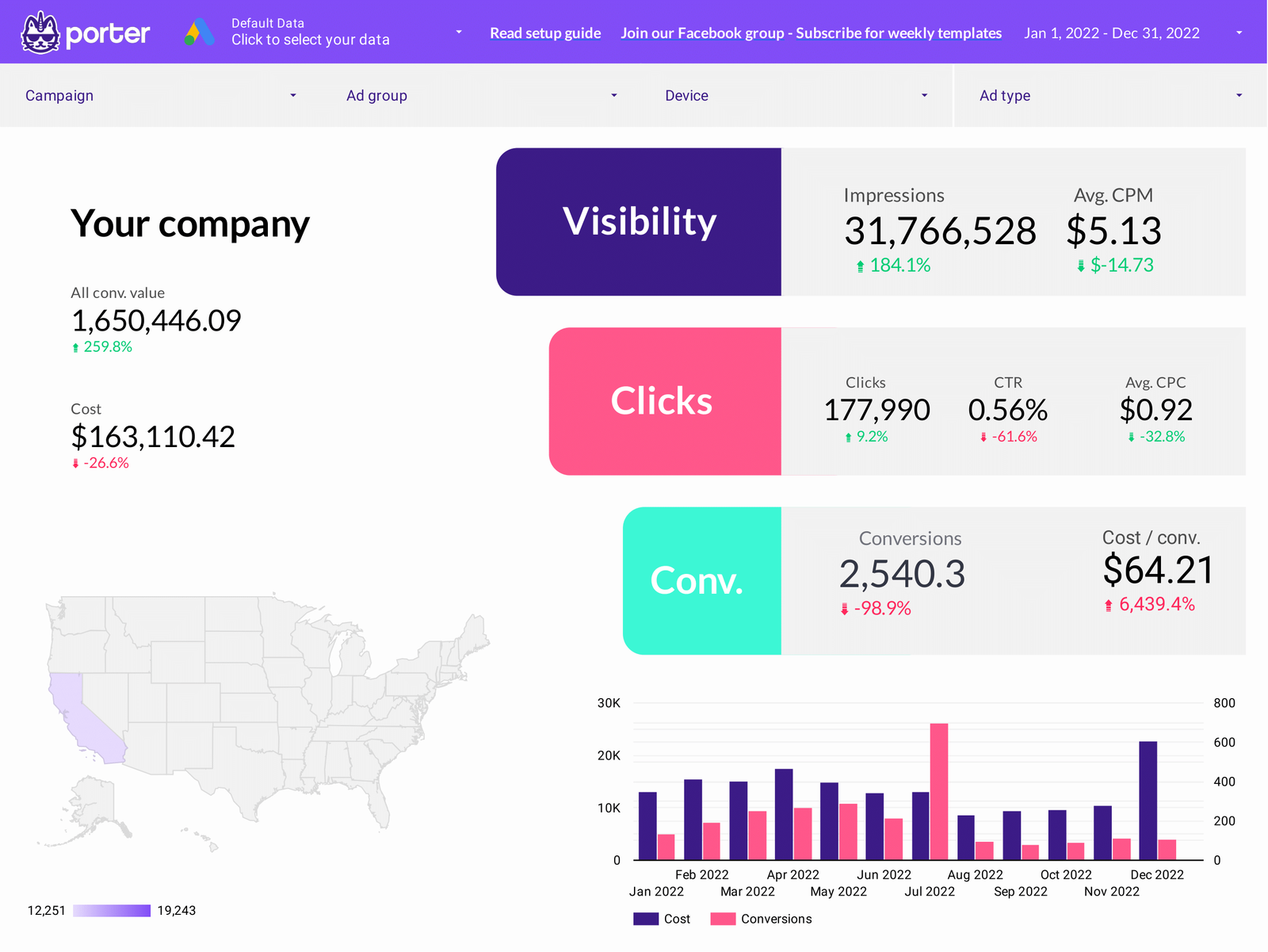
Pricing, tier by tier
These are the monthly list prices from Porter's pricing page, checked on October 21, 2026. Annual billing takes about 17% off, which Porter describes as two months free, paid upfront.
| Connected accounts | Monthly price | Effective per account |
|---|---|---|
| 1 | $15 | $15 ($12.50 annually, $150/yr) |
| 2 | $30 | $15 |
| 3 | $39.99 | $13.33 |
| 4 | $40 | $10 |
| 5-12 | $8 per account ($40-$96) | $8 |
| 13-20 | $100 flat | $7.69 down to $5 |
| 21-39 | $5 per account | $5 |
| 40-49 | $4.50 per account | $4.50 |
| 50-69 | $4 per account | $4 |
| 70-99 | $3 per account | $3 |
| 100-199 | $2.70 sliding to $2.10 | $2.70-$2.10 |
| 200+ | $2 per account | $2 |
The table has cliffs. Four accounts cost $40 and so do five. Twelve cost $96, thirteen cost $100, and twenty still cost $100. Higher up, the per-account rate appears to apply to every account rather than only the ones above the threshold (the help center's tier totals read that way), which produces odd results: 39 accounts at $5 is $195 a month, while 40 at $4.50 is $180. At 69 accounts you would pay $276; add a seventieth and the bill drops to $210. If you sit just under a boundary, connecting one more account can lower the invoice.
There is a 14-day trial with full access and no card, and leaving a review buys another 14 days. After that you fall to the free plan, and here Porter's own pages disagree. The pricing page says the free plan includes unlimited connected accounts with 30 days of history (15 days in AI chats). The help center says 3 connected accounts, and that if your trial ends with more, Porter keeps the 3 you used most recently. Both agree on the 30-day history cap and on a Porter badge in free reports. Plan for 3 and treat anything more as a bonus.
About 30 sources, ten destinations
Porter quotes its own connector count as 25, 26+, 30+ and 36 on different pages, so call it roughly 30. The list is heavy on paid media: Meta Ads, Google Ads, TikTok Ads, LinkedIn Ads, Reddit Ads, Pinterest Ads, Microsoft Ads, Apple Ads, X Ads, Google DV360 and StackAdapt. Around that sit GA4, six social sources, Shopify, Amazon Seller, Northbeam and Triple Whale for ecommerce, HubSpot, Klaviyo, Mailchimp and ActiveCampaign, plus Search Console and Google Business Profile. The list Porter publishes for its Claude connector adds Stripe, WooCommerce, TikTok Shop, Snowflake and PostgreSQL, the last three read-only.
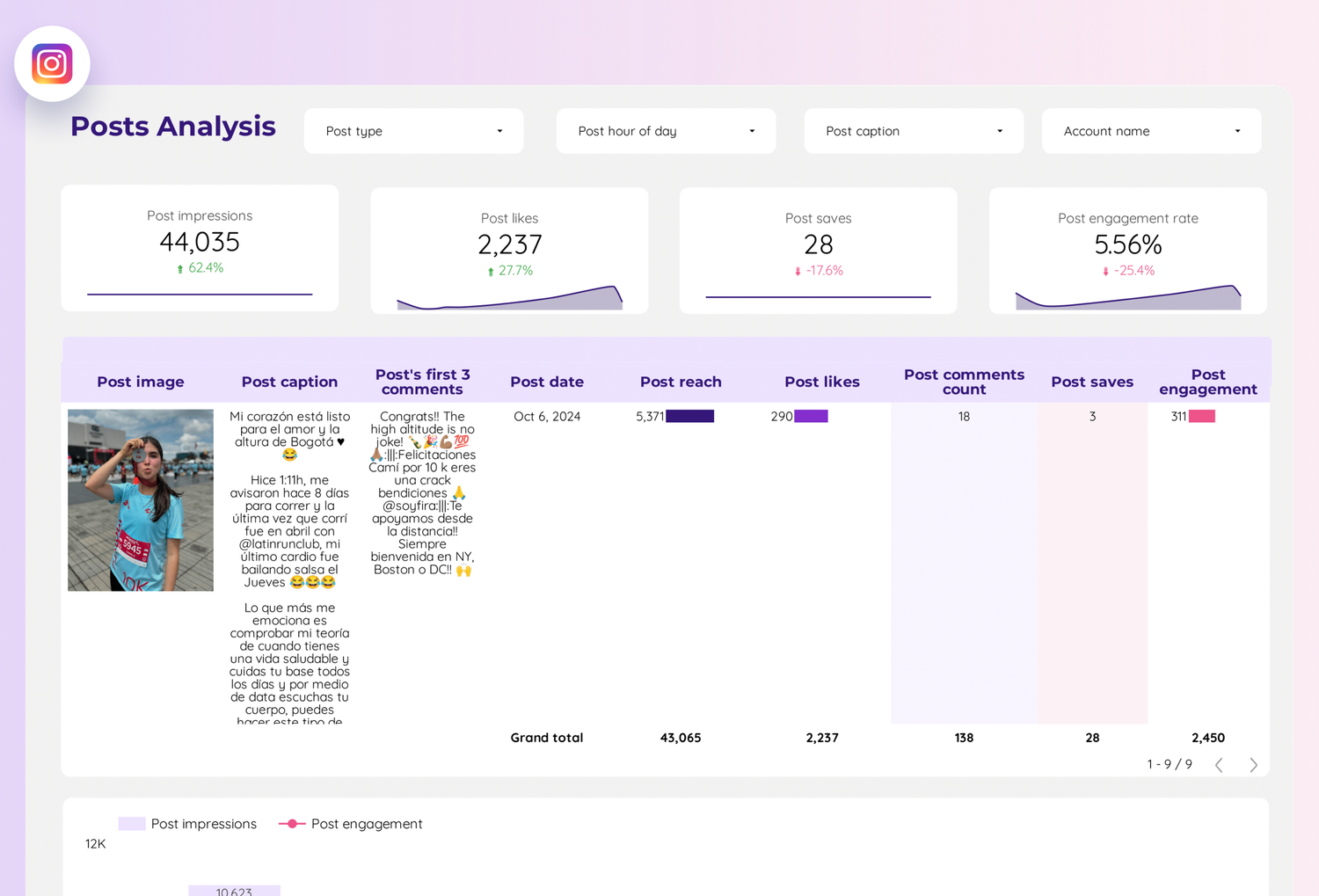
That covers a typical agency client running ads on Meta and Google with GA4 behind them. It does not cover the long tail. Porter's founder-written overview page says so plainly: for 100+ connectors, use Funnel, Windsor or Hevo. If a client lives on Amazon DSP, Criteo or a regional ad network, check the list before anything else.
Destinations are Looker Studio (which Porter now calls Google Data Studio, after Google's rename), Google Sheets, Power BI, Claude, ChatGPT, Gemini, Slack, Zapier and a generic MCP endpoint. There is no Excel destination and no database other than BigQuery, and BigQuery is where the docs contradict each other a second time. The connectors page says BigQuery is part of every plan. A help article says it is not in any paid Reporting plan, only testable on the free plan with 30 days of data or bought as Enterprise on a sales call. The pricing page lists "BigQuery & managed services" behind "Schedule a call". Assume a warehouse costs extra and get a quote.
Freshness depends on the source. Ads, social and GA4 refresh near real time, as fast as each platform's API allows. Shopify, HubSpot, Klaviyo and ActiveCampaign refresh every 12 hours, so a morning ecommerce report can show yesterday's late orders missing. Paid plans pull as much history as each API allows, usually several years for Meta, Google and TikTok Ads. Sources whose APIs keep only a short window start their history the day you connect, so connect them early.
The MCP server and the separate Automation agent
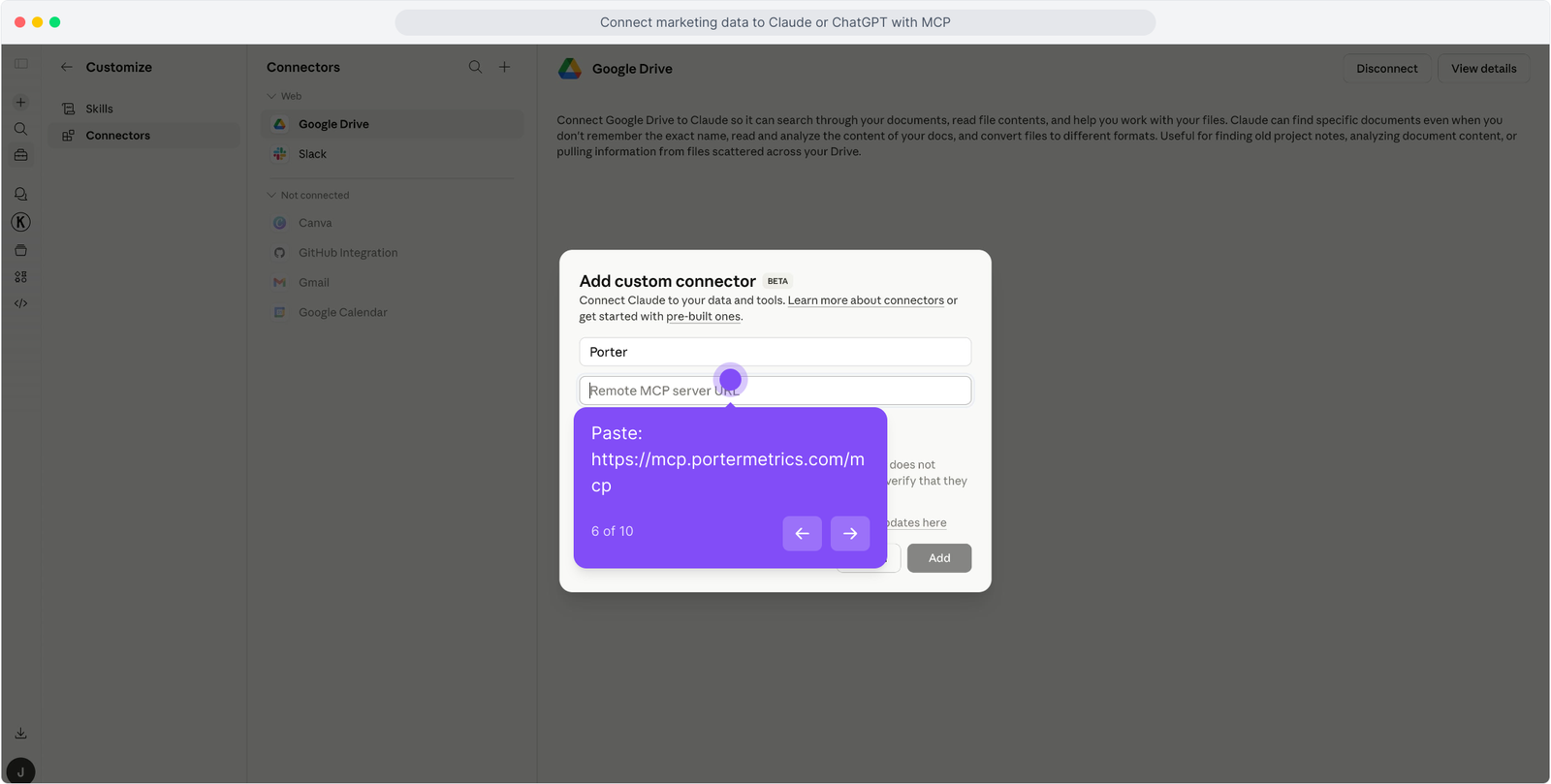
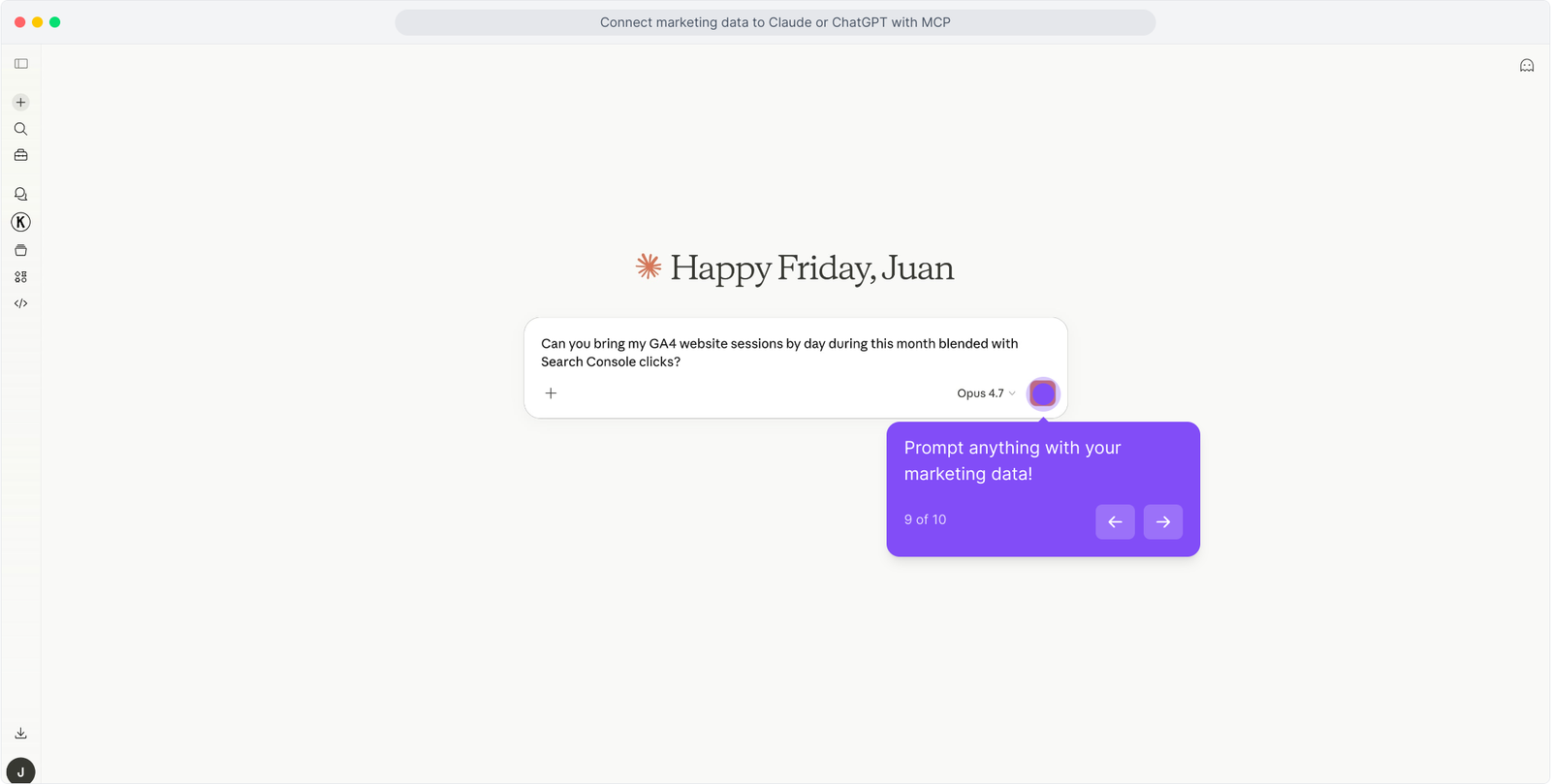
The 2026 addition worth knowing about is Porter's MCP server. You paste its URL into Claude's remote-connector field (ChatGPT and Gemini work the same way), approve the tools, and the chat can query your connected ad and analytics accounts directly: "which campaigns lost ROAS this week" without building a dashboard first. It is included on every plan, the free one too, though free accounts only let the chat see 15 days of data.
Automation is a different product with a different meter, and it is easy to confuse the two on the pricing page. It is an AI agent that runs ads, SEO and social tasks from a chat, billed in credits where one credit is one completed task. The list prices are Free at 100 credits a month, Build at $28 for 500, Grow at $100 for 2,500 and Scale at $250 for 10,000. Run out and automations pause until the next cycle; nothing is charged automatically. Plan credits do not roll over, but Grow and Scale can buy top-ups at the plan rate that last a year. We would treat Automation as an experiment, not a reason to choose Porter; the reporting connector is the mature part.
What the pricing page leaves out
The refund window is 14 days from purchase, and it is the only one. After that, cancelling stops renewal but does not refund the current cycle. Downgrades take effect at the next renewal and the rest of the cycle is not refunded either, so an agency that loses a client on day 3 of an annual plan pays for those accounts until the year ends. Upgrades, by contrast, are charged the prorated difference immediately. Billing is in US dollars through Stripe.
Data retention is the third place the documents disagree. The help FAQ says stored data is kept one year by default and can be extended on request. The privacy policy says cached data is deleted within 30 days and that nothing is stored on Porter's servers unless a backup service is offered. If retention matters for a client contract, get the answer in writing.
Compliance is a hard stop for some buyers. Porter's own overview tells anyone who needs SOC 2 to look at Windsor (SOC 2 plus HIPAA) or Funnel (SOC 2 plus GDPR), and admits to slower feature development than larger competitors. On G2, where Porter rates around 4.6, the complaints that recur are connectors breaking or needing re-authentication, slow-loading reports and slow support replies. That fits a small vendor, not a Supermetrics-sized one. On the positive side, there are 60+ Looker Studio templates included on every plan, and paid plans remove the Porter badge so reports can go to clients white-labelled.
Verdict
Buy Porter Metrics if you are a freelancer or a small agency building Looker Studio or Sheets reports for clients on Meta Ads, Google Ads, GA4 and Shopify. Six clients with those three ad and analytics accounts each is 18 accounts, which lands in the $100 flat tier: $1,000 a year on annual billing for every client, every user and every destination, with the AI chat access thrown in. Size your account count against the tier cliffs above before you pay.
Skip it if you need a data warehouse, a niche source or a compliance certificate. For BigQuery or Snowflake loads with 100+ connectors, Funnel or Windsor will cost more and do the job; for SOC 2, Porter itself points you to them. And if you mostly need many sources for a handful of accounts rather than many accounts on a handful of sources, compare against Supermetrics, whose pricing runs the other way.
Ready to try Porter Metrics?
Visit the official website to see the latest plans, pricing, and special offers.
Get Started - Porter Metrics* Affiliate link - we may earn a commission at no extra cost to you.