Lemlist Review: Multichannel Cold Outreach, and What It Really Costs
Lemlist review (September 2026): the Email plan at $55/mo and Multichannel at $87 per user/mo annually, the credit add-ons that raise the real cost, LinkedIn automation caps, and how it compares to Instantly, Smartlead, Apollo and Woodpecker.
Expert Review

What lemlist actually sells
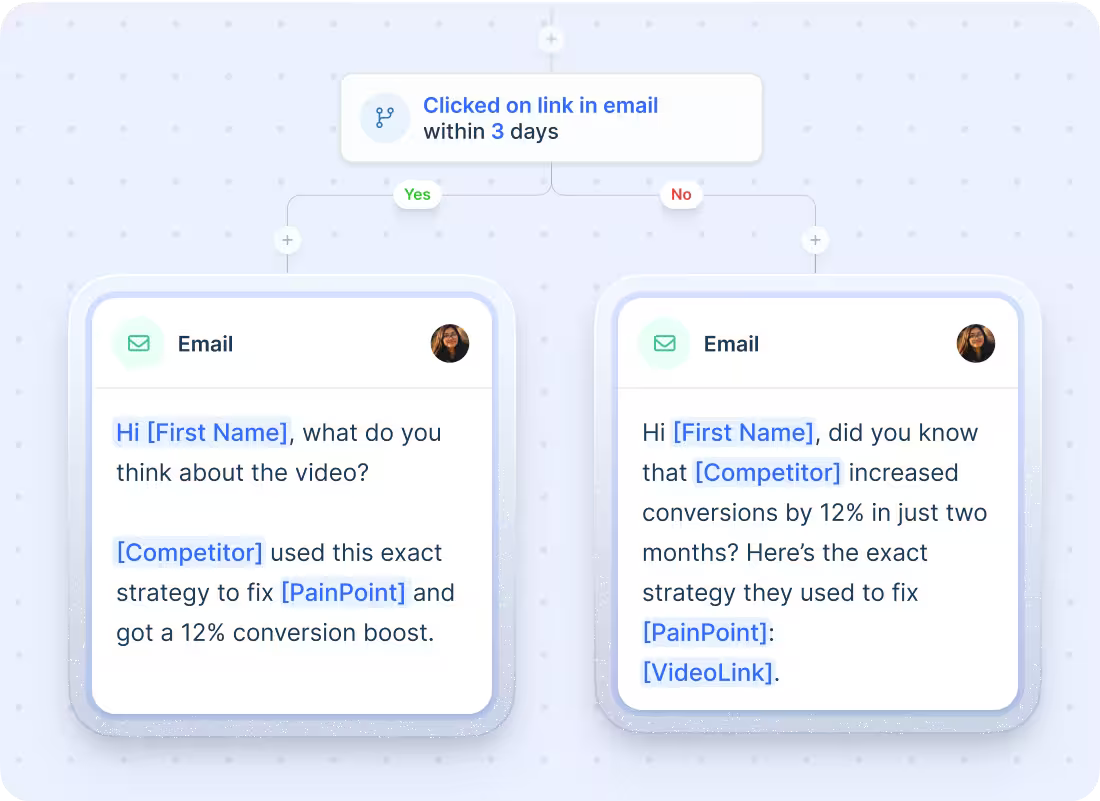
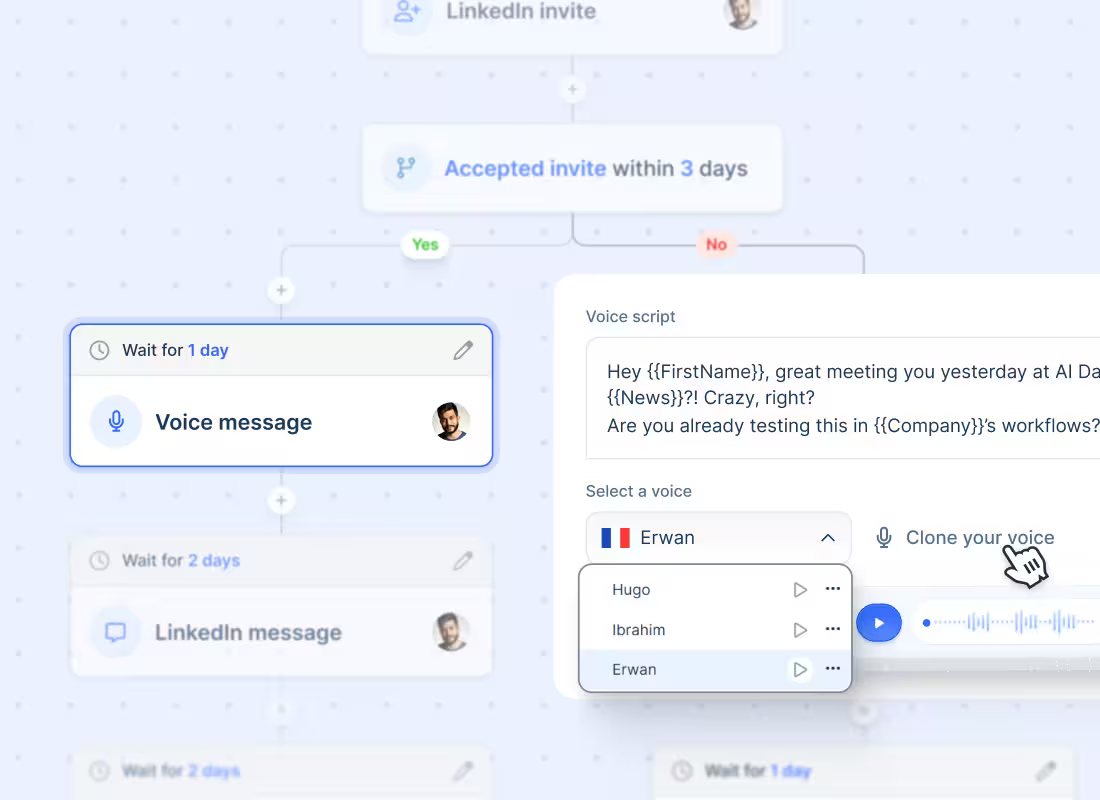
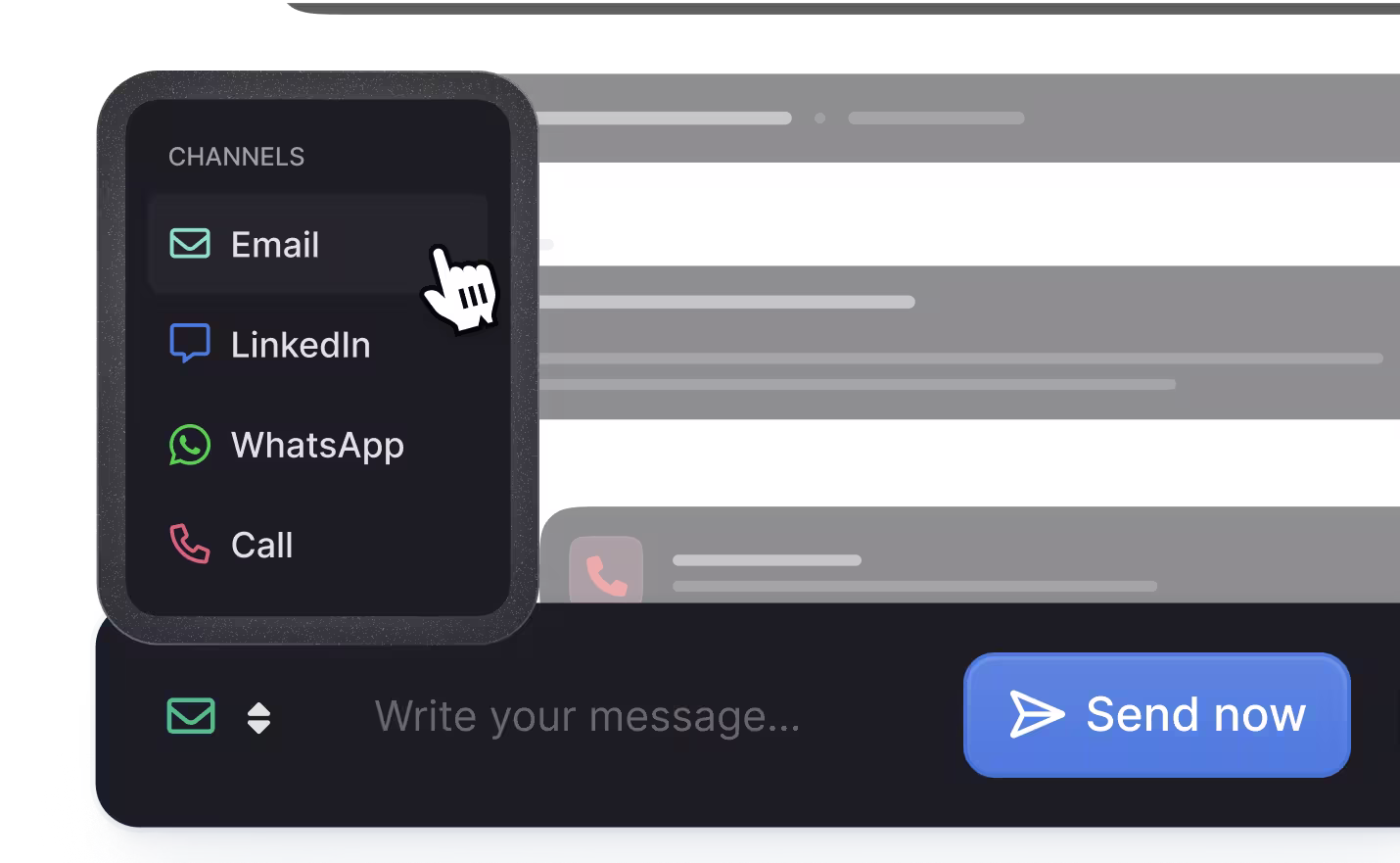
Lemlist is a cold-outreach platform built around sequences that mix email, LinkedIn and phone calls in one campaign, rather than email alone. It ships a 650M-plus lead database, an email and phone finder, AI writing agents (lemAgent), a unified inbox and a deliverability hub with inbox warm-up. The pitch is that one tool replaces a stack: prospecting data, sending, and a light CRM.
The company behind it, Paris-based lempire, was reportedly founded in 2018 by Guillaume Moubeche and brothers Vianney and François Lecroart, and industry trackers say it has stayed bootstrapped, turning down eight-figure investment offers. That matters to a buyer in one way only: there is no outside investor pushing a fire-sale discount, so the sticker price is the price.
Pricing, checked in September 2026
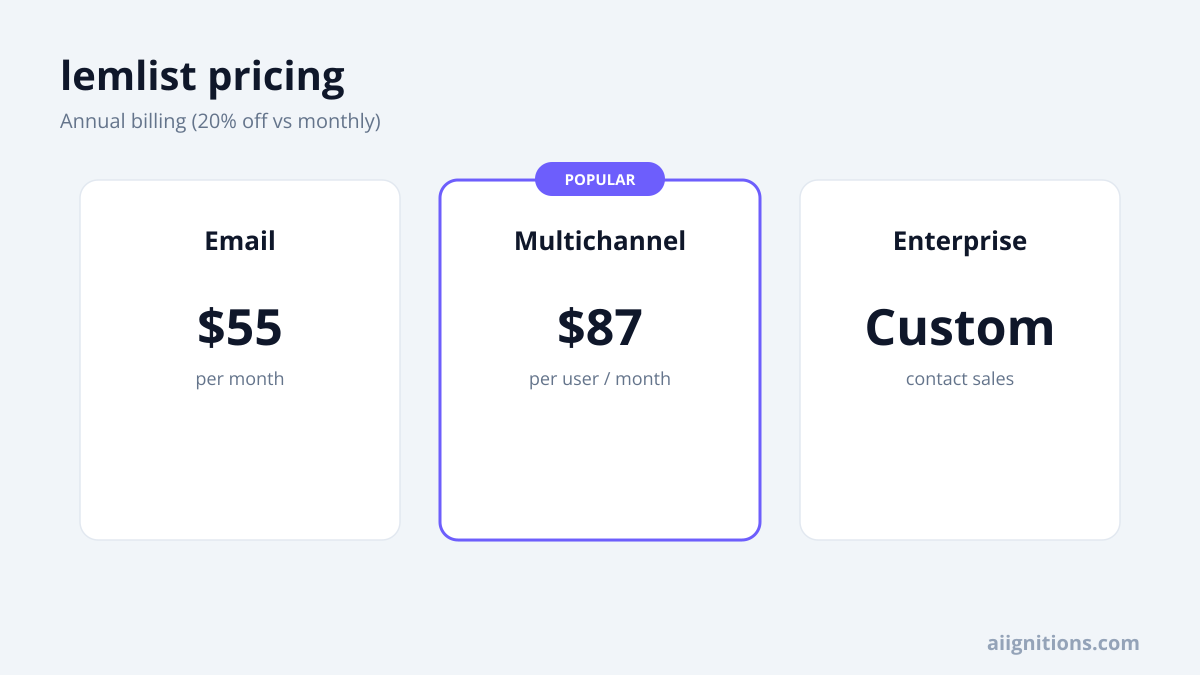
Two plans matter. The Email plan is $69/month, or $55/month billed annually at 20% off, and includes 50,000 emails a month, unlimited users, the lead database, the email and phone finder, the unified inbox, warm-up and API access. The Multichannel plan, marked "Popular," is $109/month, or $87/month annually, and it is priced per user — that is where the bill grows. It adds LinkedIn automation, SMS, a WhatsApp add-on, a built-in call dialer, five senders per user and task management.
Enterprise is custom-priced and adds SSO/SAML, custom roles, a dedicated account manager and 1:1 onboarding. The 14-day free trial is the genuinely good part: it opens the full Multichannel plan and, per lemlist's pricing page, needs no credit card to start.
Where the real cost hides: pay-per-success credits
The subscription buys the software, not the data you pull through it. Enrichment runs on pay-per-success credits at 1 credit = $0.01, and they add up fast on a real prospecting list. A verified email costs 5 credits (about $0.05), a phone number 20 credits ($0.20), and company web-visit signals 20 credits each. Intent data is pricier: hiring and job-change signals start at 100 credits, fundraising signals at 100, and LinkedIn engagement signals from 400 credits, roughly $4 a lookup.
Do the arithmetic before you sign. Building a 2,000-contact list with verified emails and direct-dial numbers is 50,000 credits, about $500 on top of the monthly seat cost. The 650M-lead database is bundled, but pulling usable contact details out of it is not free at the margin. Budget for the credits, not just the plan.
The LinkedIn automation nobody advertises
LinkedIn automation is the headline reason to pay for Multichannel, and lemlist's own help center is unusually candid about its ceiling. It recommends capping activity at roughly 20 connection invites a day (LinkedIn itself allows around 100 a week), 30 messages a day and 30 profile visits a day, for a rough limit near 100 to 110 actions daily. It warns that a sudden burst of activity after a quiet spell is what commonly trips LinkedIn's throttling.
There is a sharper trap for anyone on a free LinkedIn account: connection requests that carry a custom note are capped by LinkedIn at three per month, and the note itself is limited to 200 characters. Automate all you like; the platform underneath sets the real speed limit. Lemlist does not claim to be an official LinkedIn partner, and its own advice to throttle carefully tells you why.
How it compares to Instantly, Smartlead, Apollo and Woodpecker
Lemlist is not the cheapest way to send cold email. Price-checked in September 2026 against secondary comparisons (verify each vendor's live page before you buy), the gaps are real. Instantly lists $47 to $555 a month, though teams report $180 to $400 once the lead database and warm-up credits are added. Smartlead's core tiers run $39 to $379, with deliverability and placement testing billed separately at $49 to $599. Apollo starts at $49 a month, keeps a genuine free tier and bundles its own contact database. Woodpecker charges by usage, about $7 per 100 prospects contacted, roughly $24 a month on annual billing, with unlimited inboxes.
What lemlist sells that the email-only tools do not is the LinkedIn-and-calling layer inside the same sequence. If you only send email, Apollo or Woodpecker will cost less and do the job. Lemlist earns its premium when the multichannel steps are the point, and not before.
What users complain about
Across roughly 1,500 reviews, G2 scores lemlist near 4.6 out of 5, so most buyers are satisfied. The recurring gripes cluster in three places: pricing, CRM-integration bugs, and Chrome-extension reliability. The extension is what drives the LinkedIn steps, so its flakiness lands on the flagship feature. Those reports are aggregated from review sites, not first-hand testing, so weigh them as signal rather than proof.
One complaint is worth quoting because it costs money. A reviewer on Trustpilot wrote that cancellation "is not transparent, paid several months without using it because I thought it is cancelled." If you trial lemlist and walk away, confirm the subscription is actually dead before the next billing date.
Verdict: who it's for, who should skip it
Buy lemlist if multichannel is the actual strategy: a sales team that wants email, LinkedIn touches and a call in one automated sequence, priced at $87 per user a month annually, and ready to budget credits on top for verified data. The 14-day no-card trial of the full Multichannel plan is a fair way to test that before paying.
Skip it if you send email and nothing else. At $55 a month annually the Email plan is fine, but Apollo's free tier or Woodpecker's usage pricing will cost a solo founder less for the same outbound email, without a per-seat multiplier. And read the LinkedIn caps first: if your plan depends on sending 500 invites a day, no tool can do that safely, lemlist included.
Ready to try lemlist?
Visit the official website to see the latest plans, pricing, and special offers.
Get Started — lemlist* Affiliate link — we may earn a commission at no extra cost to you.