MarketMuse Review: Demo-Only Pricing and Deep Topic Models
A September 2026 review of MarketMuse: its demo-only pricing since the Siteimprove acquisition, free-tier limits, content briefs, the unstated model and data policy, and how it compares to Clearscope and Surfer.
Expert Review

The pricing went dark
MarketMuse used to publish a dollar figure for every plan. It does not anymore. Checked on the live pricing page on 21 September 2026, four tiers are listed — Free, Optimize, Research and Strategy — and not a single dollar amount appears anywhere on the page. Every paid tier ends at the same button: Book a demo. There is no self-serve checkout, no "start free trial and add a card later," no way to learn what Optimize costs without booking a call.
That change lines up with Siteimprove completing its acquisition of MarketMuse on 31 October 2024. The product is now Siteimprove-owned, and somewhere in that transition the published prices came off. Third-party aggregators still quote old numbers around $99 to $499 a month, but they disagree with each other and none of them is marketmuse.com, so treat them as rumour. The checkable fact is the one that matters to your calendar: budgeting for this tool now starts with a sales conversation, not a pricing page.
What the free tier actually lets you do
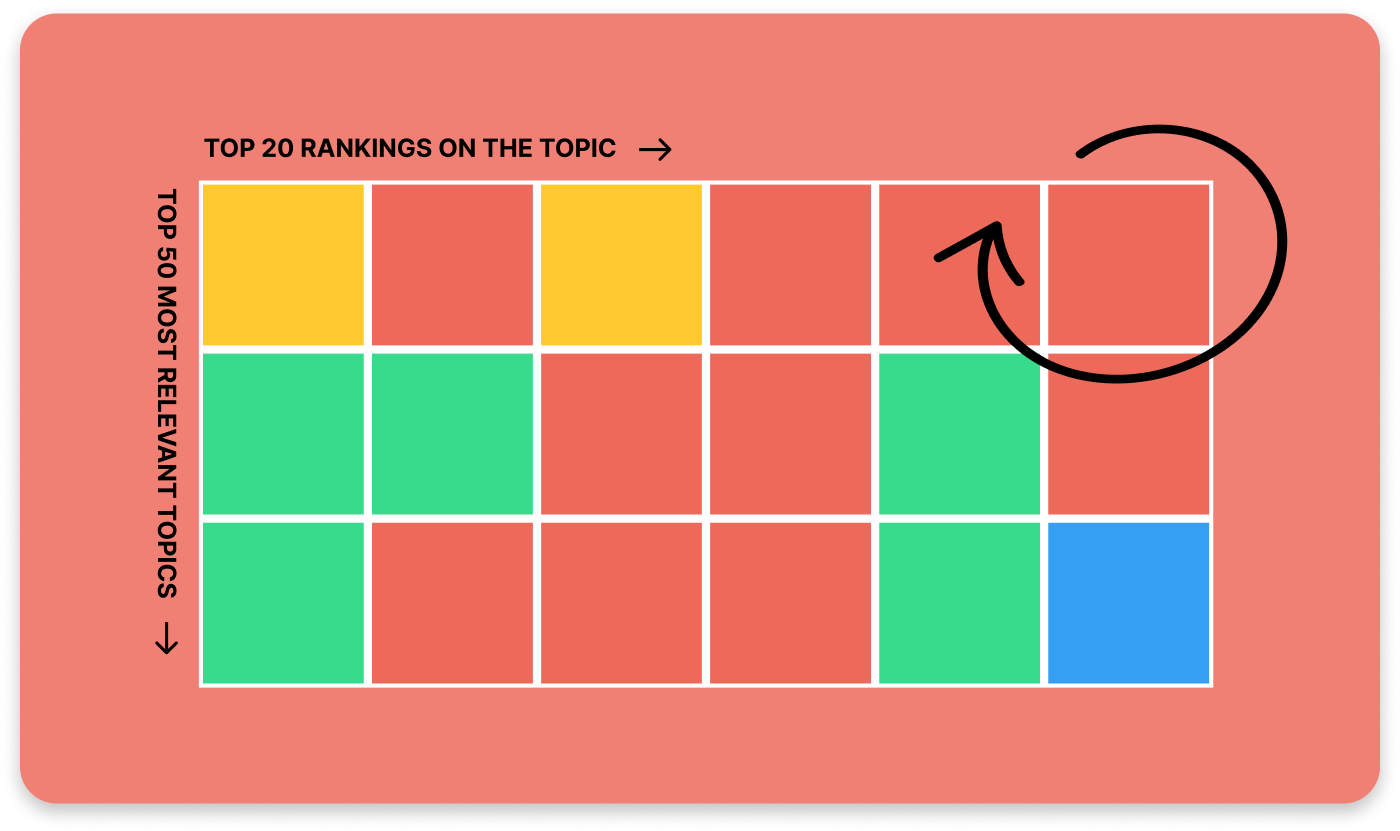
The Free plan is real, and its cap is the first thing worth knowing. One user, ten queries a month, zero tracked topics, zero content briefs, zero strategy documents. A "query" is one topic run through one of MarketMuse's applications, so ten a month is roughly ten article topics researched before you are locked out until the reset. For a solo blogger publishing one post a week that is already too tight, and the plan carries none of the briefs or tracked-topic monitoring that are the actual reason to use the tool.
In practice the free tier is a demo you run yourself. It shows you the topic model and the interface, then stops well before it can carry a real content calendar. MarketMuse's own blurb agrees: "Best for individuals with a low content volume."
The four tiers, and where the limits bite
Above Free the ceilings rise steeply, and the thing to watch is not the query count but the briefs and tracked topics, since those are what a content team lives on. Optimize gives you 100 tracked topics, 100 queries a month, 5 content briefs a month and 1 strategy document, for a single user. Research lifts that to 1,000 tracked topics, unlimited queries, 10 briefs and 3 strategy documents across 3 users. Strategy tops out at 10,000 tracked topics, 20 briefs, 5 strategy documents, 5 users, and adds all nine brief types.
Read those numbers as a team-size gate. Optimize is one seat and five briefs, so a two-person content team writing eight posts a month has already outgrown it and is looking at Research, whatever Research turns out to cost. The brief allowance is the real meter here, not the query count that the marketing leads with.
The content briefs are the point
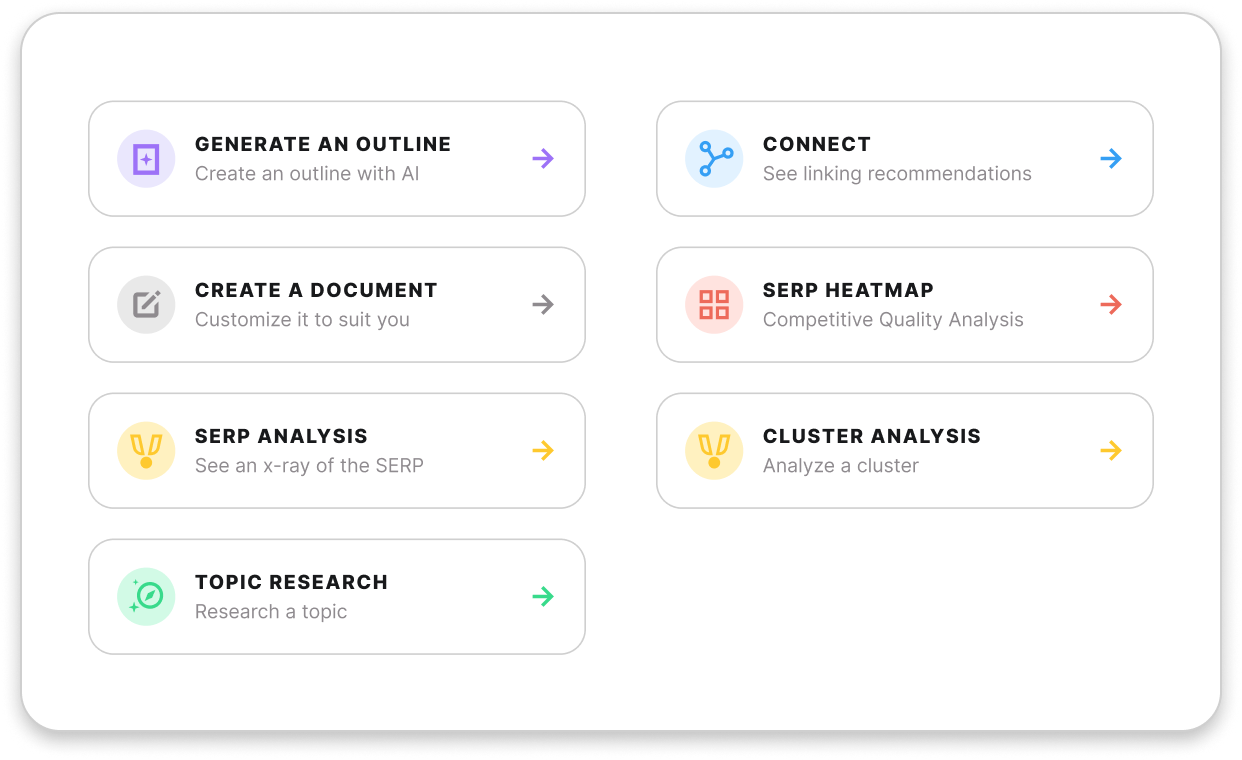
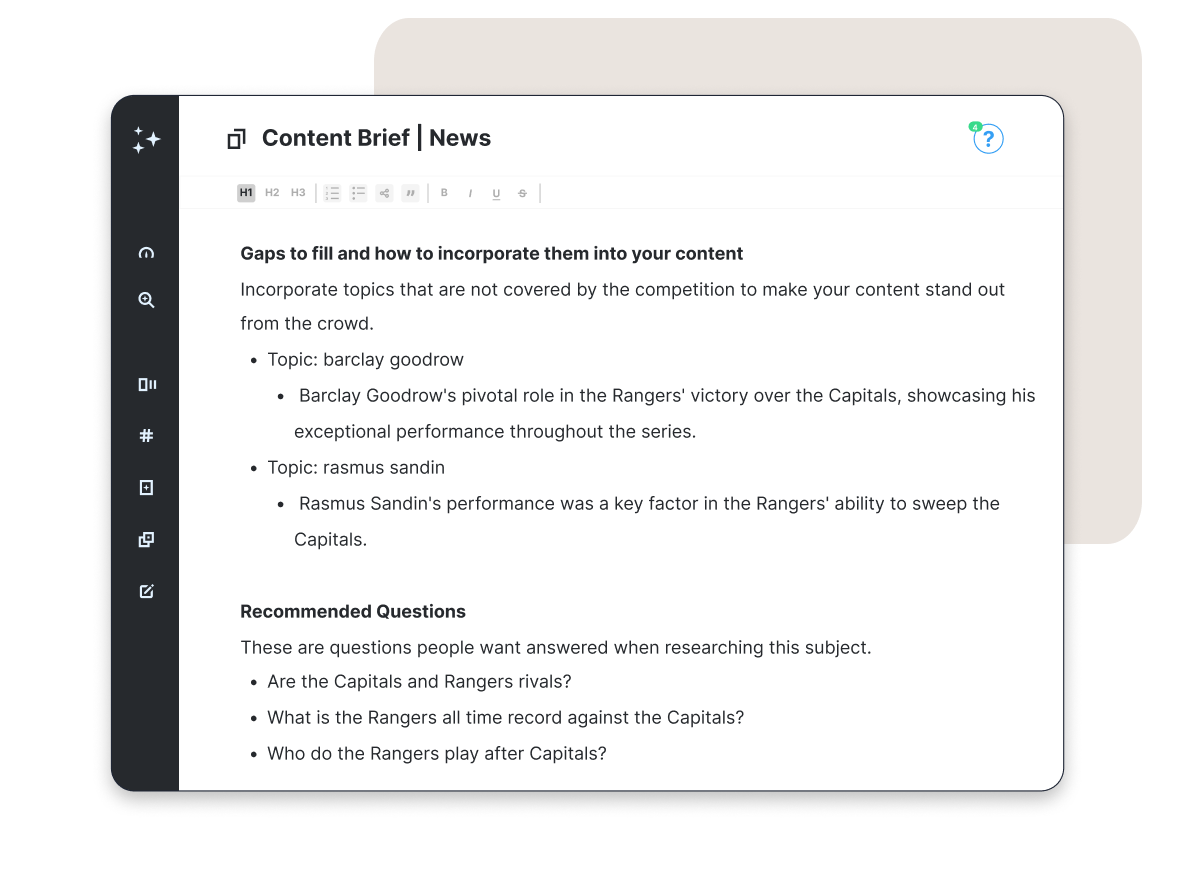
Strip away the pricing awkwardness and the reason people pay for MarketMuse is the brief generator. It supports nine brief types (Article, News, Local, Comparison, FAQ, How-to, Product Review, Listicle and Guide) and lets you tune each one by point of view, expertise, tone, target market, buyer journey and search intent before it exports to Google Docs or Word. The distinctive claim underneath is the topic model: MarketMuse says it analyses hundreds to thousands of pages to build one, where it claims rivals read only the top 10 to 30 SERP results. If that claim holds, the payoff is a brief that covers subtopics a shallower tool never surfaces.
Which model writes the drafts, and what happens to your data
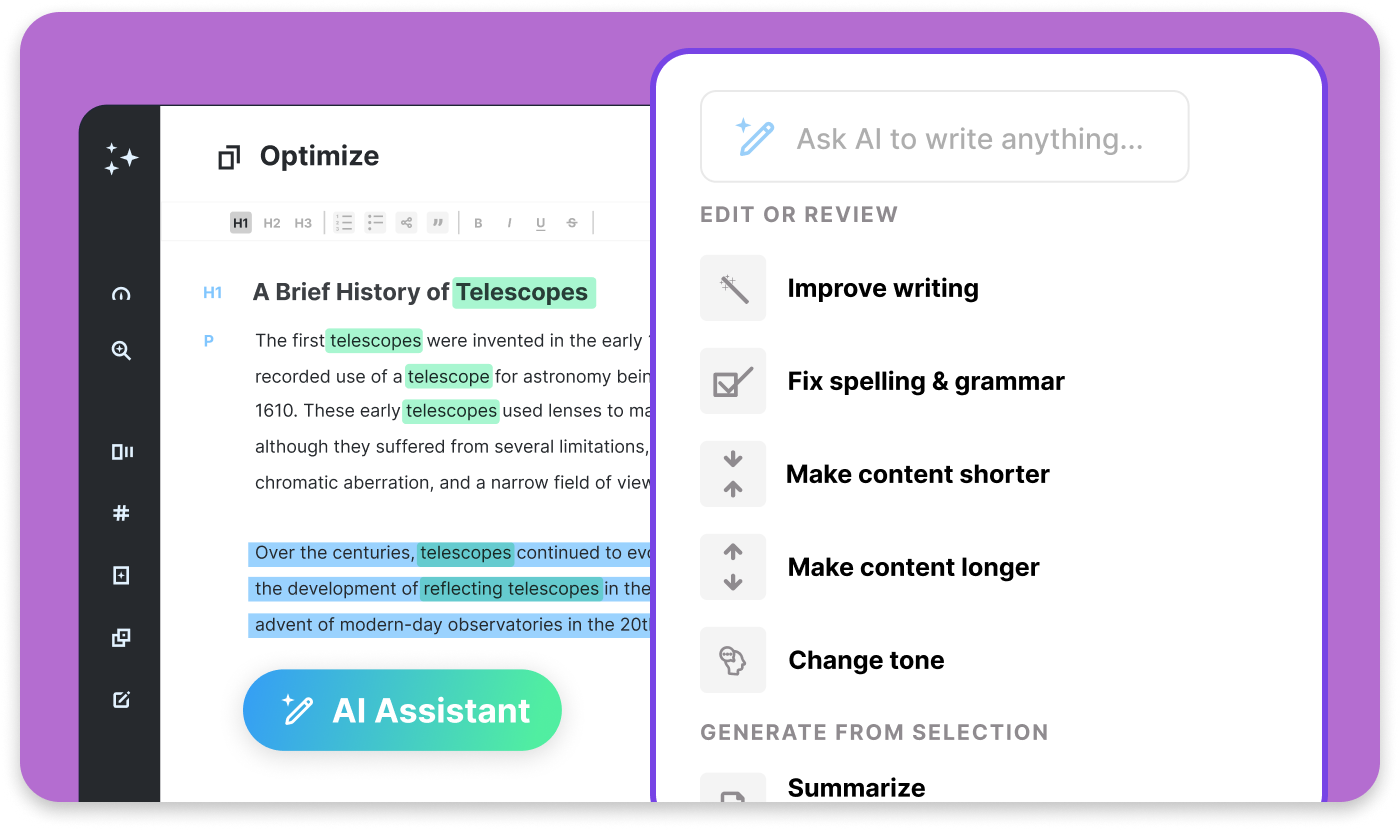
This is where a careful buyer should slow down. MarketMuse once shipped a direct ChatGPT integration (published April 2023) that sent prompts to OpenAI using an API key you supplied yourself. That article now carries a notice that the integration "has been deprecated in favor of our new AI assistant in Optimize" — and no MarketMuse page I could find names which model powers that current assistant. So if you need to know whether your drafts are going through GPT, Claude or something in-house, the honest answer today is that the vendor does not say, and it can change without telling you.
The data question is worse. MarketMuse's privacy policy, last updated 25 April 2024, contains no statement on whether your content trains its models and no clause on who owns AI-generated output. Not a permissive clause, not a restrictive one: silence. For a tool you would feed unpublished content strategy into, that silence is the thing to raise on the demo call before anything else.
The recurring complaint: it is hard to learn
Across user reviews the same note repeats, and it is not about price. One Capterra reviewer, an internet marketing specialist, wrote in May 2022: "I find the usability to be very bad. I've been using MarketMuse for over a year and I still don't really understand how some things are supposed to work." An email copywriter put it more gently in December 2021: "Getting started does take quite a bit of learning, and diving through tutorials." A third reviewer, a CEO, called it "very expensive and certainly not suitable for beginners or small content marketers." MarketMuse still holds a 4.6 out of 5 across 28 Capterra reviews (checked 21 September 2026), so the people who climb the curve tend to stay. The warning is about the climb.
MarketMuse vs Clearscope and Surfer
The sharpest contrast is pricing you can actually see. Clearscope's Essentials tier starts at $129 a month (50 reports, 50 inventory pages, 50 tracked prompts), published on its own site, no call required. Surfer SEO starts from $49 a month and bundles AI content generation into the base plan. MarketMuse splits keyword research, related questions and content optimization into separate applications drawing on separate credit pools, where Surfer gives you higher article limits and built-in drafting on the entry plan. If your objection to MarketMuse is that you cannot find out what it costs, both alternatives answer that objection by simply printing the number.
Who should buy it, who should skip it
Buy MarketMuse if you run a content team big enough to need real topic models and monitored inventories across hundreds or thousands of pages, you have someone willing to learn the tool properly, and a sales call does not scare off your budget process. That buyer gets briefs that are genuinely deeper than a top-10-SERP scraper produces.
Skip it if you are a solo writer or a small team that needs to see a price and start today. The free tier's ten queries will not carry you, the demo-gated pricing adds a week to your buying cycle, and Surfer at $49 a month gives a small team self-serve pricing plus built-in drafting for the kind of volume that MarketMuse's Optimize plan barely covers. And press MarketMuse on the data-training and output-ownership questions in writing before you commit, because the privacy policy will not answer them for you.
Ready to try MarketMuse?
Visit the official website to see the latest plans, pricing, and special offers.
Get Started - MarketMuse* Affiliate link - we may earn a commission at no extra cost to you.