Pendo Review: Free Is Now a Side Door, and Every Paid Plan Is a Sales Call
Pendo review: no public price for Base, Core or Ultimate (Vendr median $48,598/yr), what the 500-MAU Free plan blocks, Novus, Leo and cheaper rivals.
Expert Review

Table of Contents
- Pendo Free is still there, but the door has moved
- Pricing: no number until you ask
- What 500 MAUs on Pendo Free buys, and what it blocks
- Leo, Agent Analytics and the MCP server
- Your data: where it lives and how you get it out
- Where Pendo earns its price, and what users complain about
- Verdict: who should buy Pendo, and who should skip it
Pendo Free is still there, but the door has moved
Go looking for Pendo's free plan in November 2026 and the page that used to sell it now opens with "Looking for Pendo Free? Meet Novus." Novus is not a cut-down Pendo. Pendo's own FAQ says it "will not have feature parity with Pendo - that's by design, not a roadmap gap," and that if you install both, "they don't share data." It connects to your GitHub repo, instruments the product from the code and posts what it finds broken into Slack.
Pendo Free has not been switched off. Existing accounts work "exactly the same as it always has," and the pricing page, checked on November 27, 2026, still shows a Free card for 500 monthly active users with a "Start now" button. Yet the Free page tells newcomers who want the full platform to "talk to our sales team." Two pages, two answers. The practical reading: Free still works for a small product today, Pendo would rather new users went elsewhere, and everything above it goes through a salesperson.
What Pendo actually sells is the bundle rather than any single tool. Product analytics, in-app guides, session replay, NPS and surveys, a feedback portal and a roadmap tool all run off one JavaScript snippet or mobile SDK.
Pricing: no number until you ask
The pricing page lists three paid tiers and prices none of them. Base covers product analytics and in-app guides. Core adds session replay. Ultimate adds sentiment (NPS, PMF, CSAT), Orchestrate for cross-channel journeys, Listen for feedback and Data Sync for warehouse export. All three say "Request pricing." Predict and Agent Analytics are priced separately by volume.
The meter is monthly active users. The price rises with MAUs while the cost per MAU falls, and Pendo says it does not charge per application, so tracking three products costs no more in app fees than tracking one. Exceed your MAU allowance on a paid plan and nothing switches off, although Pendo's MAU help page says reports can fall back to sampled "generalized trends."
The only real figures come from third parties. Vendr's buyer data, checked on November 27, 2026, puts the median at $48,598 a year across 590 purchases, ranging from $18,625 to $151,741, with buyers negotiating 12% off on average. Vendr says teams of 500 to 2,000 MAUs often pay $7,000 to $15,000, that add-ons can add $10,000 to $50,000 or more, and that setup services run $5,000 to $25,000 or more. Userpilot, a competitor with an obvious interest, cites SpendHound averages of $54,757 for SMB customers and $214,512 for enterprise.
Budget for the contract, not the tool. Two- and three-year terms reportedly earn 15 to 30% off, which is also how a vendor keeps you. One r/UXDesign poster quoted by Userpilot said their roughly $7,000-a-year starter plan was being discontinued in favour of a $35,000-plus tier. That is one anecdote, but the tiers do shift: a Pulse tier was folded into Ultimate around the turn of 2026, and Pendo's own data-retention article still names a "Pendo Starter" plan the pricing page no longer shows.
What 500 MAUs on Pendo Free buys, and what it blocks
For a product with a few hundred users, Free is generous where it counts. It includes guides, Pendo-branded NPS, dashboards, segments, funnel, path and retention reports, roadmaps, unlimited internal users, and even Agent Analytics and Pendo's external MCP server. Signing up needs a business email address, and event data stays visible in the UI for 12 months. The help center is more candid than the pricing page about the rest:
- The cap degrades data rather than stopping it. Past 500 unique visitors in a 30-day window you can no longer create guides, NPS surveys or segments, and every report switches to "generalized trends based on a random sampling of 500 visitors."
- No API and no integrations. In Pendo's words, "You won't have access to our API or third-party integrations until you upgrade." Your data stays inside Pendo's UI.
- No session replay, Resource Center, Product Areas, Data Explorer or web analytics, and no "most AI features, including Leo." That last line contradicts the pricing page, which calls Leo "Included in all Pendo plans."
- Support is a bot. Free users can chat with the Pendo Support Bot but cannot open a ticket or reach a support engineer.
One trap costs real days. Activate the paid-feature trial before installing the snippet and you get 30 days; install first and the same trial "only lasts 14 days." The upside of installing early: Pendo records every click from day one, so features tagged months later still show their full history.
Leo, Agent Analytics and the MCP server
Pendo's 2026 has been an AI rebuild. It bought Chisel Labs in February, its fourth acquisition in 18 months and the third of an AI-native startup. In April it cut about 90 jobs, roughly 10% of staff, in what CEO Todd Olson framed as "refounding" the company, according to ABC11.
For a customer, three pieces matter. Leo answers analytics questions in plain language and, in agent mode, builds the chart itself, which removes the report-building step new users find slowest. Agent Analytics, generally available as of September 2026, measures how people use the chatbots and assistants inside your own product, with its own prompt-volume pricing and a free allowance. The MCP server, generally available since May 2026 and listed in Claude's and ChatGPT's connector directories, lets you query Pendo from those assistants or from Cursor and Codex.
Agent Analytics is the one to weigh seriously if your product has an AI assistant, because otherwise those conversations are a blind spot in your funnel. Leo is a convenience rather than a reason to sign, and Free users mostly do not get it.
Your data: where it lives and how you get it out
Choose the region at setup, because you cannot move later. Pendo runs separate US, EU, Japan and Australia environments on Google Cloud, defaults to the US and does not replicate data between them. Raw events are kept for up to seven years (adjustable from 1 to 84 months), though the UI shows only 12 months on Free.
Leaving is the weak spot. Data Sync, the scheduled one-way export to Snowflake, Databricks, BigQuery, S3, Google Cloud Storage or Azure, is listed under Ultimate. It is not a real-time stream and imports nothing. Below that tier you work from report exports and, on paid plans, the API, so a complete raw history to take with you is effectively a top-tier feature. Session replays are kept 30 days by default, or 90 if your contract includes it.
The security paperwork is solid: a SOC 2 Type II audit covering all five Trust Services Principles, third-party penetration tests at least yearly, self-certification under the Data Privacy Framework, plus HIPAA and TX-RAMP. Pendo does not claim ISO 27001, so a procurement checklist that requires it means a conversation.
Where Pendo earns its price, and what users complain about
The case for Pendo is consolidation. Analytics, guides, replay, NPS, a feedback portal and a roadmap share one install and one model of your users, so a guide can target the accounts that stall at a funnel step and a feature request ties back to the account that filed it. Listen, the feedback module, adds AI summaries of incoming requests. Pendo also works on internal tools: IT can push the Pendo Launcher browser extension through device management to track and guide employees inside third-party web apps, the job WalkMe and Whatfix sell.
Ratings are good, about 4.4 out of 5 from roughly 1,800 G2 reviews and 4.5 from around 240 on Capterra, but the same complaints recur underneath. Price climbs as usage grows ("expensive with a capital E," one Capterra reviewer wrote). The learning curve is measured in months. Tagging problems leave teams doubting their own numbers, and G2 reviewers describe data as "slow and unreliable" at times. Test the tagging in a trial, because every report depends on it.
Verdict: who should buy Pendo, and who should skip it
Buy Pendo if you run a mid-size or enterprise SaaS product with a budget somewhere between $20,000 and $150,000 a year, want analytics, in-app guidance and feedback from one vendor, track several apps under one contract, or need employee-facing digital adoption through the Launcher. Then negotiate, starting from Vendr's 12% average and the multi-year discount.
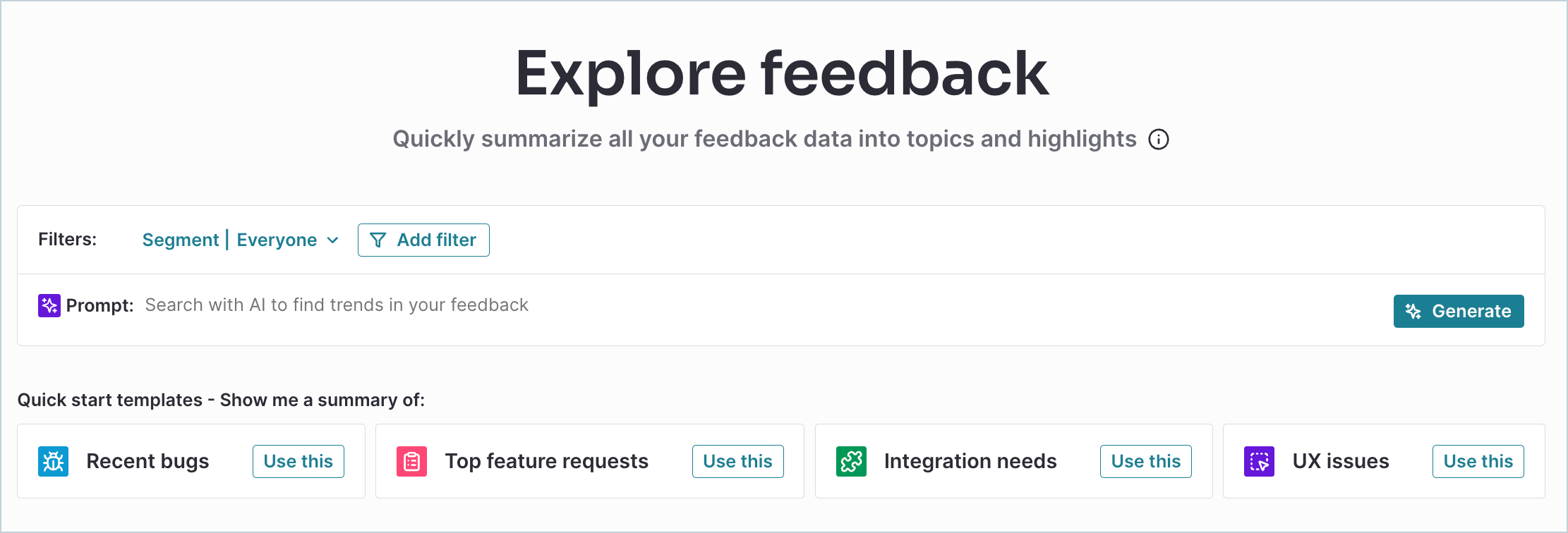
Skip it if you are a startup or a small team. The paid tiers have no public price and Free freezes at 500 MAUs. Userpilot publishes a Starter plan at $299 a month for up to 2,000 MAUs, and Appcues Grow starts at $9,000 a year; both cover onboarding guides without a sales call. If you only need analytics, Amplitude's free plan covers 2 million events a month and Mixpanel's covers 1 million plus 10,000 session replays, both checked on November 27, 2026. And if Pendo's AI pitch is what drew you, try Novus first: free with no MAU limit during the beta, paid tiers due "post-GA in H2." Just know it will never grow into full Pendo.
Ready to try Pendo?
Visit the official website to see the latest plans, pricing, and special offers.
Get Started - Pendo* Affiliate link - we may earn a commission at no extra cost to you.