Plinthos Review: Room-by-Room Rental Management for Shared Houses
A hands-on review of Plinthos, the room-by-room rental manager for landlords of shared houses: pricing checked September 2026, the trial mechanic, bill-splitting, data hosting, and who should skip it.
Expert Review

Built for the shared house, not the apartment block
Most property-management software assumes you rent whole units: one tenant, one lease, one door. Plinthos assumes the opposite. It is built for the landlord who rents a single flat to three people on three separate arrangements, splits the electricity bill between them, and needs to know who has paid and who has not. That room-by-room case is what tools like Rent Manager and Rentroom treat as an edge case, and it is the whole product here.
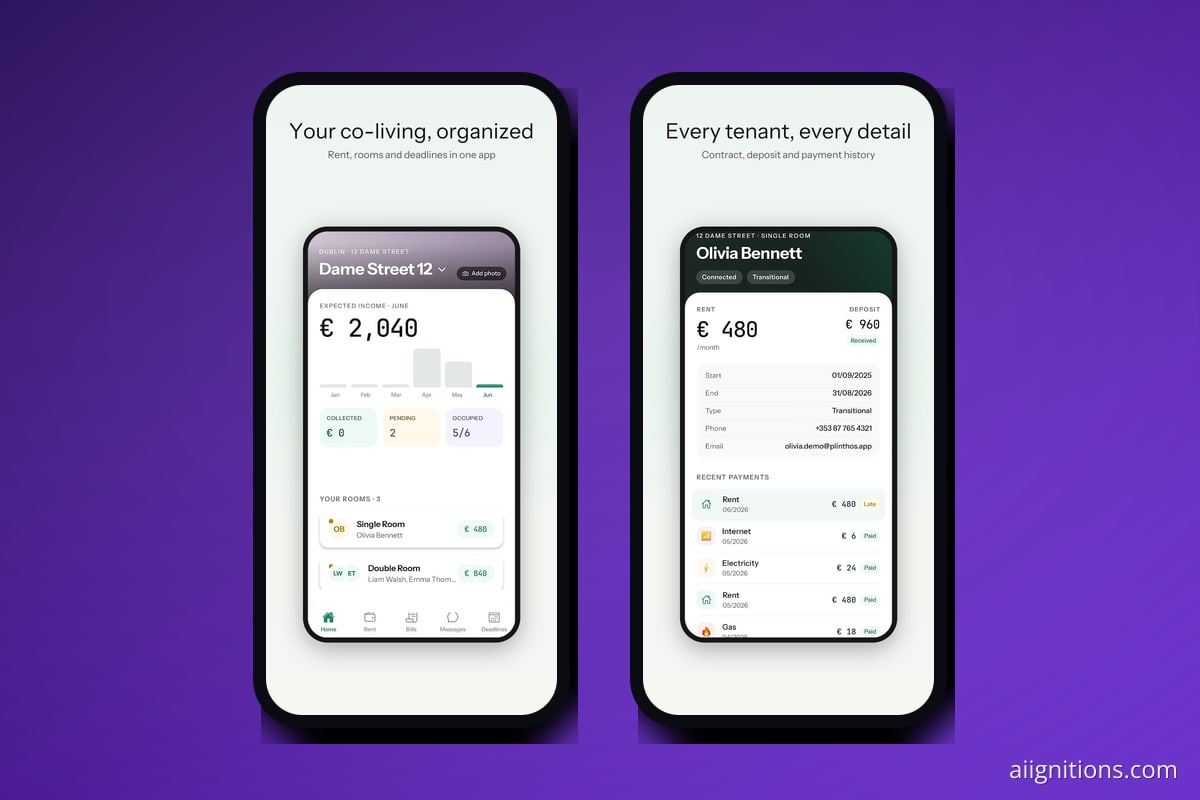
Rooms are configured as single, double, or triple occupancy, with pricing set per bed or per room. A tenant sees only their own room, their rent, their lease end date, and their share of the bills. The landlord sees everything. This is a small operation's tool, and it does not pretend to be an enterprise portfolio system.
Pricing: one paid seat, everyone else free
Only the landlord pays. The Landlord plan is €7.99/month billed monthly, or €71.99/year if you pay annually, which works out to €6.00/month — a 25% discount (checked on the Plinthos site in September 2026). One earlier search result still quoted €4.99/month; that figure is out of date, so budget for the current price.
Tenant accounts are free forever, with no per-tenant limit and no ads. For the landlord that price covers unlimited apartments and rooms, so the bill does not climb as you add doors. A landlord with two flats and six rooms pays the same €6 to €8 a month as one renting out a single spare room, where per-unit SaaS that charges by the door would not.
The trial clock, and what happens when it runs out
The 14-day free trial has one detail the pricing page makes easy to miss: the clock starts when you add your first property, not when you register. So you can create an account, look around, and only start the countdown once you are ready to enter real data. No credit card is asked for at signup.
What happens after the trial is the part worth knowing before you commit. If you do not pay, the landlord account switches to read-only: you keep seeing your data but cannot change it. Tenant accounts keep working regardless. That is gentler than a hard lockout, but it means a landlord who lets the subscription lapse mid-tenancy cannot record a payment or edit a bill until they pay again.
Bill splitting is the feature that earns the subscription
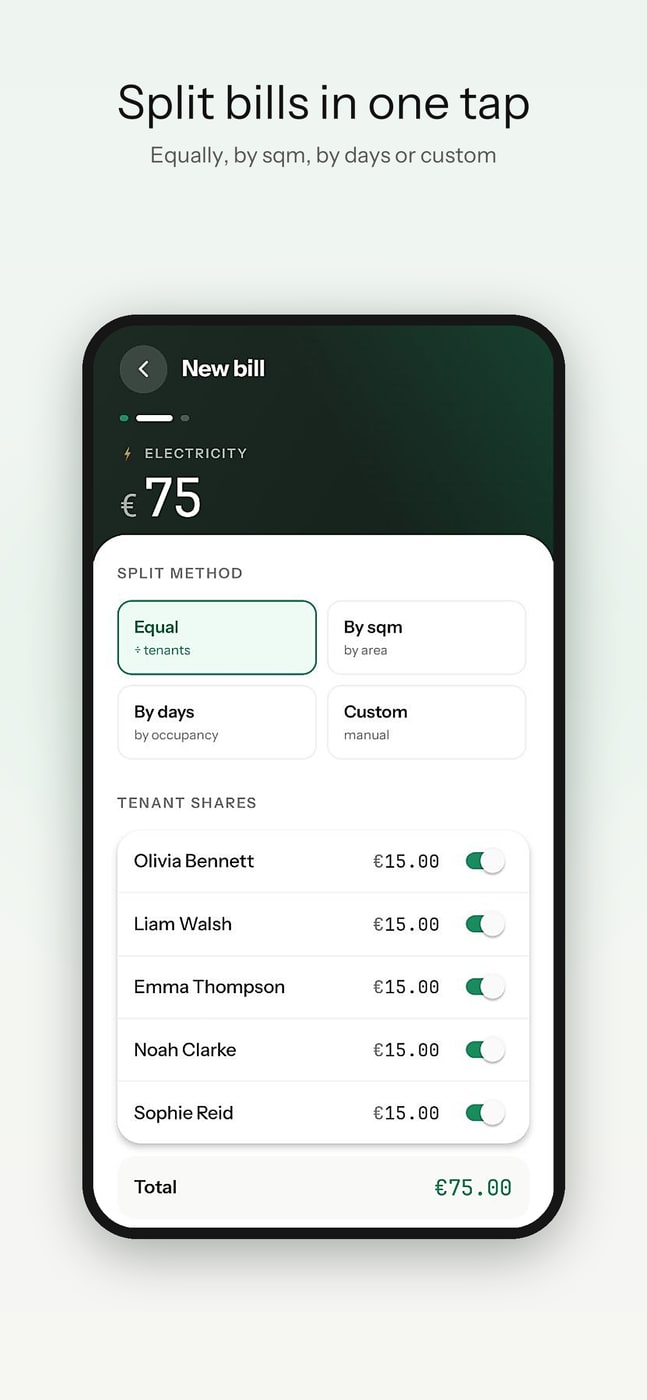
Utility bills are where shared houses actually argue, and Plinthos splits them four ways: equally, by square meters, by days occupied, or by custom amounts. The "by days occupied" option is the useful one for houses where someone moves in mid-month or leaves for the summer, and it is exactly the calculation a spreadsheet gets wrong.
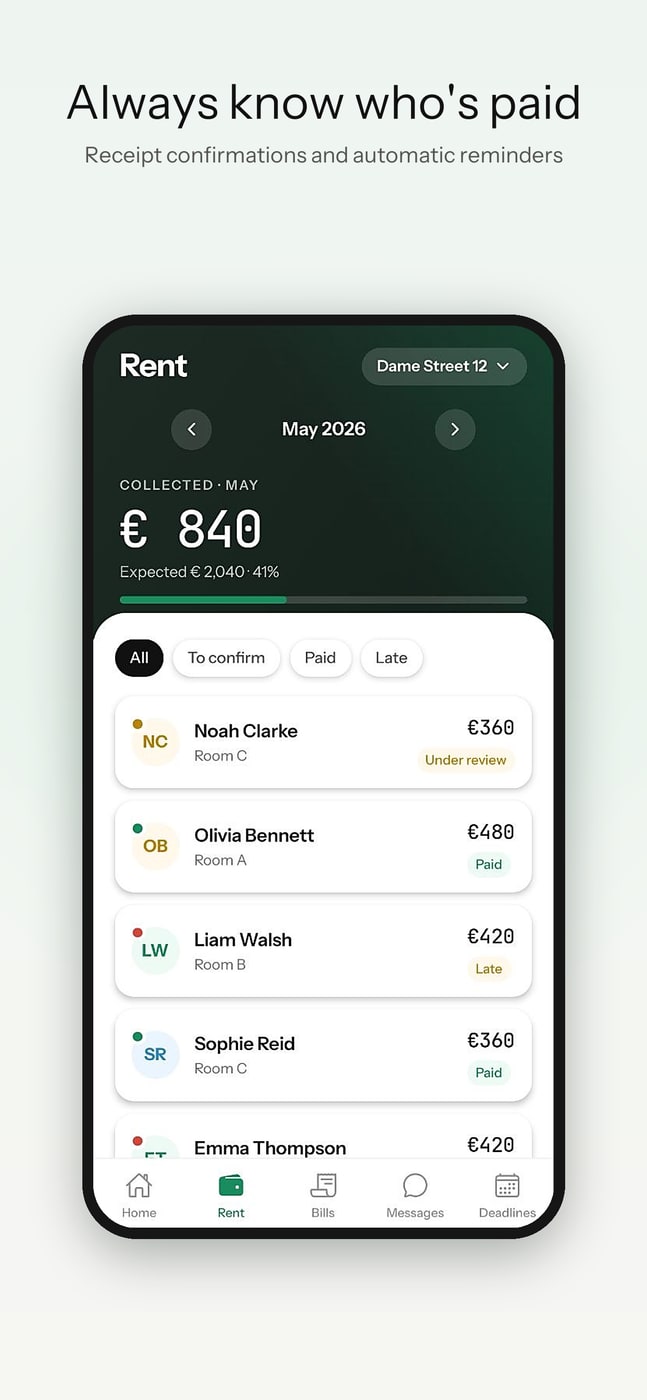
Payment tracking runs on photo receipts. A tenant marks a payment and attaches a photo, and the landlord confirms it. Deposits are handled the same way, tracked from the receipt when the money is taken to the photo evidence when it is returned. Contract deadlines come with 30-day and 7-day reminders, so a lease does not roll over unnoticed. There is a group chat for the whole house plus private landlord-to-tenant messages, and shared documents both sides can open.
Where your data lives, and where the app runs
Plinthos runs in the browser with no install, alongside native iOS and Android apps, all synced to one account. Data is hosted on EU servers in Frankfurt, encrypted in transit and at rest, and the company describes the service as GDPR-compliant with user-initiated export and delete. Note the limit of that claim. It is a stated compliance and encryption position, not a published third-party security audit, so treat it as the vendor's word rather than a certified result.
The company says it is made in Italy, and the site carries a 2026 copyright. Support is email only, at [email protected], with a stated reply within 24 hours. There is no phone line and no live chat, which for a tool at this price is reasonable, though worth knowing if you expect a fast answer during a tenancy dispute.
Who should use it, and who should not
Use Plinthos if you are a small landlord renting rooms in one or a few shared houses and your real headache is splitting bills and chasing payments between housemates. The free-forever tenant accounts and the flat price regardless of door count fit that shape better than any per-unit tool, and the monthly cost is trivial against a single disputed electricity bill.
Skip it if you manage whole units at scale and need accounting integrations, tenant screening, or maintenance-request workflows. Plinthos does none of that, and a portfolio platform like Rent Manager or Buildium will serve you better even at a higher price. It is also the wrong tool if you require a certified security audit on paper rather than a GDPR compliance statement. For its narrow case, though, it is priced and built exactly right.
Ready to try Plinthos?
Visit the official website to see the latest plans, pricing, and special offers.
Get Started — Plinthos* Affiliate link — we may earn a commission at no extra cost to you.