PureVPN Review: Features, Pricing, and the No-Logs Question
PureVPN review: the 2017 FBI logging case, the KPMG always-on no-logs audits that followed, 2026 pricing, and who should still pick a rival.
Expert Review

Last updated 1 August 2026. Prices, server counts and audit history were re-checked against PureVPN's own pages that day; the review date above marks the original publication.
What PureVPN is
PureVPN is a consumer VPN run by GZ Systems, a company registered in the British Virgin Islands since 2021 after years based in Hong Kong. The BVI has no mandatory data-retention law and sits outside the Five, Nine and Fourteen Eyes intelligence-sharing pacts, which is the jurisdiction most privacy-focused VPNs now advertise.
The service does the usual things. It encrypts your traffic, hides your home IP behind one of its servers, and lets you appear to browse from another country. What makes PureVPN worth a second look is none of that. It is that in 2017 the company did the one thing a VPN is never supposed to do, and has spent the years since trying to prove it will not happen again.
The no-logs question: audits, not promises
In October 2017 PureVPN handed connection logs to the FBI in a cyberstalking case. The records tied a suspect's real home IP to the VPN addresses used in the harassment, and they helped convict him. At the time PureVPN's marketing said it kept no logs. It plainly did.
The response was to rebuild. Since 2019 the company has paid KPMG to audit its no-logs claim, and it has passed four times (2019, 2021, 2023 and, most recently, 2024). More unusual is the "Always-On Audit" it signed in 2021: a standing arrangement that lets KPMG walk in and re-verify the servers at any time, unannounced, rather than on a scheduled date a provider can prepare for. The auditors confirmed PureVPN does not store origin IPs, assigned VPN IPs, connection timestamps or DNS queries.
Be clear about what this does and does not buy you. An audit is a snapshot of a configuration, not a mathematical guarantee, and it cannot undo 2017. But a surprise-inspection agreement is a stronger commitment than the once-a-year audits most rivals point to, and it is a fair answer to the obvious worry that PureVPN's own history creates.
Servers and speed
PureVPN markets more than 6,000 servers. The country count it quotes has drifted: the plan page I checked on 1 August 2026 said 65+ countries, while other pages on the same site still claim 140+. Either way the coverage is broad enough that finding a nearby server is rarely the problem.
Speeds are good rather than record-setting. On short hops it is quick enough to stream 4K and hold a video call; on long intercontinental routes it slows more than ExpressVPN or NordVPN do, which is the usual trade a mid-priced VPN makes. It supports WireGuard, OpenVPN and IKEv2, and WireGuard is the one to pick for speed.
Security features that matter
- AES-256 encryption across the WireGuard, OpenVPN and IKEv2 protocols.
- Kill switch: cuts your internet if the VPN drops, so your real IP is never exposed mid-session.
- Split tunneling: route only chosen apps through the VPN and let the rest use your normal connection.
- Port forwarding and P2P: included, with servers that allow torrenting rather than blocking it.
- Dedicated IP: a paid add-on if you need a static address for remote access or to avoid shared-IP CAPTCHAs.
- DNS and IPv6 leak protection to stop requests slipping outside the tunnel.
One subscription covers up to 10 devices at once, which is generous and enough for most households.
Pricing (checked August 2026)
PureVPN's price depends heavily on which promotion is running, so treat these as the figures on 1 August 2026 rather than fixed rates. The month-to-month plan sat around $11 to $13. The two-year plan, paid in full up front, brought the effective cost to a little over $2 per month, which is where PureVPN is genuinely cheap. Every plan carries a 31-day money-back guarantee, so you can test it properly before committing.
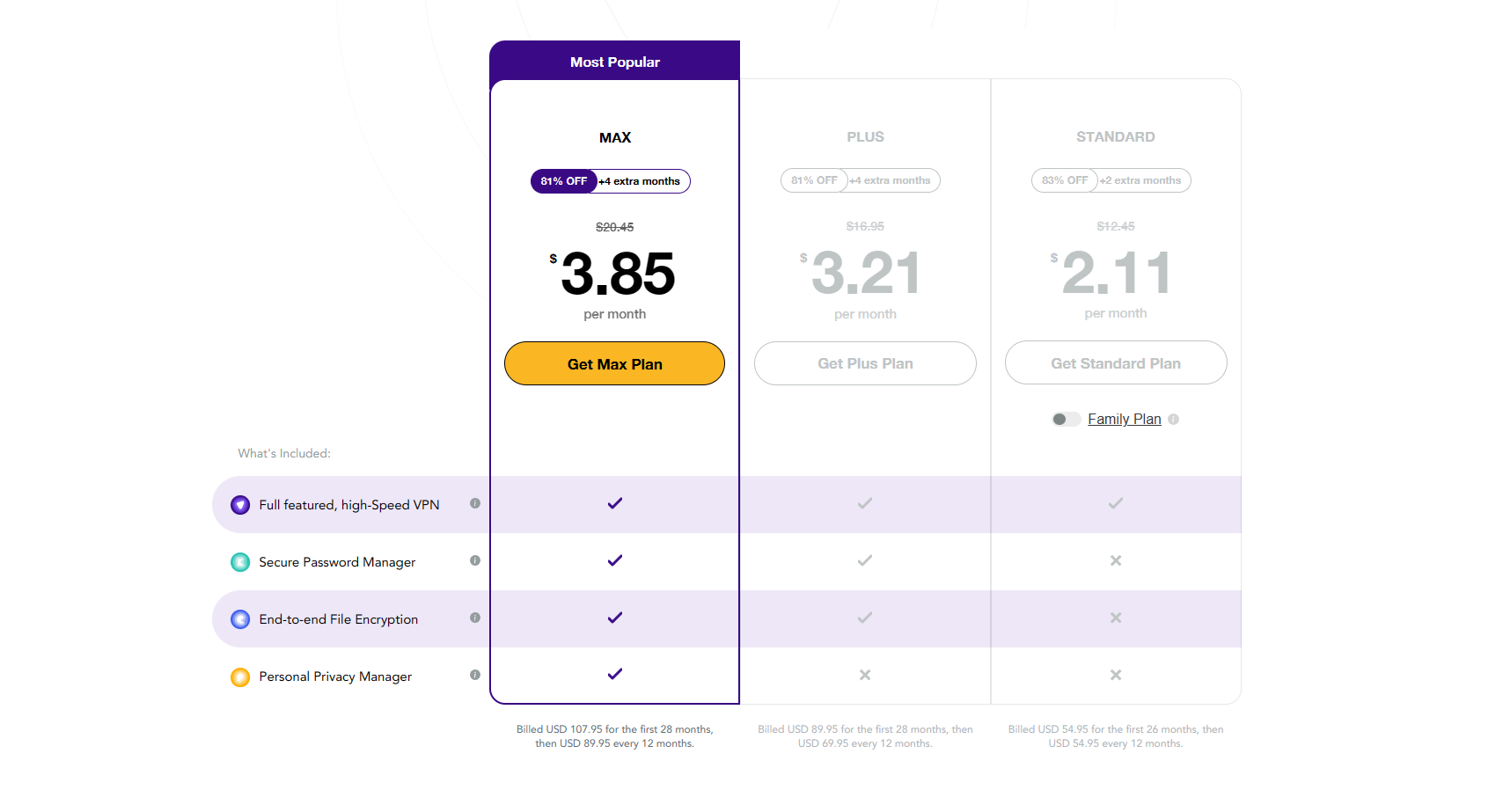
The pattern is standard for the category: the headline monthly rate is not worth it, the long commitment is, and the long commitment is what renews. Diarise the renewal date, because the second-term price is higher than the introductory one.
Who should use PureVPN, and who should look elsewhere
PureVPN is a sound pick if you want broad server coverage and up to 10 connections for close to the lowest price in the category, and if the KPMG always-on audit is enough to satisfy you that the 2017 problem is behind it. For unblocking streaming libraries, everyday privacy on public Wi-Fi and torrenting, it does the job.
Look elsewhere if the 2017 case is a dealbreaker no audit can fix, or if you want the fastest long-distance speeds and the most battle-tested track record. Pay more for ExpressVPN in that case, or take NordVPN for its larger feature set. Surfshark is the closer price rival if you want a clean history at a similar cost.
Related comparison: See how PureVPN compares in PureVPN vs NordVPN vs ExpressVPN: Best Value VPN in 2026? — or browse all comparisons & best-of guides.
Ready to try PureVPN?
Visit the official website to see the latest plans, pricing, and special offers.
Get Started - PureVPN* Affiliate link - we may earn a commission at no extra cost to you.