Whatagraph 评论:每月 999 欧元,以及它仍然为谁带来回报
Whatagraph 评论:Max 现在的费用为 999 欧元/月,每年收取 50 个源积分。它遗漏了哪些内容(Shopify、API、自定义域)、不退款合同和更便宜的替代方案。
专家评测

From EUR 0 to EUR 999 in five months
In May 2026 Whatagraph's pricing page listed three plans: Free at EUR 0, Start at EUR 199 and Boost at EUR 399 a month. By late August all three were gone, replaced by two plans called Max and Prime. When we checked the pricing page on 19 October 2026, Max cost EUR 999 per month, billed annually. Wayback Machine copies of that same page from 29 August, 23 September and 28 September 2026 all show EUR 699. The roughly 43% jump landed some time in the three weeks after that, and Whatagraph has not said on which day.
The help centre has not caught up. Its plan overview, last updated on 1 September 2026, still quotes "Max - EUR 699/month (EUR 8,388/year)". Budget from that page and you are EUR 3,600 short.
So this is no longer the cheap way into client reporting that older reviews describe. Whatagraph now calls itself "the agentic marketing intelligence platform", and it charges like one. The company you contract with is Whatagraph B.V., a Dutch entity, described as Amsterdam-based when it raised EUR 600k in 2019; its Series A investors were the Baltic funds Inventure, Open Circle Capital and LitCapital. This review answers one question: who is EUR 11,988 a year still a good deal for?
Source credits are the meter that matters
Users and reports are unlimited on both plans. The help centre says each plan includes 50 user seats by default and that "Extra seats are completely free", so there is no seat minimum to argue over. You pay by the source credit instead: "1 source credit = 1 connected data account (e.g., 1 Facebook Ads account)".
Max starts at 50 credits. Ten clients with Google Ads, Meta Ads, GA4, Search Console and one more channel each fill it exactly, which works out to about EUR 20 per connected account per month. Client number eleven means buying extra credits at a price Whatagraph does not publish, and the pricing page is blunt about where that ends: "You can purchase extra credits until you reach the next plan threshold, then it's time to upgrade." The next plan is Prime, priced as "Custom". Data transfers to other destinations draw on the same pool of credits.
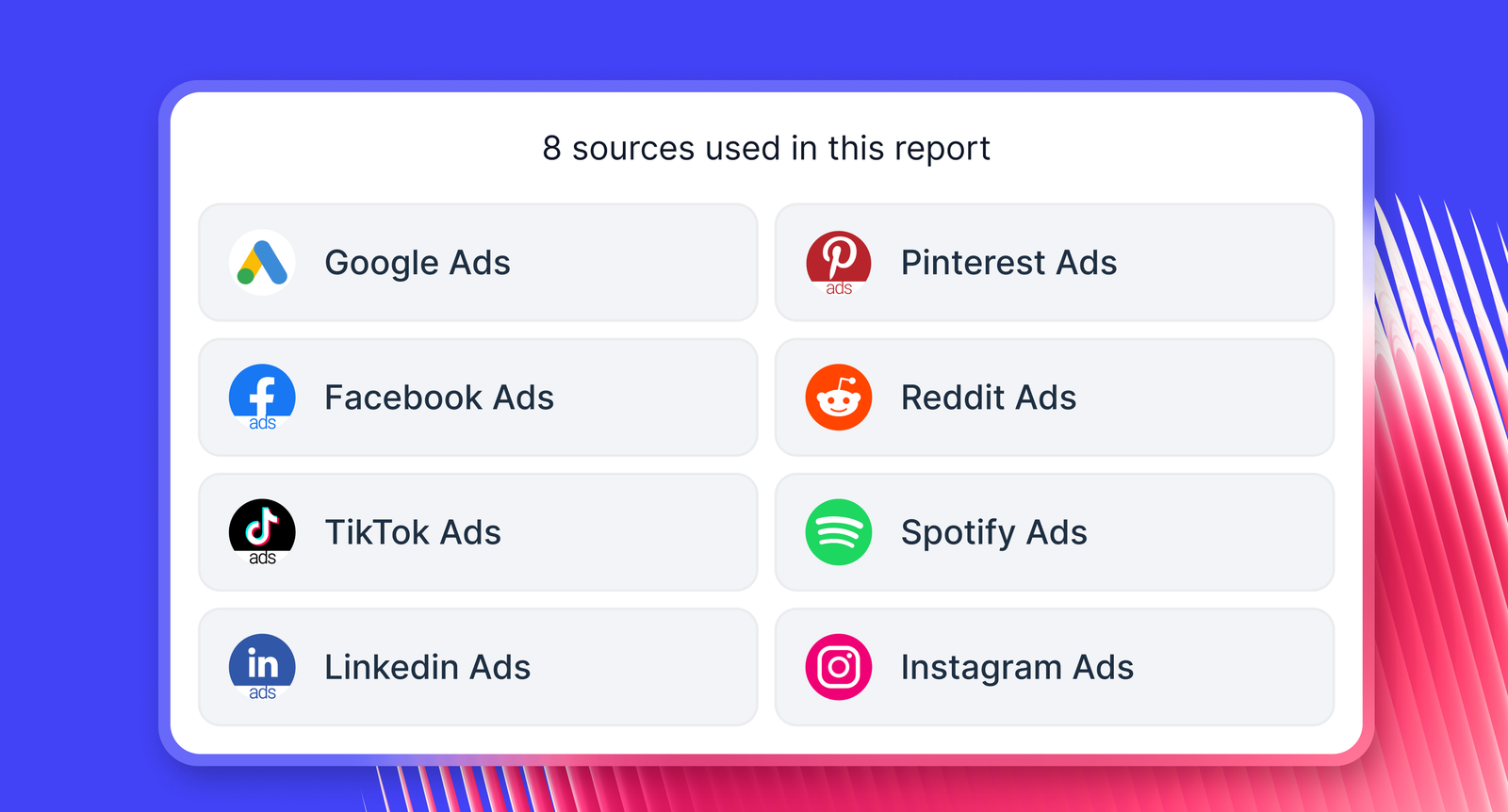
Source Groups help with multi-client reporting. They merge many accounts from the same channel into one aggregated source, so a portfolio report does not need a widget for every client account. The docs we read do not say whether a group bills as one credit or one per member. Ask on the sales call, because the answer can move your bill by hundreds of euros.
What EUR 999 a month does not include
The comparison table on the pricing page is where Max starts to look thin for its price. Several things you might expect from a four-figure plan are Prime-only:
| Feature | Max | Prime |
|---|---|---|
| Custom report domain | No | Add-on |
| Public API (push data in) | No | Add-on |
| Transfer to BigQuery | No | Add-on |
| Transfer to Looker Studio | No | Yes |
| Whatagraph IQ+ (custom prompts, dimension creation) | No | Yes |
| Single sign-on | Google login | SAML as add-on |
| Premium connectors (Shopify, HubSpot, Salesforce and more) | No | Yes |
| Enterprise SLA, priority support | No | Yes |
Two of those rows matter more than the rest. White-label branding is included on Max, but without a custom domain your clients still open their reports on app.whatagraph.com rather than reports.youragency.com. Worse for some agencies, the newest integrations article (13 October 2026) puts Shopify, WooCommerce, Magento, BigCommerce, HubSpot, Salesforce, GoHighLevel, BigQuery, Snowflake and the Custom API connector in a Premium tier "available only in the Prime plan". On that reading, an ecommerce agency paying EUR 999 a month cannot connect a client's Shopify store. Whatagraph's own documents disagree here, since the 1 September plan overview still lists Shopify under Max, so get the answer in writing before you sign.
The Advanced tier on every plan covers the usual paid and organic set: Google Ads, Facebook Ads, TikTok Ads, LinkedIn Ads, Microsoft Advertising, Amazon Advertising, GA4, Search Console, Google Sheets, Semrush, Ahrefs, Klaviyo, Mailchimp and CallRail among others. The homepage counts "60+" native integrations. The bigger "1000+" figure counts MCP connections, not connectors Whatagraph maintains itself.
Where the money goes: Data Hub and IQ agents
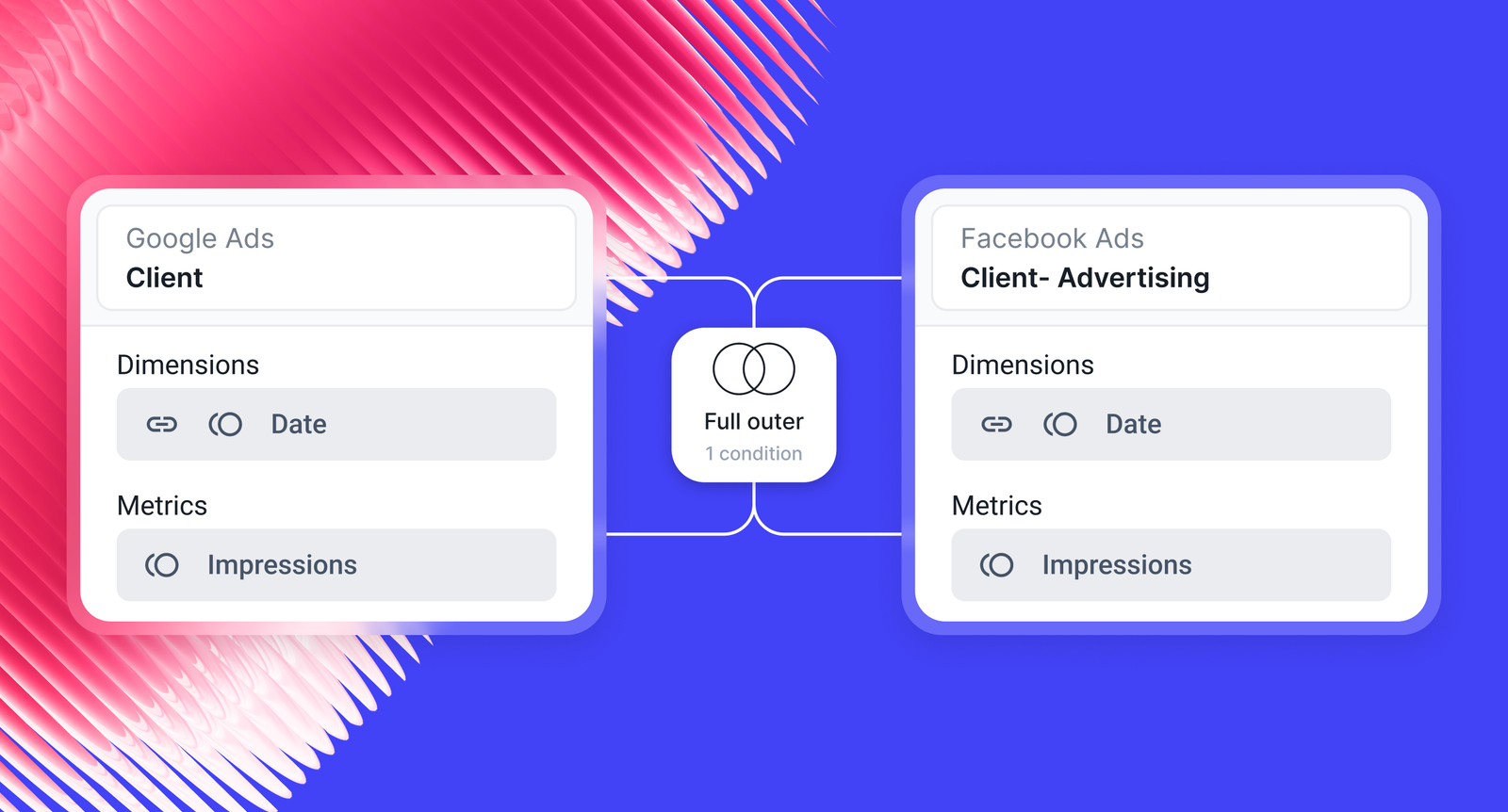
The Data Hub is the part a free Looker Studio setup has trouble copying. You blend sources into one table, for example Google Ads and Facebook Ads joined on date, then build custom metrics with formulas on top, such as cost per thousand impressions from Spend and Impressions. In Looker Studio a blend like that breaks whenever a connector changes. Here it is a saved source that every report reuses.
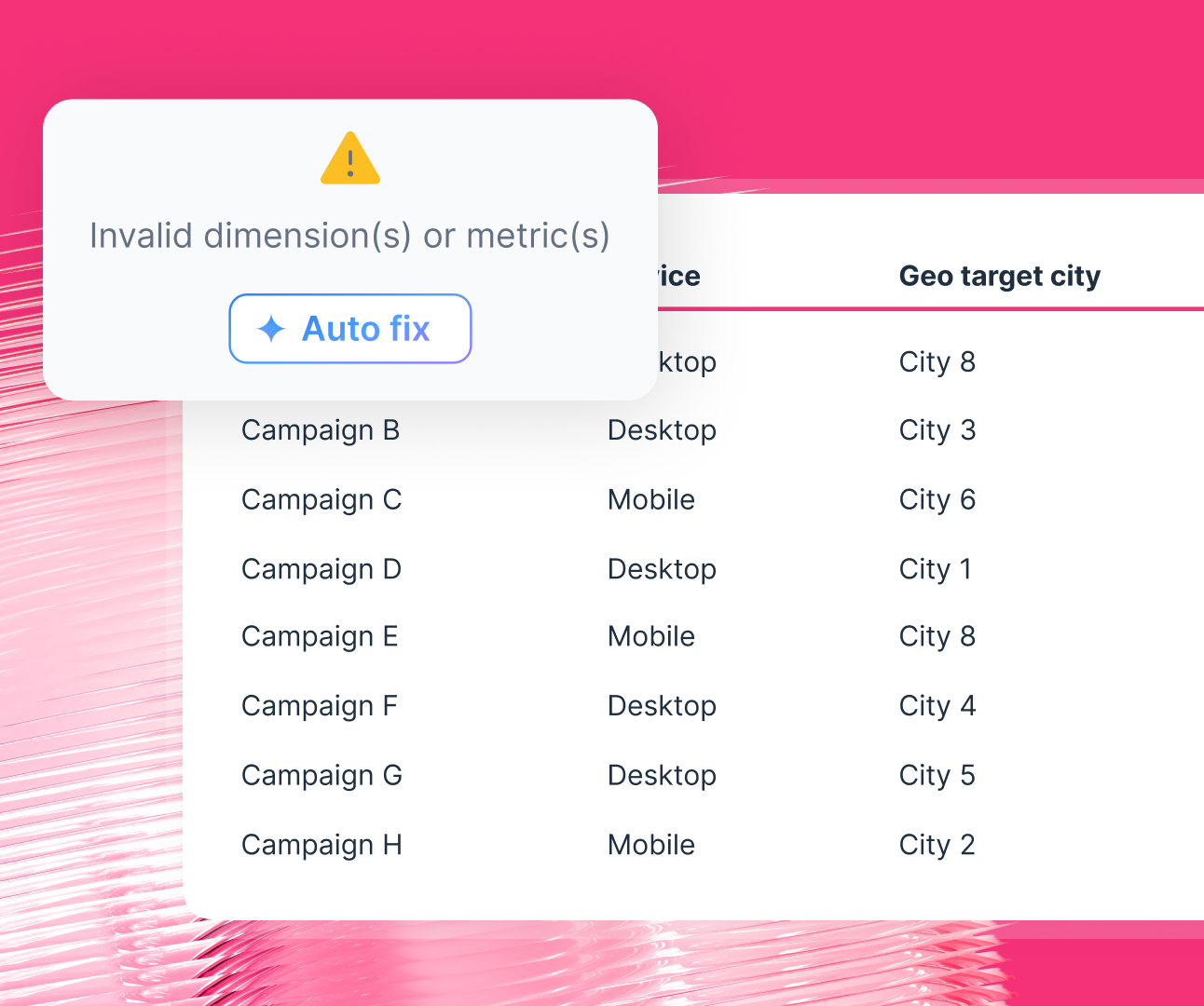
Max includes two pieces of AI. Whatagraph IQ handles report creation, chat with your data and written summaries. IQ Agents, which the help centre calls "AI teammates that work inside your Whatagraph account", are meant to "build reports, answer questions about your data, fix broken sources, onboard new clients, and run recurring checks". Fixing broken sources is the one an agency will feel. An expired Meta token is a common reason a Monday client report goes out with blank charts. Custom prompts and AI-created dimensions sit in IQ+, which is Prime only. A Whatagraph MCP server also lets outside AI tools read the data.
The AI does not change one limit: the data is not live. Widgets load from pre-synced storage, and scheduled refresh, still labelled Beta, runs every 4 hours, every 12 hours or once a day. A client who checks spend at 3pm may be looking at the morning's numbers.
Reports, history and exports
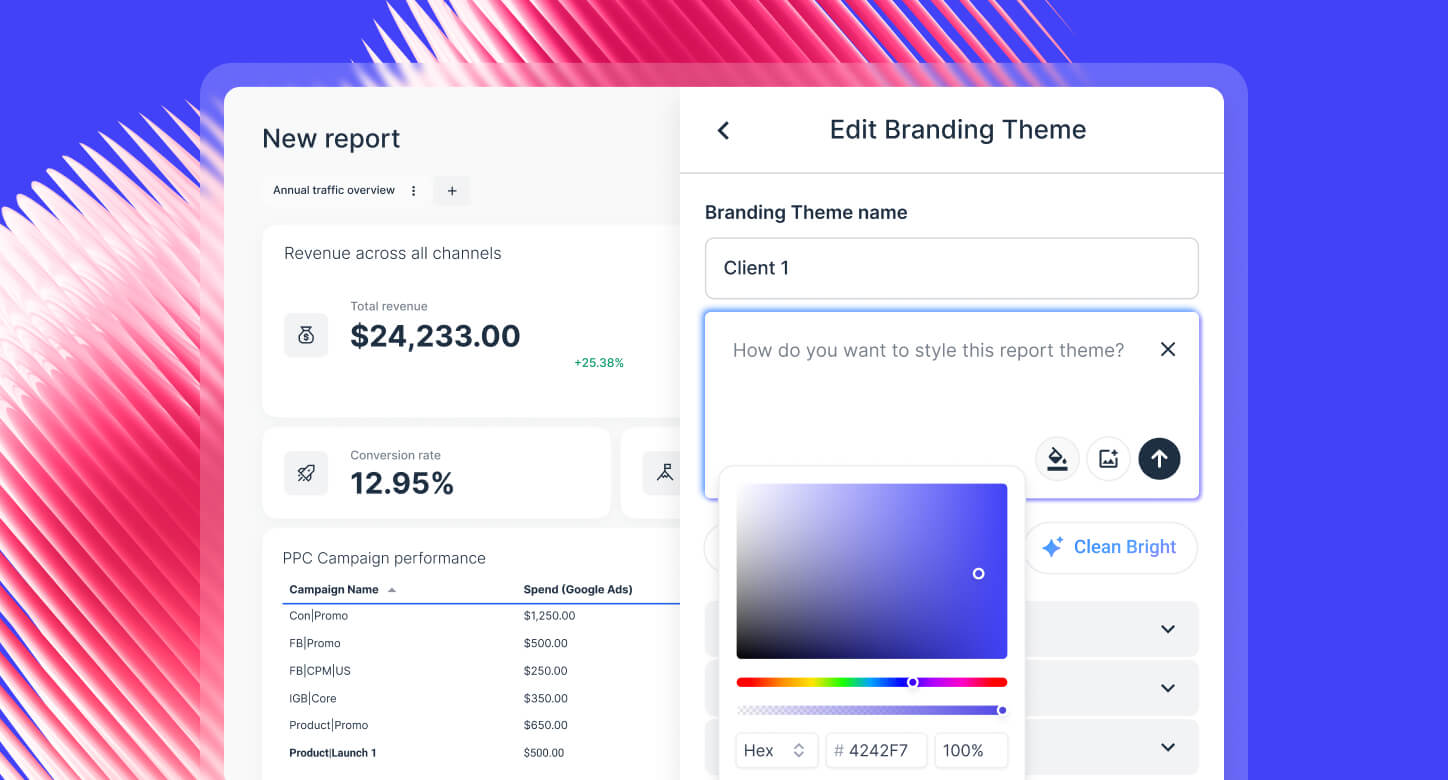
Reporting itself is still Whatagraph's strongest suit. Branded templates, drag-in widgets and automated emails with PDF and Excel attachments come with both plans. A PDF can merge every report tab into one file or give each tab its own page.
The gaps are in details the sales pages skip. Excel exports the whole report, but CSV exports one widget at a time, so pulling raw numbers out of ten widgets means ten downloads. Amazon Ads data "cannot be exported in either format" because of limits on Amazon's side. Several channels also arrive with no history: Instagram Business, LinkedIn, Pinterest Organic, Mailchimp, ActiveCampaign, Klaviyo and Campaign Monitor, with HubSpot missing some. A new client's year-on-year Instagram chart starts on the day you connect it.
The contract: annual, 30 days' notice, no refunds
Every new account starts on a 14-day Max trial with full access, and whatever you build during it stays in the account. To keep going you book a call. Neither plan has a self-serve checkout, and no monthly billing option appears on the pricing page or in the help centre. We could not confirm whether the trial asks for a card.
The exit terms deserve more attention than they usually get. Subscriptions renew automatically, and cancelling goes through live chat or support, "may require phone validation" and "must be submitted at least 30 days before your renewal date". "All subscription payments are non-refundable." The terms add that on termination Whatagraph "may delete all data, files, or other information" in your account and that backing it up is your job. There is no export tool for leaving, and CSV goes one widget at a time. Start the backup weeks before the notice date, not after it.
The few public reviews say this happens in practice. Trustpilot showed 2.5 out of 5 from 19 reviews when we checked on 19 October 2026. That is a small sample, but the complaints cluster. A May 2026 reviewer wrote "we were stuck paying for most of another year after canceling". In July another said client reports were deactivated "even though I had 47 days left on my paid subscription". A September review called the cost "absolutely astronomical".
Cheaper ways to send client reports
Below about 50 connected accounts, the maths rarely favours Whatagraph. All prices were checked on 19 October 2026.
| Tool | Entry price | How it scales |
|---|---|---|
| Whatagraph Max | EUR 999/month, billed annually | 50 source credits, then extra credits or Prime |
| AgencyAnalytics | $20 per client/month, billed annually | Per client, unlimited data sources |
| DashThis | $44/month paid yearly (3 dashboards) | $139/month for 10 dashboards |
| Databox | Free plan; Analyst $71/month billed annually | Agency from $79 plus $20/month account packs |
| Looker Studio | Free | Your own time spent maintaining it |
Ten clients on AgencyAnalytics come to $200 a month, roughly a fifth of Max, with white-label included. DashThis is cheaper still for a handful of dashboards, though its source cap bites as the roster grows. Databox's free plan and Looker Studio cost nothing if someone on the team will keep them running. None of them match the Data Hub's blending or the IQ agents, and that gap is what the extra EUR 800 a month buys.
Verdict
Buy Whatagraph Max if you are an agency or in-house team with around 50 connected ad and analytics accounts, you want blended cross-channel data, AI agents that repair broken sources and white-label PDFs in one tool, and you can commit close to EUR 12,000 upfront. At that scale the cost per account, about EUR 20 a month, is level with AgencyAnalytics, and the data layer is better.
Skip it if you report for fewer than ten clients, because AgencyAnalytics or DashThis do the job for a fraction. Skip it if your clients sell on Shopify or run on HubSpot or Salesforce, because those connectors now point you at Prime and a custom quote. And skip it if you need monthly billing or an easy exit. Whatagraph raised its main plan by EUR 300 a month in a matter of weeks, and its contract is annual with 30 days' notice and no refunds. Sign it with that in mind.