6sense Review: Intent Data, AI Agents and a Quote-Only Price Tag
6sense review, checked November 2026: quote-only pricing (Vendr median $62,220/yr), expiring credits, unenforced licence limits, buying stages, AI Email and BDR agents, and when Common Room, Clay or Apollo fit better.
Expert Review

What changed at 6sense in 2026
You can no longer try 6sense. Until this summer its pricing page offered a free Sales Intelligence plan with 50 data credits a month, company and people search, sales alerts, a list builder and the Chrome extension. That tier disappeared between mid-July and mid-August 2026, depending on which tracker you trust: UsagePricing saw the "Start for Free" buttons gone by July 14, while UpLead dates the removal to August 12 and says free-only accounts lost access.
Then, on November 3 at its Breakthrough 2026 conference in Las Vegas, the company rebranded as "the Partner for Agentic GTM" and put a BDR Agent into beta, billed as "the first of a family of 6sense agent coworkers". It is now led by CEO Amir Ravandoust, previously its COO. The name stayed. So did the hidden prices.
This review answers the two questions the website will not: what a 6sense contract usually costs, and which limits you only learn from the support docs. With no free plan left to sign up for, nothing here comes from hands-on use. The limits are quoted from 6sense's own documentation, checked on November 15, 2026.
Pricing: quote-only, around $62,000 a year
The pricing page, checked in November 2026, lists three starting points and not one number. Revenue Marketing is for marketers (advertising, segments, intelligent workflows, the RevvyAI assistant). Sales Intelligence is for sellers (company and contact data, recommended contacts, AI insights). 6sense Intelligence is for data and analytics teams. Each one says "Get a quote". No seat count, credit allowance or contract term is shown, and the add-ons - AI Email Agents, Bombora topic packs, extra credits, predictive models, data packs, professional services - carry no prices either.
The FAQ says each unit "is priced by the volume band it falls into, so larger purchases lower your average cost per unit". Translated: the smallest buyers pay the most per seat.
The best public figure comes from Vendr, which tracks 388 purchases: a median of $62,220 a year, with deals from $11,191 to $175,915 (guide last updated February 2026). Vendr also flags a platform access fee on top of seats, two- to three-year terms as the usual route to a lower annual rate, and annual price escalators of typically 5-10%. ZoomInfo, a competitor, puts the range at "$60,000 to $100,000+ annually", so read that one as a rival's estimate.
The escalator is the line to fight over. On a $62,000 three-year deal, a 7% yearly uplift makes year three about $71,000 and the whole term close to $200,000.
Limits the sales page leaves out
The support documentation is far more candid than the sales site, and five details in it change what a contract is worth.
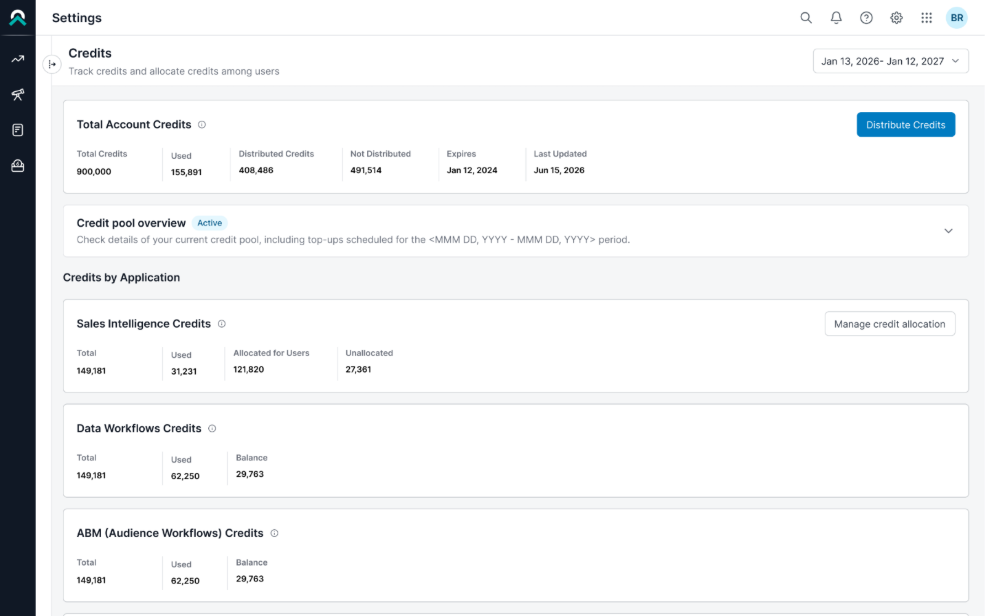
Credits expire and do not roll over. The allowance is set by your contract, "Credits do not carry over from one timeframe to another", and they expire "at 1:00 AM UTC on the expiration date, regardless of your local time zone". A team in California loses them at 5 or 6 PM the evening before. Top-ups go through your Customer Success Manager, not a button.
Licence limits are not enforced. In 6sense's words, the platform "does not enforce contractual license limits within the application", so a Primary Admin can invite more users than you paid for, and the admin takes one licence in each application. The risk is a bill at renewal, not an error message on the day.
Contact purchases have no default ceiling. "By default, no limits are configured", even though many contracts carry an annual contact allowance. Set the caps yourself in week one, or an eager SDR team can spend the year's allowance by spring.
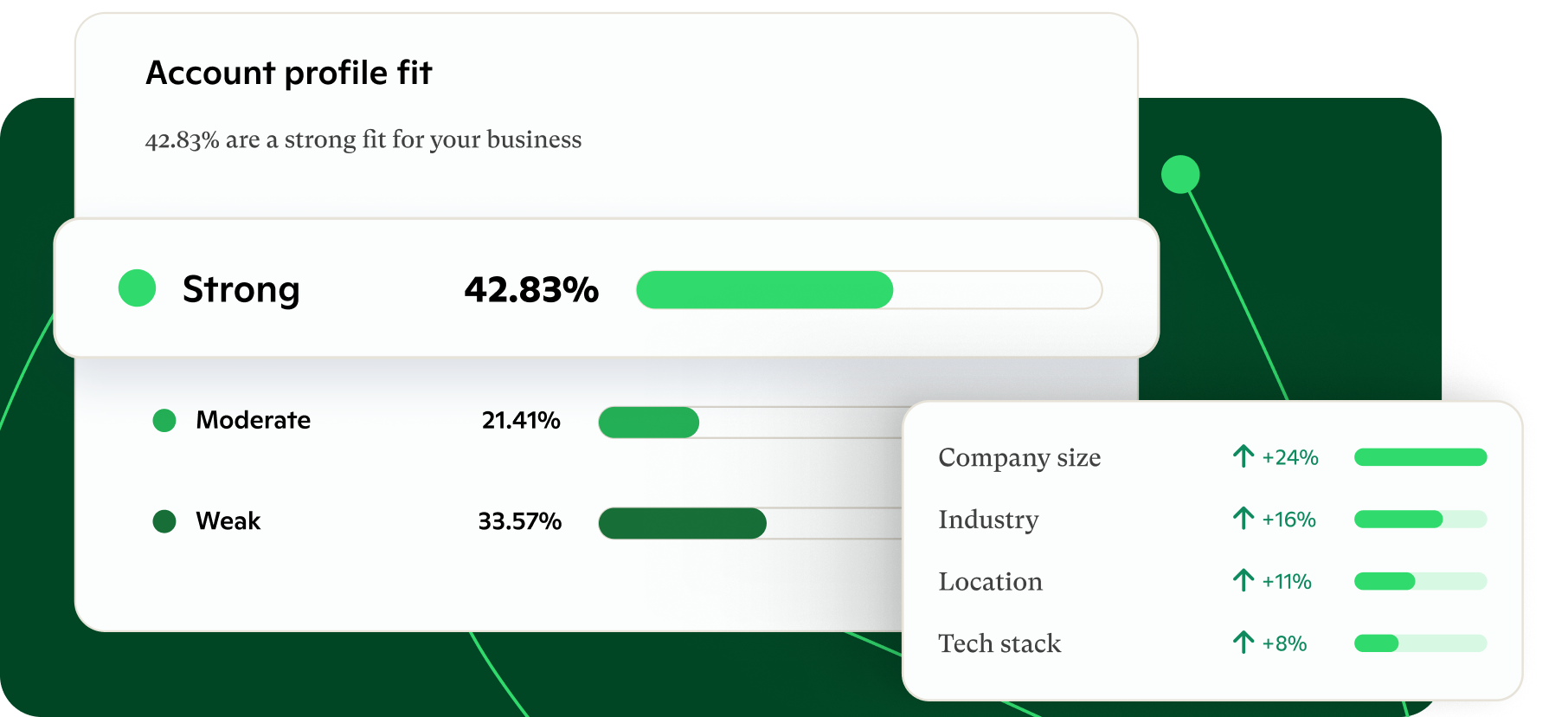
The headline feature arrives later. Until 6sense has built your predictive model, Sales Intelligence shows "No predictive insights, such as buying stage, 6QA, and engagement recommendations". Reviews on G2 and TrustRadius describe rollouts measured in quarters, and one TrustRadius title sums up the mood: "Great source of intent and lots of capabilities but also a lot of work".
Intent is mostly English. The keyword docs admit that "The vast majority of web events are on English language websites." A new keyword gets a seven-day lookback and takes 24-48 hours to show data. If your buyers research in German or Japanese, the signal thins out.
Existing customers have one more chore. Orchestrations "will sunset in 2026", and anything built there has to be rebuilt in Intelligent Workflows.
How the buying stages work
What 6sense really sells is a guess about timing. Its model sorts accounts into stages that "indicate the likelihood of an account opening or progressing in the next 90 days", fed by generic and branded searches, links clicked, forms filled, page views, your own site traffic through the WebTag, and CRM and marketing-automation activity. Branded keywords "get special weight". Each account's intent score lands it in one band.
| Stage | Intent score |
|---|---|
| Target | 0-19 |
| Awareness | 20-49 |
| Consideration | 50-69 |
| Decision | 70-85 |
| Purchase | 86-100 |
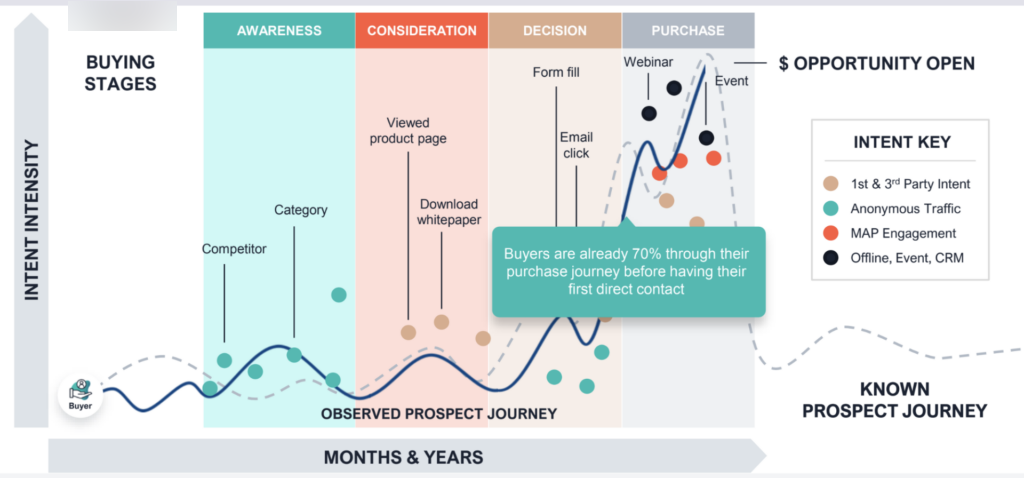
Visitor identification runs through the WebTag's Company Identification API, and that traffic "can take up to 24 hours to appear in Sales Intelligence". So 6sense is good at telling you which companies are warming up this quarter and weak at telling you who to call this afternoon. It names accounts, not people. Common Room pitches against exactly that gap.
Advertising, Sales Intelligence and the AI agents
Advertising is where Revenue Marketing earns its price. The campaign builder takes a budget, a max daily spend and a media CPM in dollars, plus a daily frequency cap; 6sense suggests starting at the default of 6. It buys LinkedIn ads and programmatic inventory across publishers, and the November release adds an OpenX integration and DV360 segment sync. Because targeting follows buying stage, you can stop paying for impressions at accounts the model rates cold.
Sales Intelligence is the rep-facing half: company and contact data, alerts, and a Chrome extension that is free for any licence holder. 6sense's own guidance caps LinkedIn profile views at 50 a day on a free LinkedIn account, 100 on Premium and 200 on Sales Navigator, so reps who prospect from LinkedIn will want Sales Navigator as well.
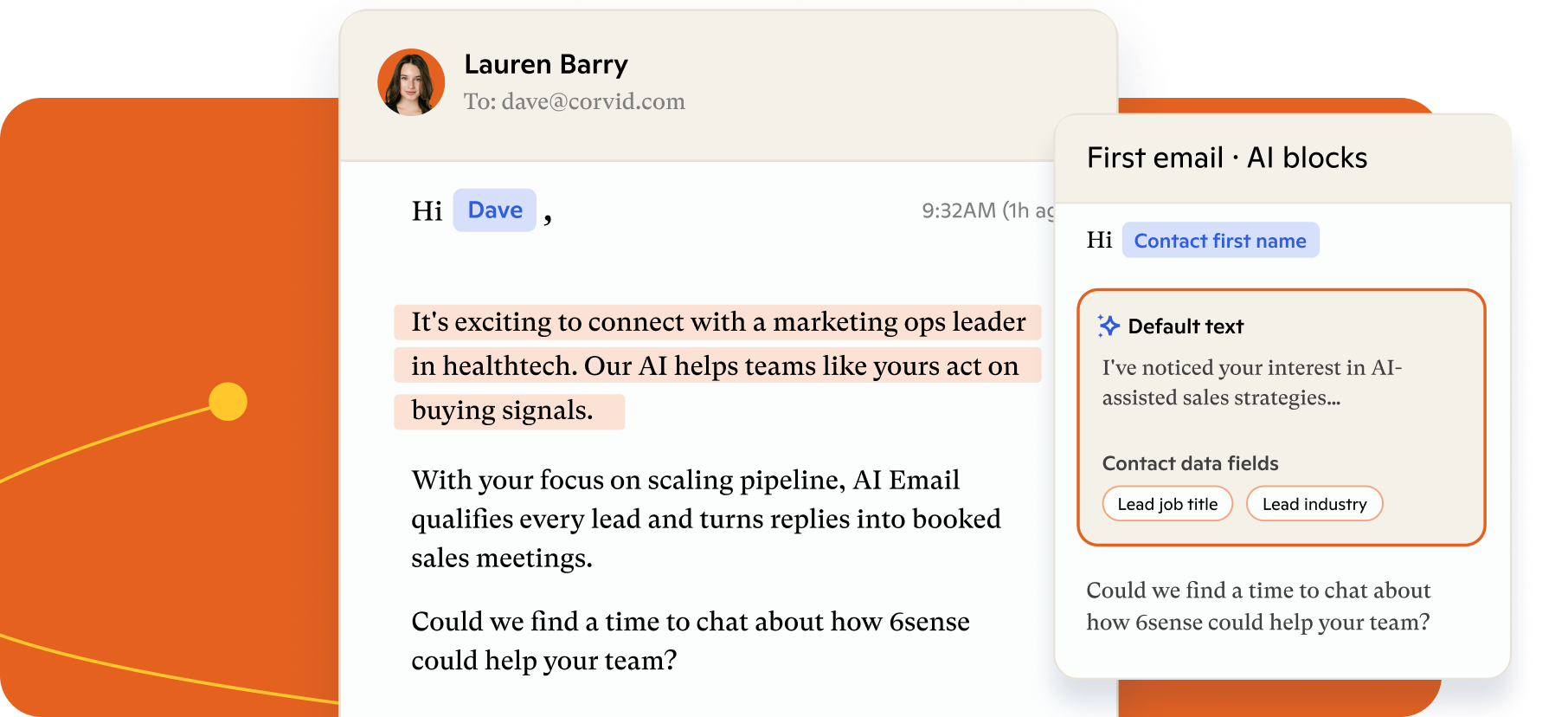
AI Email Agents, launched in August 2025 and sold as an add-on, write and send outreach through SendGrid, with a 30 MB ceiling on message plus attachments. The Breakthrough list is longer than what ships today. The BDR Agent and Explainability are in beta this month, AI Visibility follows in December, and the Competitive Threat and Deal Risk models are in closed beta. Only the Sales Intelligence MCP server and the keyword intent APIs are generally available. Pay for what is GA and treat the rest as roadmap.
Native integrations cover Salesforce, HubSpot, Marketo, Outreach, Salesloft, Gong Engage and the LinkedIn, Google and Meta ad platforms.
Where the data comes from
The privacy policy (updated August 24, 2026) says the business database is built from "data co-ops or publicly available sources" and from ad networks, exchanges and publishers using "IP address, cookies and other unique identifiers". It also says 6sense has "sold" business-related personal information from that database, and that your own uploaded data is not added to it. Individuals can opt out at privacy.6sense.com. The security paperwork is strong: an annual SOC 2 Type 2 audit across all five trust criteria, ISO 27001, ISO 42001 for AI management, and GDPR and CCPA/CPRA compliance.
Data quality is the complaint that recurs most in G2 and TrustRadius reviews - intent false positives and wrong contact details - followed by the learning curve and doubts about value for money. A 2024 right-of-publicity class action over the use of people's profiles in 6sense ads was dismissed in May 2025 and has been appealed.
6sense vs Common Room, Clay and Apollo
| Tool | Published price (checked November 2026) | Better at | You give up |
|---|---|---|---|
| 6sense | None; Vendr median $62,220/yr | Account buying stages plus ad buying in one contract | A visible price, a free tier, person-level signals |
| Common Room | Essential $2,500/mo, billed annually | Names the person behind the signal; 6 Bombora topics included | 6sense's predictive model and native ads |
| Clay | Free tier; Launch from about $167-185/mo | Cheap enrichment and workflows; web intent from Growth ($446/mo) | Buying stages and ABM advertising |
| Apollo | Free plan with no time limit | A contact database you can try today | Intent depth and predictive timing |
The like-for-like rival is Demandbase, at a third-party estimate of $50,000-$150,000 a year. Get both quotes.
Verdict
Buy 6sense if you are a mid-market or enterprise B2B team with an ABM budget above $50,000, a marketing ops person who can own the rollout, Salesforce or HubSpot plus Marketo already in place, and buyers who research in English. For that team, account-level intent, stage-based ad targeting and contact data under one contract is a genuine consolidation.
Skip it if you need to know which person is interested at a price you can see first (Common Room from $2,500 a month), want cheap enrichment and workflows (Clay from about $167-185 a month), need a free contact database (Apollo), or sell mostly outside English-speaking markets. If you do sign, negotiate the escalator, cap contact purchases and licence invites yourself, and spend your credits before 1:00 AM UTC on the day they lapse.
Ready to try 6sense?
Visit the official website to see the latest plans, pricing, and special offers.
Get Started - 6sense* Affiliate link - we may earn a commission at no extra cost to you.