AMD to Buy Fei-Fei Li's World Labs for $8.2 Billion in Stock
AMD will acquire Fei-Fei Li's World Labs for about $8.2 billion in stock, making Li chief scientist. What the deal means for Marble, Atlas and AMD's race with Nvidia in physical AI.
News Report

AMD agrees to buy World Labs
AMD said on Monday, September 28, that it has signed a definitive agreement to acquire World Labs, the San Francisco spatial-intelligence startup founded by Stanford professor Fei-Fei Li, for approximately $8.2 billion in stock. No cash changes hands. The deal is expected to close by the end of 2026, subject to regulatory approvals and customary closing conditions, according to AMD's press release. Until then World Labs stays independent.
Li joins AMD as Executive Vice President and Chief Scientist, reporting directly to CEO Lisa Su. World Labs' own announcement says its team becomes part of AMD's frontier research organization, with co-founders Justin Johnson and Ben Mildenhall still running it.
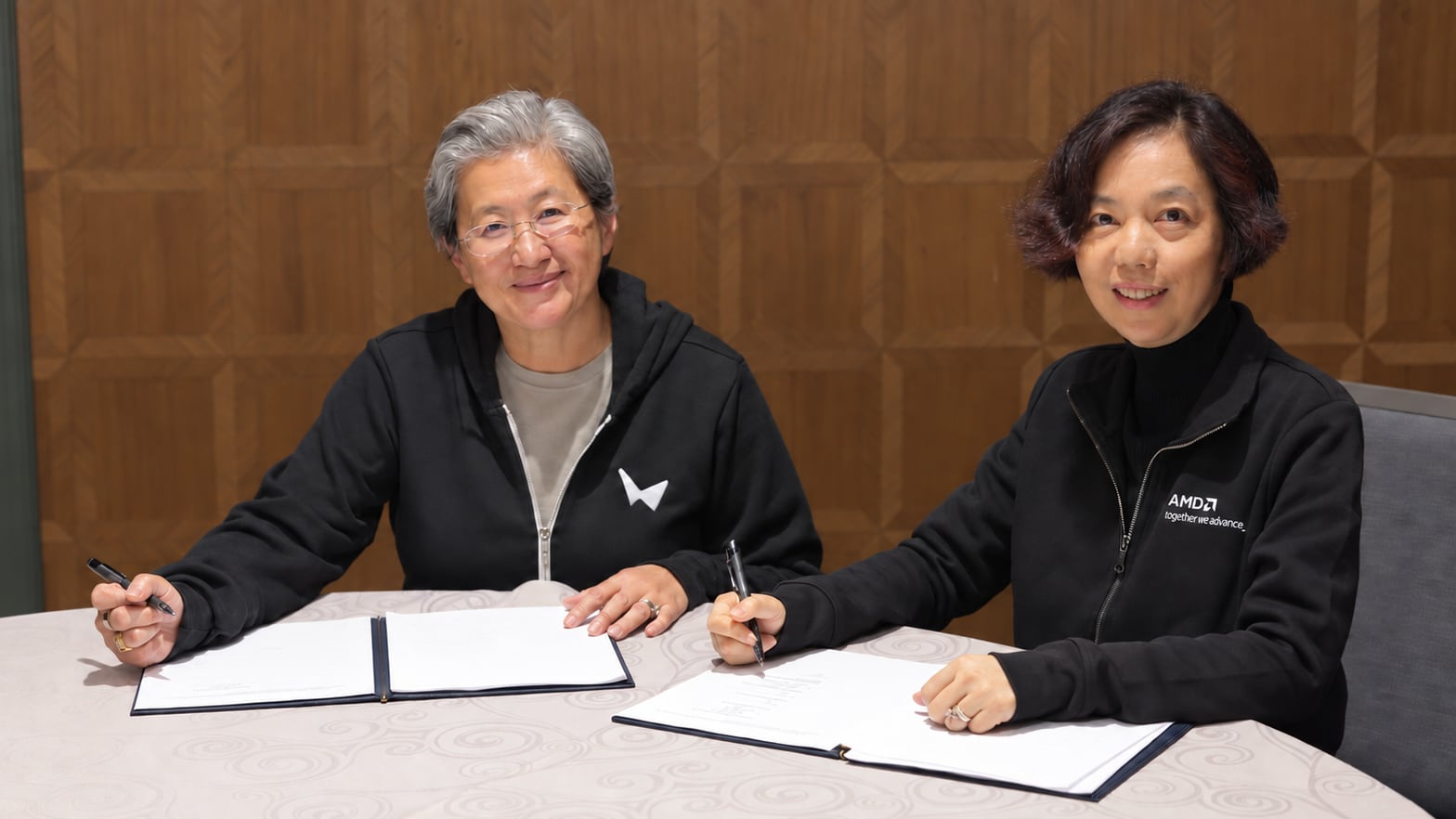
Image: World Labs
The two companies were not strangers. They started a technical partnership in 2025 on model training and inference optimization on AMD GPUs, and that work is what led to the acquisition. Li also appeared as a guest at AMD's CES 2026 presentation, TechCrunch notes. Investors shrugged: AMD shares were roughly flat in after-hours trading on Monday, per Fortune.
Why a chipmaker is buying a model lab
AMD sells the GPUs that train models, but it has had little of its own running on them in the physical world. Nvidia has plenty. Its Cosmos family of open-weight world models is already a common starting point for teams building autonomous vehicles, industrial robots and humanoids, while AMD offered only text and video models, as TechCrunch points out. Nvidia is also pushing into physical AI through partners such as self-driving company Wayve, Fortune reports.
A world model is the piece a robot needs. It understands 3D space, predicts what a scene looks like when a camera or an arm moves, and can generate environments to train in without wrecking real hardware. Owning the best-known independent lab in that field gives AMD a model roadmap to design silicon around, instead of chasing workloads that Nvidia's software already defines.
Su framed it in exactly those terms: "Building the compute platforms for the next generation of AI requires a deep understanding of how models are evolving." Li, speaking to Fortune, was blunter. "Without having a focused hardware effort, AI is hobbled in efficiency. And scale. And for our purposes, remains trapped in the digital world."
What World Labs actually makes
World Labs was founded in 2024 on a belief Li restated to Fortune this week: "language alone isn't sufficient for model development." She created ImageNet, the dataset that kick-started modern computer vision, and the company is her attempt to do for 3D space what large language models did for text.
Marble is the product anyone can use today. It turns images, video or a text prompt into an explorable 3D world, and it has been generally available since November 12, 2025. Its users range from studios building interactive entertainment to robotics teams generating simulated training environments.

Image: World Labs
Atlas, announced on September 1, 2026, is the bigger bet. World Labs calls it an "omni world model": text, images, video and 3D are all native inputs, along with camera poses and depth maps. From one to six reference images it generates up to a minute of 1440p video that follows an exact camera path. From one to dozens of photos it reconstructs a scene as point clouds or 3D Gaussian splats. World Labs says Atlas keeps getting better as training compute grows, which is precisely the property a GPU vendor wants to own.

Image: World Labs
Atlas is not public. As of September 29, 2026 it is in early access with select partners through a request form, with no date for a public API, and World Labs says it will power future versions of Marble.
The price, and who else had money in
$8.2 billion is a steep step up. In February 2026 World Labs raised $1 billion from a group that included AMD, Autodesk, Emerson Collective, Fidelity Management & Research, Nvidia and Sea. Autodesk alone put in $200 million to bring world models into 3D design workflows, TechCrunch reported. That round reportedly valued the startup at around $5 billion, a figure World Labs never confirmed.
So AMD is paying roughly 60% more than that reported valuation, in its own shares, for a company its biggest rival also backed seven months ago. Neither side has said what happens to Nvidia's stake, or to Autodesk's product plans, once the deal closes.
What changes for teams building on it
Nothing yet. Until the deal closes, Marble keeps running as it does today and Atlas access still goes through World Labs. The open questions are practical ones:
- Hardware. AMD's announcement names no products. It does not say Atlas or Marble will run only on, or best on, Instinct GPUs or the ROCm stack, and it gives no integration timeline.
- Openness. World Labs says the combined goal is "an end-to-end open AI ecosystem spanning hardware, software, platforms, and widely accessible open models". If that means open weights, AMD finally has an answer to Cosmos. Nobody has committed to releasing Atlas that way.
- Terms. Marble's plans are set by World Labs today. After closing they are AMD's to change, and AMD has said nothing about them.
Robotics and simulation teams standardized on Nvidia's stack should watch one thing: whether World Labs models stay hardware-neutral. A frontier world model tuned first for AMD silicon would be the first serious reason in physical AI to benchmark an AMD cluster. A model that quietly runs worse on Nvidia would be a reason to look elsewhere for simulation.
What happens next
The deal needs regulatory approval, which AMD expects to have by the end of 2026. A multibillion-dollar purchase by one of the two biggest AI chipmakers is the kind that draws antitrust review, and AMD has not said which jurisdictions must sign off. Until then the clearest signal to watch is Atlas: whether its early-access program widens, and whose hardware the announcement mentions when it does.