BigCommerce Review: Who It Still Suits After the New Plans and Payment Fees
BigCommerce review: Core $29, Growth $79, Scale $299 (annual), the $30K and $100K auto-upgrade caps, the Open Payment Provider fee on offline orders, and who should pick Shopify instead.
Expert Review

What changed on June 1, 2026
For years BigCommerce sold itself against Shopify on one line: no transaction fees, and generous sales limits before you have to move up a plan. On June 1, 2026 it rewrote most of that line. The four plans got new names (Standard, Plus, Pro and Enterprise became Core, Growth, Scale and Performance). The sales limits that force an upgrade came down. A new fee now applies to orders taken through any payment processor outside BigCommerce's approved list.
The base prices did not move. BigCommerce's own update page says pricing for Core and Growth "is unchanged from Standard and Plus" and Scale "is unchanged from Pro". Everything else around those prices changed, and most reviews and comparison tables still quote the old numbers. This review uses the plans as they stood on the pricing page when we checked it on October 7, 2026.
The company itself has been called Commerce (Nasdaq: CMRC) since July 31, 2025. The store builder is still BigCommerce.
Pricing and the automatic upgrade
| Plan | Annual billing | Monthly billing | Sales cap before a forced change | Before June 1, 2026 |
|---|---|---|---|---|
| Core | $29/mo | $39/mo | $30K trailing 12 months, then moved to Growth | Standard, $50K |
| Growth | $79/mo | $105/mo | $100K trailing 12 months, then moved to Scale | Plus, $180K |
| Scale | $299/mo | $399/mo | $33,333/month, then 0.9% on everything above it; moved to Performance at $2M a year | Pro, $400K plus $150 per extra $200K |
| Performance | Custom, from $1,499/mo billed annually | Contracted | Enterprise | |
Prices checked on bigcommerce.com/pricing on October 7, 2026. Annual billing saves 25%.
The cap is the part that matters. Hit $30K of trailing sales on Core and your plan upgrades itself to Growth, which costs $50 a month more on annual billing. You cannot step back down either: if your trailing 12-month sales are above a lower plan's threshold, BigCommerce says "that plan won't appear as an available option."
The number that counts is not your own revenue figure. BigCommerce measures sales as gross order value minus 10%, and it counts taxes and shipping. A store that thinks of itself as a $28K business because it strips out sales tax and postage may already be over the Core line.
Scale changed the most. The old Pro plan covered $400K a year and then charged $150 for each further $200K block. Scale covers $33,333 a month and takes 0.9% of the rest, month by month. On our arithmetic, a $50,000 month on Scale costs about $150 on top of the $299 base (0.9% of $16,667). A seasonal store with one huge December pays that overage even if its year averages out under the cap.
"No transaction fees" now has conditions
BigCommerce still charges $0 per order if every payment goes through one of its Embedded Payment Providers. The list is long and covers most of what a US or European store would pick anyway: Stripe, Adyen, PayPal (Braintree, Complete Payments and the wallet), Checkout.com, Worldpay, Global Payments, Klarna, Affirm, Afterpay, Sezzle, Amazon Pay and BigCommerce Payments, among others.
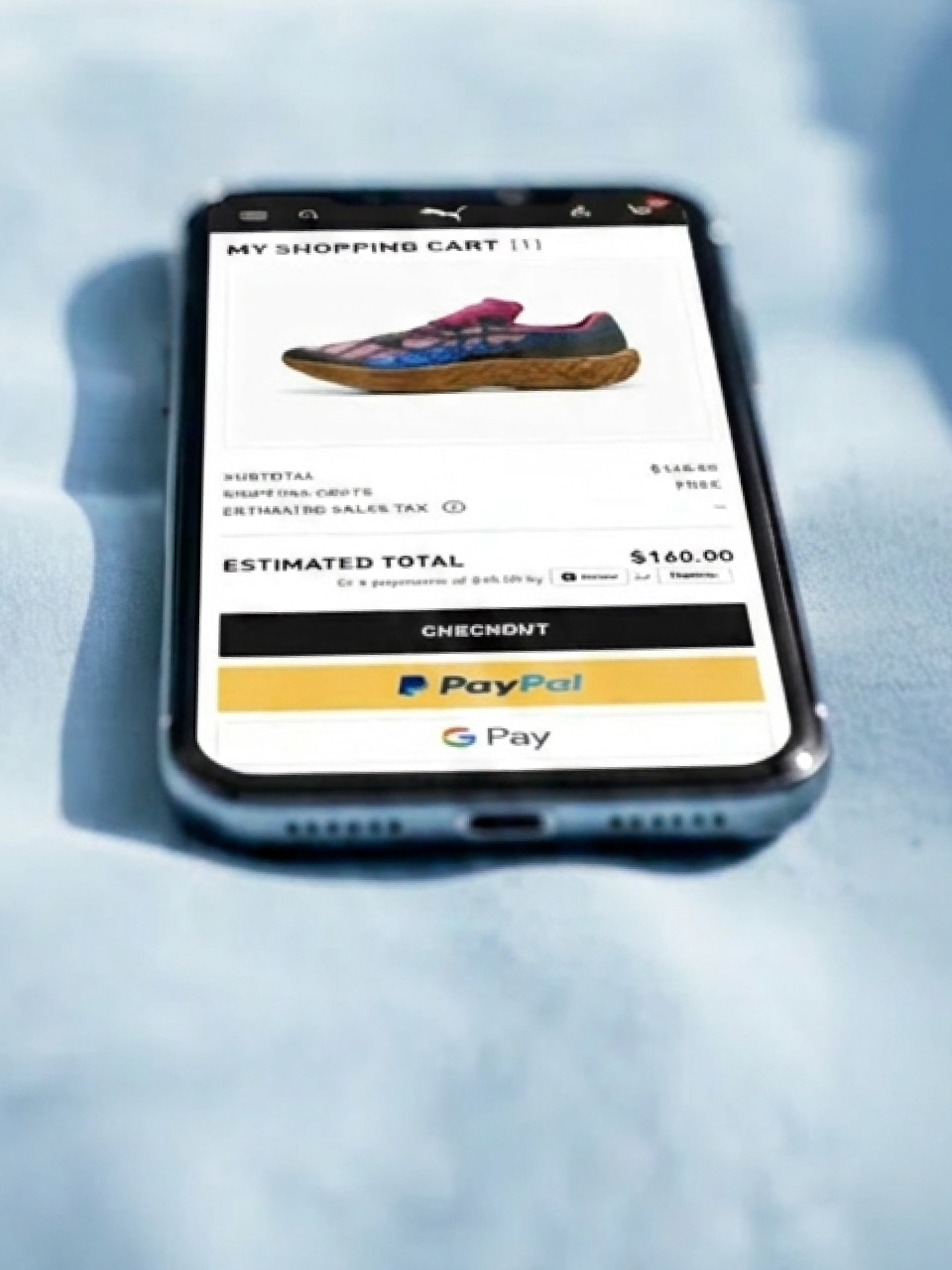
Anything outside that list now pays the Open Payment Provider fee. It is 2.0% of eligible order GMV on Core, 1.0% on Growth and 0.6% on Scale, with Performance on contracted terms. You are not allowed to pass it on to shoppers at checkout.
The detail that has caught B2B sellers is offline orders. BigCommerce's FAQ answers "Does the fee apply to offline orders?" with "Yes", and it names purchase orders and other manual payment methods. A wholesaler on Growth that invoices $27,000 a year by bank transfer would pay roughly $240 for those invoices (our arithmetic: 1% of the GMV figure after BigCommerce's 10% reduction). The money never touched BigCommerce, but the fee applies anyway.
Card processing through BigCommerce Payments "begins at 2.89% + $0.29 per transaction." That rate needs a US-based business on Growth, Scale or Performance. American Express is 3.50% with no fixed fee. "Begins at" is a floor, and the pricing page does not publish the rate each plan actually gets.
What each plan actually gets
Core lacks more than its price suggests. Abandoned cart recovery, customer groups, persistent carts and stored credit cards all start at Growth. Faceted search filters (size, colour, price) start at Scale. Price Lists, the SKU-level custom pricing B2B buyers expect, are Performance only. Extra storefronts cost $30 a month each on Core (up to 3), $50 on Growth (up to 5) and $100 on Scale (up to 8).
Products, storage and bandwidth show no limit on the pricing table, but the page never says "unlimited". The developer docs put API limits at 20,000 requests an hour on the old Standard and Plus plans and 60,000 on Pro. If an ERP syncs your inventory every few minutes, check that number first.
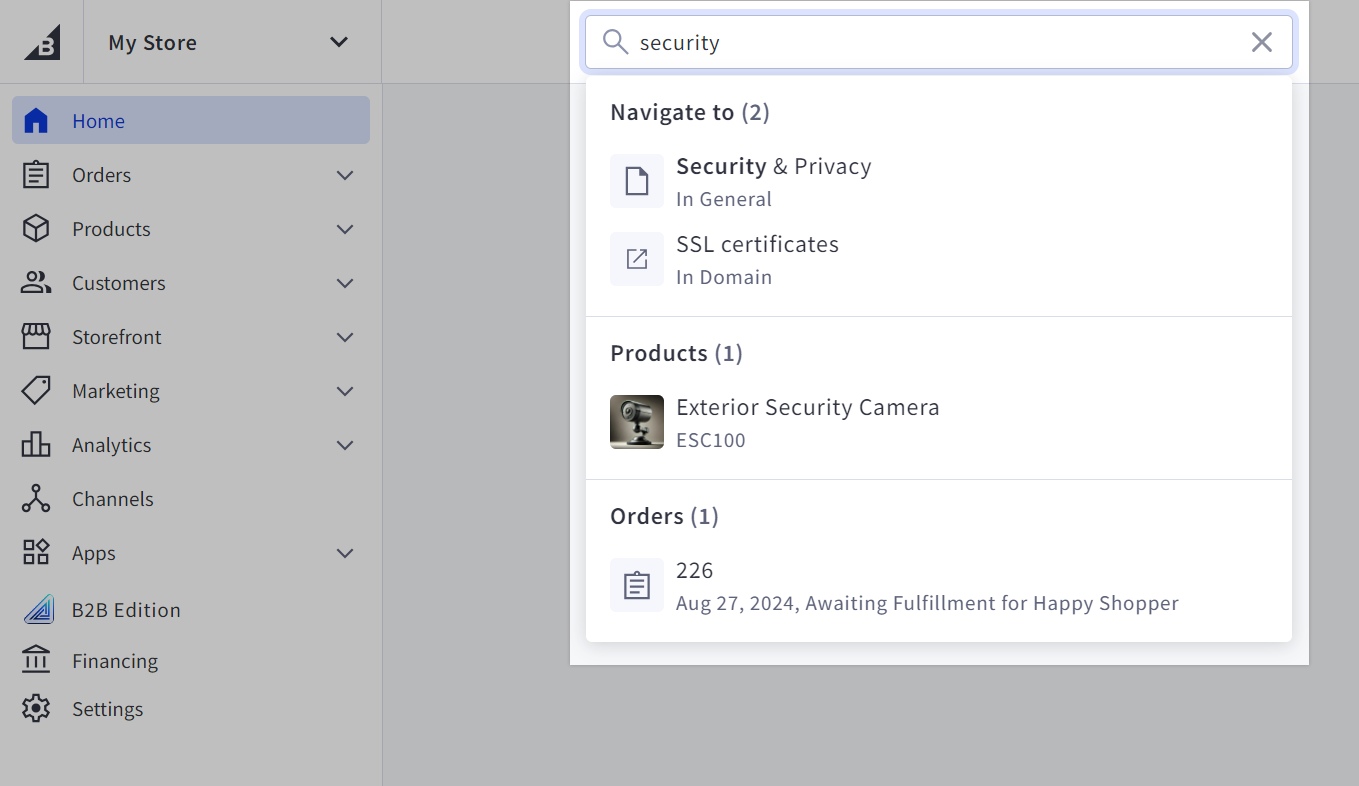
The control panel itself is better than its reputation. A redesign brought a cleaner left-hand menu, simpler names under Products, and a global search box that finds settings, orders and products from anywhere in the admin.
The AI and headless push
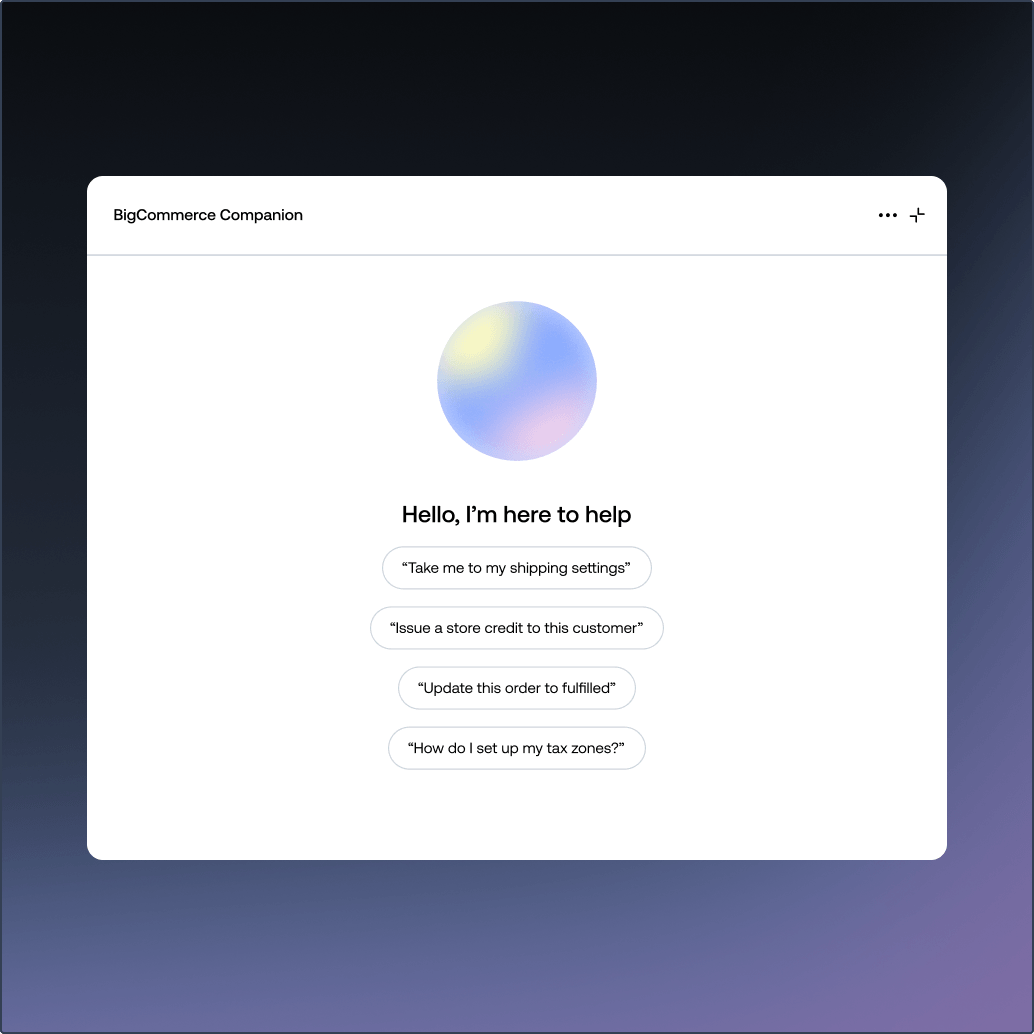
On April 30, 2026 the company announced product distribution into ChatGPT, Gemini, Copilot and Perplexity, "agent-enabled checkout", and a merchant assistant called BigCommerce Companion. Catalyst, its headless storefront, was promised free Cloudflare hosting "coming to open beta this summer". We could not confirm that beta has shipped, so don't plan around it yet.
BigCommerce vs Shopify after the change
At the entry level the two now look much alike. Shopify Basic is $29 a month billed annually or $39 monthly, the same as Core. Shopify charges 2.9% + 30c on cards and a 2.0% fee when you use a processor other than Shopify Payments. That is the same 2% BigCommerce now charges on Core for an unlisted processor.
The difference is the cap. Shopify does not move you to a pricier plan because your sales grew. BigCommerce does, at $30K. On top of that, Core is missing abandoned cart recovery, a feature most small stores pay for back within a month. For a store under $100K a year, the old "zero fees" advantage has mostly gone. Our Shopify review covers the other side of that trade, and Ecwid is cheaper still for a store bolted onto an existing site.
BigCommerce still wins further up. On Scale, with Stripe or PayPal, there is no per-order fee at all. Several storefronts run from one catalogue. Native B2B tooling and an open API make headless builds simpler than on Shopify's equivalent tiers. For a $500K store already on an embedded processor, the June changes cost little or nothing.
Support and what customers say
Core gets 24/7 chat and email. Phone support, which was included on Standard, is now a paid add-on. Growth, Scale and Performance get 24/7 phone and chat, and Performance adds a dedicated customer success manager.
The summer of 2026 shows up in user reviews. Trustpilot showed a TrustScore of 1.3 from 460 reviews when we read it on October 7, 2026: 51% one-star, but 28% five-star, so opinion is split rather than uniformly bad. The recent complaints are mostly about the new pricing. One from July 2026 says "they increased my invoice by 300% (1000$/month)". One from August reads "they're now charging small business 1% for offline transactions". Another, from June, says "Emails upon emails trying to reach support ignored."
The company's Q2 2026 results explain the motive. Revenue was $84.5 million, up 0.1%, while merchant sales on the platform rose 14% to $8.8 billion. Fees on sales volume let it share in that growth.
What leaving looks like
An April 2026 Trustpilot reviewer wrote that "once you're in, it becomes very difficult to move later." Third-party migration guides explain why (BigCommerce's help centre would not load for us). Products export to CSV or XML and customers to CSV, minus passwords, so every customer resets theirs on the new platform. The theme and custom storefront logic are rebuilt from scratch. CSV exports can drop metafields, custom fields and full variant relationships, so a catalogue heavy on custom fields means a developer and the API, not an afternoon with spreadsheets.
The free trial is 15 days with no card required. If you do not pick a plan, BigCommerce keeps the store's data for 90 days, but your shop is closed to customers in the meantime.
Verdict: who should buy BigCommerce, and who should not

Buy it if you sell somewhere between $100K and a few million a year, take payments through Stripe, PayPal, Adyen or another processor on BigCommerce's embedded list, and need what Shopify charges more for: several storefronts, native B2B tools, faceted search and a headless option. On Scale with an embedded processor, you pay $299 a month and no fee on each order, which is still a good deal for that size of store.
Skip it if you are under $30K a year. Core costs the same as Shopify Basic, forces an upgrade sooner, and leaves out abandoned cart recovery and phone support, so Shopify or Ecwid is the better start. Skip it too if you rely on a processor outside the embedded list or take a real share of orders by invoice or purchase order. You will pay 0.6% to 2% on those orders for nothing in return, and a platform like AmeriCommerce or WooCommerce will cost less.
BigCommerce is still a capable store builder for mid-size and B2B sellers. Since June 2026, though, "no transaction fees" is only true if you use one of its approved payment providers.
Ready to try BigCommerce?
Visit the official website to see the latest plans, pricing, and special offers.
Get Started - BigCommerce* Affiliate link - we may earn a commission at no extra cost to you.