Cisco Patches a Root Zero-Day in Secure Email Gateway Already Under Attack
Cisco disclosed CVE-2026-76461, a 9.8-severity unauthenticated root RCE in Secure Email Gateway under active exploitation. No workaround exists; here are the fixed AsyncOS builds and the log indicator to check.
News Report

What happened
Cisco on September 14, 2026 disclosed CVE-2026-76461, a critical flaw in the email-parsing logic of AsyncOS for Secure Email Gateway that lets an unauthenticated attacker run commands as root by sending a single crafted message. It carries a CVSS 3.1 base score of 9.8 (AV:N/AC:L/PR:N/UI:N/S:U/C:H/I:H/A:H): reachable over the network, no login, no user interaction. Cisco's PSIRT says the bug was already exploited in the wild around the time the advisory went out.
The mechanism is a SQL injection that escalates into operating-system command execution. A message carrying malicious SQL statements reaches the parser, the statements run, and from there an attacker lands a root shell on the appliance. Cisco's security advisory states plainly that no workaround exists. Upgrading is the only fix. Because the trigger is an inbound email, an attacker does not need to find an open management port or guess a password; they need only get a message accepted for processing, which is the appliance's entire job.

Why it matters
A Secure Email Gateway sits at the edge of an organization's mail flow, inspecting every message that comes in or goes out. Root on that box is not a foothold on one laptop. It is control of the device that handles the company's email, along with the credentials and the plaintext traffic passing through it. From there an attacker can read and rewrite messages, harvest saved credentials, or use the appliance as a quiet pivot into the rest of the network.
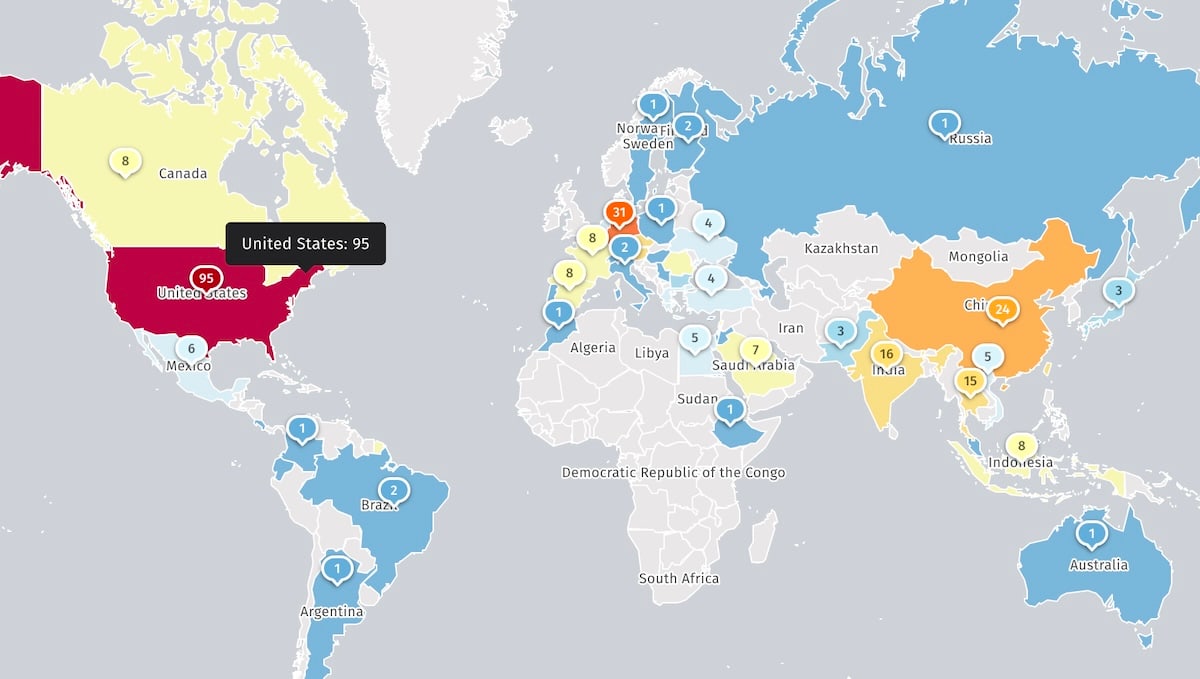
Cisco flagged a second danger that outlasts the patch. Root access lets an attacker delete or hide the traces of the intrusion, so an appliance compromised before the fix can look clean afterward. Patching closes the hole. It does not tell you whether someone already walked through it. Shadowserver counted more than 400 internet-exposed Secure Email Gateway appliances at disclosure, each one a candidate.
Who is affected, and the fixed builds
The flaw affects Secure Email Gateway physical and virtual appliances regardless of configuration, on AsyncOS 15.5 and earlier, 16.0, and 16.5. Cisco says Secure Email and Web Manager and the Secure Web Appliance are not affected.
Fixed builds, checked on Cisco's advisory September 16, 2026:
- 15.5 track: upgrade to 15.5.5-0141
- 16.0 track: upgrade to 16.0.4-3021
- Cisco recommends migrating to 16.5.0-780
Cisco patched four other critical Secure Email Gateway and Secure Email and Web Manager bugs the same day (CVE-2026-76440, CVE-2026-76441, CVE-2026-20353 and CVE-2026-76443), with no sign that any of those four has been exploited. CVE-2026-76461 is the one under active attack.
The one indicator to check
Cisco published a concrete detection sign. Administrators should search their mail logs for COPY ... TO PROGRAM SQL statements, which point to an attempt to turn the injection into command execution, as reported by The Hacker News. A hit is reason to treat the appliance as compromised and open an incident, not merely to patch and move on. Because root access can erase later log entries, the absence of that string on an already-patched box is reassuring but not proof, and organizations with exposed appliances should preserve and review logs from before the upgrade.
What happens next
CISA added CVE-2026-76461 to its Known Exploited Vulnerabilities catalog on September 14 and set an unusually short clock: federal civilian agencies have three days, until September 17, 2026, to patch or stop using the product, according to SecurityWeek. It is the second Cisco appliance zero-day to hit the KEV list with a three-day deadline in recent weeks, after the ASA and FTD firewall flaw CVE-2026-20349.
For anyone running this gear the sequence is short. Upgrade to a fixed build now, because there is nothing to configure around it. Then grep the mail logs for the indicator Cisco named, and if it turns up, assume root was reached and respond accordingly. A mitigation to buy time is not something Cisco has left on the table.

Read the original source
Head to the original source for the full announcement and complete details.
Read Original Source