Clearbit Review: What Is Left of It Inside HubSpot
Clearbit review, checked November 2026: no standalone plans, enrichment now free inside HubSpot, buyer intent billed at 10-50 credits per company. Who should use it.
Expert Review

The Clearbit you remember is gone
Search for Clearbit pricing and you still find tiers, a free plan and a Chrome extension. None of it can be bought. HubSpot announced it was acquiring Clearbit on November 1, 2023, closed the deal on December 4, 2023, and spent the next two years folding it into its own CRM. Since April 30, 2025 the help center has said it in one line: "We're no longer offering new standalone Clearbit subscriptions."
So this review answers a narrower question than most. Clearbit today is the data enrichment and buyer-intent layer inside HubSpot - the thing HubSpot sold for a while as Breeze Intelligence. Is it worth having, and is it worth moving to HubSpot to get it? Every price and limit below was checked against HubSpot's product catalog and knowledge base in November 2026.
The short version. If you already run HubSpot, the enrichment half now costs nothing extra and you should switch it on, carefully. If you don't, Clearbit is no reason to start.
What shut down, and when
It came in stages, and old tutorials still point at tools that no longer answer.
| Date | What happened | Replacement Clearbit named |
|---|---|---|
| Dec 5, 2023 | New sign-ups require a HubSpot account | - |
| Mar 19, 2024 | "Clearbit by HubSpot" launches as a HubSpot-centric experience | - |
| Apr 30, 2025 | Free Clearbit Platform, Weekly Visitor Report, TAM Calculator, Clearbit Connect and the free Slack integration sunset; the free Risk and Name to Domain APIs end; no more standalone subscriptions | HubSpot enrichment and buyer intent; HubSpot Smart CRM for Slack; nothing for Connect |
| Dec 8, 2025 | The public Logo API (logo.clearbit.com) is switched off, a week after the December 1 date first announced | Logo.dev, or the logo field in the paid Company Enrichment API |
The November 24, 2025 changelog entry announcing that last cutoff is the final one Clearbit has posted. There are no 2026 entries.
Existing customers sit in a holding pattern. Their Salesforce, Marketo and Segment integration guides are still maintained - the Segment one was updated in March 2026 - and Name to Domain and Risk survive for them as "free, legacy products ... unsupported." Only the Autocomplete API is open to anyone.
If your app still loads images from logo.clearbit.com, those images are broken. Logo.dev's migration guide swaps the host for img.logo.dev and adds a publishable key as a token parameter on every request. Its free Community plan needs no card, but a commercial project on it must show a visible link back to Logo.dev.
What you actually get inside HubSpot
Three features carried over, and they now behave very differently on the bill.
Contact and company enrichment
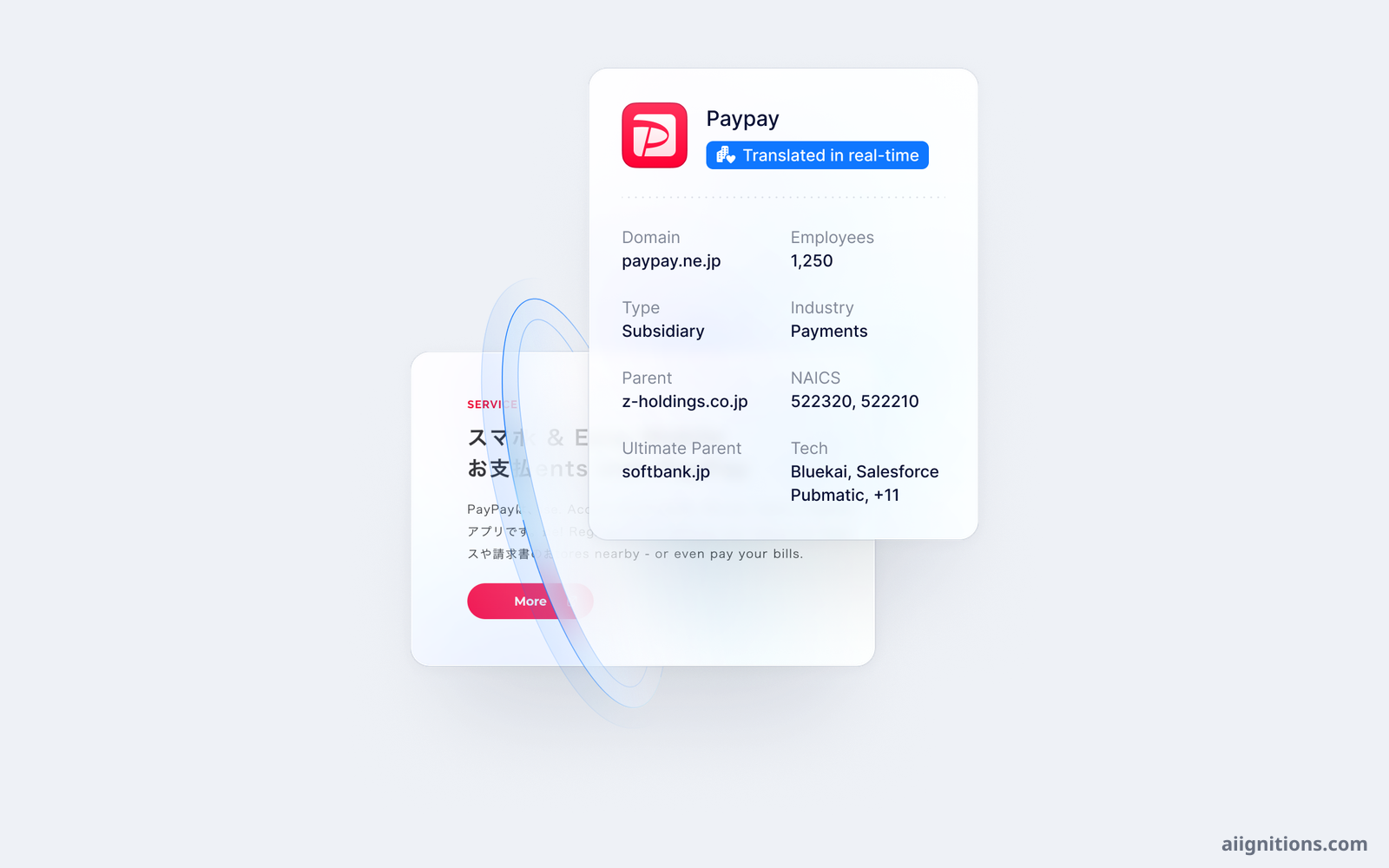
HubSpot's September 2024 launch claimed "over 200 million company and buyer profiles" and "over 40 firmographic, demographic, and technographic attributes"; it has published no newer figure since. The clearbit.com page that now greets visitors adds 6-digit NAICS, GICS and SIC codes, corporate hierarchies and normalized role and seniority. Enrichment writes those fields onto contact and company records, and HubSpot's knowledge base is blunt about the cost: "Data enrichment does not consume HubSpot Credits."
Two catches. Automatic enrichment is off by default, so nothing happens until an admin turns it on. And Smart properties - the AI-generated fields that sit beside the enriched ones - do burn credits. Ignore the blog posts claiming one enrichment costs 10 credits; HubSpot's own article, last modified in July 2026, says otherwise.
Form shortening
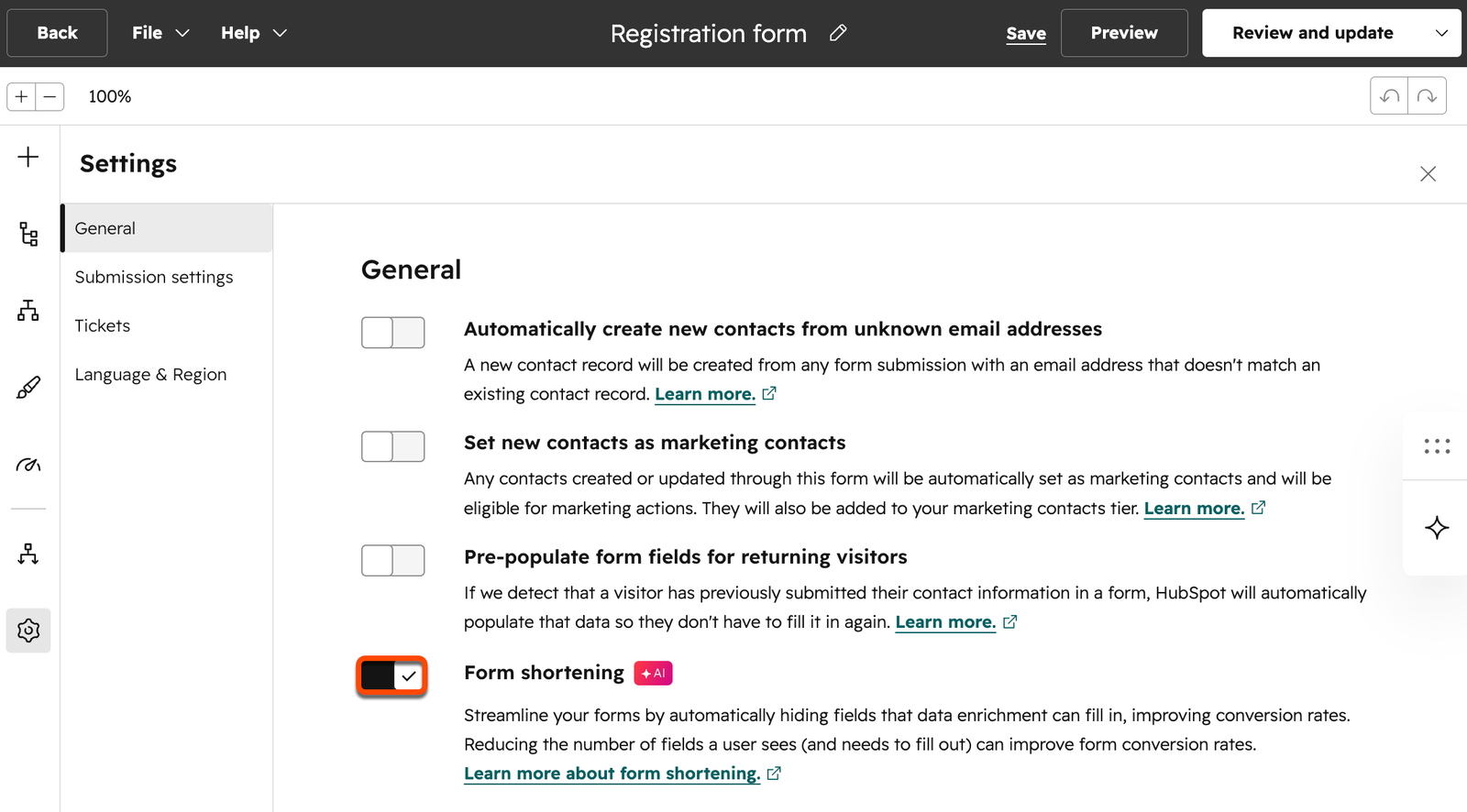
A visitor types a work email and HubSpot hides the fields it can already fill, such as company size, industry and role. Since September 3, 2025 form shortening "no longer needs or consumes HubSpot Credits." On the old Clearbit-by-HubSpot plans it cost one credit per unique form filled or shortened, so busy demo forms got cheaper.
Buyer intent
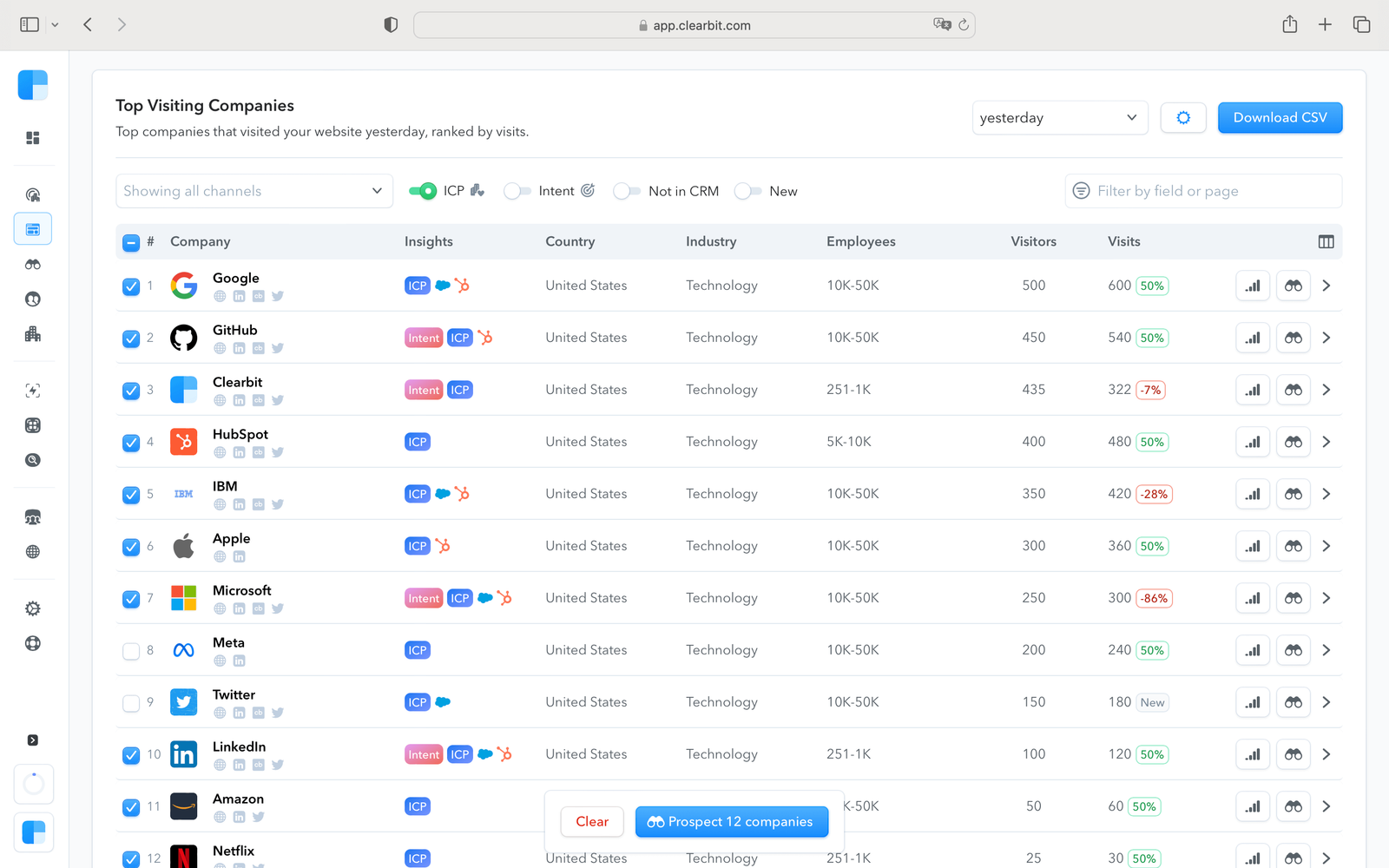
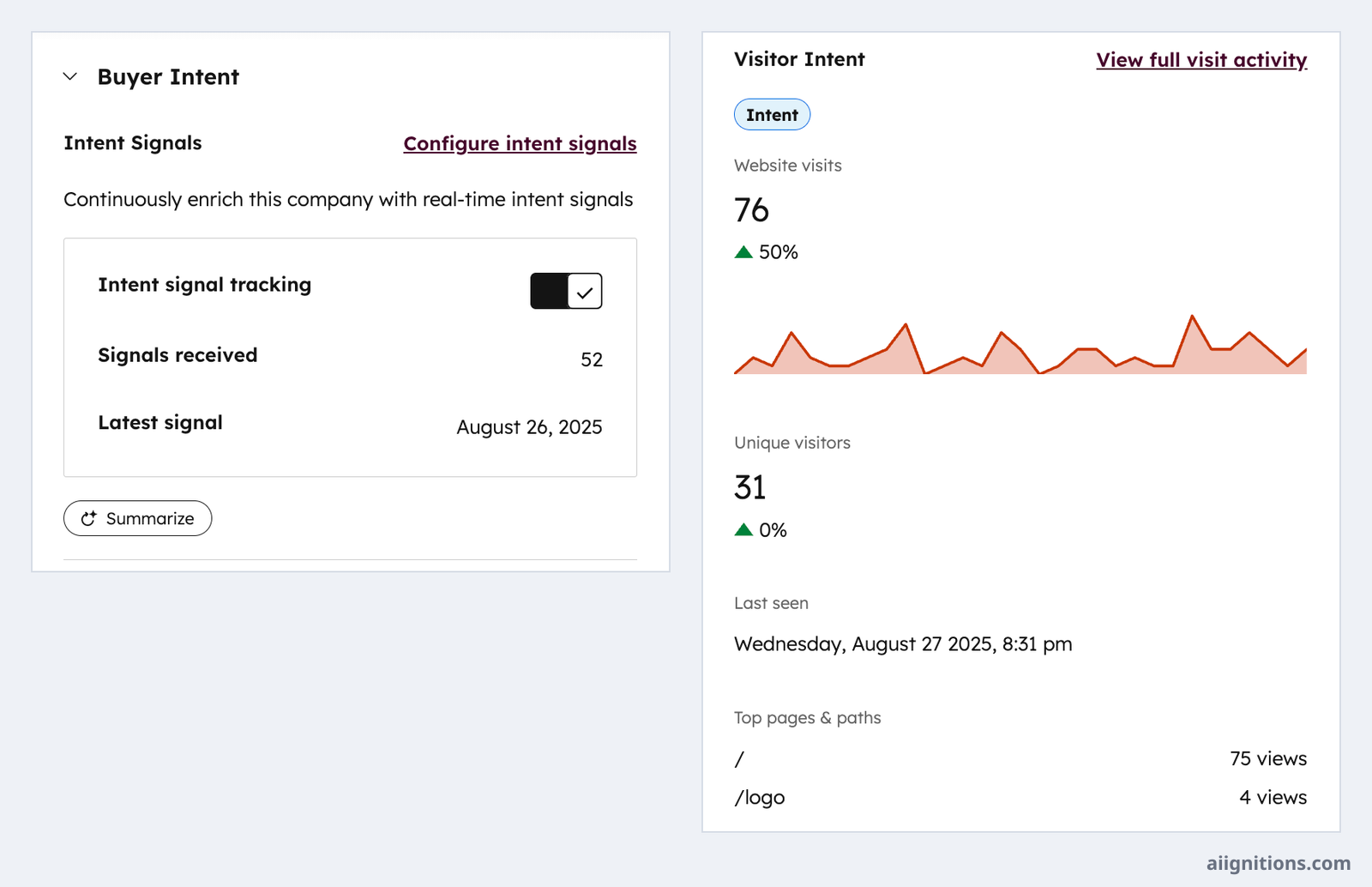
This is the successor to Reveal and the Weekly Visitor Report. It matches website visits to companies through the HubSpot tracking code, which has to be installed on your site, and lets you monitor target accounts for research signals. It is also where the money goes.
Pricing: HubSpot seats plus credits
There is no Clearbit price list. You pay for HubSpot, and the usage-based parts draw on HubSpot Credits. These figures come from HubSpot's product and services catalog, checked in November 2026 (last modified November 2, 2026).
- Entry ticket. A Core Seat, which includes "enriched data" and Smart CRM, is $20 per seat per month on Starter, $50 on Professional and $75 on Enterprise. The catalog does not say whether that assumes monthly or annual billing.
- Credits. $0.010 each - $10 per 1,000 - bought pay-as-you-go or as capacity packs.
- Included each month. 500 credits on any Starter hub, 3,000 on a Professional hub, 5,000 on Enterprise. Data Hub and Customer Platform get 5,000 on Professional and 10,000 on Enterprise. Allotments do not stack across hubs; you get the single highest one.
Unused credits expire at the end of each month. Run dry on included credits alone and usage-based features "pause until your next reset date". Buy extra capacity packs and you cannot cancel or downgrade them until the contract term ends.
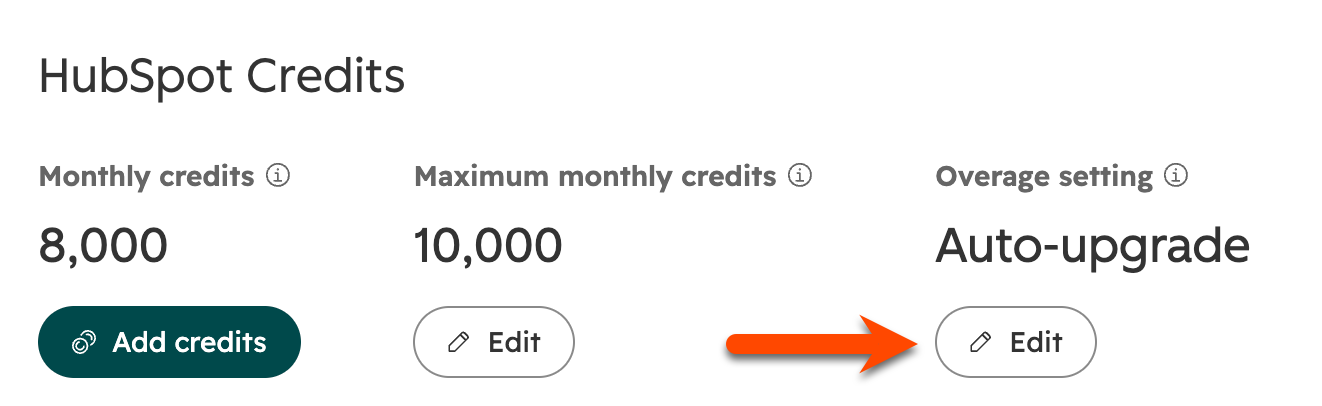
What happens when you go over changed on September 16, 2026. Credits bought before that date default to auto-upgrade, which moves you to the next capacity pack for the rest of the term. From that date on, the default is pay-as-you-go: overages billed monthly in arrears, in steps of 10 credits. Check which setting your account carries under Account & Billing before you switch intent on.
What buyer intent really costs
HubSpot's rate sheet prices intent per company. Enabling intent signals to monitor a company for one month costs 10 credits. Creating a company record from a market segment costs 10. Watching one company for one custom signal for one month costs 50, and the Data agent charges 10 per prompt per record.
Multiply it out. A Starter account's 500 included credits cover 50 companies on standard signals, or 10 on a single custom signal. A Professional Marketing Hub's 3,000 stretch to 60 companies with one custom signal each. Track 100 accounts for one custom signal and you have spent 5,000 credits - the whole Enterprise allotment - before Smart properties take their share. Bought pay-as-you-go, that is $50.
And it recurs. A company added and tracked in the same billing period is charged once, but tracking is charged again every month it stays on. With no credits at all, a buyer intent view shows 20 companies and stops there.
Your contacts feed the dataset
HubSpot's marketing pages leave this out. When you run one-time or automatic enrichment, "limited business contact data from that enrichment may also be contributed back to the commercial dataset." The CRM you enrich helps enrich everyone else's. Continuous enrichment alone, which only keeps already-enriched records current, adds nothing, and switching enrichment off ends your account's participation.
The legal work lands on you: HubSpot makes customers responsible for "notices and opt-out mechanisms and collecting consents." In the EU and some other regions HubSpot emails a contact when they are added to the commercial dataset, so a prospect can hear about your CRM from HubSpot before they hear from you. A European team should walk through these terms with whoever owns GDPR before flipping the automatic switch.
What users complain about
Data accuracy, mostly. We could not load G2 directly, but competitor write-ups quoting it put Clearbit at about 4.4 out of 5 across roughly 630 reviews, with "Inaccurate Data" the most-mentioned con at 133 mentions. The blogs repeating it sell rival tools, so weigh it accordingly. Monthly-expiring credits and the HubSpot lock-in come up next.
The sharper complaint comes from HubSpot's own community. In a thread opened in May 2025, customers objected that HubSpot pulled the old Insights company data mid-contract, which "completely screws with database segmentation", and that the answer amounted to "Tough Luck, Buy Breeze credits." A reply that September defended the move: "The Insights database had serious flaws." Enrichment has since stopped costing credits, so that particular bill is gone. The lesson is not. HubSpot sets the rules here, and it has changed them in the middle of a term before.
Who should skip it, and what to use instead
Anyone whose CRM is not HubSpot. New buyers cannot get the standalone Salesforce or Marketo integrations, so Clearbit data now means running HubSpot. The same goes for developers who enriched sign-ups through Clearbit's API in their own product: that door is closed to new accounts. Depending on what you used Clearbit for, these are the places to look:
- Contact emails and phone numbers for outbound: Lusha, RocketReach or Kaspr.
- EU-heavy prospecting where compliance matters: Cognism.
- Prospect capture inside a sales workflow: LeadIQ.
- Account-level intent across a big target market: 6sense or Demandbase.
- Company logos in your app: Logo.dev, the replacement Clearbit itself pointed to.
Verdict
Clearbit is no longer a product you choose. It is a feature of HubSpot, and judged as one it has become better value since 2025: enrichment and form shortening cost nothing beyond the seat, and a $20 Starter Core Seat is enough to reach them.
Take it if you already pay for HubSpot. Turn enrichment on, decide deliberately about the data-sharing that comes with automatic enrichment, and point buyer intent at a short list of target accounts rather than your whole market. At 50 credits per company per custom signal, the length of that list is what sets the bill.
Do not move to HubSpot for Clearbit. If your CRM lives elsewhere, Lusha or Cognism will enrich it without a platform migration, and 6sense or Demandbase handle intent at account scale. And if all you ever used was the free logo URL, it went dark on December 8, 2025.
Ready to try Clearbit?
Visit the official website to see the latest plans, pricing, and special offers.
Get Started - Clearbit* Affiliate link - we may earn a commission at no extra cost to you.