The FCC Banned Foreign Robots, Not Chinese Ones. The Difference Catches Your Next Roomba.
The FCC's July 28, 2026 Covered List action is not a China ban. The definition catches robot vacuums, warehouse robots and allied-country makers, and the exemption asks for a US factory plan.
News Report

What the FCC Did on July 28
On Tuesday, July 28, 2026, the Federal Communications Commission added two new categories to its Covered List: "advanced robotic devices" and connected power inverters. Anything on that list is barred from receiving an FCC equipment authorization, and almost no wireless device can be legally imported, marketed or sold in the United States without one. The action took effect the same day. There is no transition period.
The headlines that followed were close to unanimous. The United States had banned Chinese humanoid robots. That is roughly the point at which the reporting stops matching the document.

The national security determination did not originate at the FCC. It came from a White House-convened Executive Branch interagency body, and the Commission's role was to adopt it and act on it. Chairman Brendan Carr's statement was that "following President Trump's leadership, the FCC will continue to do our part to secure America's critical supply chains." The Commission's own fact sheet, which runs through the surveillance and remote-commandeering risks in detail, does not name China. It does not name any country.
Four Tests, and Humanoids Are the Small Part
Read the definition and the scope stops looking like a humanoid rule. A covered device is any mechanical mobile device capable of locomotion, obstacle avoidance, navigation or movement on the ground, operating at a distance from a human operator, that also satisfies every one of the following:
- Weight: more than 4.4 pounds, roughly 2 kg, counting any dock or ground station.
- Sensing: at least one sensor that perceives its environment.
- Connectivity: a wired or wireless link carrying 200 kb/s or more in either direction. Wi-Fi, Bluetooth, cellular and satellite all count.
- Software: code handling navigation, movement, perception, data collection or remote command and control.
Nothing there describes a humanoid in particular. It describes a Roomba.
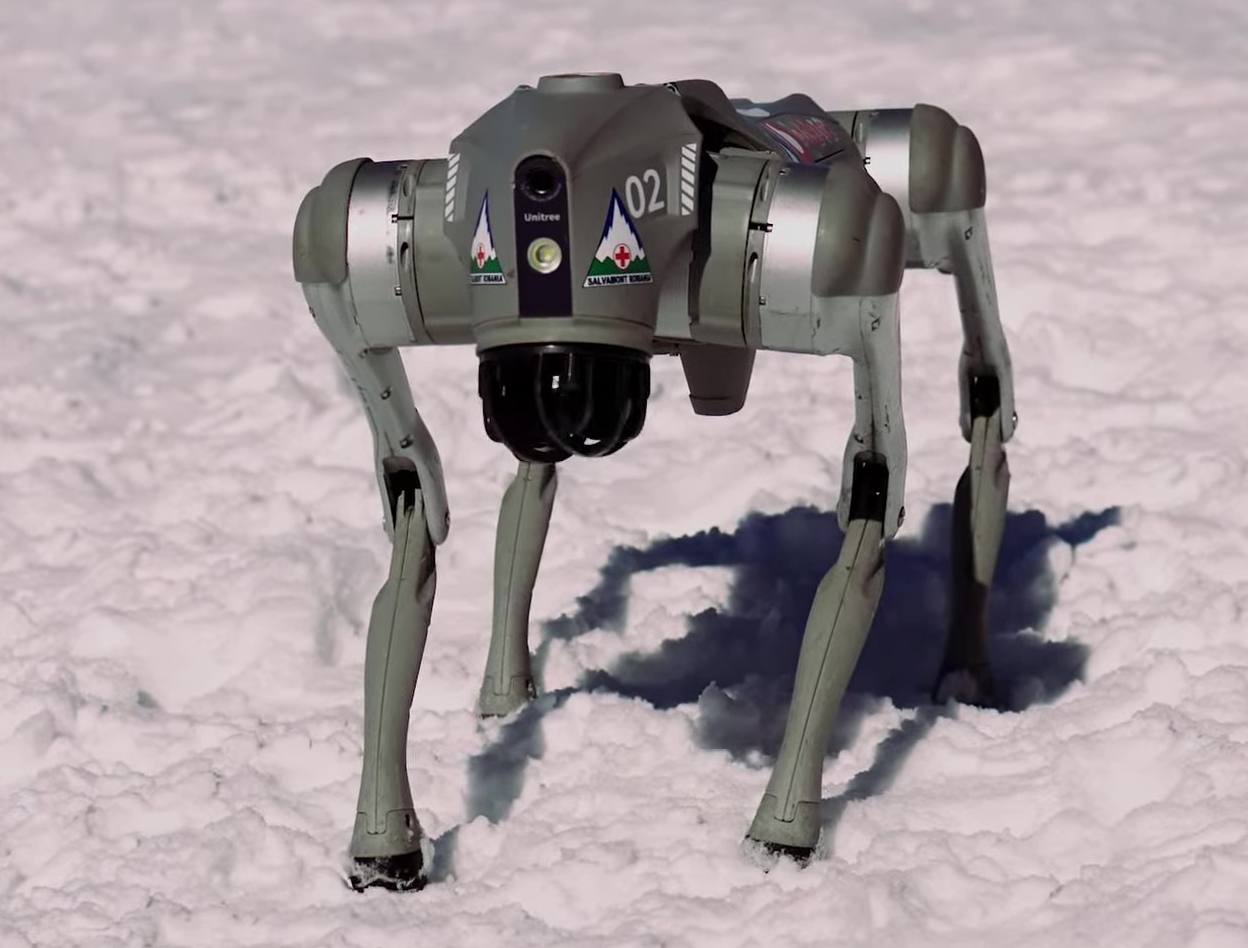
The exclusions are what give it away. The FCC took the trouble to carve out fixed industrial arms (SCARA, gantry, Cartesian and articulating), medical devices including surgical robots and powered wheelchairs, drones, rail vehicles, underwater vehicles and connected cars. It did not carve out floor cleaners, warehouse AMRs or inventory scanners, every one of which clears four and a half pounds with a camera and a Wi-Fi radio without trying.
Fox Business named the brands sitting inside that gap: iRobot, SharkNinja, Dyson, Samsung's Jet Bot line and LG's CordZero. Roborock, Ecovacs and Dreame are in the same position. iRobot's response was that it is "aware of the FCC's recent action and working with them to better understand its implementation and potential impact," which is what a company says when it does not yet know whether its next model can be sold.
"Foreign-Produced" Is a Buy American Test
Here is the part most of the coverage skipped. "Foreign-produced" is not defined by country of origin. It means any article that fails to qualify as a "domestic end product" under the Buy American regulations at 48 C.F.R. 25.101(a): manufactured in the United States, from components costing more than 65% of the total for deliveries through 2028, rising to 75% from 2029.
That is a domestic content requirement, enforced through radio equipment authorization.
The consequences run in directions a China ban would not. A robot built in Japan, South Korea or Germany is foreign-produced. So is one from 1X Technologies, the Norwegian-American company behind the Neo home humanoid, which manufactures in Hayward, California and in Moss, Norway. iRobot is an American brand now owned by Shenzhen Picea Robotics and Santrum Hong Kong, and it builds in China and Vietnam, so it fails the test twice over.
The escape hatch confirms the reading. A manufacturer can apply for Conditional Approval, granted by the Department of War for robotic devices and by the Department of War or Homeland Security for inverters, with applications going to [email protected]. Law firms that have worked through the guidance attached to the determination report that an application asks for ownership structure and foreign government connections, bills of materials, and a time-bound plan running one to five years, with milestones, to establish or expand manufacturing inside the United States. The FCC's published fact sheet, checked on July 31, 2026, sets out no application deadline and no term for how long an approval lasts.
An exemption you earn by committing to a factory schedule is industrial policy. The cybersecurity determination is the vehicle it arrived in.
The Security Record Behind It
None of which makes the security findings invented. They are unusually well documented, and they are mostly about one company.
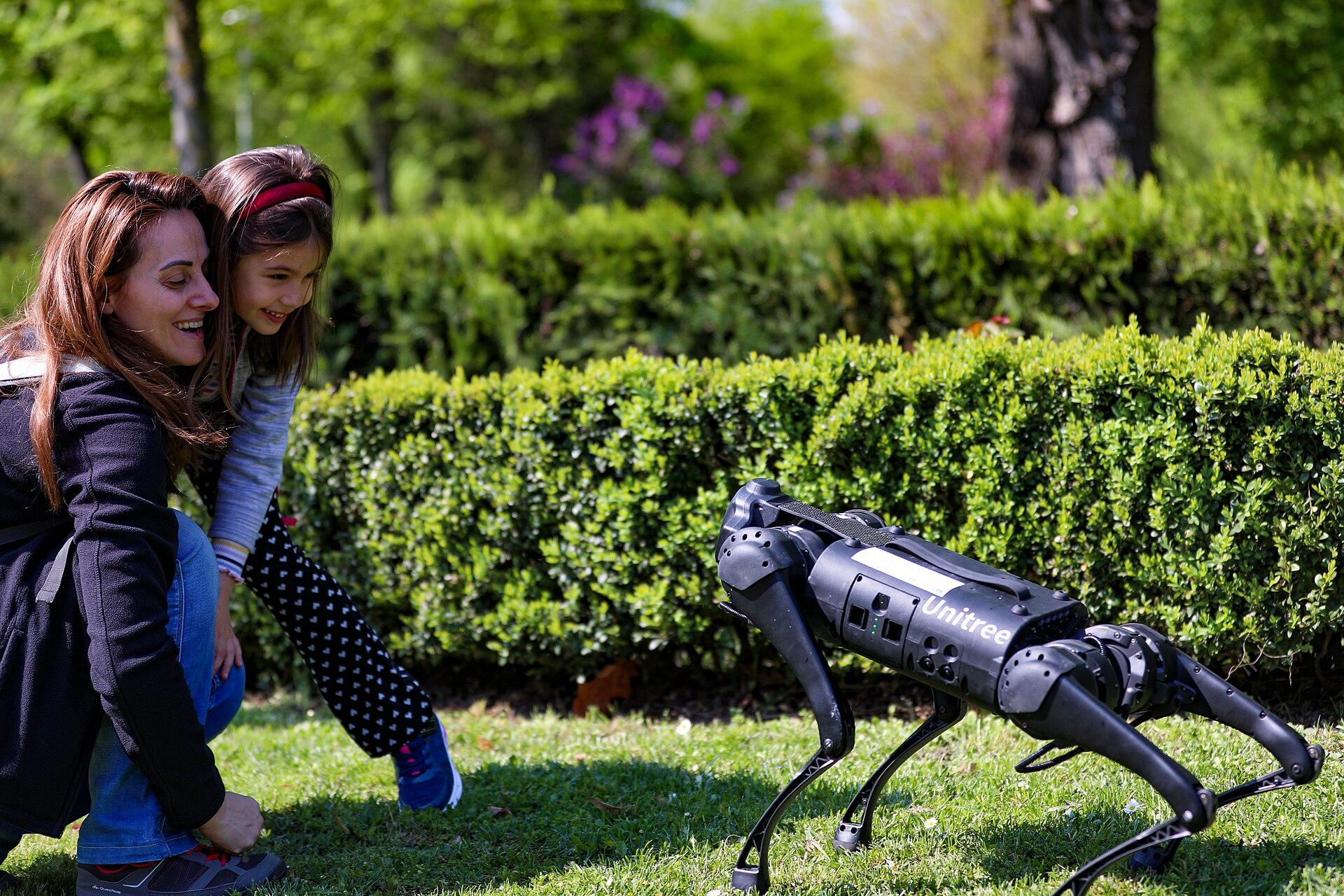
CVE-2025-2894, cataloged in March 2025, is a backdoor in the firmware of Unitree's Go1 quadruped. It started on boot, opened a tunnel to a cloud service run from China, and handed complete remote control of the machine to anyone holding the API key. In September 2025, researchers Andreas Markis and Kevin Finnisterre disclosed UniPwn, a flaw in the Bluetooth Low Energy setup interface shared by the Go2, B2, G1 and H1. The encryption protecting that interface uses a single hardcoded AES key, identical on every unit and already leaked online. Encrypting the word "unitree" with it is the entire entry step. The exploit is wormable, so a compromised robot can locate and infect others within Bluetooth range.
Unitree said on September 29 that it had "completed the majority of the fixes." Victor Mayoral-Vilches of Alias Robotics was still telling owners to run the machines on Wi-Fi with Bluetooth switched off. Separately, the G1 has been observed sending data to servers in China every five minutes without notifying the operator.
The determination also leans on an early-2026 finding in which researchers pulled camera feeds, microphone audio and floor-plan maps from thousands of household robots. For the inverter half it rests on Reuters reporting from May 2025, when US officials found undocumented communication devices, including cellular radios, inside Chinese-made inverters and batteries. Their significance was that they could open a channel around the firewalls utilities use to block traffic heading back to China.
Who It Actually Hits
Not the companies you would guess, and not immediately.

The rule is not retroactive. An FCC spokesperson confirmed that "this action does not impact a consumer's continued use of devices they previously acquired," and models that already hold authorizations keep selling. Unitree certified its R1 on June 22 and its H2 and A2 on June 30, 2026, five weeks before the ban landed. Those keep their access to the US market. What actually stopped was the expansion: Unitree opened commercial sales in Europe on July 22, and North America was the next step.
The market position being defended here is real. Counterpoint Research ranked Agibot, Unitree and UBTech as the top three humanoid makers by installation share in 2025. Of roughly 15,000 humanoids shipped worldwide that year, Unitree and Agibot each shipped more than 5,000. Tesla and Figure AI each shipped a few hundred or fewer. Price is the reason. A Unitree Go2 starts at $1,600 and a G1 lists at $13,500 on Unitree's own store, against about $17,990 through US dealers and $43,900 and up for the EDU research configurations.
Morningstar's Kangyuxiao Li read the action as removing an important future market and shielding US developers from price competition, while not materially slowing China's humanoid development. Counterpoint's Soumen Mandal pointed at the timing, with several Chinese makers including Unitree preparing IPOs this year. UBTech's Hong Kong shares fell more than 6% on Thursday morning.
For most Americans the number that matters is smaller and much closer to home. A Roomba starts around $200. Matic, the US-manufactured alternative, is about $1,245.
Beijing, September, and What to Watch
China's commerce ministry demanded the determination be withdrawn on Thursday, July 30, threatened retaliation and said the move severely damages bilateral relations. Foreign ministry spokesperson Mao Ning added that "protectionism does not make the U.S. more competitive, and it will only hurt the interests of U.S. companies and consumers." A Trump-Xi summit is scheduled for September 2026, which leaves both sides about six weeks to work out whether robots are a bargaining chip or a red line.
Three things will settle what this rule actually is. Whether the Department of War grants Conditional Approval to a company with no plausible route to 65% US content, which would make the exemption a formality. Whether an allied manufacturer, Japanese or Korean or Norwegian, is quietly waved through, which would make it a China rule after all. And whether the next generation of robot vacuums simply fails to appear on US shelves, which is the version of this policy most households will actually meet.
This is the third such action in eight months, following foreign-produced drones in December 2025 and consumer routers in March 2026. The pattern is established enough to plan around now: pick a connected device category, assemble the security record, and close the border to anything not built domestically. Robots were never going to be the last one. The FCC's public notice and fact sheet are on its site.
Read the original source
Head to the original source for the full announcement and complete details.
Read Original Source