Marvell to Buy Lumentum in $115 Billion All-Stock Deal to Own the Optics Behind AI
Marvell agreed to acquire Lumentum in an all-stock deal valued at $115 billion (enterprise value). The terms, the optics rationale, the selloff and what comes next.
News Report

The deal
Marvell Technology said on November 2, 2026 that it will acquire Lumentum in an all-stock transaction that puts an implied enterprise value of $115 billion on the optical components maker. The joint announcement filed with the SEC sets a fixed exchange ratio: each Lumentum share becomes 4.500 Marvell shares. There is no cash component and no announced debt financing.
Logos via Wikimedia Commons (Marvell, Lumentum); trademarks of their owners.
Measured against both companies' unaffected closing prices on October 28, 2026, the last trading day before reports of the talks surfaced, that ratio worked out to about $1,132 per Lumentum share, a premium of roughly 23.9%. Once the deal closes, Marvell stockholders will own about 67% of the combined company and Lumentum stockholders about 33%, fully diluted. Yahoo Finance described it as the largest merger between two publicly traded companies on record.
Both boards approved it unanimously. Matt Murphy stays chairman and CEO of the combined company. Three Lumentum directors, including Lumentum CEO Michael Hurlston, join Marvell's board, which has seven members today. The target for closing is the first half of calendar 2028.
Why Marvell wants lasers
Marvell already sells much of the electrical side of an AI data center: custom accelerators (XPUs) designed with hyperscalers, the optical DSPs that sit inside transceivers, and network switching silicon. What it lacks is the light source. Lumentum makes lasers, optical transceivers and optical circuit switches (OCS), and it makes them in its own compound semiconductor fabs.

Photo: Derek Harper, CC BY-SA 2.0, via Wikimedia Commons.
The release frames the deal around a physical limit: "Rapidly growing bandwidth requirements and the physical limitations of copper-based connectivity are accelerating the transition toward optical technologies." As links get faster, copper reaches shorter distances. Optics move closer to the processor, first as pluggable modules, then as near-packaged optics (NPO) and co-packaged optics (CPO) that sit beside the chip itself, which the companies say demands "much closer co-design of electrical and optical technologies".
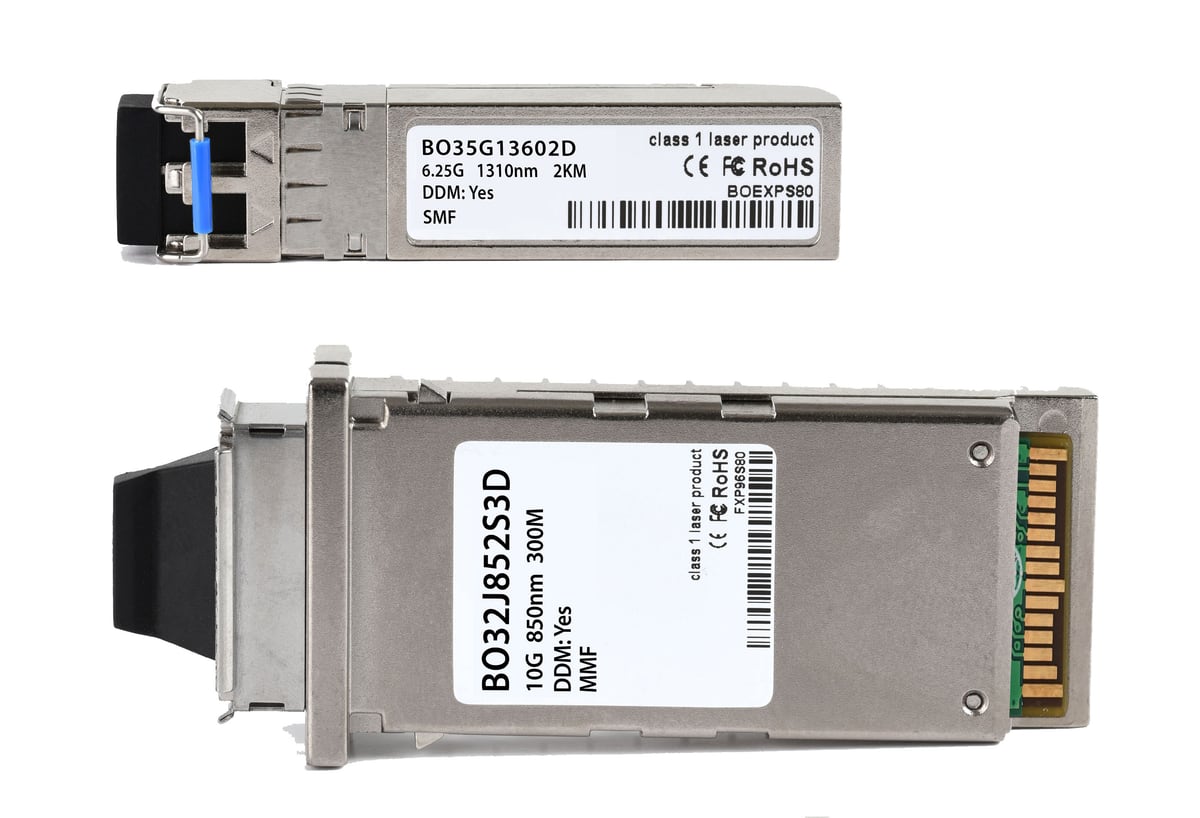
Photo: Martijn Boer, public domain, via Wikimedia Commons.
On the conference call, Hurlston made the case for buying rather than partnering. "Lumentum owns the world's largest indium phosphide manufacturing footprint," he said, describing indium phosphide as a material "that can naturally emit and absorb light efficiently, which standard CMOS simply cannot do." Those lasers, he added, "are key enablers of the shift to NPO and CPO. It is not practical to replicate this capability as a fabless company." Marvell is fabless. That one sentence is most of the deal.
Murphy's version was about timing: "AI infrastructure is undergoing a fundamental architectural shift toward optical connectivity, creating an opportunity that comes along once in a generation. The companies that move first and help define this transition will set the standard for decades to come."
The two were not strangers. At OFC in March 2026 they demonstrated Marvell's Aquila and Ara 1.6T optical DSPs running with Lumentum's R300 optical circuit switch for AI scale-up networks. The merger turns that joint demo into a single roadmap.
What the companies are promising
The pitch rests on three numbers: a combined addressable market of $550 billion, "line of sight to more than $1 billion in annual run-rate cost synergies", and accretion to Marvell's non-GAAP earnings per share in the first year after closing. Murphy told analysts the combined company would be "the pure-play leader in the optical connectivity industry, significantly greater in scale than the next largest competitor," and expects it "to become one of the top five largest AI infrastructure semiconductor companies."
The product map covers four distances. Scale-in means connections inside a chip package. Scale-up links accelerators inside one system or rack, scale-out joins racks into a cluster, and scale-across ties data centers together. Hurlston's own framing shows where the growth is supposed to come from: the pair will serve "scale-across and scale-out today" and "scale-up and scale-in domains tomorrow". The bet, in other words, is that the short links still running on copper are the next to go optical.
Marvell used the same morning to say preliminary fiscal third-quarter 2027 revenue came in line with guidance, keeping the midpoint and narrowing the range to plus or minus 2% from plus or minus 5%.
Investors balked at the price
The market did not share the enthusiasm. According to the Motley Fool's November 2 market wrap, Marvell closed down about 13% at roughly $171 on volume near 60.5 million shares, some 171% above its three-month average. Lumentum closed down 18.6% at $684.40. The Nasdaq Composite fell 1.07%. The reasons cited were dilution, valuation and financing risk.
Marvell had already dropped 13.24% to $218.34 on October 29, after Bloomberg reported advanced talks. Lumentum was then worth about $83 billion against Marvell's roughly $221 billion, and with around $3.9 billion in cash, Marvell had little option but to pay in shares.
The fixed ratio is why the selloff matters. Lumentum holders get 4.500 Marvell shares whatever Marvell trades at, so every dollar Marvell loses takes $4.50 off each Lumentum share's deal value. At Marvell's November 2 close, 4.5 shares are worth about $771, far below the $1,132 headline. Lumentum closing at $684.40, under even that, is the kind of gap that signals doubt about timing or completion.
Analysts split. Raymond James upgraded Lumentum to Strong Buy and called the selloff overdone. Stifel cut it to Hold over the terms, and Mizuho lowered its price target. B. Riley trimmed its Marvell target but kept a Buy, citing dilution and integration risk. Rival optics maker Coherent rose about 2% during the session, per 24/7 Wall St.
What it changes for AI infrastructure buyers
For hyperscalers and anyone building large AI clusters, nothing changes yet: the two companies stay separate until the deal closes. The longer-term shift is concentration. Today a cloud provider can buy a Marvell DSP and pair it with lasers from Lumentum, Coherent or someone else. After closing, Marvell will sell the DSP, the laser and the optical switch as one co-designed set, and it will own the indium phosphide capacity that much of the laser supply depends on.
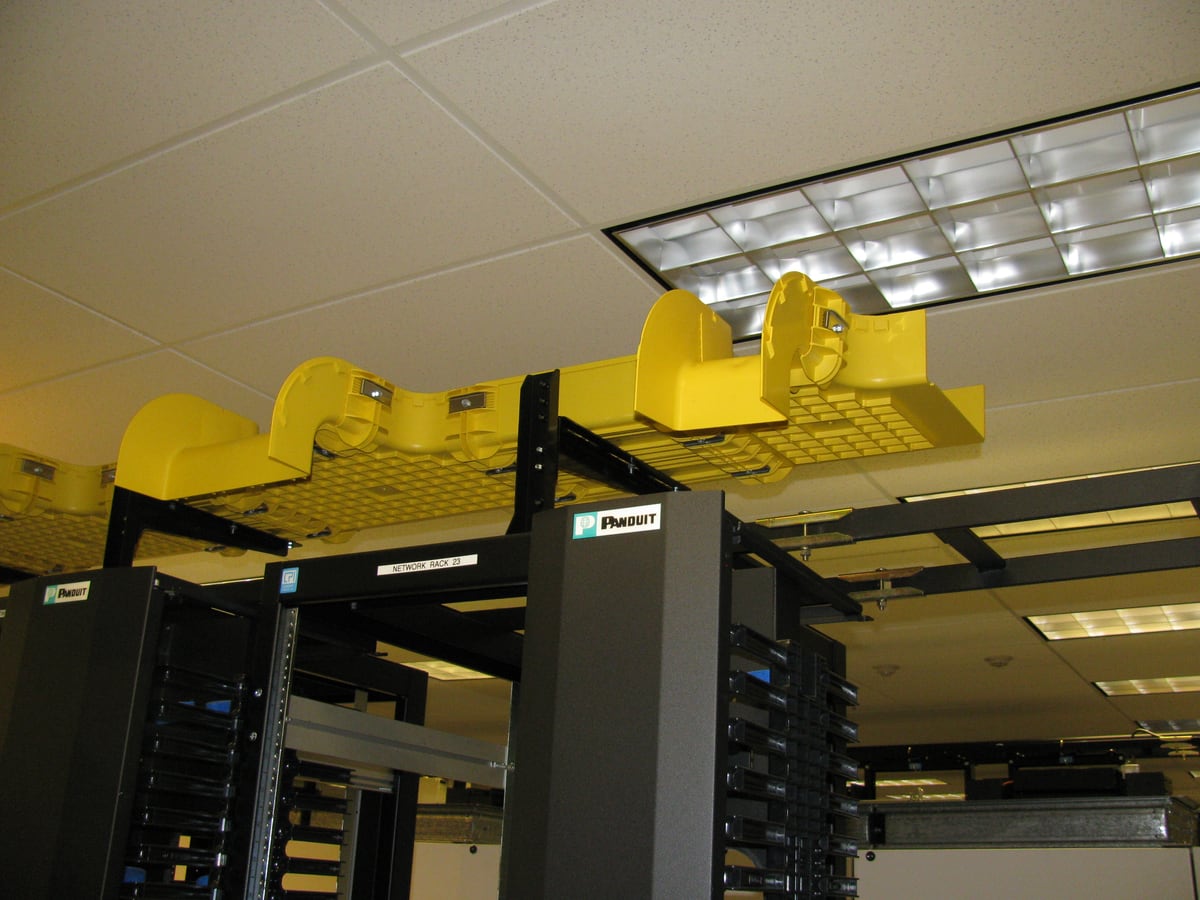
Photo: Robert.Harker, CC BY-SA 3.0, via Wikimedia Commons.
That cuts both ways. Co-packaged optics needs the electrical and optical halves designed together, which is slow across a company boundary, and Hurlston promised customers "faster time to market" from "extreme co-design". But a buyer who wants Marvell silicon with another vendor's lasers will now be asking Lumentum's parent company to help a competitor. Customers that dislike single-sourcing have a reason to keep a second optics supplier qualified, and Coherent's gain on announcement day suggests some investors read it that way.
What happens next
Nothing has closed. Marvell will file a Form S-4 registration statement with a joint proxy statement and prospectus, and stockholders of both companies then vote. The deal also needs regulatory approvals, which the announcement did not itemise. Until then, the number Lumentum holders should watch is Marvell's share price, because it, not the $115 billion headline, sets what they actually receive.
Figures in this article are as of November 3, 2026, the day after the announcement.
Top photo: Marvell's Santa Clara headquarters by King of Hearts, CC BY-SA 3.0, via Wikimedia Commons.