Microsoft Builds Its First Cybersecurity AI Model and Sends Agents to Fight Agents
Microsoft launched MAI-Cyber-1-Flash and Project Perception on July 27, 2026: its first in-house cyber AI model and an agentic defense platform. What it does and what to watch.
News Report

What Microsoft announced
On July 27, 2026, at an event in San Francisco, Microsoft put two things on the table at once: MAI-Cyber-1-Flash, the first cybersecurity model it has trained in house, and Project Perception, an agentic security platform built to run defenders that think and act at machine speed. The framing from Microsoft's security leadership was blunt. Attackers now use AI to find and exploit bugs faster than human teams can respond, so the defense has to be AI too.
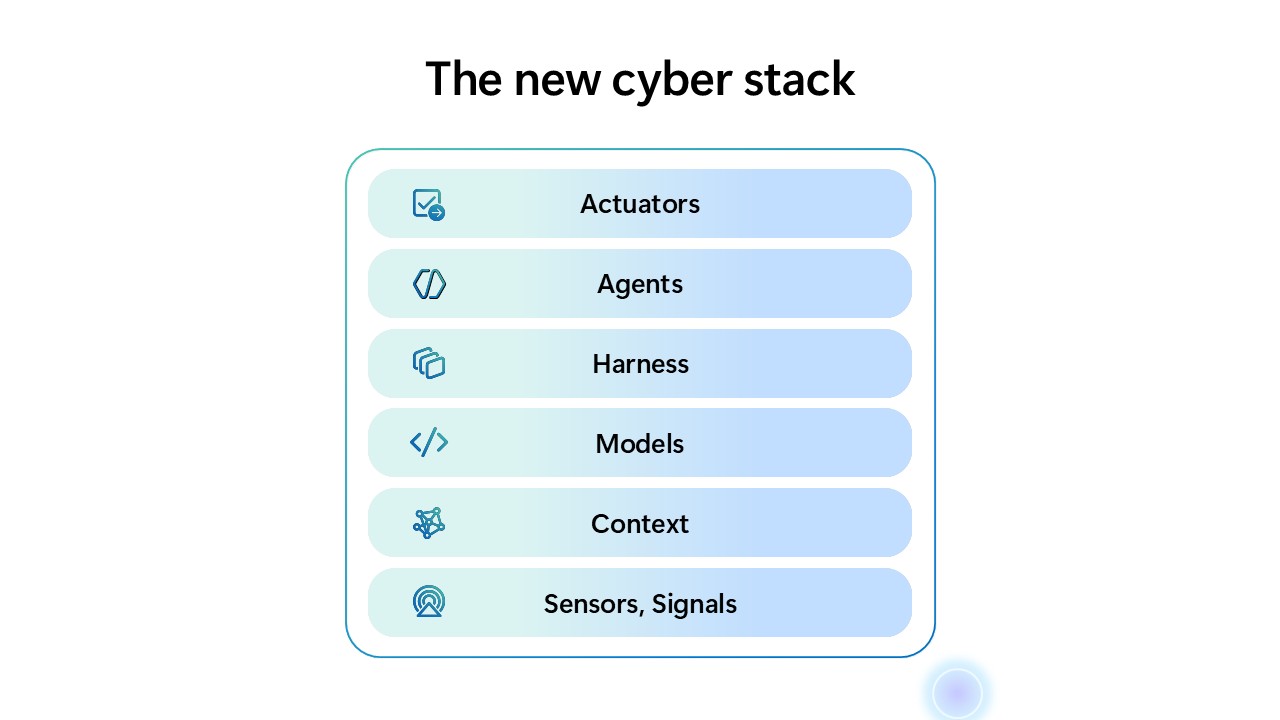
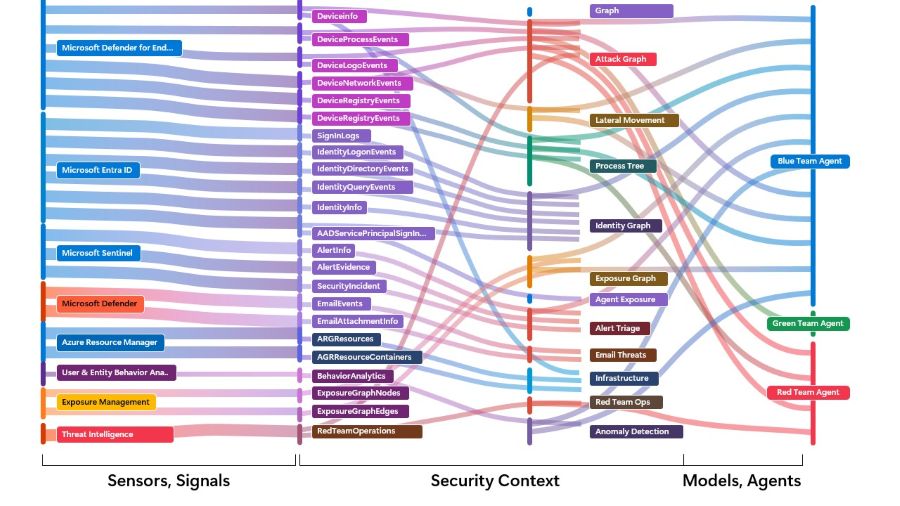
The pitch is not another chatbot bolted onto a dashboard. Microsoft describes a full stack: signals and sensors at the bottom, then security context, models, a harness that orchestrates them, the agents themselves, and actuators that take action. MAI-Cyber-1-Flash sits in the model layer; Project Perception is the layer where agents actually do the work.
The model: MAI-Cyber-1-Flash
MAI-Cyber-1-Flash is tuned for one job: finding hard-to-spot vulnerabilities in large, messy codebases. Microsoft says it scored 96% on CyberGym, a public benchmark for security tasks, which it puts 12 points ahead of a competing model it refers to as Mythos. The number that will matter more to buyers is the other one Microsoft quoted: running the model in this configuration costs roughly 50% less than the setup it currently uses for the same work, measured against its own production baseline as of the July 27 announcement.
The model powers MDASH, Microsoft's harness for spotting software flaws and proposing fixes. In plain terms, MDASH is the workflow and MAI-Cyber-1-Flash is the engine now driving it. A cheaper engine that scores higher is the whole argument for training a specialist model rather than paying to run a general-purpose one on security tasks it was never optimized for.
Project Perception and its agent teams
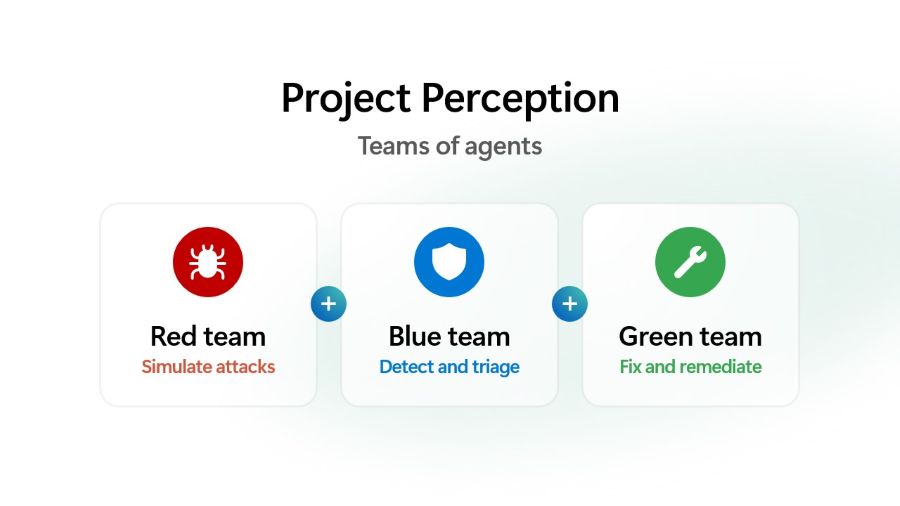
Project Perception is where the model turns into action. It coordinates three kinds of agents, borrowing the color language security teams already use:
- Red team agents simulate attacks, hunting for the paths an intruder could take before a real one does.
- Blue team agents detect, investigate, and decide which alerts are worth a human's time.
- Green team agents carry out the fix: patching, hardening, closing the gap the red team found.
The loop is the point. A red agent finds a weakness, a blue agent confirms it is real, a green agent remediates it, and the cycle repeats without waiting for a ticket to move through a queue overnight. Hayete Gallot, Microsoft's executive vice president for security, framed the goal as protection that is "highly effective, continuously available and affordable at scale." Microsoft says a human stays in the loop for oversight rather than approving every step.
Why it matters
The before-and-after is concrete for anyone running a security operations center. Today, a mid-size SOC triages a flood of alerts by hand, and the slow part is not detection. It is the human hours between "something looks wrong" and "the hole is closed." Microsoft is betting that agents can compress that gap from hours to minutes for a large share of routine cases, freeing analysts for the incidents that actually need judgment.
There is a cost story underneath the security one. The 50% figure is aimed squarely at enterprises that have watched their AI security spend climb as they throw general-purpose models at vulnerability scanning. If a purpose-built model does the same work for half the compute, the math changes for who can afford continuous, automated defense rather than periodic audits.

The open questions
Benchmarks and vendor comparisons deserve caution. CyberGym is a public test, but a 96% score and a named 12-point lead over "Mythos" both come from Microsoft's own announcement, not an independent evaluation. The Mythos label is Microsoft's; it is not a product a reader can go and price against MAI-Cyber-1-Flash today.
The harder question is the one every autonomous-remediation tool raises. A green team agent that patches production is also an agent that can break production, and an agent given standing permission to change systems is a large piece of attack surface in its own right. Microsoft's answer is human oversight, but the details of what an agent may do unattended, and what an attacker who compromises the orchestration layer could do with it, are exactly what the August preview will expose. Autonomy that closes a hole in minutes can open one just as fast.
What happens next
Project Perception enters public preview on August 3, 2026, which is when the claims stop being slides and start being something customers can run against their own environments. Watch three things: whether the CyberGym score survives contact with real, non-benchmark codebases; whether the cost saving holds once the agents run continuously rather than in a demo; and how much autonomy early adopters actually grant the green team before they trust it to touch production.
The wider signal is that the vendor arms race has moved. A year ago the security pitch was "AI helps your analyst read alerts faster." Microsoft's version now is AI defending against AI, with the human moved up to supervision. Whether that is a genuine shift or a rebrand of automation that already existed is what the preview, and the first independent tests after it, will settle.
Read the original source
Head to the original source for the full announcement and complete details.
Read Original Source