Microsoft Surface Laptop Ultra and RTX Spark: Windows on Arm Takes Aim at the MacBook Pro
Surface Laptop Ultra ($2,599.99, ships Oct 16) and the $5,999.99 Surface RTX Spark Dev Box bring NVIDIA RTX Spark to Windows. Specs, prices and what ships when.
News Report

What happened
On October 7 in San Francisco, Microsoft used a Windows + Surface event to launch its first PCs built on NVIDIA's RTX Spark, an Arm-based chip that pairs a Grace CPU with a Blackwell RTX GPU and up to 128GB of memory shared between the two. Pre-orders opened the same day. The Surface Laptop Ultra costs $2,599.99 and ships October 16. The Surface RTX Spark Dev Box, a mini PC for AI developers, starts at $5,999.99 and ships to U.S. customers in November.
Satya Nadella, Windows + Devices EVP Pavan Davuluri and NVIDIA CEO Jensen Huang shared the stage, and the target was named outright: Apple's MacBook Pro, and the job of running large AI models on the machine in front of you instead of in a data center. There was no new Windows version. This was not Windows 12.
"If you look at the entire journey of our company, Windows was at the core of it," Huang said, per NVIDIA's event post. "If not for Windows there would be no GeForce."
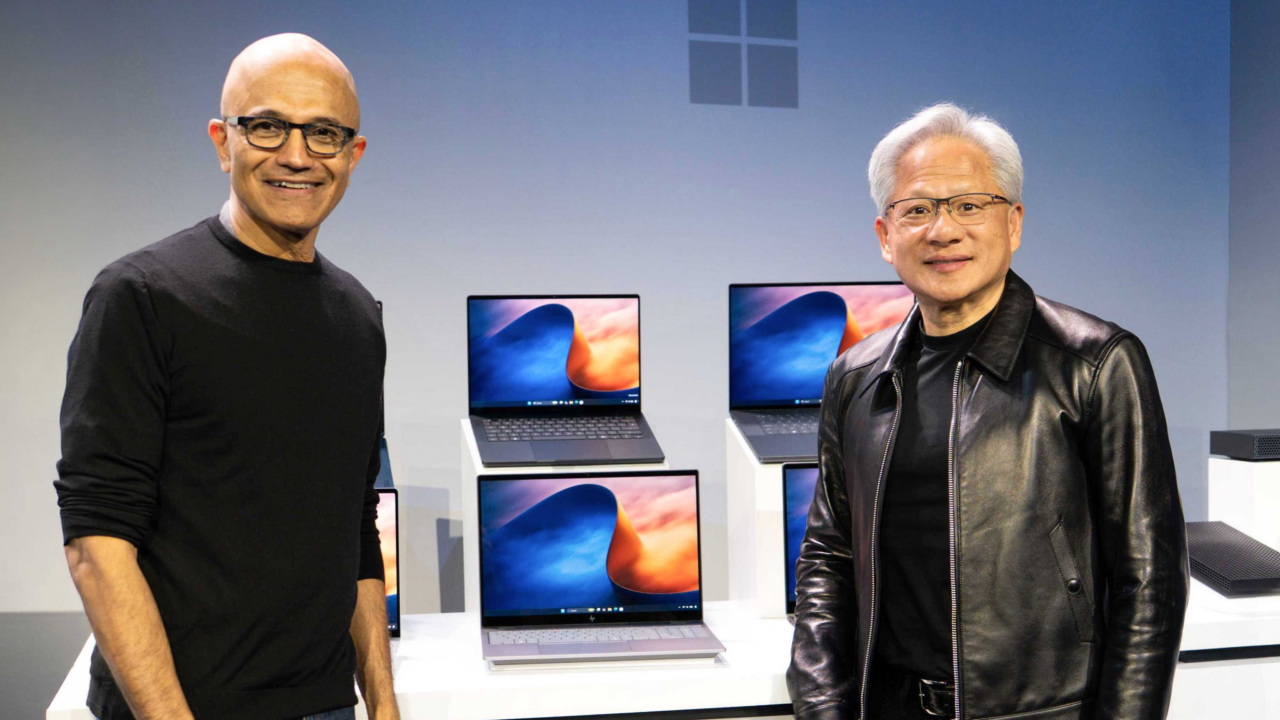
Surface Laptop Ultra: what $2,599.99 buys
The headline price buys the smaller chip. RTX Spark comes in two versions: a laptop-focused one with an 18-core Grace CPU and 5,120 CUDA cores, and the flagship with 20 cores, 6,144 CUDA cores and up to 128GB. ServeTheHome lists three Surface configurations. Its prices are rounded, and Microsoft's own blog post gives none.
| Configuration | CPU / GPU cores | Memory | Storage | Price (approx.) |
|---|---|---|---|---|
| Entry | 18-core / 5,120 | 24GB | 512GB PCIe Gen4 | $2,600 |
| Mid | 20-core / 6,144 | 32GB | 1TB PCIe Gen5 | $3,700 |
| Top | 20-core / 6,144 | 128GB | 1TB PCIe Gen5 | $5,900 |
So the laptop that can hold a 120-billion-parameter model is a roughly $5,900 machine, not a $2,600 one. The entry model's 24GB covers image generation and small models. It will not load the large open models the keynote demos leaned on.
The rest of the spec sheet reads like a creator laptop. The 15-inch PixelSense touchscreen runs 3270x2180 at 120Hz, is mini-LED in a 3:2 shape according to Engadget, and peaks at 2,000 nits in HDR. A 92Wh battery is rated for up to 25 hours of local video at 150 nits. It weighs under 4.5 lb and is under 18mm thick, in Platinum or Nightfall. Ports include a full-size SD reader and HDMI 2.1b alongside three 40Gbps USB-C ports, USB-A, a headphone jack and magnetic USB-C charging, with up to three external 4K monitors. Petri reports the SSD is user-replaceable, so storage can be added later instead of bought at checkout.
Engadget reports Microsoft puts the GPU close to a GeForce RTX 5070, cooled by a system with 2.5x the thermal capacity of the seventh-generation 15-inch Surface Laptop.
The Surface RTX Spark Dev Box
The Dev Box comes in one configuration: the full 20-core chip with 6,144 GPU cores, 128GB of LPDDR5X, a 2TB SSD, Wi-Fi 7 and 10GbE, in a 326.5 x 172.0 x 42.9 mm case with a 100W thermal envelope. Microsoft quotes "up to one petaflop of AI compute". It arrives with Windows 11 Pro, VS Code, GitHub Copilot CLI, WSL and PowerShell 7 installed and configured.
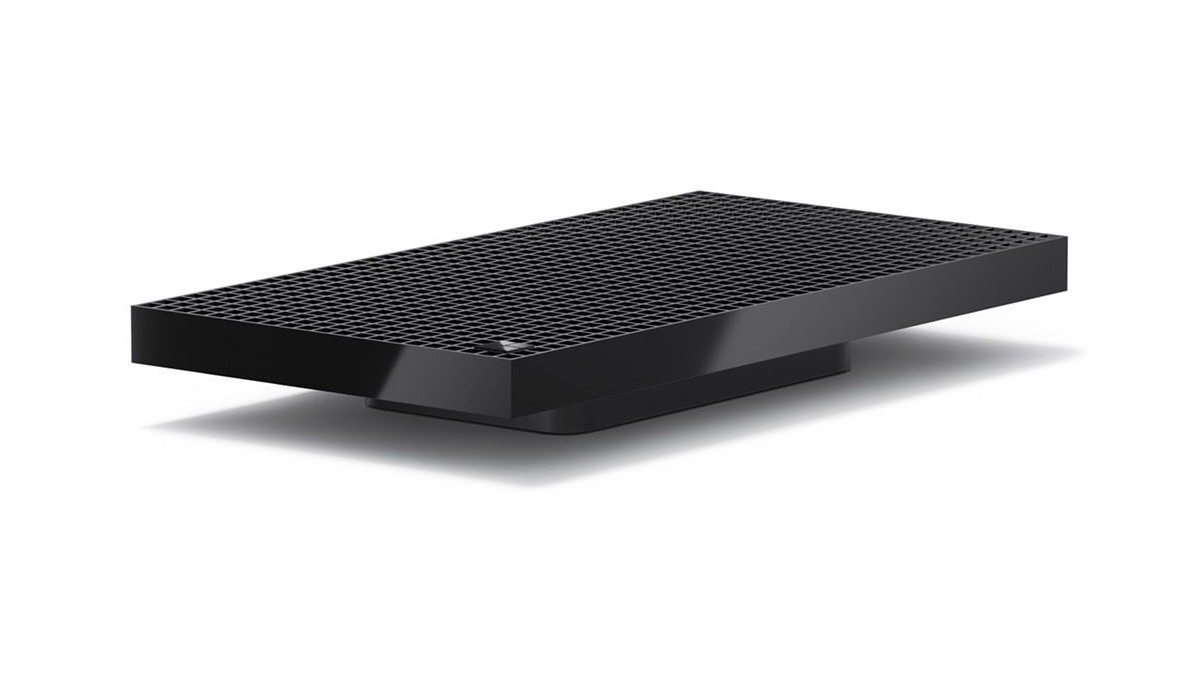
At $5,999.99 it costs about what the top laptop does, with the same chip and memory. The difference is twice the storage, 10GbE and a box built to run jobs all night on a desk. If you need a laptop anyway, skip the Dev Box.
The MacBook Pro claims, and the Arm caveat
Microsoft's comparison machine is a 16-inch MacBook Pro with the M5 Pro. Against it, Microsoft claims RTX Spark is 2.1x faster to the first token, 4.3x faster at AI image generation and 6.2x faster at AI video generation, and that it runs local models of 120+ billion parameters. NVIDIA gives Qwen 3.8 Flash Next, a 125B model, as an example. These are vendor numbers from a launch event. No independent benchmark exists yet.
The real pitch is CUDA. Most open-source AI tooling targets NVIDIA GPUs first, while the usual way to get a large pool of GPU-addressable memory in a laptop has been a Mac. RTX Spark offers 128GB of unified memory and the CUDA stack in the same machine.
The catch is the CPU. RTX Spark is Arm, so this is Windows on Arm. Anyone who depends on an x86-only driver, plugin or anti-cheat system should check compatibility before ordering. Microsoft's own roadmap hints at where gaming stands: Call of Duty is coming to RTX Spark in 2027.
Windows agents: what ships now and what does not
Microsoft's name for the software side is "hybrid intelligence": agents that run locally when they can and reach the cloud when they must. "Agents don't work like traditional apps," Davuluri wrote. "They can run around the clock, use tools, write code, access files, and act across systems, often without someone watching every step."
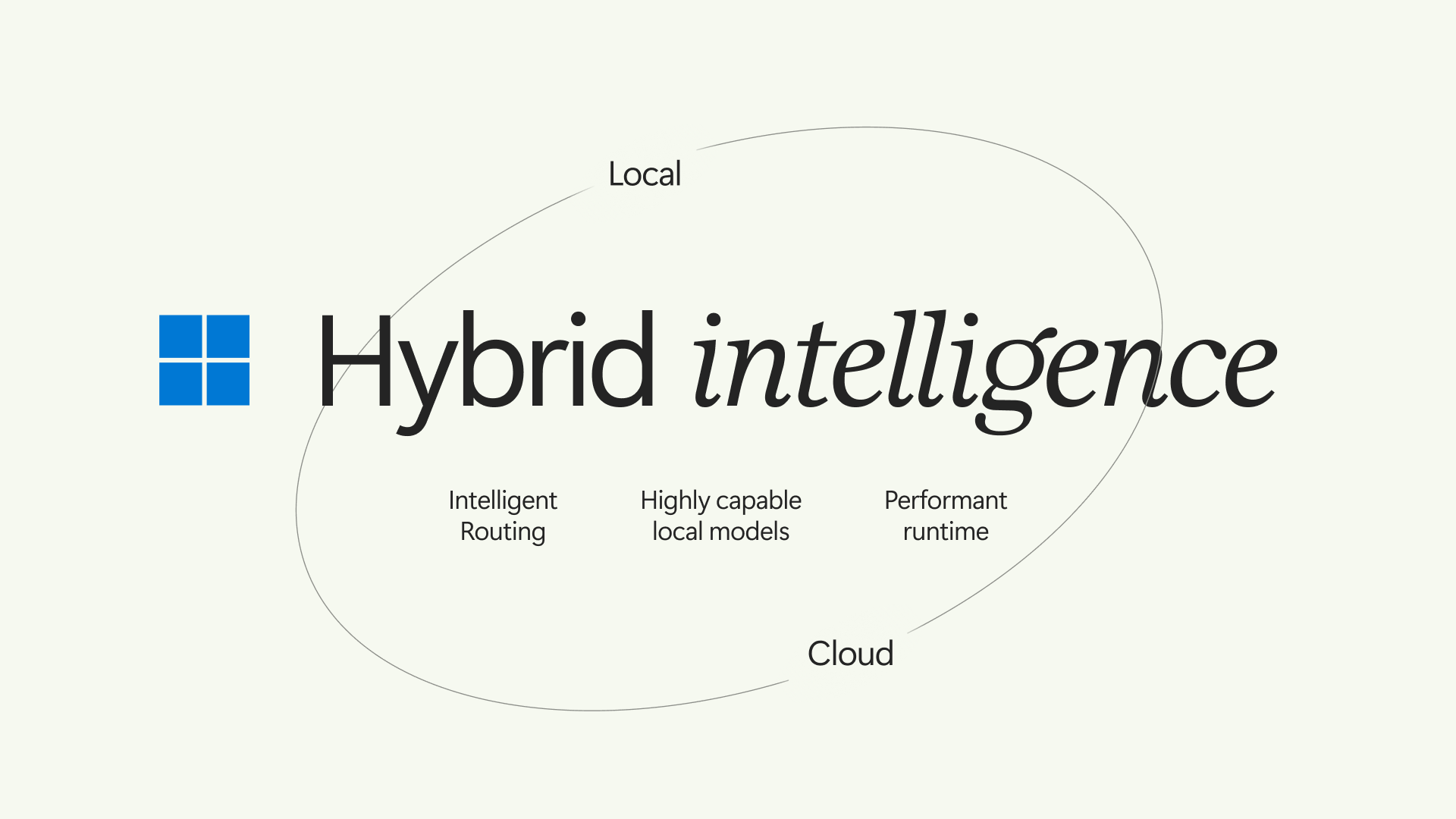
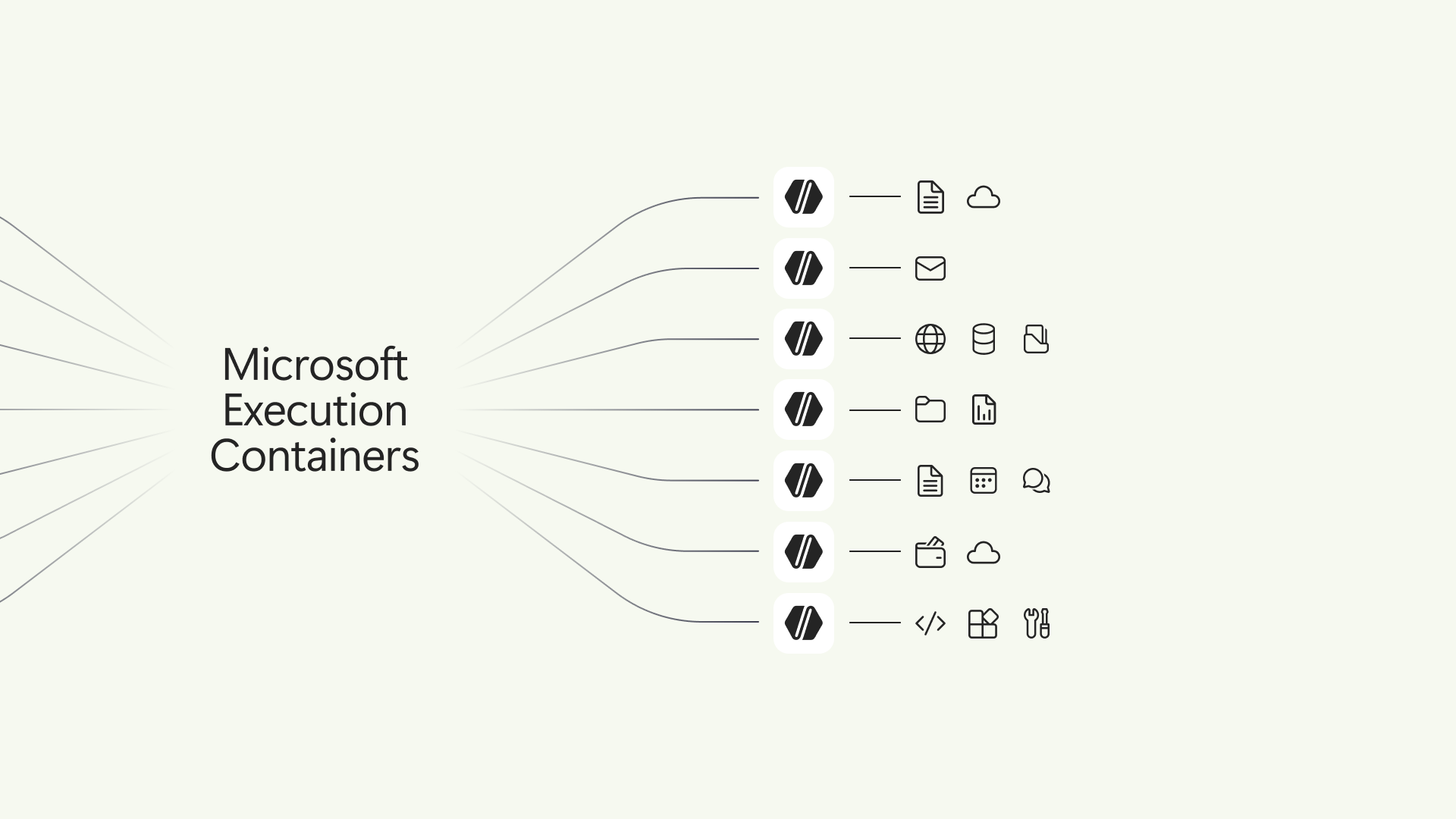
Only one piece is generally available. Microsoft Execution Containers (MXC) put AI agents on Windows 11 inside policy-driven containment, so what an agent can touch is set by policy, not by what the agent asks for. The rest arrives on different schedules.
| Feature | Status on October 8, 2026 |
|---|---|
| Microsoft Execution Containers (MXC) | Generally available on Windows 11 |
| HydraFusion for GitHub Copilot (routes work between local and cloud models) | Experimental preview later in October, in the Copilot app, CLI and VS Code |
| Windows Search actions (dark mode, text messages, window management from the taskbar) | Windows Insider experimental channel |
| Search + Copilot inline answers | Opt-in, select markets, later this year |
| Copilot with hybrid intelligence (local context, local actions on your files, local models) | Copilot+ PCs, "in coming months" |
For anyone building on Windows, MXC is the part to read up on now. If your product runs an agent on customer machines, IT departments just got a native way to fence it in, and they will ask whether you support it. HydraFusion matters to teams paying for Copilot by usage: sending simpler work to a local model is how a $6,000 box could start paying back in cloud spend. Microsoft has not said how HydraFusion decides which work runs where.
What's next
The Surface Laptop Ultra will not be alone on October 16. Pre-orders also opened on October 7 for the ASUS ProArt P16 and P14, Dell XPS 16 Creator Edition, HP OmniBook Ultra 16, Lenovo Yoga 9n 2-in-1 and MSI Prestige N16 Flip AI+, all on RTX Spark and shipping from the same day. NVIDIA lists Acer and Gigabyte for later devices, and compact desktops, the Dev Box among them, follow in November.
Later in 2026 come the heavy machines: Dell Pro Precision with GB300, HP ZGX Fury AI Station and NVIDIA's DGX Station for Windows, a GB300 desktop with 748GB of coherent memory and up to 20 petaFLOPS of FP4, aimed at trillion-parameter models. None of these should be confused with DGX Spark, NVIDIA's separate and earlier mini-PC line.
The launch suits developers who prototype with 70B-plus open models, want CUDA on a laptop and will pay around $5,900 for 128GB. The $2,599.99 entry model is a fast creative laptop, not the local-AI machine from the keynote. If your work needs x86-only software, a MacBook Pro or an x86 laptop with an RTX GPU is still the safer order. Independent reviews should land around the October 16 ship date. Prices were checked on Microsoft's store on October 8, 2026.