Nightwatch Review: SEO Rank Tracking Meets AI Citation Monitoring
A hands-on look at Nightwatch, the EU SEO rank tracker that now monitors AI citations across ChatGPT, Claude, Gemini and Perplexity. Pricing, depth, limits and who should skip it.
Expert Review

Two jobs, one dashboard
Most SEO teams now carry two worries at once: is our page still ranking on Google, and does an AI answer engine mention us when someone asks the same thing? Nightwatch's bet is that those are one report, not two subscriptions. The Danish company took its existing rank tracker and added AI-citation monitoring to the same dashboard, so a single keyword row can show your Google position and whether ChatGPT or Perplexity cited you for the matching prompt.
That framing is the reason to look at it. Plenty of tools now track AI visibility, and plenty track rankings, but running them separately means reconciling two datasets that describe the same query. Nightwatch keeps them in one place. Whether that convenience justifies its keyword-priced plans is the question this review keeps coming back to, because that pricing is also the thing its own users complain about most.
The AI visibility layer
The newer half of the product tracks whether your site gets cited when an AI model answers a prompt. Coverage spans ChatGPT, Claude, Gemini and Perplexity, plus Google's own AI Mode and AI Overview, and it goes past a yes/no mention: Nightwatch adds sentiment analysis on how you are described and citation-source analysis showing which pages the models pulled from. You track this with AI prompts rather than keywords, and the prompt allowance is where the plan tiers start to bite.
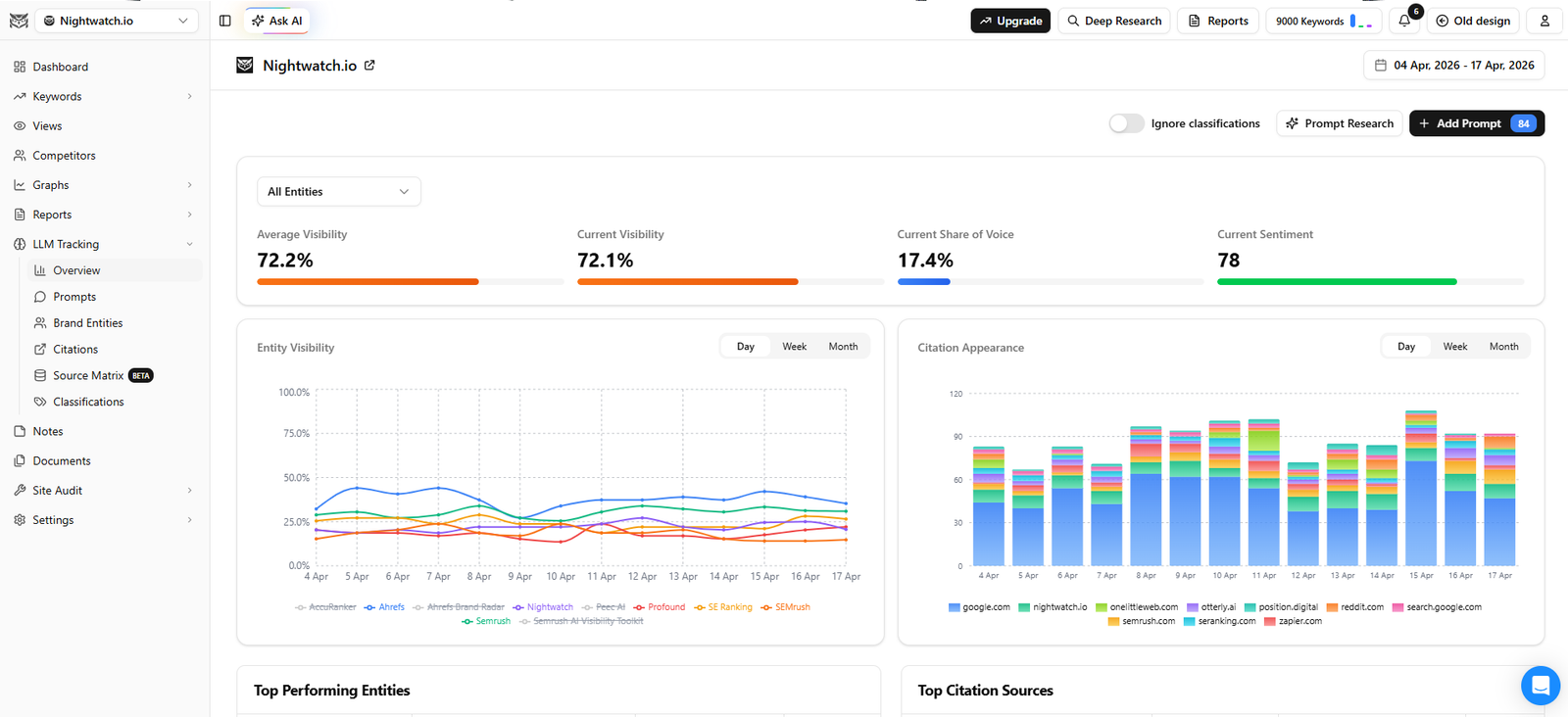
The Starter plan includes 50 AI prompts, Professional 150, and Agency 500. If your reason for buying Nightwatch is the AI half, count your prompts before your keywords: a brand monitoring a few dozen high-intent questions across four models will exhaust 50 prompts faster than it exhausts 500 keywords, and the two allowances do not trade against each other.
Rank tracking that goes deep
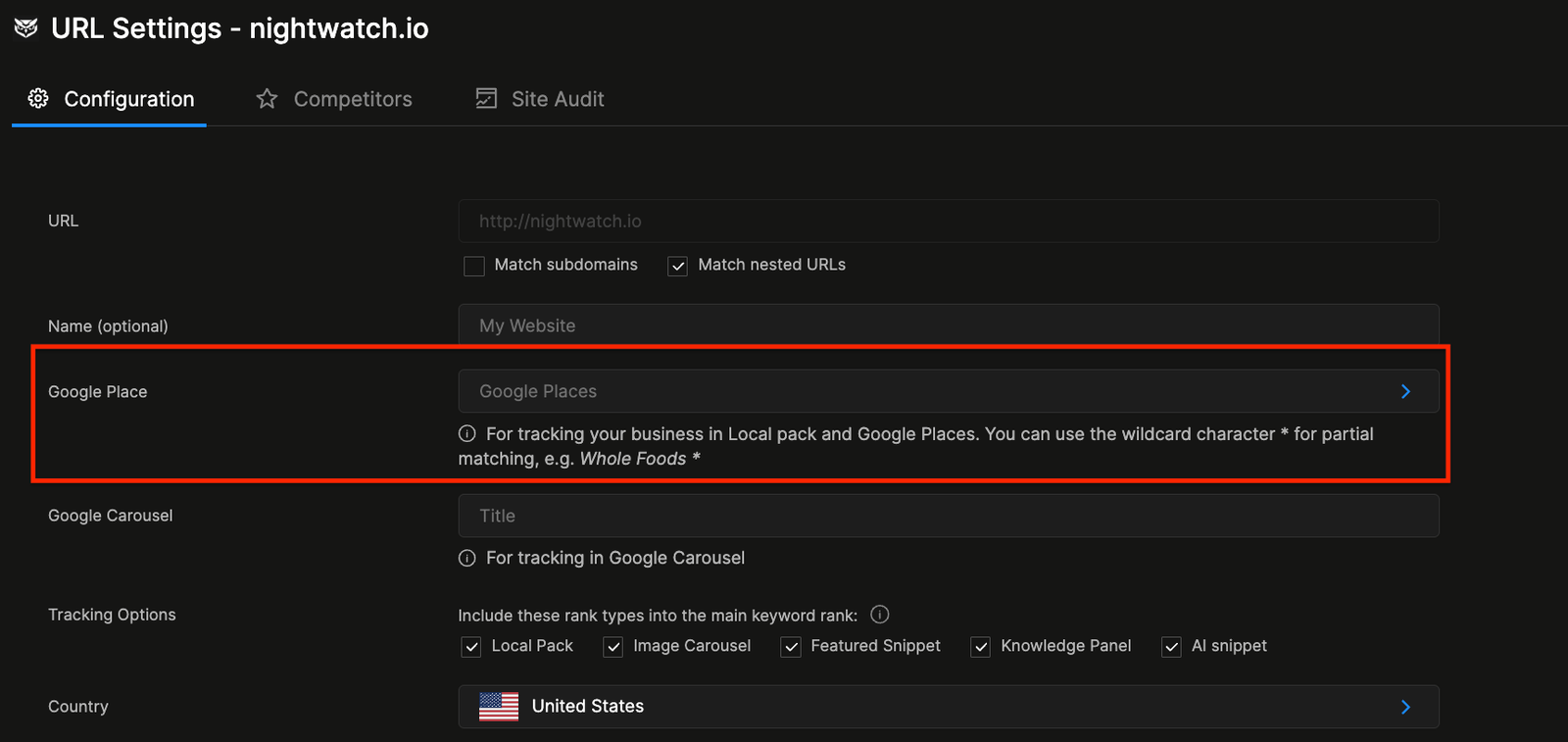
The older half is where Nightwatch has years of engineering behind it, and it shows. Rank tracking covers Google, Bing, YouTube, DuckDuckGo and Yahoo with daily checks. Location targeting reaches zip-code precision across more than 107,000 tracking points in 190-plus countries, which matters if you are a local or multi-location business rather than a national brand chasing one national SERP.
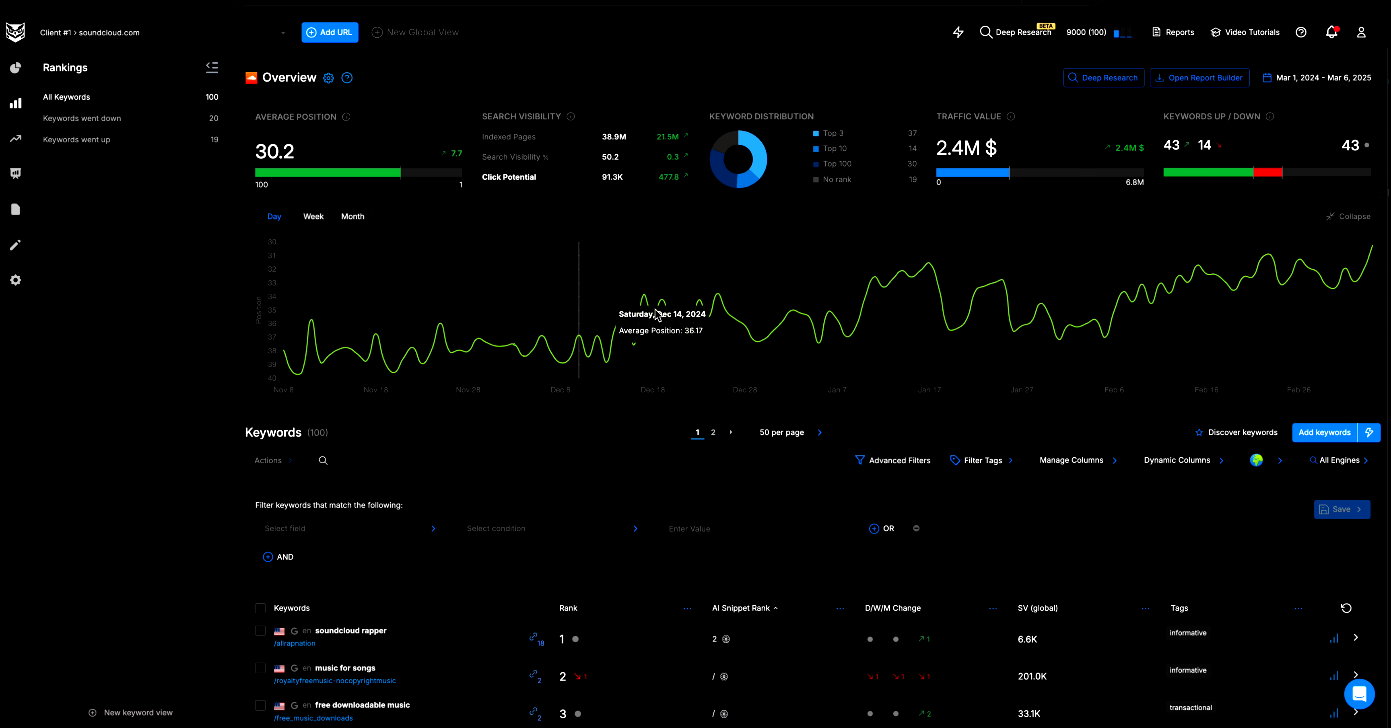
The detail worth paying for is the archive. Nightwatch stores raw HTML SERP snapshots dating back to 2012, so you can open the actual result page from the day a ranking moved instead of trusting a position number stripped of context. When a client asks why traffic dropped in a given week, being able to show the SERP as it looked, features and all, is the difference between a guess and an answer.
Pricing, and what every plan includes
Nightwatch bills in euros because it is an EU company, so read the figures as EUR, not dollars. Checked on the pricing page in September 2026, Starter is EUR 79 per month billed monthly (500 keywords, 50 AI prompts), Professional is EUR 159 (2,500 keywords, 150 AI prompts), and Agency is EUR 399 (7,500 keywords, 500 AI prompts). Enterprise is custom-priced for 20,000-plus keywords. The pricing page advertises a 20% discount for annual billing, though the exact per-month figure after that discount was not cleanly stated on the page.
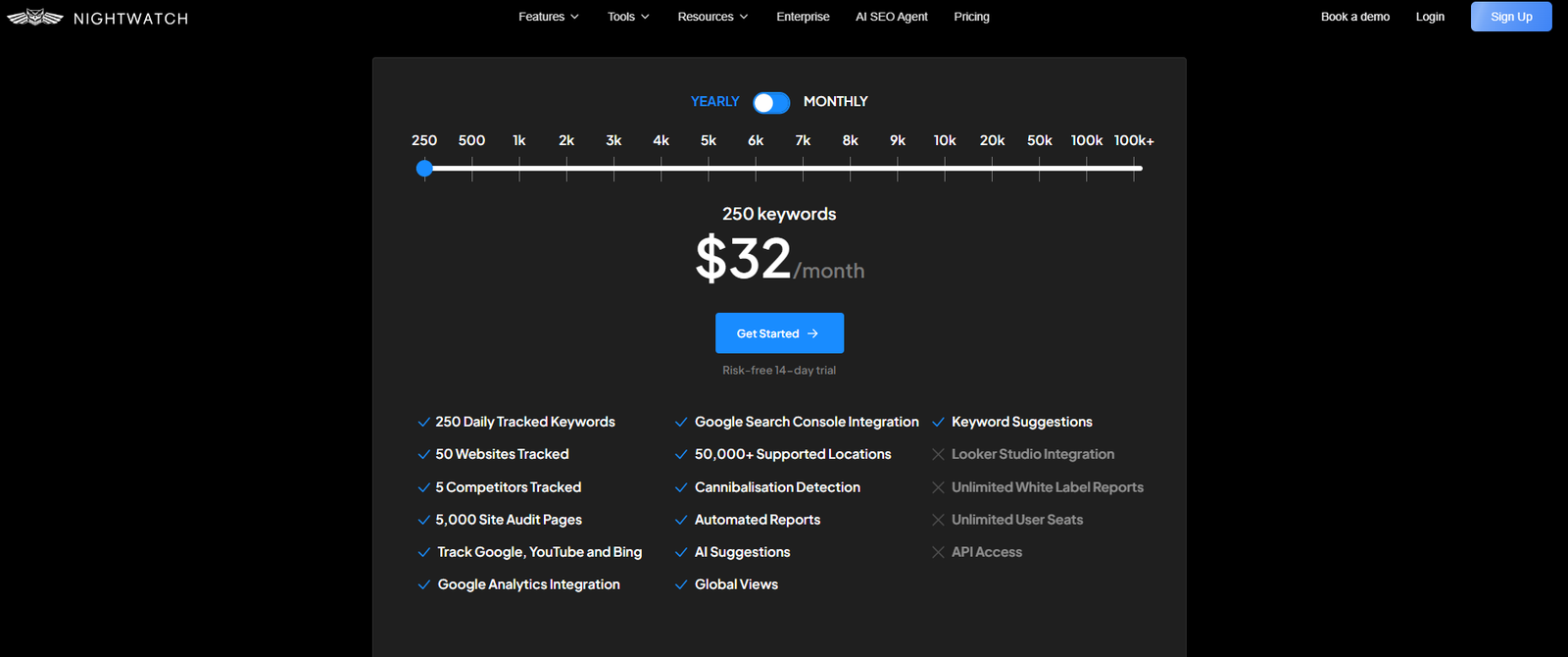
What softens the price is what is bundled at every tier, Starter included: unlimited user seats with no per-seat fee, white-label reports, and API access. On top of that sit Content Studio, Keyword Research, Prompt Research, an SEO MCP server, a Site Audit and a Search Simulator. Agencies that would pay per-seat elsewhere save real money here. A 14-day free trial runs on every plan with no credit card required, so you can load your keywords and see the dashboard before paying.
Where it frustrates people
Nightwatch holds a 4.8 out of 5 on Capterra, so the complaints come from people who mostly like it. The one that repeats is cost: the price climbs quickly as you add keywords, and reviewers describe the entry pricing as unfriendly for beginners next to cheaper trackers. If your list is small and static, you are paying for headroom you will not use; if it grows, the bill grows with it in a way flat-rate rivals avoid.
Two more limits are worth knowing before you commit. There is no mobile app, so checking a ranking on your phone means the mobile web view, not a native one. Backlink monitoring is not in the base product and needs an upgrade, which surprises people who expect it bundled with a tool at this price. Reviewers also note that grouping multiple client domains in the dashboard is more limited than an agency juggling ten accounts would want, and that the interface, polished as it is, carries a learning curve. Support, at least, is consistently described as responsive.
Who should buy it, who should not
Buy Nightwatch if you are an agency or in-house team that already tracks a large keyword set and now needs AI-citation data in the same view, and if unlimited seats and white-label reports offset the price for you. The location depth and the SERP archive back to 2012 are genuinely hard to match, and for local or multi-market work they alone can justify the cost.
Skip it if you track a handful of keywords, want backlink monitoring in the box, or need a native mobile app, because the keyword-based pricing punishes small lists and the missing pieces cost extra. A solo site owner watching 50 keywords is better served by a flat-rate tracker such as SE Ranking or Wincher, and can add a dedicated AI-visibility tool only if that question actually matters to them. Nightwatch is built for the team that has outgrown exactly that setup.
Ready to try Nightwatch?
Visit the official website to see the latest plans, pricing, and special offers.
Get Started - Nightwatch* Affiliate link - we may earn a commission at no extra cost to you.