Omnisend Review: Email, SMS and Push on One Bill for Ecommerce
Omnisend review: one-plan email, SMS and push for Shopify, WooCommerce and BigCommerce stores. Real pricing (including a promo that conflicts with the help center), the May 2026 SMS change, and who should skip it.
Expert Review

One plan, three channels
Most ecommerce marketing tools sell you email first and treat SMS as a paid bolt-on. Omnisend's argument is the opposite: email, SMS and web push sit inside a single plan, priced off one contact count, and a single automation can chain all three. For a Shopify or WooCommerce store that wants an abandoned-cart flow to email now and text two hours later, that is genuinely less plumbing than wiring two vendors together.
The catch arrived this year. On May 4, 2026 Omnisend removed SMS from the Standard plan for new subscribers, per its help center checked in September 2026; Standard signups after that date get email and push only. Accounts opened before the change keep buying SMS as before. So the "three channels, one plan" line is now fully true only on the Pro plan or a grandfathered account.
Pricing, and a number that disagrees with itself
Omnisend has three self-serve tiers plus a Custom plan for lists above 150,001 contacts. The Free plan is $0 with no card, capped at 250 contacts, 500 emails and 500 web-push sends a month. Its help center lists SMS as "Not available" on Free, so do not count on free texts; some secondary sites claim a small SMS credit, but the primary source does not.
Above Free is where the site contradicts itself. The help center's pricing article lists Standard "starting at $16/month" and Pro "starting at $59/month". The live pricing page, opened the same day (September 23, 2026), instead showed a 30%-off promotional rate: $11.20/month for Standard and $41.30/month for Pro, or about $33.60 and $123.90 for three months up front. Budget against the $16 and $59 figures, not the promo, because the discount is the number that vanishes.
Whatever the headline, you pay by "billable contacts": subscribers plus any non-subscriber who received an automated message, recalculated every billing cycle. Standard starts at 500 contacts with roughly 6,000 emails a month (about 12x your list size). Pro advertises unlimited email and push under an undisclosed fair-use policy, which is the usual place an "unlimited" claim keeps its ceiling.
SMS is now metered on Pro. New Pro subscribers pay volume-based US rates that fall as spend rises: $0.009 per SMS at $10-$49.99 of monthly SMS spend, then $0.0085, then $0.008, down to $0.007 per SMS once you cross $10,000. Legacy Pro accounts keep the old model, where included SMS credits matched the subscription price. MMS is US and Canada only; plain SMS is global.
Automations that combine channels
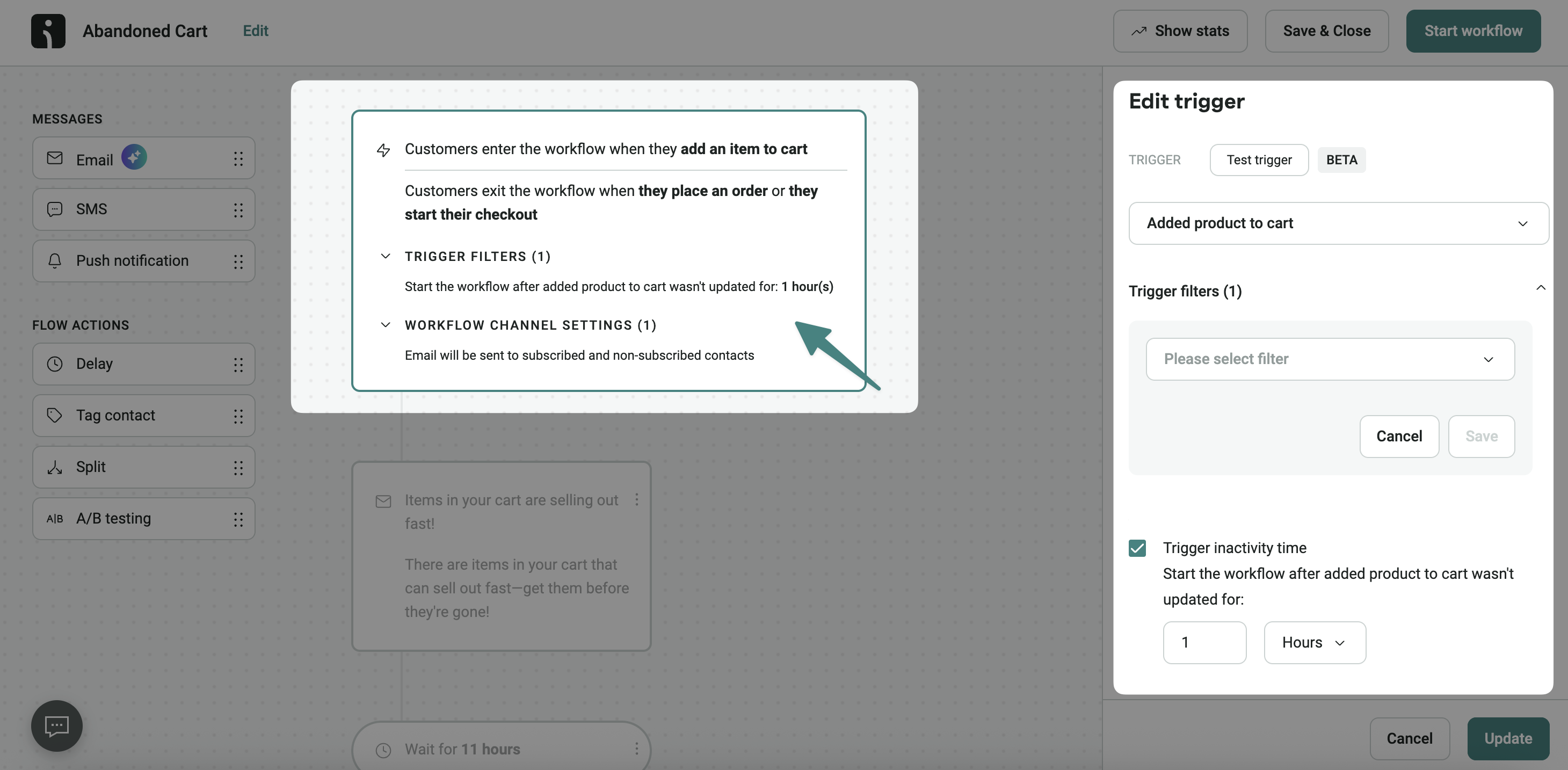
Omnisend ships more than 15 pre-built workflows: welcome series, abandoned cart, browse abandonment, post-purchase and the rest. Each exposes editable triggers, delays, exit conditions and A/B splits, and one flow can mix email, SMS and push steps rather than forcing a single channel per automation. That is the feature the whole product is built around, and it works as advertised.
Store integrations
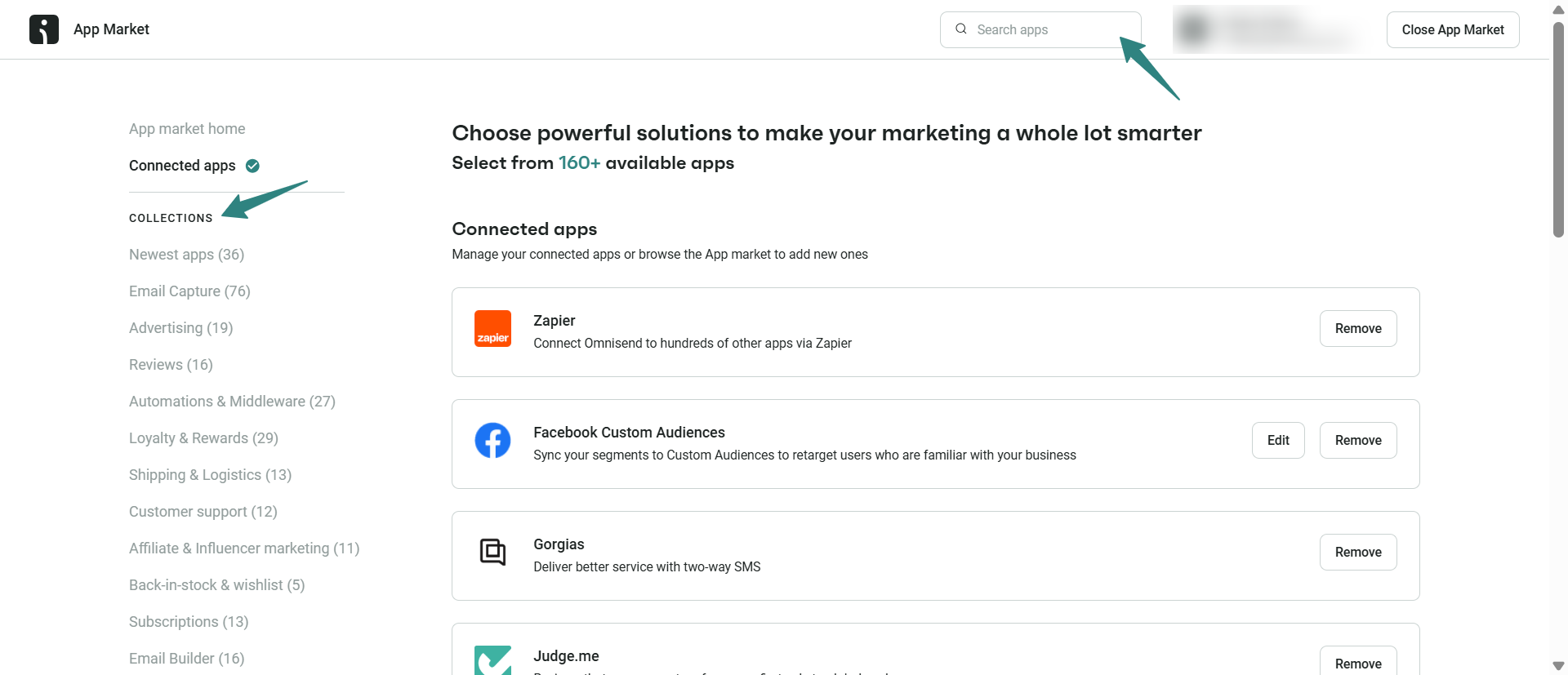
The store connections are the strongest part. Shopify, WooCommerce and BigCommerce all have native, no-code integrations; Wix, Ecwid, Magento and Square Online connect too, and anything else goes through the API. If you run one of the big three carts, setup really is a few clicks, and the App Market adds review, loyalty and forms apps on top.
Support scales with what you spend
Support is AI-first. Below $400 a month you talk to a bot named Omni, offered in six languages, with an escalation path to a human over chat or email; there is no phone line. Cross $400 a month and you get a dedicated human Account Expert who runs quarterly performance reviews, deliverability audits and priority escalations. That line matters more than it looks: a small store on the $16 Standard plan is, by design, a bot's customer first.
Where it frustrates users
Omnisend holds 4.4 out of 5 on Trustpilot across 508 reviews (84% five-star, 12% one-star, checked in September 2026), so most people are happy. The one-star reviews cluster around specific, believable failures: SPF and deliverability problems dropping mail into spam, automations that quietly stopped for 60 days while still billing, and no way to edit a live workflow's steps or move contacts between completed flows. Several describe opaque account suspensions from the compliance team.
On G2, the recurring gripes are "Limited Templates" and "Limited Customization", about 33 mentions each: there is no blank-canvas campaign, so you always start from a template. Exports are a partial bright spot. You can pull the full contact list to CSV, with phone numbers, consent dates, tags and custom properties, but only as an Owner, Admin or Analyst, and there is no documented export of workflow definitions or campaign logs. Moving your automations to another tool means rebuilding them by hand.
Verdict
Buy Omnisend if you run a small-to-mid ecommerce store on Shopify, WooCommerce or BigCommerce and you want email, SMS and push on one dashboard and one bill, with cart and post-purchase flows live the day you install it. That is the store it was built for, and it does that job well.
Skip it if you are a list-heavy sender who lives on predictive segmentation. Klaviyo bills per active profile, so it costs more as your list grows, but its data model is deeper, and that is the trade you are making. Skip it too if guaranteed live-workflow editing and fast human support matter and you will not clear the $400/month Account Expert line. Omnisend launched in 2014 as Soundest and rebranded in 2017; it is a mature product, but its shape favors the merchant who wants channels bundled over the marketer who wants fine control.
Ready to try Omnisend?
Visit the official website to see the latest plans, pricing, and special offers.
Get Started - Omnisend* Affiliate link - we may earn a commission at no extra cost to you.