Planhat Review: The Quote-Only Customer Platform Rebuilt Around an AI Agent
Planhat review: quote-only pricing (median ~$41k/yr per Vendr), Core vs unlimited View Users, Pi and the 10,000 AI credits, integrations, security, and why logs and emails cannot be exported.
Expert Review

One data model for the whole customer lifecycle
Planhat started in Stockholm in 2015 as customer success software, and most buyers still meet it next to Gainsight and ChurnZero on a CS shortlist. That label is now too small. The pricing page has three product tabs - CRM, CSP (customer success platform) and PSA (professional services automation) - and all three sit on the same records: companies, contacts, revenue, usage data, tasks and projects. The pitch is that sales, account management, onboarding and support stop arguing over whose spreadsheet is right.
In November 2026 Planhat went further and rebuilt the product as Planhat OS, with an agent called Pi in the middle. A month earlier it had been named a Leader in the 2026 Gartner Magic Quadrant for Customer Success Management Platforms, as it was in 2025. It bootstrapped for six years, raised a $50 million Series A in 2022, and counts Wiz, Nasdaq and Dropbox as customers. It will not tell you what it costs.
Pricing: no list, a platform fee and a seat floor
There is no price anywhere on planhat.com. Every column on the pricing page ends in an "Enquire" button, there is no free trial and no self-serve signup, and the only way in is a 30-minute sales call. That was still true when we checked the page in November 2026.
What the page does say is how the bill is built. Each plan is "a Platform Fee and a minimum number of Core Users", plus any extra Core Users and any paid extensions on top. A Core User can edit everything in the plan; a View User can see everything and edit nothing. View Users are unlimited on every plan, which is the most useful line on the page: executives, finance and sales can read health scores and renewal dates without each costing a seat. The seat minimum bites the other way - a four-person CS team still pays for whatever floor the contract sets.
Billing terms are rigid. Plans are billed in US dollars, "annually upfront", by bank transfer, direct debit or ACH. Euro or sterling invoices are available "in exchange for a conversion fee". A dedicated Customer Success Manager is included, but only above a minimum annual spend that is not stated.
For an actual number you have to go to buyer data. Vendr, which negotiates SaaS contracts, reports a median of $41,255 a year across 35 Planhat purchases, with a range from $19,866 to $118,800, and says most mid-market deployments land between $25,000 and $45,000. Treat that as what other companies signed, not a quote. Onboarding, technical deployment and AI deployment services are sold separately on top.
The paid extensions - Upgraded AI Platform, Advanced Service, Email Marketing and Advanced Portals - are unpriced too.
Pi, and the AI budget nobody mentions
Planhat markets Pi as "the world's first multiplayer customer agent" - its claim, not ours. In practice Pi is a chat you open in a Session. According to Planhat's own Planhat OS overview, updated on 13 November 2026, Pi "knows all of your Planhat data", answers questions about it and can build things inside Planhat, including HTML artifacts. Memories, Skills and churn-risk Signals arrived with it.
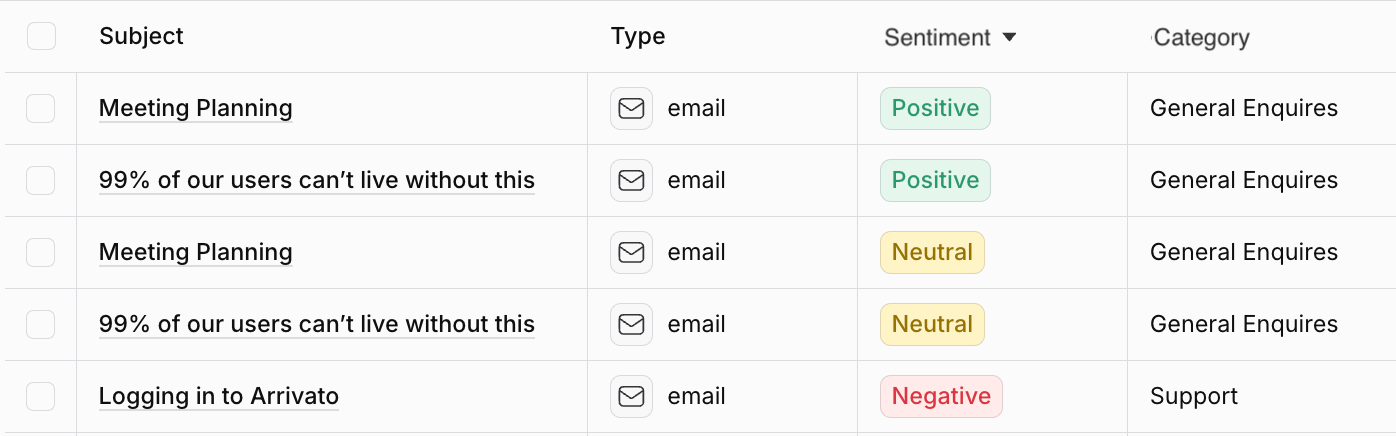
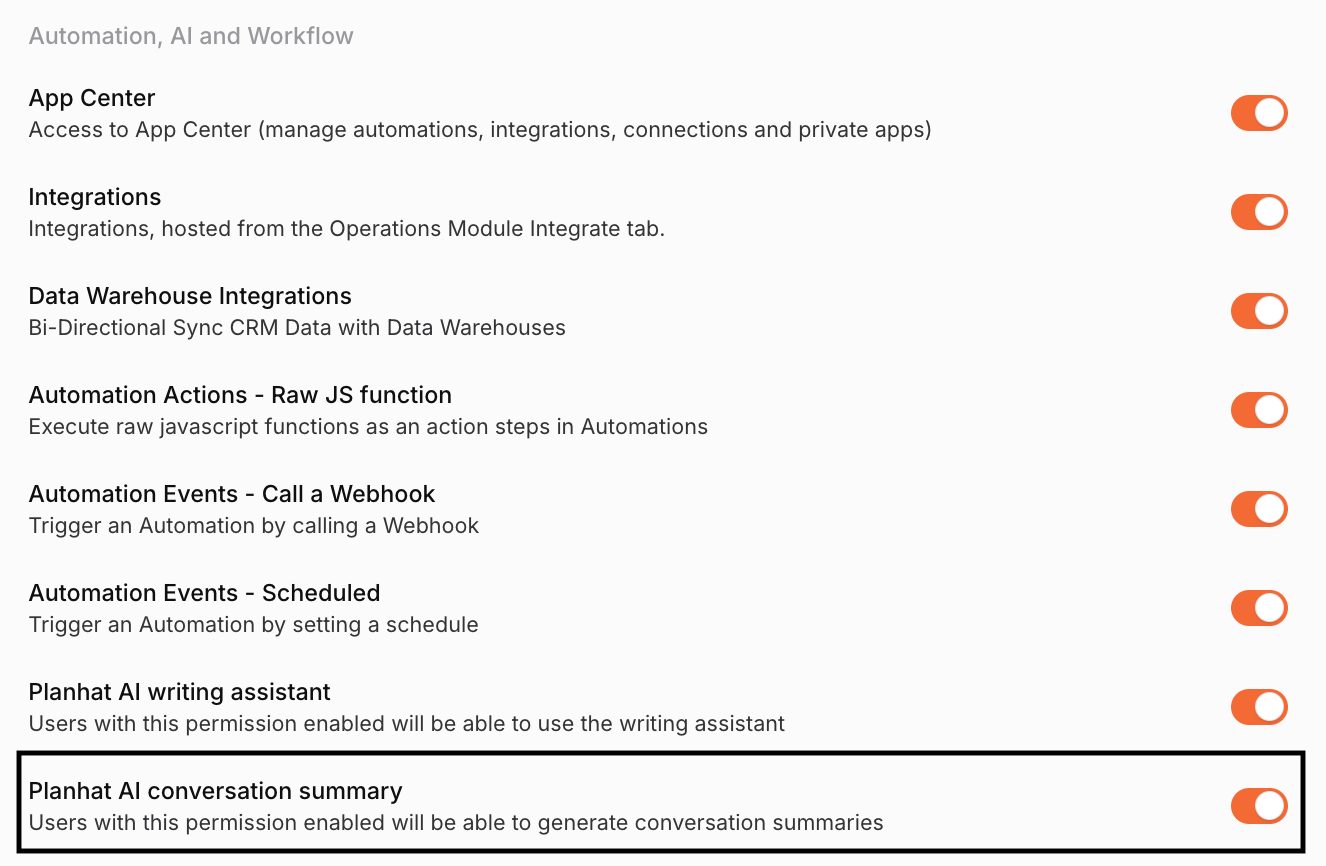
The routine work is done by older features: an AI step inside Automations, sentiment and topic classification on conversations, and summaries. An MCP server lets ChatGPT or Claude read your Planhat data.
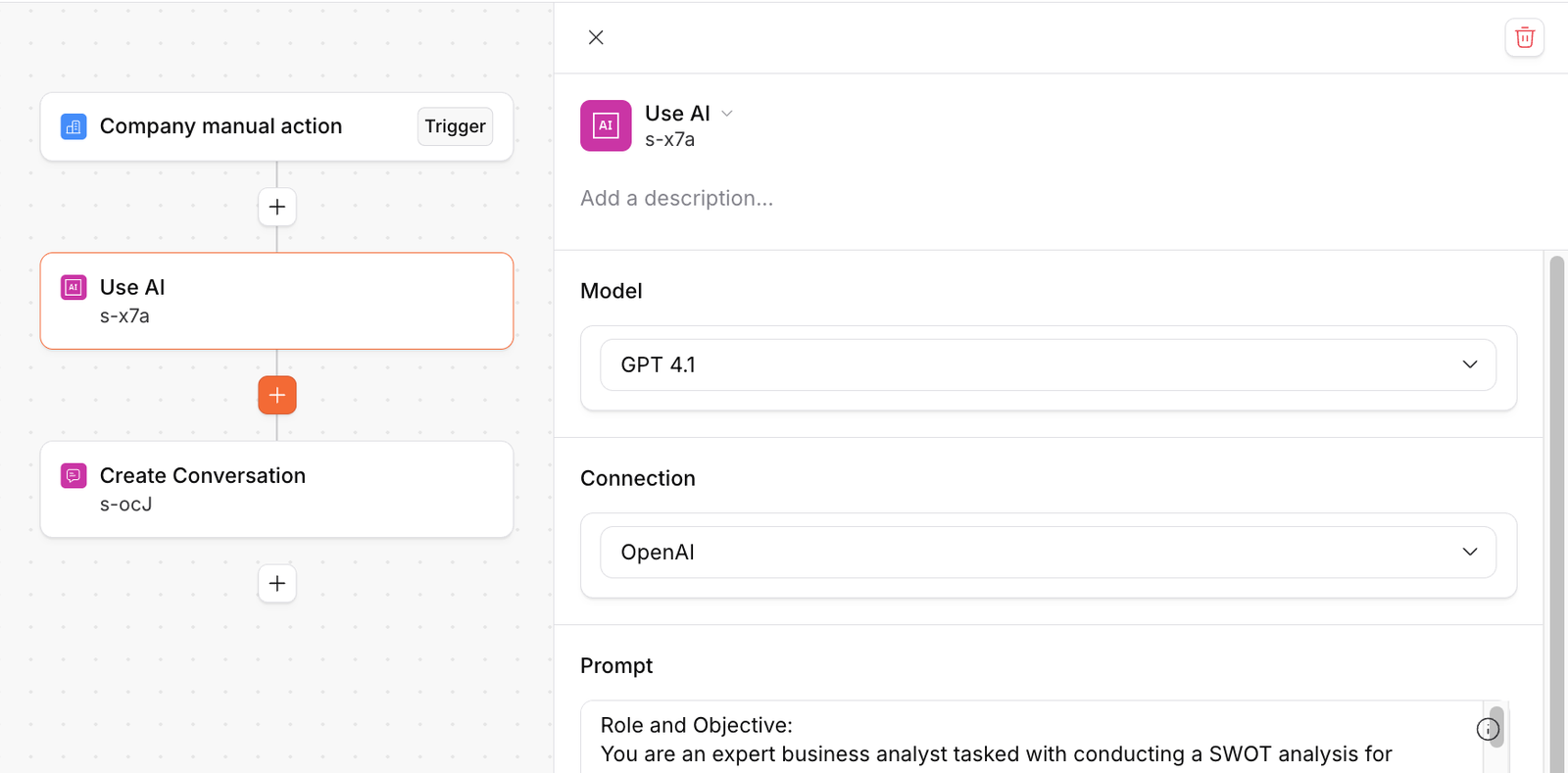
The models are not Planhat's own. They are reached through Google's Vertex AI (Gemini, and Anthropic models via Vertex) and through OpenAI. Planhat says your data is not used for training by either provider, and that the AI processing region, EU or US, is specified.
10,000 credits, shared by everyone
This is the part to read before signing. Every Planhat instance gets 10,000 AI credits on a rolling 30-day basis, shared across all users. Planhat's own rates are about 100 credits to summarise 25 accounts and 1,000 credits to classify around 7,000 emails. So the monthly allowance covers roughly 2,500 account summaries for the whole company - comfortable for a small team, thin once Pi is answering questions for 40 CSMs and an automation is classifying every inbound email. When the credits run out, in Planhat's words, "the AI features can no longer be used" until the window rolls on.
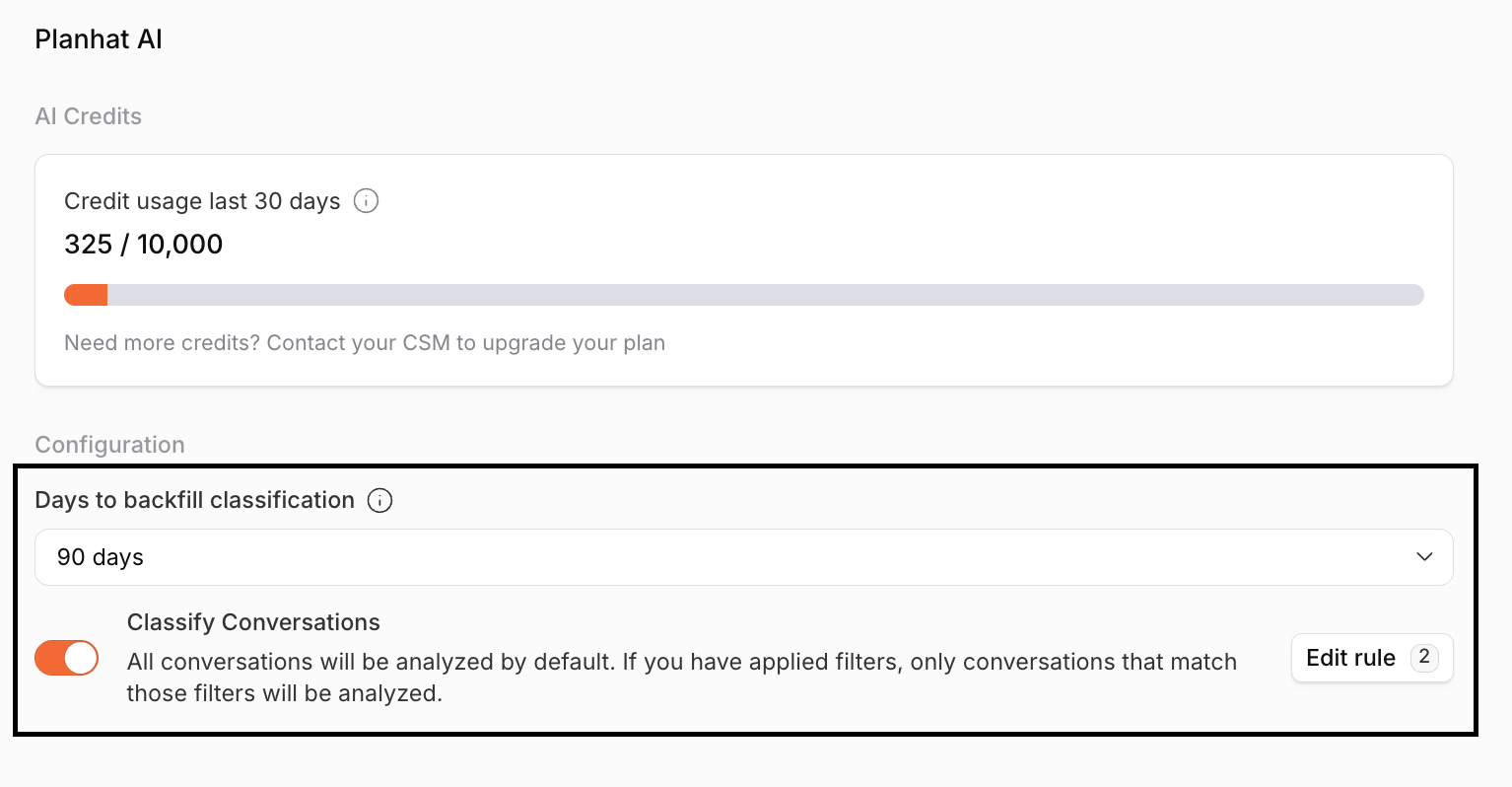
There are two ways out. You can buy more credits or the Upgraded AI Platform through your CSM, at a price the help centre does not give. Or you can connect your own LLM, in which case no Planhat credits are charged and the token bill goes to your OpenAI or Google account instead.
Integrations and the warehouse sync
Planhat's value depends on how much data you feed it, and the plumbing is good. Native integrations sync to and from Salesforce and HubSpot, support desks, Jira and NPS tools; there is a Zapier app and an open REST API with long-lived bearer tokens generated from Private Apps.
The Snowflake and BigQuery connectors are the more interesting part for a data team. CRM data syncs both ways, roughly hourly, while product usage data is fetch-only and can be pulled every 5, 10, 30 or 60 minutes or daily. That is fast enough for a health score to react the same morning a customer stops logging in.
What you cannot take with you
Planhat's own developer docs list the ways data leaves - native integrations, custom integrations and spreadsheet export - and then add one sentence: "Logs, Activities, and Emails cannot be exported from Planhat."
For a customer success tool that is the expensive sentence. Companies, contacts, custom fields and metrics come out as spreadsheets or through the API. Three years of logged calls, QBR notes, activity history and synced email threads - the record that explains why an account is at risk - stays behind. If you migrate to Gainsight or ChurnZero later, you arrive with clean account records and no memory.
Ask for this in writing during the sales process. If the activity history is the asset, either negotiate an export at contract end or mirror the important activities into your warehouse from day one.
Security, uptime and support
Planhat holds SOC 2 Type II and ISO 27001:2022, with the report and certificate available under NDA. It runs on Google Cloud, encrypts with TLS 1.2/1.3 in transit and AES-256 at rest, states GDPR and CCPA compliance and publishes its sub-processor list. The security page names GCP but not a hosting region for the core platform, so EU data residency is a question for the sales call, not an assumption.
Uptime is the weaker answer. Planhat's SLA policy says it has delivered "over 99.9% uptime", then: "We typically don't commit to any specific numbers." No contractual figure by default means no service credits unless you negotiate one.
Support is 24/5, per Planhat's own pricing page - some third-party listings say 24/7, which Planhat does not claim. Larger enterprises can buy Premium Success Support on top.
What users say
Planhat cites "950+ reviews" on its About page. On G2, where it scored about 4.5 out of 5 at the time of writing, the praise and the complaints point the same way. Day-to-day ease of use and the support team are the most-mentioned strengths; a learning curve and complexity are the most-mentioned weaknesses, followed by reporting that some teams find limited. That is the usual shape of a flexible data model: once it is set up, CSMs like living in it. Setting it up is a project.
Who should skip it
Skip Planhat if you are a small team that wants to see a price, start a trial and be live in a week. There is no trial, the contract is annual upfront, and the median buyer pays around $41,000. Vitally is the closer fit there, and ChurnZero if you want a CS-only tool with its own AI agents.
Skip it too if your activity and email history must be portable. Planhat says plainly that it is not. And if you are an enterprise that already runs Salesforce as the system of record and only wants customer success on top, Gainsight remains the incumbent alternative, without asking you to move CRM and service delivery as well.
Verdict
Planhat is the strongest pick for a mid-market or enterprise B2B company that wants customer success, account CRM and onboarding projects on one set of records, has someone to own the setup, and can sign a five-figure annual contract upfront. Unlimited View Users make it unusually cheap to put customer health in front of the whole company, and the warehouse sync keeps usage data fresh enough to act on.
Go in with three questions answered in the contract: how many Core Users the floor includes, what extra AI credits cost once Pi is in daily use, and how you get your activity history out if you leave. Planhat answers none of them on its website.
Ready to try Planhat?
Visit the official website to see the latest plans, pricing, and special offers.
Get Started - Planhat* Affiliate link - we may earn a commission at no extra cost to you.