Totango Review: The Customer Success Platform Now Sold as Odie, From $1,500 a Month
Totango review: now sold as Odie from $500 or $1,500 a month, one-year minimum, no trial. Pricing, AI data terms, export and API limits, and who should pick Gainsight, ChurnZero, Vitally or Custify instead.
Expert Review

Totango is now Odie
On September 10, 2026, Totango stopped selling under its own name. A letter from CEO Keith Frankel, who came in with the acquisition of his AI startup Parative, announced that "Totango has become Odie", now pitched as a "Customer Knowledge Engine" for post-sales teams. Totango.com says the same thing in its top banner, yet its menu still lists three products: the Totango Customer Success Platform, the Catalyst Customer Growth Platform (from the 2024 Totango-Catalyst merger) and Odie. The old pricing page now returns a 404.
So anyone shortlisting Totango today is choosing between two different purchases. Existing customers keep what they have. The letter says "nothing about your account changes today. Same contract, same pricing, same product, same people", and that "for now it will be business as usual." It does not say for how long, or whether the Totango and Catalyst products will be kept or retired. New buyers are steered to Odie.
The pitch behind the rename is blunt. Frankel calls every customer success platform "a secondary CRM with better manners." Odie's answer is to stop being one more dashboard and instead feed account knowledge into the AI tools a company already runs, through an MCP server. That is the bet you are buying into, two months after the name changed.
Pricing and contract terms
For years Totango was contact-sales only. A pricing tracker logged the switch between September 7 and 18, 2026: three unpriced products became two with published starting prices, the first change it had recorded since it began watching the page in April. Both still sit behind a "Talk to sales" button, so nothing here can be bought online. Figures checked on heyodie.ai/pricing on November 19, 2026:
| Customer Knowledge Engine | Customer Operating System | |
|---|---|---|
| Starts at | $500/month | $1,500/month |
| What moves the price | How many business-unit, customer and employee knowledge graphs you maintain, plus an access fee for the MCP connection | Customer portfolio size, depth and frequency of analysis, and a pool of AI tokens and service hours |
| What it includes | The "Living Narrative Index", knowledge curation agents, the Odie MCP server, data source integrations | Daily evaluation of every account, AI-guided workspace, predictive renewal-risk models, workflow and campaign engine, post-sales agents, chat copilot |
| Minimum for a one-year term (our arithmetic) | $6,000 | $18,000 |
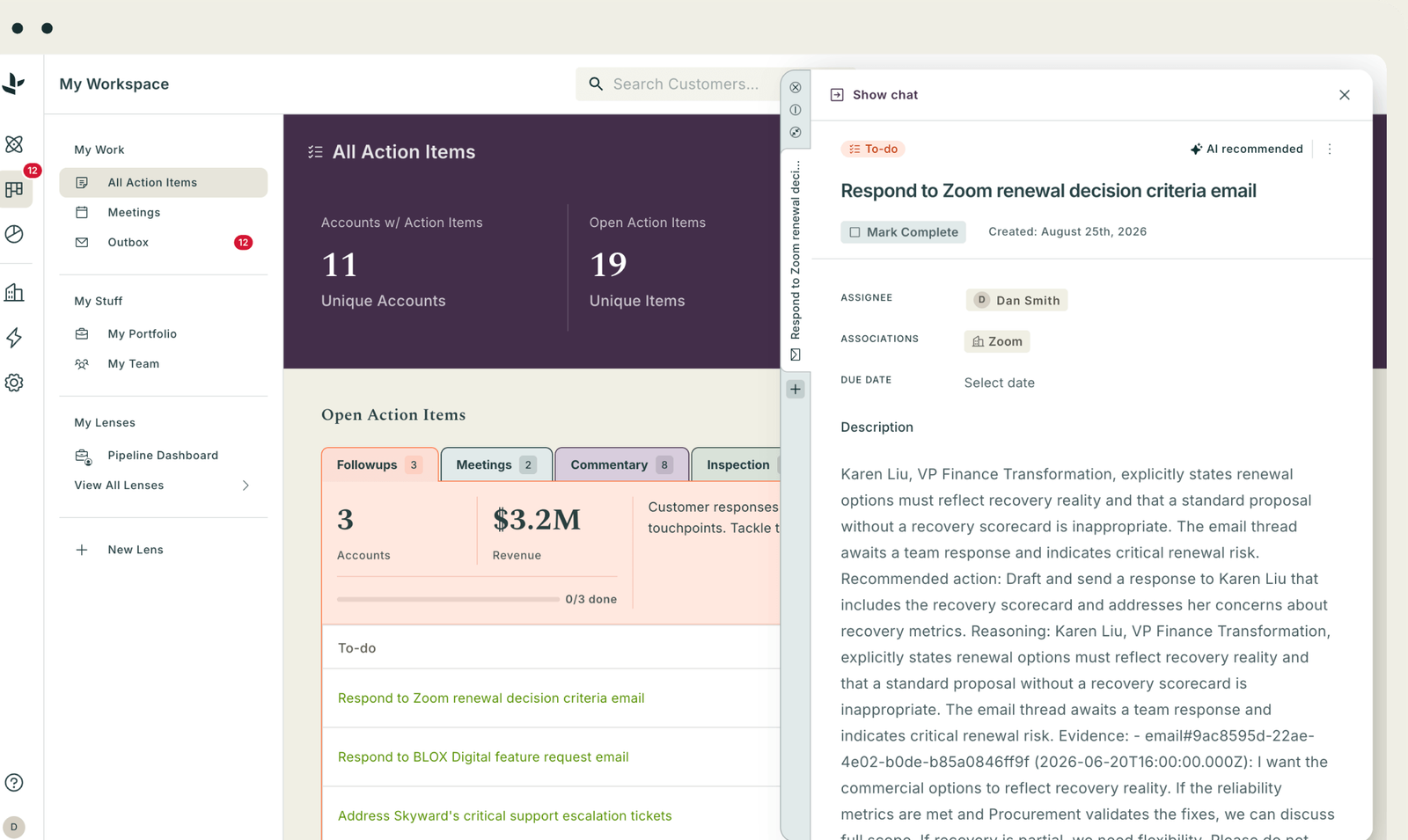
The Customer Operating System is the successor to the classic customer success platform, so it is the column most Totango shoppers should read. The Knowledge Engine is the cheaper, headless half: no workspace, just the knowledge layer and the MCP feed.
There is no month-to-month option. The FAQ answers that question with "Sorry, no", and says two years is the typical term, with one-year deals available and longer ones priced lower. There is no seat pricing and no charge per integration, which helps a team with forty part-time viewers. There is no free plan or trial either. The "free testing pool for your first 60 days" is token credit that starts after you sign.
Tokens deserve a closer look. Scheduled daily analyses are covered by the account fee. Tokens pay for the on-demand work: manually triggered analyses, generated briefs, emails and meeting prep, and the chat copilot. Odie says it never bills overages automatically; you top up when the pool runs dry, and for the first three months it releases only 25% of the pool while it watches real usage. Whatever your own LLM consumes through the MCP server stays on that vendor's bill. Budget for eight weeks to go-live, the company's own estimate.
What the platform does
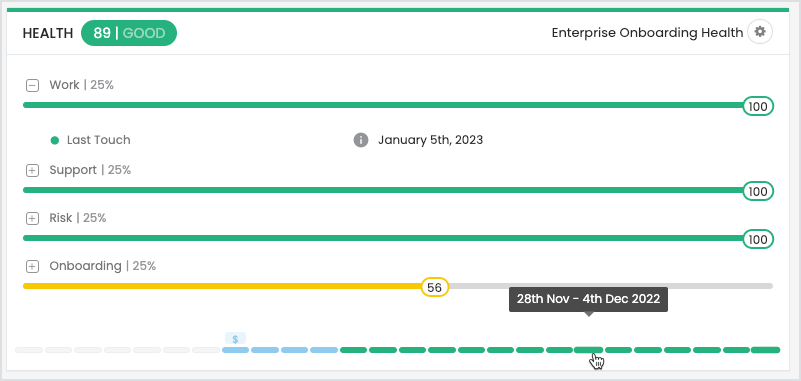
Under the new name, the working parts are still the ones Totango customers know. Health scores compare each account against a "pre-defined 'ideal' profile" and grade it poor, average or good. Segments filter the book of business by any data point you have synced. SuccessBLOCs are the signature idea: packaged playbooks for one stage of the customer journey, bundling scorecards, segments, reports, campaigns and SuccessPlays (task sequences), with a marketplace of pre-built ones for onboarding, adoption and renewal.
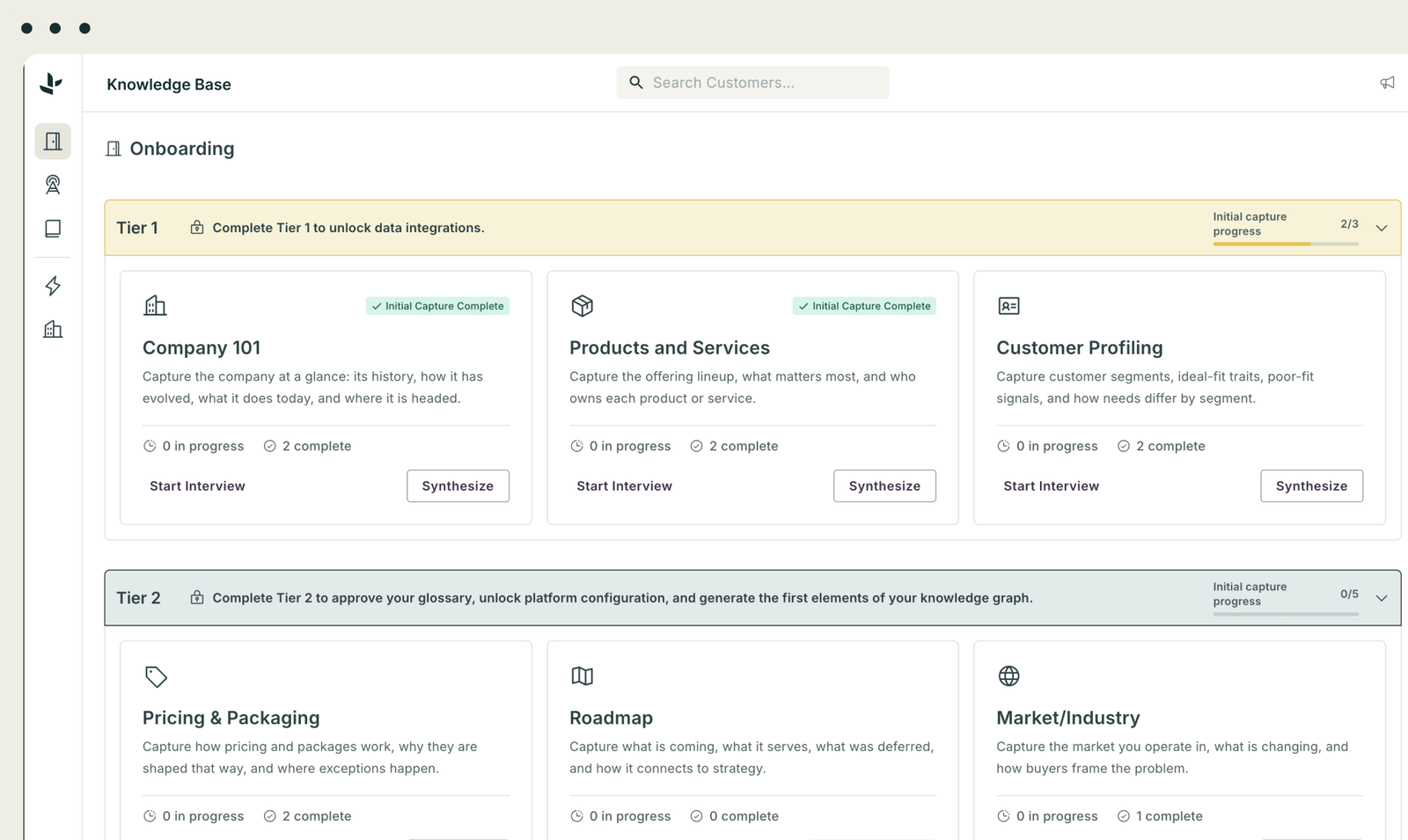
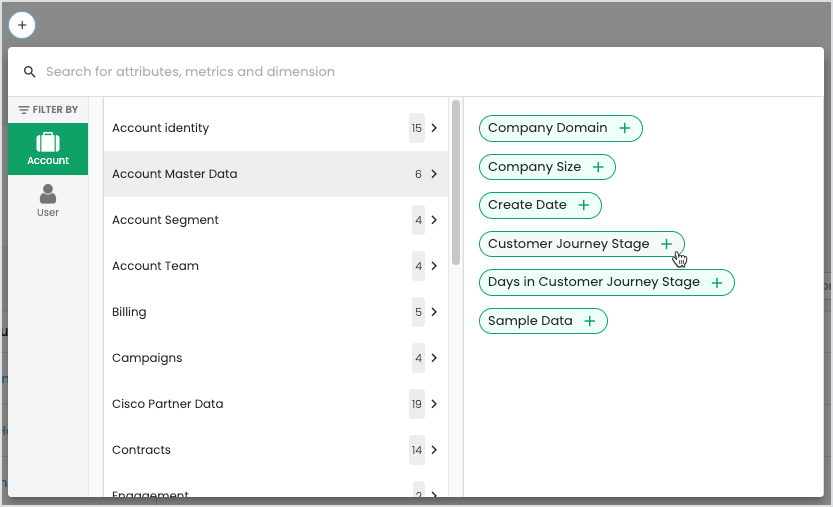
The data side is broader than the price suggests. The connector catalogue covers Salesforce, HubSpot, Microsoft Dynamics and Zoho on the CRM side; Snowflake, BigQuery, Redshift, Databricks, PostgreSQL, MySQL, SQL Server and Oracle as warehouses; Zendesk, Intercom and Jira for support; Mixpanel and Pendo for product usage; and Gong, Chorus, Teams and Google or Outlook calendars for conversations. Warehouse syncs run anywhere from once to every few minutes. A team that already models customer data in Snowflake can point Totango at it rather than rebuild it.
Legacy accounts hand out three licence types: Practitioner, Contributor and a read-only Viewer. The help centre gives no prices for them, and the Odie packaging drops seats altogether.
AI features and your data
Odie's AI layer grew out of Parative's predictive models, which Totango had branded Unison. The renewal-risk scoring, intelligence briefs and copilot all run on it. Which large language model sits underneath is not published. The AI Terms, last updated September 9, 2026, promise to disclose "names and versions of all AI systems, models, and technologies" and the providers behind them, but only on request. Ask before you sign, because a silent model change can shift what the copilot says about your accounts.
The training clause is stronger than most in this category. The company "will not use Data or Proprietary Information to train, improve, enhance, or develop any artificial intelligence systems", its own or anyone else's, except models built only for your account, and no raw data or PII goes to third-party AI subprocessors for training.
Data lives on AWS in a US data centre (t01) or an EU one (t11). Totango is ISO 27001 certified and has a SOC 2 page that does not say whether the report is Type I or Type II. Procurement teams that need Type II should ask for the report itself.
Limits the sales page leaves out
Leaving is the weak spot. Bulk export to CSV covers exactly two objects, Tasks and Touchpoints, and only for the last 30 days. Health histories, segments and account data have no export button. The way out is the REST API, capped at 100 requests per minute with a 429 error above that, or whatever you already copied to your warehouse. If you pull 50,000 records one call at a time, that is more than eight hours of scripted requests (our arithmetic). The event-tracking HTTP API is not rate limited, so getting data in is easier than getting it out.
Smaller frictions add up. Manual file uploads stop at 100 MB because of browser limits. The SLA promises 99% monthly availability, with service credits below that, and defines business hours as 4 AM to 8 PM Eastern, weekdays only. First-line support is an in-app chatbot or an email address. And on November 19, 2026 the new pricing page said dedicated customer success coverage "comes with contracts above [insert threshold]". A customer success vendor has not filled in when you get a customer success manager.
What users complain about
Review-site ratings describe the legacy product, not Odie. Totango sits at about 4.3 out of 5 on G2 from roughly 1,150 reviews, and around 3.7 on Capterra from a much smaller sample of 33. Praise centres on ease of use and the support team. The complaints repeat: a real learning curve, reporting that is hard to bend to your questions, and integrations that need babysitting. One G2 reviewer found reporting and segmentation less customisable than competitors'. Another, quoted in a comparison by Velaris, called it "a good fit and middle ground between Gainsight which was overwhelming for our needs and ChurnZero." That middle-ground reputation is the one Odie now has to rebuild around a different product.
Verdict: who should buy it, who should skip it
Buy it if you are a mid-market B2B team with customer data already in a warehouse, an in-house LLM stack you want fed with account context over MCP, and the budget to commit for one to two years. The no-seat pricing and the training covenant are real advantages there, and $1,500 a month to start is modest for what the Customer Operating System claims to do.
Skip it if you want to try before you commit. There is no trial and no monthly plan, so Vitally or Custify suit a smaller SaaS team better. If you need deep enterprise configuration and a large admin community, Gainsight is still the safer bet. If what you want is retention automation on a product whose roadmap has not just changed, look at ChurnZero. Existing Totango customers do not need to move yet, but they should get the renewal terms for the legacy product in writing before the next contract cycle, because "for now" is the only promise on record.
Ready to try Totango?
Visit the official website to see the latest plans, pricing, and special offers.
Get Started - Totango* Affiliate link - we may earn a commission at no extra cost to you.