Railway Review 2026: The Fastest Way From Git Push to Live App?
Railway review (August 2026): per-second usage billing, one-click databases, the project canvas, honest pricing math, and who should actually deploy on it.
Expert Review
What makes Railway different
Most platforms make you pick a server size before you have written a line of code. Railway flips that around. You push a repo, it works out how to build and run it, and you pay by the second for the CPU and memory the app actually burns. There is no instance to size, no Kubernetes manifest to babysit, and no bill for capacity sitting idle at 3 a.m.
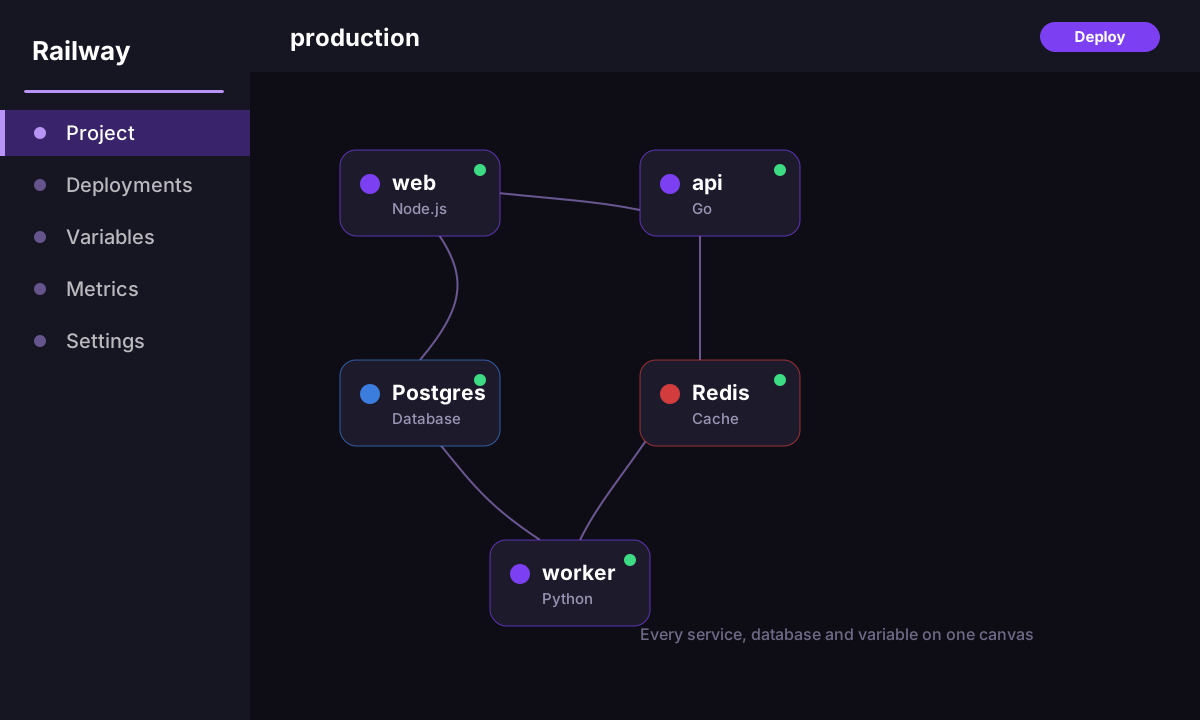
The second thing you notice is the canvas. A Railway project is not a list of servers, it is a live diagram: every service, database and cron job is a node, and the lines between them are the private connections they share. It reads like an architecture whiteboard that happens to be running in production.
From git push to live URL
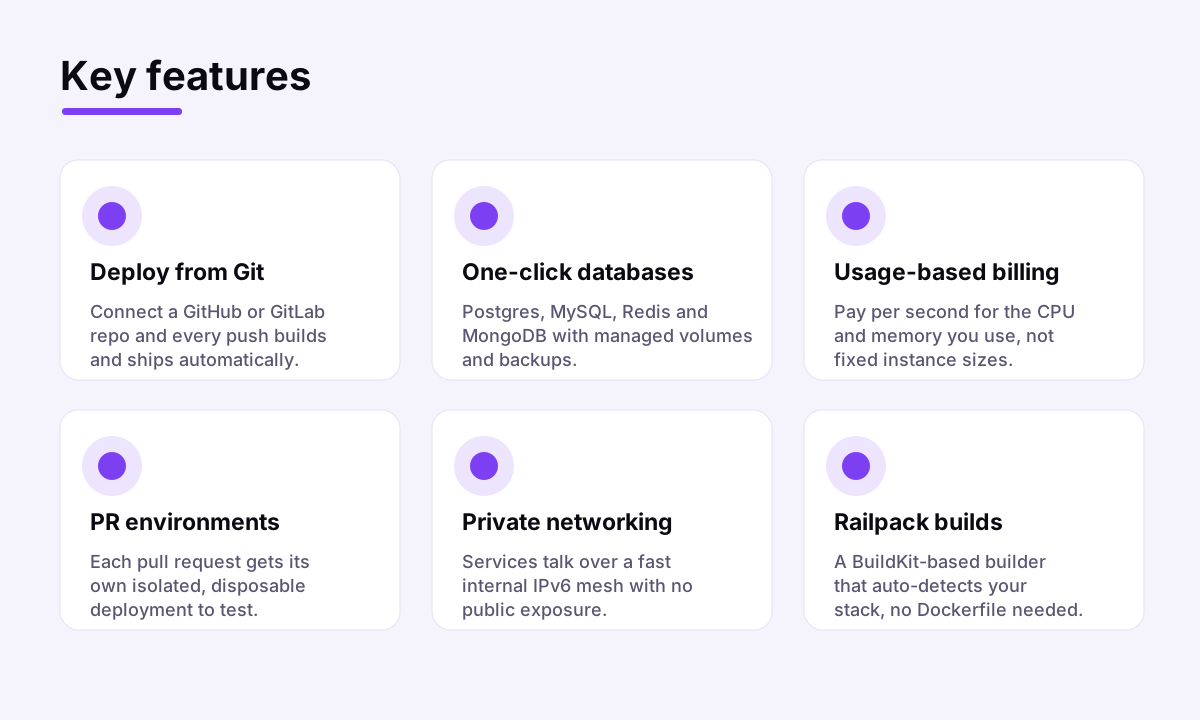
Connect GitHub or GitLab, pick a repo, and Railway detects the stack and builds it. Since March 2026 that build runs on Railpack, a BuildKit-based builder that replaced the older Nixpacks system; it produces smaller images and caches better, and you still do not need to write a Dockerfile unless you want one. Every push to the branch you chose kicks off a fresh build and a zero-downtime rollout.
Databases are a single click. Postgres, MySQL, Redis or MongoDB each spin up as their own service with a managed volume attached. Reference variables let one service read another's connection string without you copy-pasting secrets, and everything talks over a private IPv6 network, so your database never needs a public port. Open a pull request and Railway can stand up a full copy of the environment just for that PR, then tear it down when you merge.
Key features
Beyond the deploy-from-Git core, a handful of things make Railway feel less like a host and more like an operations layer. It runs across seven regions and can place service replicas in several of them; there is an MCP server so an AI agent can inspect and change your infrastructure; and observability, variables and volumes are all first-class rather than bolt-ons.
Pricing and what you'll actually pay
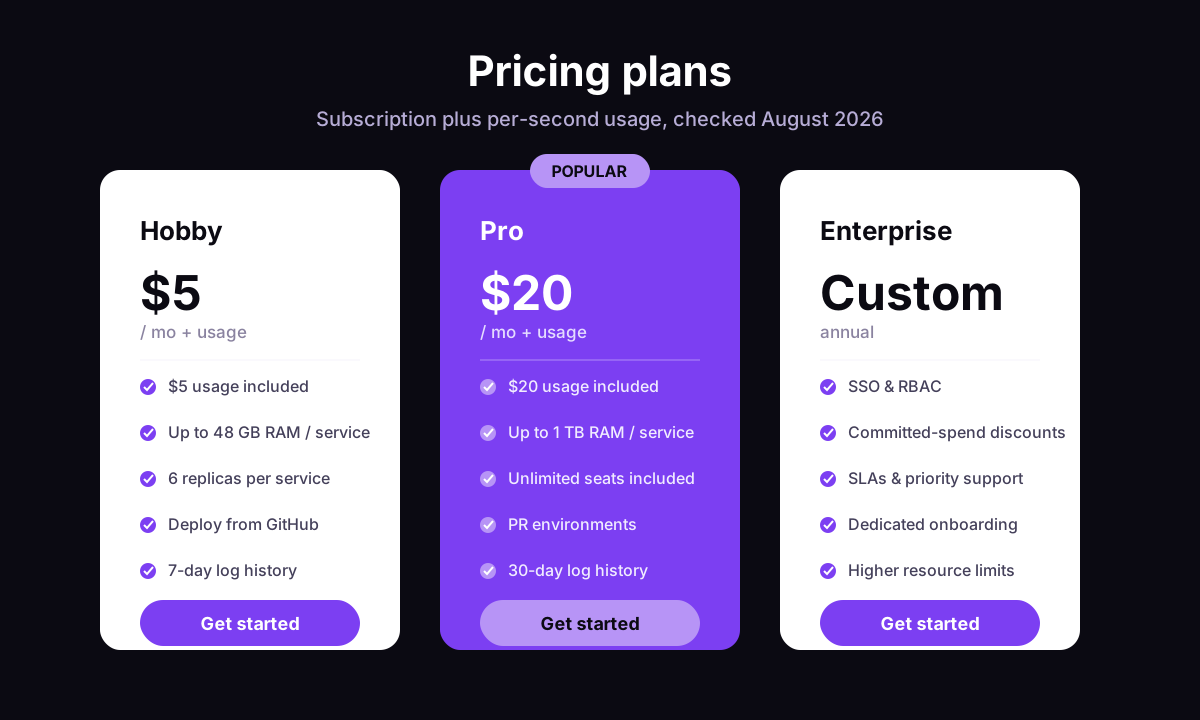
Railway dropped its free-forever tier back in 2023, and that still catches people out. What you get now is a 30-day trial with $5 of credit and no card required; when it runs out you move to Hobby at $5 a month or Pro at $20. Checked in August 2026, both figures are a subscription that includes that much usage, not a cap. Run past the included credit and you are billed per second: roughly $10 per GB of RAM per month and $20 per vCPU per month, plus $0.05 per GB of egress.
For a small always-on service that is genuinely cheap. A hobby API sipping half a gigabyte of RAM and a fraction of a core stays comfortably inside the $5. Where the meter bites is scale. Leave a memory-hungry service running across a few replicas and the usage line climbs faster than the flat $4 you would hand DigitalOcean for a droplet of the same size. Pro lifts the ceiling to 1 TB of RAM and 1,000 vCPU per service and folds in unlimited seats, so the $20 is per workspace, not per developer.
Usage rates change with the platform; check the pricing page for the current numbers.
Pros and cons
Railway's strengths and its rough edges come from the same design decision: it trades the control of a raw server for a much shorter path to a running app.
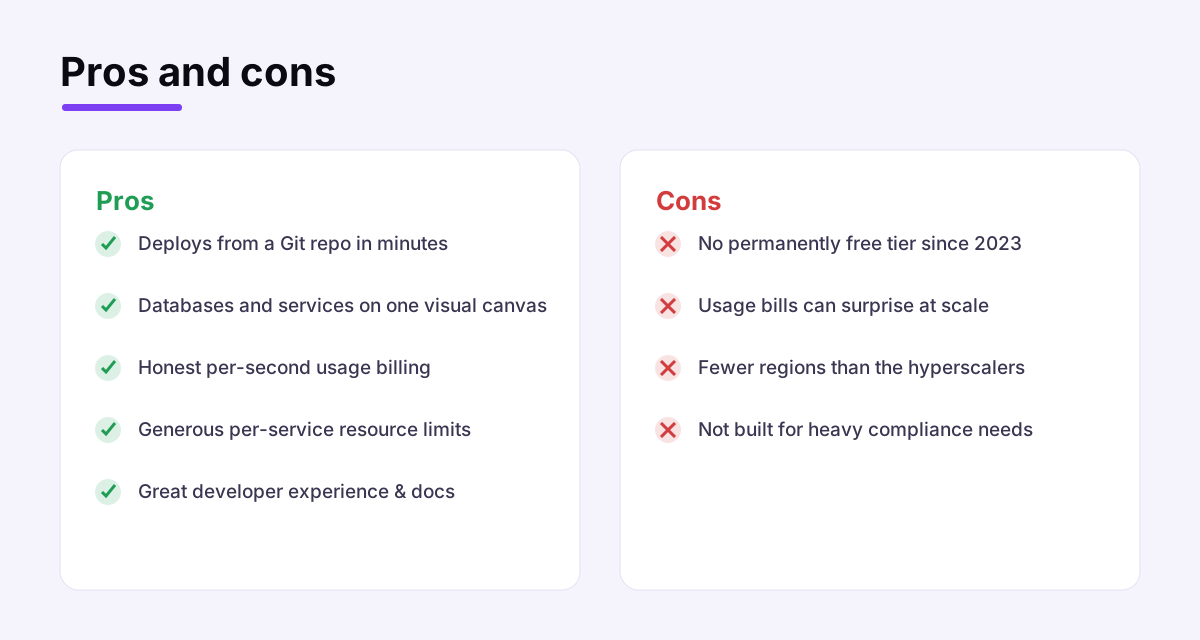
The recurring complaint in user threads is a usage bill that grew quietly, usually a forgotten replica or a chatty egress path. The fix is boring but real: set a usage limit on the project and watch the metrics tab for the first month.
Who should deploy on Railway
Railway is the platform to reach for when you want the shortest route from a Git repo to a running app with a database beside it, and you would rather pay for what you use than manage a box. Solo developers, small teams, and side projects that might quietly turn into real products: this is where it shines, and the developer experience is hard to beat.
Skip it if you need a permanently free hobby tier, where Render still obliges, or if your workload is one big, steady, predictable server that a flat-rate VPS from DigitalOcean or Hetzner will run for less. Teams bound by heavy compliance rules or needing dozens of global regions are still better served by a hyperscaler. For nearly everyone in between, Railway deletes an astonishing amount of busywork.
Ready to try Railway?
Visit the official website to see the latest plans, pricing, and special offers.
Get Started — Railway* Affiliate link — we may earn a commission at no extra cost to you.