Apollo.io Review: AI-Powered B2B Sales Intelligence in 2026
Apollo.io review 2026: a deep look at its 275M+ contact database, AI sales automation, email sequences, pricing, and whether it is worth it for sales teams.
Expert Review

What is Apollo.io?
Apollo.io is an all-in-one B2B sales intelligence and engagement platform that helps revenue teams find, contact, and close their ideal buyers. At its core sits a living database of more than 275 million contacts and 70 million companies, enriched with verified emails, direct dials, job changes, technographics, and buyer intent signals. Instead of stitching together a separate data provider, sequencing tool, and dialer, sales teams use Apollo to run the entire outbound motion from a single workspace.
Beyond raw data, Apollo layers AI across the whole workflow — from suggesting who to reach out to and writing personalized emails, to summarizing sales calls and keeping your CRM clean. It is built primarily for SDRs, account executives, founders, and marketers who need a repeatable pipeline without paying for four different tools. A generous free plan and a browser extension make it easy to try before committing.
Benefits of Using Apollo.io
Adopting Apollo.io brings several concrete advantages for sales and marketing teams:
- All-in-One Platform: Prospecting data, email sequences, a dialer, meeting scheduling, and CRM enrichment live in one place, reducing tool sprawl and per-seat costs.
- Massive Verified Database: Access 275M+ contacts and tens of millions of companies with continually re-verified emails and phone numbers, improving deliverability and connect rates.
- AI-Driven Efficiency: AI recommends accounts, drafts outreach, scores leads, and summarizes calls, letting reps spend more time selling and less time on manual research.
- Buyer Intent Signals: Intent topics (powered in part by a Bombora partnership) surface accounts already researching your category, so you can prioritize warm prospects.
- Low Barrier to Entry: A free-forever plan and a widely used Chrome extension let individuals and small teams get value immediately without a big upfront commitment.
- Deep Integrations: Native syncing with Salesforce, HubSpot, Gmail, LinkedIn, and Google Calendar keeps Apollo connected to the tools teams already use.
AI Features of Apollo.io
-
B2B Contact & Company Database
Apollo's foundation is its searchable database of 275M+ contacts and 70M+ companies. You can filter by title, seniority, department, headcount, revenue, technology stack, location, and dozens of other attributes to build precise lead lists in seconds.

-
AI Lead Scoring & Recommendations
Apollo scores prospects against your ideal customer profile and layers in intent and engagement signals, so reps focus on the accounts most likely to convert instead of guessing which leads to work first.
-
Email Sequences & Engagement
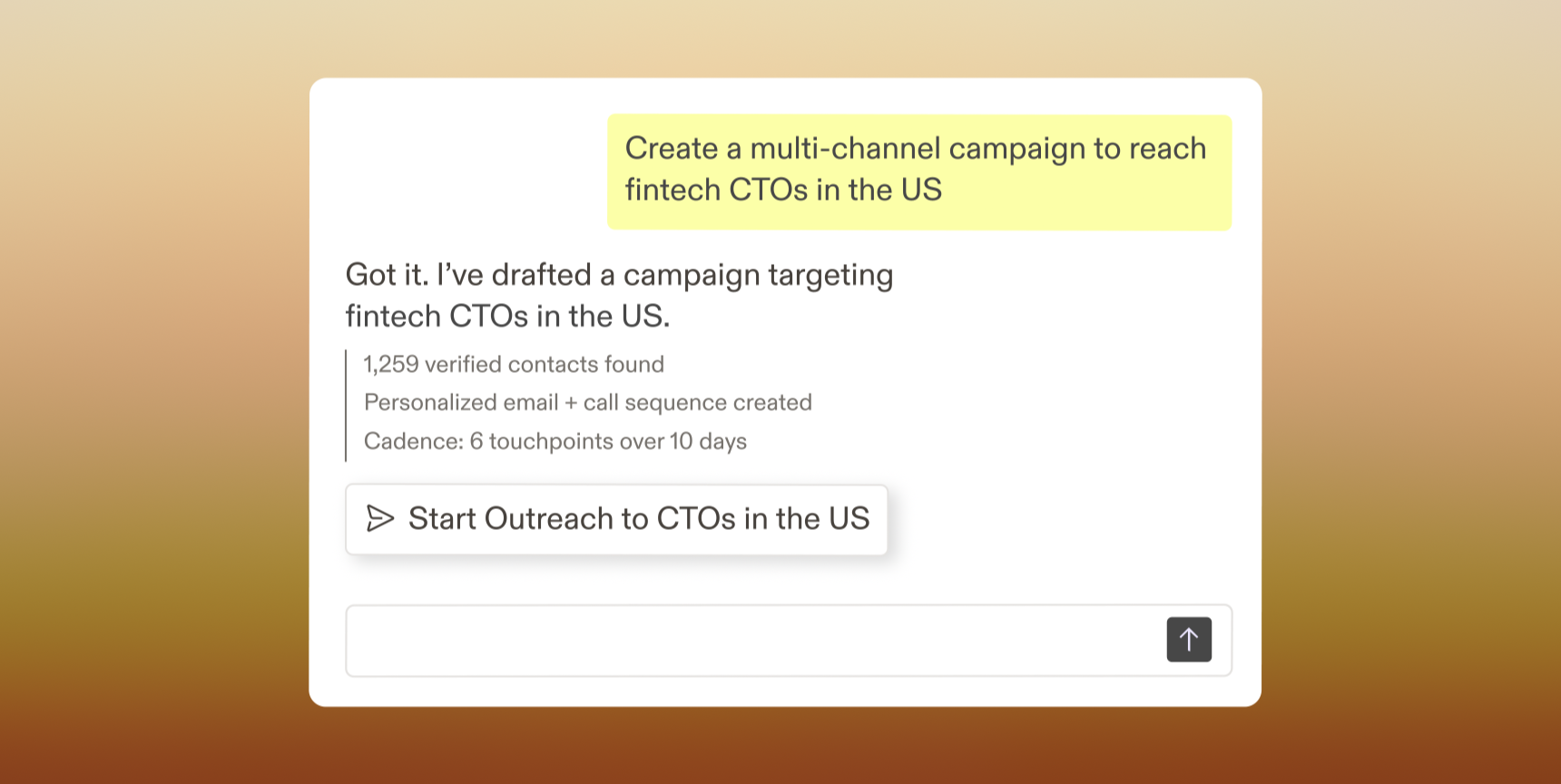
Build multi-step, multichannel campaigns that mix automated emails, calls, LinkedIn tasks, and follow-ups. Deliverability guardrails and A/B testing help keep messages landing in the inbox while you scale outreach.

-
AI Writing Assistant
Apollo's AI drafts personalized emails and entire sequences based on a prospect's role, company, and recent signals. Reps can generate a first draft in seconds and then edit for tone, cutting the time spent staring at a blank message.
-
Conversation Intelligence & Call Recording
The built-in dialer records and transcribes calls, then uses AI to surface key moments, generate summaries, and provide coaching insights. Managers can review talk-time, objections, and next steps without sitting in on every call.

-
CRM Enrichment & Data Health
Apollo automatically enriches and updates records in Salesforce and HubSpot, filling missing fields and flagging job changes. Real-time form and visitor enrichment help capture more complete data on inbound leads.

-
Chrome Extension
The Apollo Chrome extension works on LinkedIn, Gmail, company websites, Salesforce, and HubSpot. You can pull verified contact details, add prospects to sequences, and sync activity to your CRM without leaving the page you are on.
-
Workflows & Automation
Apollo's automation and "plays" let teams trigger actions from signals — for example, automatically enrolling a lead in a sequence when they visit your site or change jobs — turning manual playbooks into hands-off pipeline generation.
Pricing of Apollo.io
Apollo.io is priced per user, per month, with a meaningful discount for annual billing. As of 2026, the tiers break down as follows (annual pricing shown; monthly billing costs more):
- Free Plan: $0 — Unlimited email credits (subject to fair use), a small monthly allotment of mobile and export credits, up to 2 active sequences, and access to the full database with basic filters. Great for testing the platform.
- Basic Plan: around $49 per user/month billed annually (about $59 monthly) — More credits, no sequence limit, advanced filters, and core CRM integrations for individuals getting serious about outbound.
- Professional Plan: around $79 per user/month billed annually (about $99 monthly) — Adds conversation intelligence/call recording, advanced reporting, A/B testing, and higher credit limits. The most popular tier for growing teams.
- Organization Plan: around $119 per user/month billed annually (about $149 monthly, 3-user minimum) — Adds advanced security, customizable reporting, higher-volume dialing, and enterprise controls for larger sales orgs.
Full details at: https://www.apollo.io/pricing
Real-World Use Case Analysis
-
SDR & Sales Teams — Outbound Prospecting
Building targeted lead lists: SDRs can define an ideal customer profile with granular filters and export verified contacts directly into sequences, replacing hours of manual LinkedIn scraping with a few clicks.
Running multichannel cadences: Reps orchestrate email, call, and LinkedIn steps in one sequence, while conversation intelligence and analytics show which messaging and channels actually book meetings.
-
Marketing & Lead Generation
Enriching inbound leads: Marketers use real-time form and visitor enrichment to identify anonymous website traffic and auto-fill missing firmographic data, improving lead routing and scoring.
Fueling account-based campaigns: Intent signals help marketing hand sales a prioritized list of accounts researching the category, tightening alignment between the two teams.
-
Recruiters & Talent Sourcing
Finding and contacting candidates: Although built for sales, Apollo's database and email finder are useful for recruiters sourcing passive candidates by title, company, and location, then reaching out through sequences.
-
Startups & SMBs
Bootstrapping a pipeline: Founders and small teams often start on the free or Basic plan to validate outbound cheaply, using AI-written emails to punch above their weight without hiring a full sales team.
Scaling without tool sprawl: As the team grows, Apollo consolidates data, sequencing, and dialing into one bill, which is attractive for budget-conscious SMBs comparing point solutions.
Pros and Cons of Apollo.io
-
Advantages of Using Apollo.io
Apollo.io delivers strong value for sales-driven organizations:
- Enormous, frequently re-verified contact database at a competitive price point.
- Genuine all-in-one workflow — data, sequencing, dialer, and CRM enrichment in one tool.
- Practical AI across writing, lead scoring, and call summaries that saves reps real time.
- Generous free plan and an excellent Chrome extension lower the barrier to adoption.
-
Disadvantages of Using Apollo.io
There are some trade-offs to weigh:
- Data accuracy varies by region and role — some emails and direct dials are outdated, so verification is still needed.
- Credit limits and recent free-plan reductions can push heavy users to upgrade faster than expected.
- The breadth of features means a learning curve, and advanced automation is gated to higher tiers.
- Deliverability ultimately depends on your own sending hygiene; Apollo helps but cannot fully protect a poorly warmed inbox.
Final Thoughts on Apollo.io
Apollo.io is one of the strongest value propositions in B2B sales tech in 2026. By bundling a massive contact database, intent data, AI-assisted outreach, a dialer with conversation intelligence, and CRM enrichment into a single per-seat subscription, it removes the need to buy and integrate several separate tools. Data quality is not flawless and power users will bump into credit limits, but for SDRs, account executives, marketers, and founders who need a repeatable, affordable outbound engine, Apollo remains a top pick. The free plan makes it easy to test the platform against your own market before committing budget — and for most sales teams, it will earn its place in the stack.
Ready to try Apollo.io?
Visit the official website to see the latest plans, pricing, and special offers.
Get Started - Apollo.io* Affiliate link - we may earn a commission at no extra cost to you.