Fin Review: Intercom's AI Agent After the Salesforce Deal, and What an Outcome Really Costs
Intercom Fin review: $0.99 per outcome pricing, the $9.99 qualification fee, assumed resolutions, the Apex model, default data training and what Salesforce ownership means for Zendesk users.
Expert Review

Table of Contents
Fin is not the product you remember
If you last looked at Intercom Fin in 2025, four things have changed under you. You no longer pay per resolution. You pay per "outcome", and since March 12, 2026 one kind of outcome costs ten times another. The model writing the answers is no longer GPT or Claude. It is Intercom's own model, Apex. The company is now called Fin and only the helpdesk still carries the Intercom name. And since September 10, 2026 the company has belonged to Salesforce, which paid about $3.6 billion for it.
The job is the same. Fin reads your help center and connected systems, answers over chat, email, voice, WhatsApp, social and Slack, and hands off to a person when it can't help. It claims a 76% average resolution rate across more than 12,000 customers, a vendor figure Salesforce repeated in its acquisition release. What changed is the bill, the model and the owner. Every price below was checked on November 20, 2026 against Intercom's pricing and help pages.
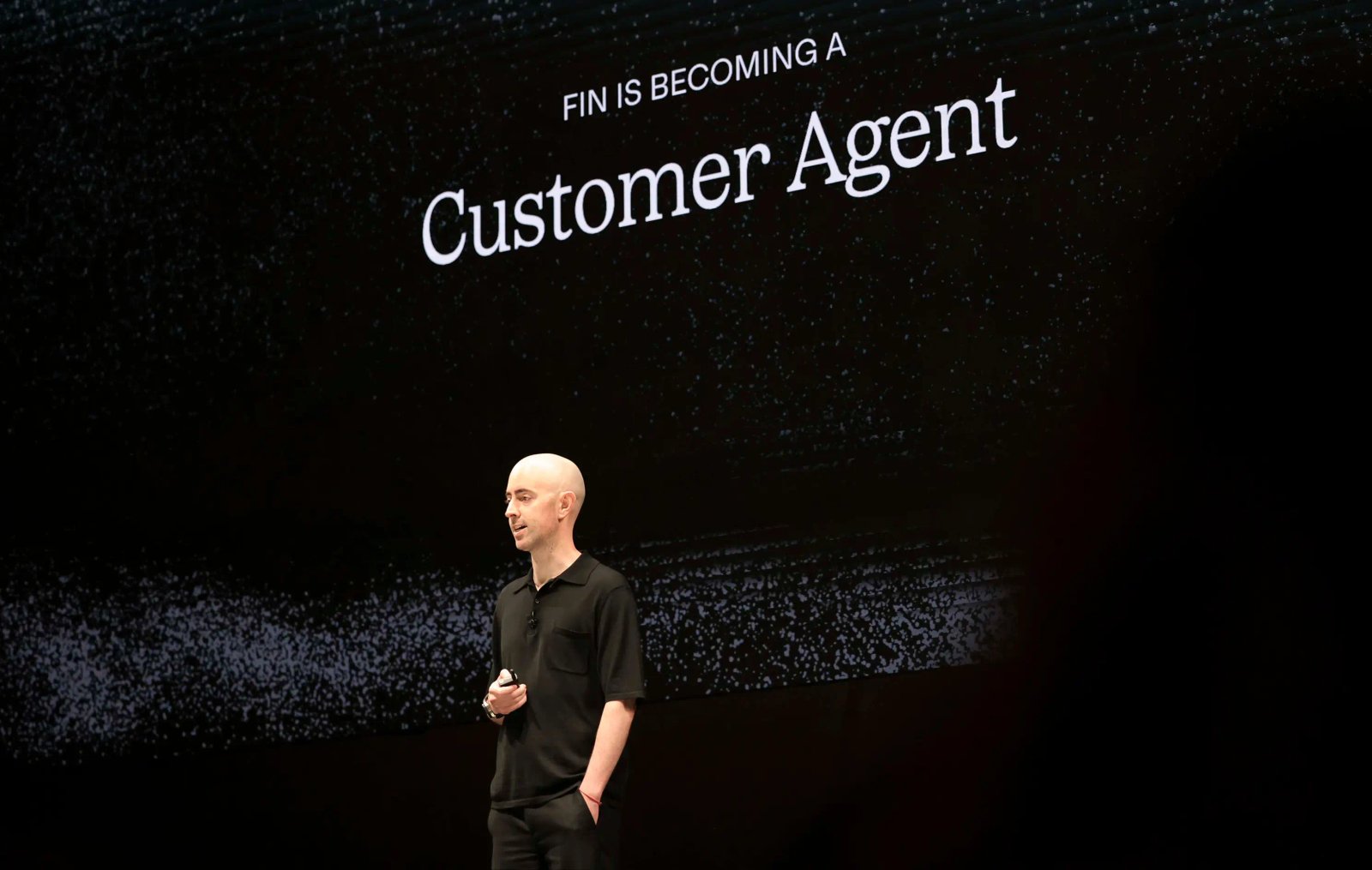
Fin 4, released October 7, recasts Fin as a "Customer Agent" that qualifies sales leads too. That is where the most expensive outcome on the price list comes from.
What an outcome actually costs
The headline is $0.99 per outcome. That covers a resolution, a Procedure that ends in a handoff, a disqualified lead and self-serve routing. A qualified lead costs $9.99. Fin Voice goes through sales at $1.99 per voice outcome. You are charged at most once per conversation, and nothing when the customer asks for a human, a Procedure fails, or the customer comes back to the same conversation.
The clause the pricing page leaves out is the definition of a resolution. Fin counts one when, after its last answer, the customer confirms it helped or exits the conversation without requesting further assistance. Intercom calls that an "assumed resolution". A customer who gives up and closes the window looks exactly like a happy one, and both cost $0.99.
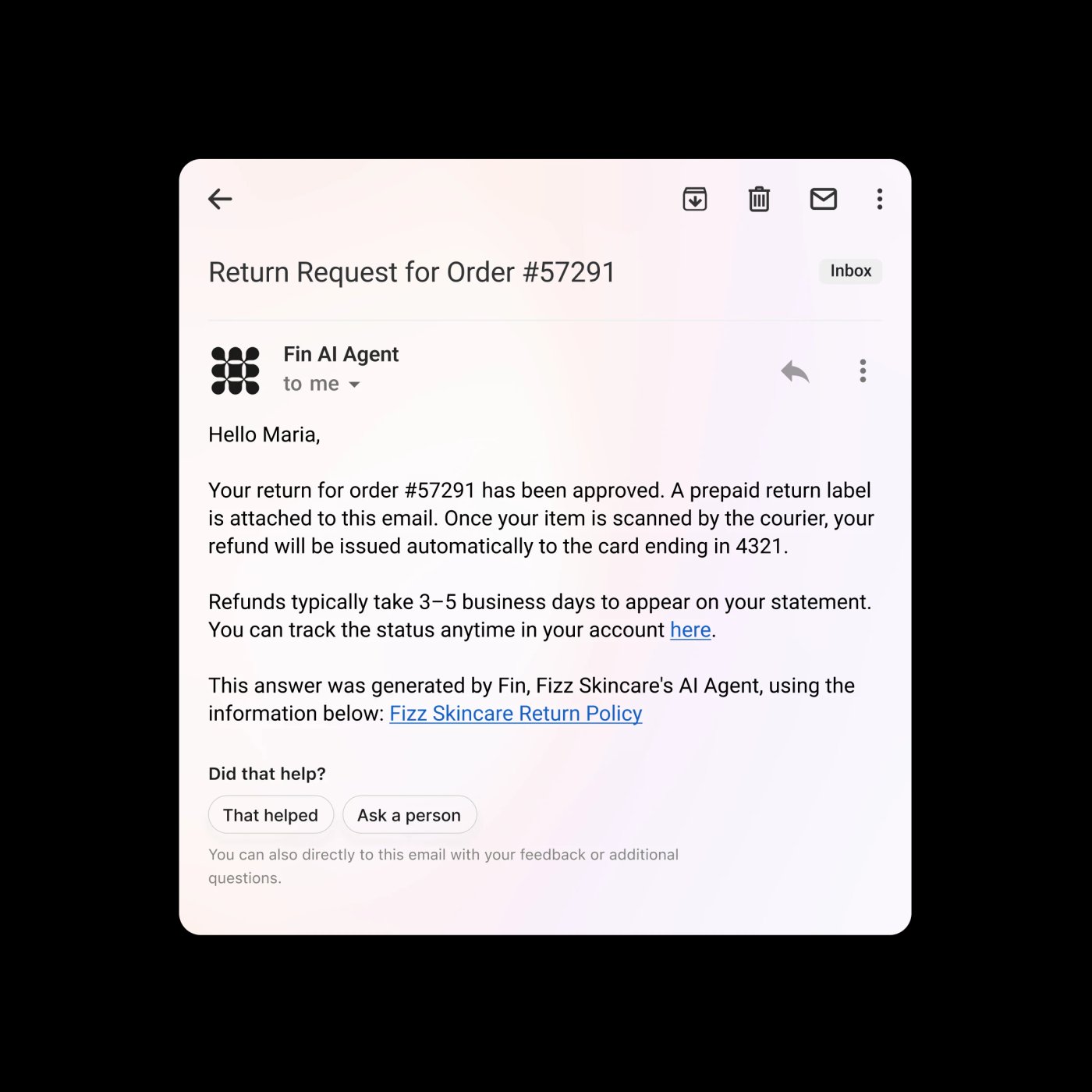
Look at the two buttons under that email. "Ask a person" costs you nothing. "That helped" costs $0.99, and so does ignoring both. Usage reminders and hard limits exist. Set both on day one.
What you pay on top depends on where Fin runs:
| Setup | Fixed cost | Per outcome |
|---|---|---|
| Fin on the Intercom helpdesk | Seats: Essential from $29/seat/month on annual billing ($19 promo for new customers), Advanced $85, Expert $132. 1 full seat minimum | $0.99 ($9.99 qualification) |
| Fin standalone on Zendesk, Freshdesk, Salesforce or similar | $49/month minimum, which includes 50 outcomes. No Fin seats, no setup fee | $0.99 ($9.99 qualification) |
| Fin Voice | Through sales | $1.99 |
Treat those seat prices with care: the same pricing page's structured data lists $29, $99 and $139, probably the monthly-billing rates, though nothing says so. Get a quote for the term you'll sign. Extras stack on top too: Copilot for human agents is $29 per agent/month billed annually ($35 monthly), Proactive Support Plus is $99/month for 500 messages, and WhatsApp, SMS and bulk email are billed per use.
Here is what that does at volume. A team where Fin resolves 5,000 chats a month pays 5,000 × $0.99 = $4,950 in outcomes. Add ten Advanced seats at $85 and the bill is about $5,800 a month. Run the same 5,000 outcomes as standalone Fin over Zendesk and they still cost $4,950, plus your Zendesk seats, which our roundup put at $55/agent/month for Suite Team in August. The outcome line is the cost that grows. Seats barely move.
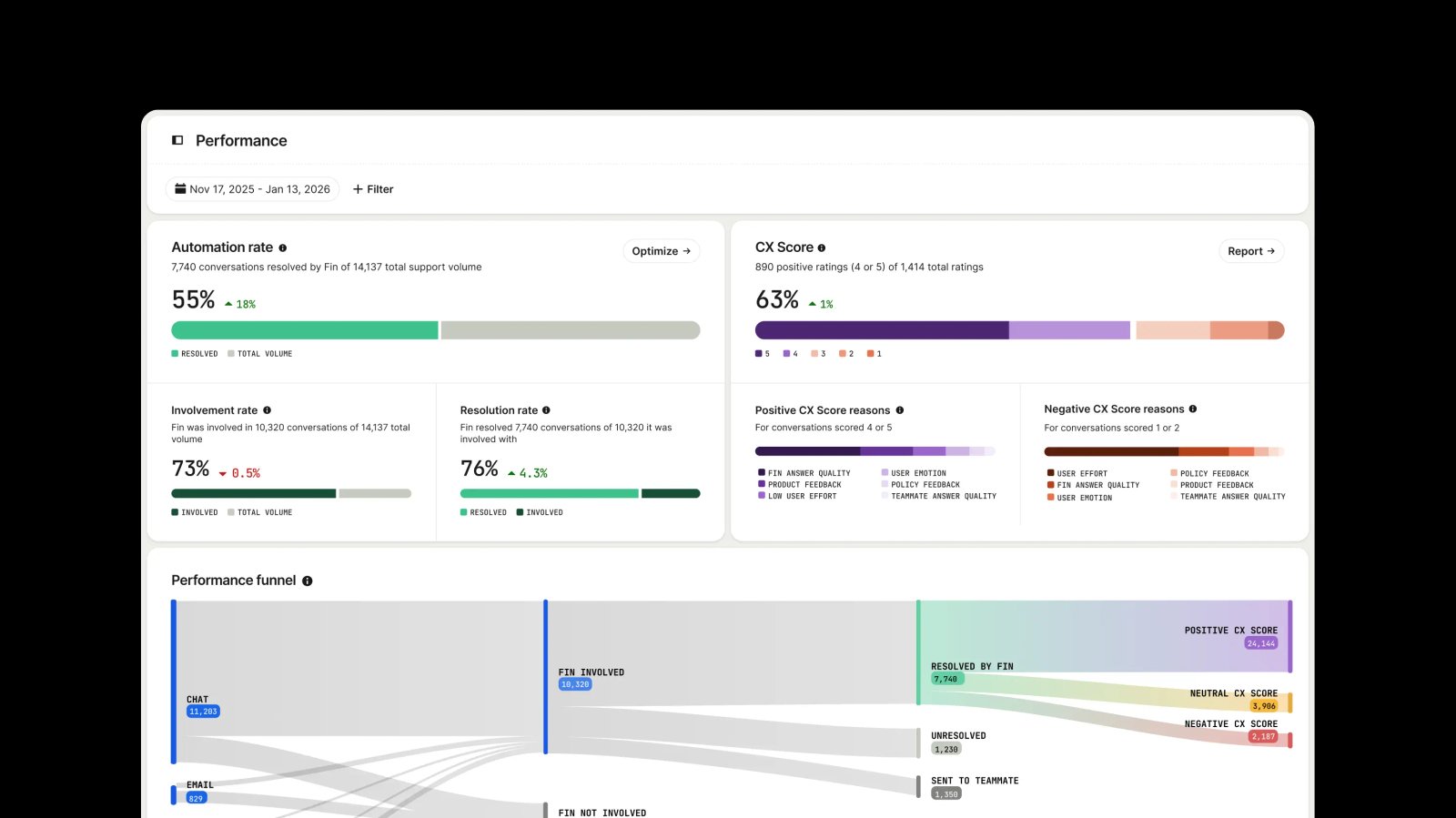
That dashboard is demo data, but read it closely. The 76% resolution rate counts only conversations Fin took part in. Measured against all conversations, the automation rate is 55%. The second number is the one that shrinks your queue.
There is a 14-day trial with no card required that includes Fin and every add-on. There is no permanent free plan. Startups with under $10M raised and 15 or fewer employees can apply for the Early Stage Program, a year of Fin plus 96% off Intercom. The old Fin guarantee (up to $1M if high-volume customers missed a 65% resolution rate) is no longer advertised.
Which model answers, and whether your data trains it
Until March 2026, Fin's core answering model came from a frontier lab: versions of GPT first, then Claude Sonnet 4.0. On March 26 Intercom switched to Fin Apex 1.0, its own model, and says about 100% of English chat and email conversations now run on it. Apex 2.0 shipped with Fin 4 in October, claiming 8.6% more confirmed resolutions than Apex 1.0. A smaller Apex Flash 2.0 handles voice.
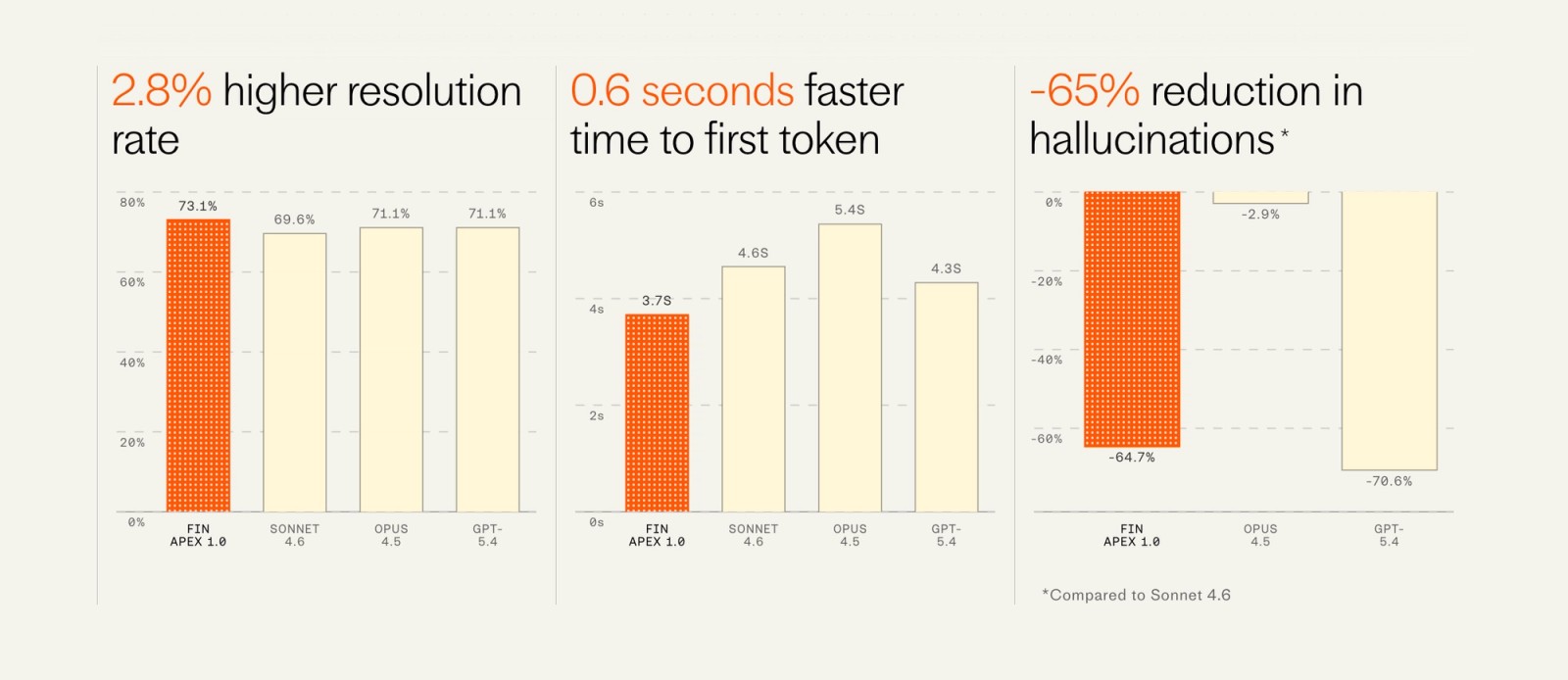
That is Intercom's own benchmark, and it says more than the headline. Apex 1.0 resolved 73.1% of test conversations against 71.1% for GPT-5.4 and Opus 4.5 and 69.6% for Sonnet 4.6. It was also the fastest to first token, at 3.7 seconds. On hallucinations, measured against Sonnet 4.6, Apex cut them by 64.7%. GPT-5.4 cut them by 70.6%. By Intercom's own chart, a general-purpose frontier model hallucinated less. Apex wins on resolution rate and speed, not accuracy.
The data question has a split answer. Intercom contractually bars its third-party AI providers (OpenAI, Anthropic, Azure OpenAI, Google Vertex, plus ElevenLabs and Cartesia for voice) from training on your inputs and outputs. Its own models are different: Fin's models "are trained using anonymized Customer Data", taken from conversations Fin was involved in. US-hosted workspaces are opted in by default. You are excluded automatically only if you have a signed BAA, use an EU or Australian hosted workspace, were granted an opt-out before, or signed a negotiated contract before September 2025. Anyone else can ask to opt out at any time. Ask before launch.
Certifications cover SOC 2, ISO 27001, 27701 and 42001, AIUC-1 and HIPAA, the last only on the Expert plan.
What it does beyond answering questions
The part that separates Fin from an FAQ bot is Procedures. You write a multi-step workflow in plain language, add code steps, IF/ELSE branches and Data Connectors to your own systems, and Fin runs it inside the conversation. It can freeze a card, look up an order or file a dispute. Either ending, resolution or handoff, is a $0.99 outcome. A failed one is free, which is the right incentive.
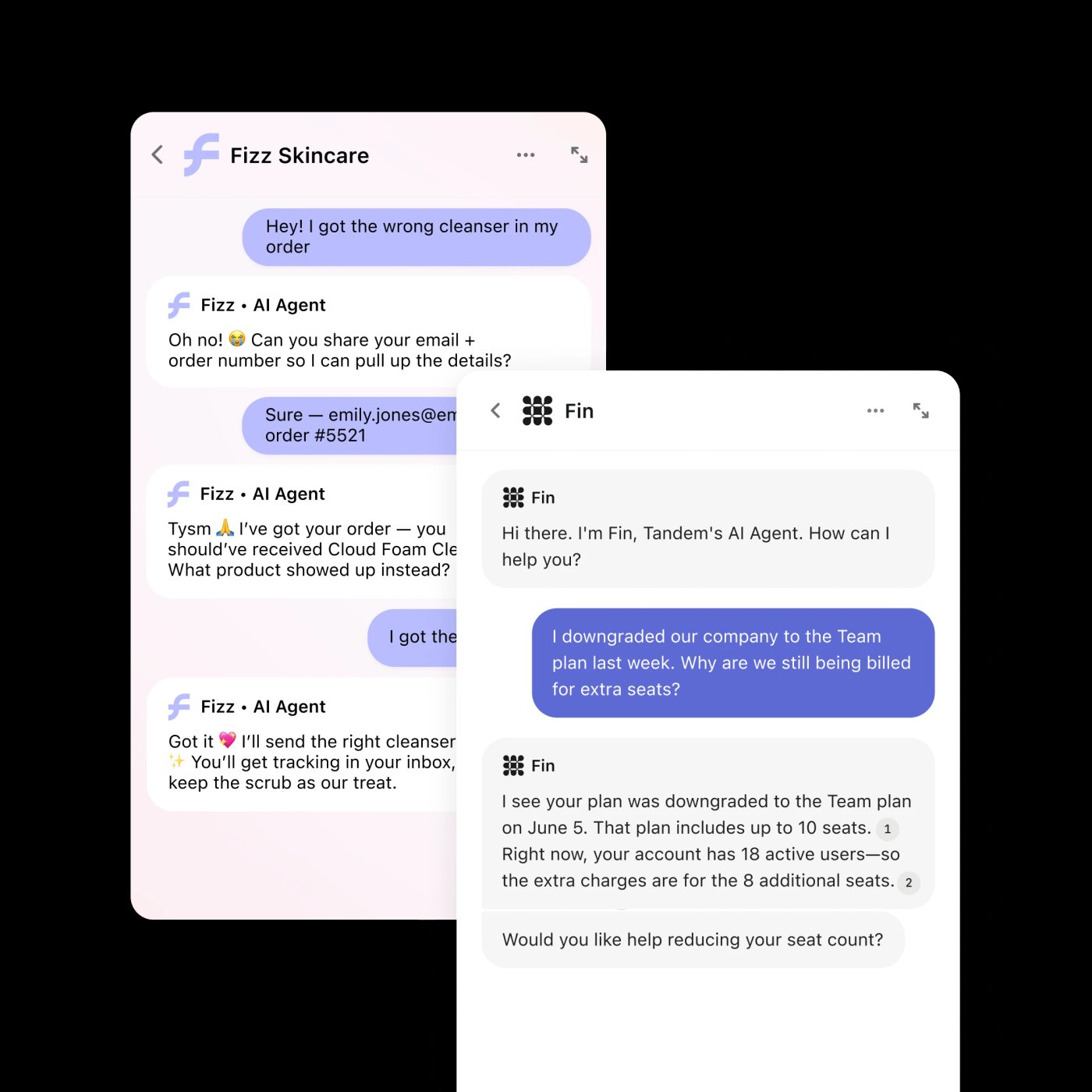
Answers carry numbered citations back to the source article, and the widget takes your branding, so customers see "Fizz Skincare's AI Agent", not Fin. AI Answers cover more than 45 languages. Integrations reach Salesforce, Zendesk, HubSpot and Freshdesk, plus an API and MCP.
Buying Fin for Zendesk now that Salesforce owns it
Standalone Fin's whole pitch is that it "works with any helpdesk". Its owner now sells a competing helpdesk and a competing agent, Agentforce. Salesforce's closing release on September 10 says Fin "will continue to serve its customers" from inside Salesforce AI Labs. It makes no public promise about support for rival helpdesks and no promise on pricing.
Nothing says Zendesk support is going away. Still, a one-year contract with clear exit terms is cheap insurance, and a three-year prepay is a bet on a roadmap nobody has published. If you run Salesforce Service Cloud already, the logic flips: Fin is now in-house, and our Salesforce review covers what the rest of that stack costs.
What customers complain about
The complaints are about money, not answer quality. A recurring theme in G2 reviews is cost predictability. A head of support called pay-per-resolution "hard to predict at higher volumes", and others mention frequent upsells. The Trustpilot listing for intercom.com is small, 13 reviews with a TrustScore of 2.0, but pointed. One reviewer in October 2026 was paying "$3000+ a month for 20 seats". Another, in May, said they could not get into their account to cancel while the card kept being charged. Thirteen reviews prove little alone, but they match the G2 theme.
Verdict: who should buy Fin, and who should skip it
Buy it if you handle a high volume of repetitive, well-documented questions, such as order status, returns, billing or account changes, and the value of one resolved conversation is clearly above $0.99. It fits best on the Intercom helpdesk, or on top of Zendesk or Freshdesk with no extra seats from $49 a month. Procedures handle real account actions, not just answers.
Skip it if you run low-margin, high-volume B2C support where many chats end in silence. Assumed resolutions plus channel fees can overtake the saving, and the AI built into the helpdesk you already pay for is the cheaper experiment. See Freddy in our Freshdesk review or Zendesk AI in the Zendesk review, and the wider field in our support software roundup. Skip it too if vendor neutrality matters to you more than the best resolution rate, because Fin's neutrality now depends on Salesforce.
Either way, before signing, request the training opt-out, set a hard outcome limit, and get the seat price for your billing term in writing.
Ready to try Fin?
Visit the official website to see the latest plans, pricing, and special offers.
Get Started - Fin* Affiliate link - we may earn a commission at no extra cost to you.