BrightEdge Review: Enterprise SEO Rebuilt for AI Search, Priced Behind a Demo
BrightEdge review, checked October 2026: AI Catalyst, AI Hyper Cube, Agent Edge and MCP, the $50,000 median contract buyers report, user complaints and who should choose Conductor, seoClarity or Ahrefs instead.
Expert Review

From rank tracker to AI-search monitor
For most of its life BrightEdge sold one thing to large companies: a way to see where thousands of pages ranked in Google, across dozens of markets, and what to fix next. That product still exists. What changed between April 2025 and August 2026 is everything bolted on top of it, and the new parts are aimed at a question its customers now ask first - when someone asks ChatGPT or Google's AI Mode about our category, does our brand come up, and is it cited?
Four launches did that work. AI Catalyst (April 9, 2025) tracks brand mentions and citations in AI answers. AI Hyper Cube (March 10, 2026) benchmarks that presence against competitors. Agent Edge (August 26, 2026) looks at the AI agents crawling your site. And BrightEdge MCP pipes the platform's data into Claude and ChatGPT. Co-founder Jim Yu is CEO again on the current leadership page; Krish Kumar, named CEO in August 2023, is no longer listed.
The price did not get more transparent along the way. There is no list price, no trial and no self-serve signup - every page ends at "Request your personalized demo". This review covers what the money buys now, checked in October 2026, and who should spend it elsewhere.
The AI search features
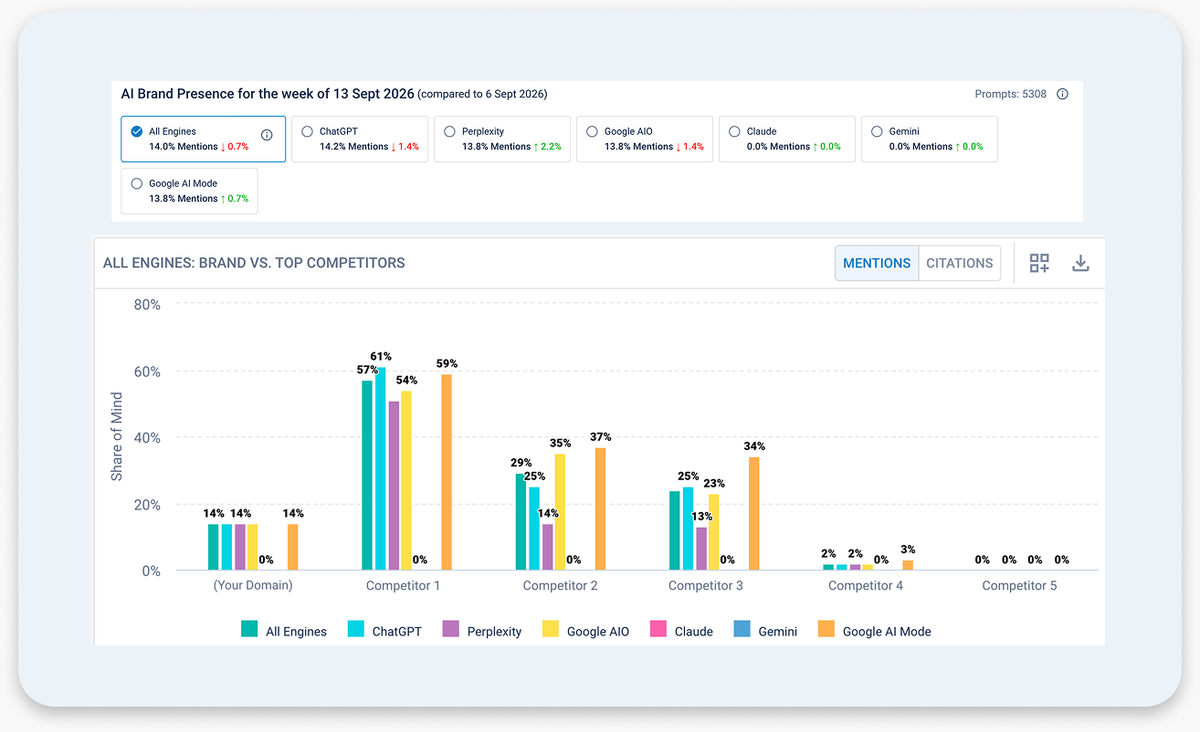
AI Catalyst is the centre of the pitch. In BrightEdge's words, it "tracks how often your brand is mentioned and cited across ChatGPT, Perplexity, Google AI Overviews, Google AI Mode, Gemini and other AI platforms, then benchmarks that presence against your competitors." For a brand team that has watched organic clicks flatten while AI referrals grow, that is the report the CMO actually asks for.
AI Hyper Cube goes a layer down: which of your pages "already earn AI trust" and how that compares with named competitors. AI Agent Insights and the newer Agent Edge turn to the other side of the traffic - the bots that ChatGPT, Claude, Perplexity and Gemini send to your site. BrightEdge's launch release claims 97% of the top 20,000 websites are not set up to serve those agents in formats such as Markdown. Treat that as a vendor statistic, but the log-level view of which AI crawlers hit which pages is hard to get anywhere else without building it yourself.
BrightEdge MCP is the quietly useful one. It is OAuth-secured, read-only ("can never modify your account") and pulls data live, so an analyst can ask Claude for last month's share-of-voice drop instead of building a dashboard for it.
BrightEdge also publishes a steady stream of research from its own data - ChatGPT referral traffic up 101% from January to August 2026, Gemini now a larger referral source than Perplexity, Claude, Meta AI, DeepSeek and Grok combined. Those releases are marketing, but they show the panel behind the product is large. If AI citation tracking is all you need, a lighter tool such as Nightwatch covers it for a fraction of the cost.
The classic SEO platform underneath
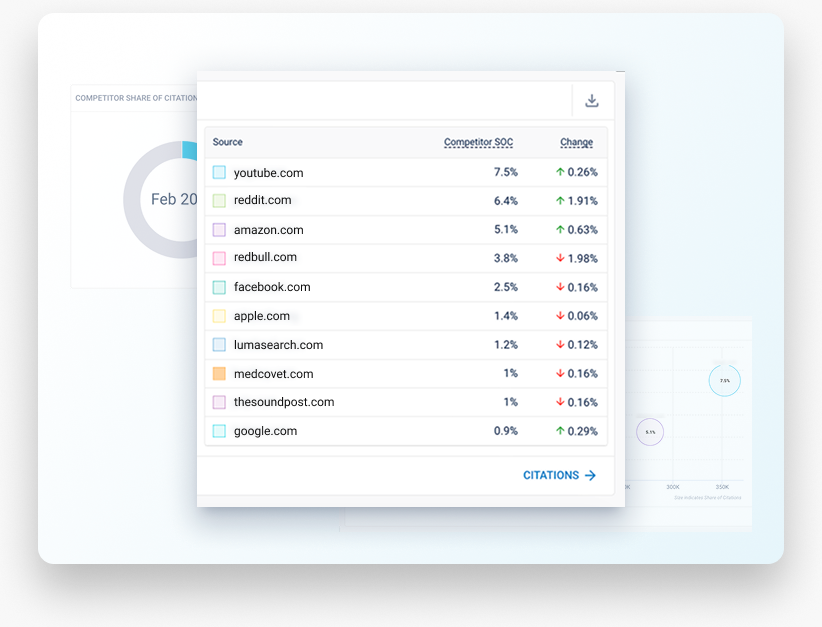
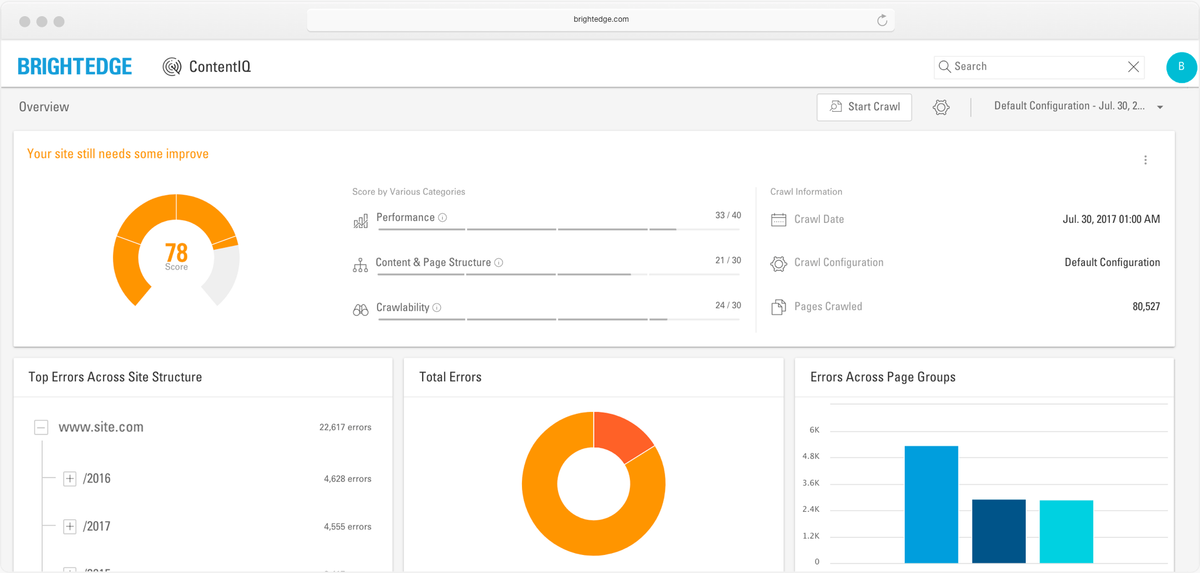
The older modules are why enterprise teams stay. Data Cube X (formerly Data Cube) is the research layer: start at any domain and drill down through subdomains and folders to single pages. Instant answers one-off checks on a keyword, competitor or location with fresh data. ContentIQ is the site auditor, built for crawls of millions of pages; BrightEdge also bought the technical crawler Oncrawl, which tells you where that side of the product is heading.
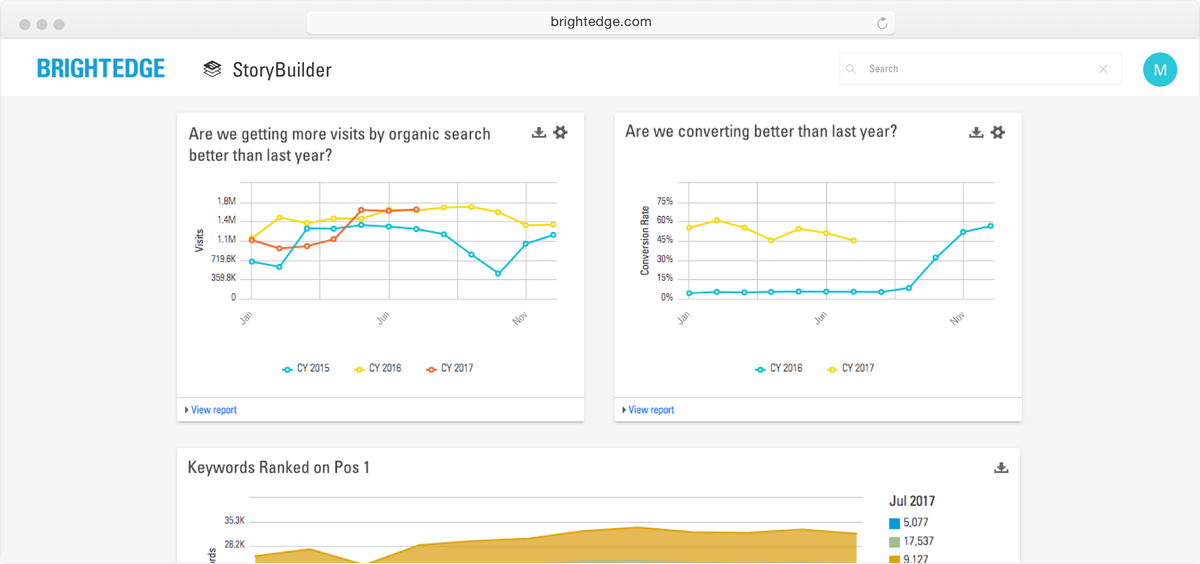
Content Advisor produces a brief and checks a draft before it goes live. StoryBuilder is the custom reporting layer, the dashboards that end up in quarterly decks. Site Agent, which used to be called Autopilot, automates internal linking, structured data and page publishing on the site itself - the one module that changes your pages rather than reporting on them, so it needs your engineering team's sign-off.
Integrations are the enterprise standard set. Google Analytics comes with every account, Google Search Console adds impressions, clicks, queries and CTR, Adobe Analytics is supported, and the API feeds Salesforce Marketing Cloud, Domo and similar platforms. What it does not do as well as Ahrefs is backlink research; nobody buys BrightEdge for its link index.
Pricing: what buyers actually pay
BrightEdge publishes no prices, so every figure below comes from somewhere else. Vendr's purchase data (46 BrightEdge deals, page last updated February 2026, checked October 2026) puts the median at $50,000 a year, with a low of $42,492 and a high of $68,936. That is a negotiated outcome, not a list price.
Contracts typically run 12 to 36 months with the year paid up front. Vendr reports that buyers who signed 24- or 36-month terms got 15-30% lower effective annual pricing. Read that the other way round, too: the discount is paid for with a longer lock-in, and the sales cycle before it "can extend several months".
| Platform | Price | Source |
|---|---|---|
| BrightEdge | Median $50,000/year (range $42,492-$68,936) | Vendr, 46 purchases |
| Conductor | Median $49,020/year | Vendr |
| Botify | Median $74,200/year | Vendr |
| seoClarity | From $2,500/month; Enterprise from $4,500/month | Published pricing page |
| Semrush (all plans) | Median $12,480/year | Vendr, 61 purchases |
| Ahrefs Enterprise | $1,499/month, annual commitment | Published pricing page |
Vendr figures as of February 2026; published prices checked October 2026. The useful comparison is Conductor: almost the same median, the same enterprise pitch, and the same demo-first sale. seoClarity is the only one at this level that tells you its price before you talk to anyone.
What you only learn when buying
Several things the product pages leave out shape what owning BrightEdge is like.
The subscription agreement is not public. The site's terms of use point to "the current subscription agreement in effect", and that document is not online, so cancellation, auto-renewal and data export are all things to ask for in writing before the demo turns into a quote. Training and certification - dashboards, keywords, recommendations, analysis - are open to customers only, which means you cannot judge the learning curve before paying for it.
And there is a learning curve. On G2, where BrightEdge holds 4.4 stars from 847 ratings, the complaint that recurs is complexity: "The UX isn't very intuitive, and you really have to know what you're doing to use it effectively." Another reviewer finds it "overwhelming because of the ever changing functionality", which fits a product that shipped four AI products in under eighteen months. The sharpest warning is about the new features: "Data connections seem to break and the GEO tracking needs to continue to be refined", and prompt tracking "is not backwards fillable with historical data without aid from technical assistance." In practice, set up every AI prompt and keyword you care about in week one, because the history starts the day you add them.
Support is the counterweight. BrightEdge says it has a 60+ person customer success team, one-on-one onboarding through a guided "Ignite" project and product webinars ten times a year. At $50,000 a year, use all of it.
Verdict: who should buy BrightEdge
Buy it if you are an enterprise brand running many sites or markets, you need AI-search citation tracking and classic rank and content reporting in one place, and your team will use a dedicated success manager. AI Catalyst plus Data Cube X plus StoryBuilder is a reporting stack that answers both the old SEO question and the new AI one, and the read-only MCP connector lets analysts query it from Claude or ChatGPT.
Skip it if you run one site or an agency on less than about $50,000 a year for tools. Ahrefs Enterprise costs around $18,000 a year and does backlinks better; Semrush buyers pay a median $12,480. If you want enterprise depth without a blind negotiation, seoClarity publishes prices from $2,500 a month. And if you are choosing between BrightEdge and Conductor, the price will not decide it - run both demos with your own AI prompts and see which tracks them more reliably.
Ready to try BrightEdge?
Visit the official website to see the latest plans, pricing, and special offers.
Get Started - BrightEdge* Affiliate link - we may earn a commission at no extra cost to you.