Lemon Squeezy Review 2026: The Indie Maker's Storefront
A 2026 review of Lemon Squeezy: the 5% + 50¢ base fee, the international, PayPal and subscription surcharges that stack on it, and what the Stripe acquisition changes.
Expert Review

A 2026 review of Lemon Squeezy: the 5% + 50¢ base fee, the international, PayPal and subscription surcharges that stack on it, and what the Stripe acquisition changes.
Lemon Squeezy started as the tool an indie hacker reaches for on a Sunday afternoon to put a digital product online without wiring anything together. It is a merchant of record like Paddle, so it sells on your behalf and handles the tax, but the pitch is different: it hands you a hosted storefront, checkout, license-key delivery, a subscription engine and an affiliate program in one login.
The audience is the solo maker and the small software shop selling ebooks, templates, plugins, courses and one-person SaaS. If your product is a file or a license key and you would rather write code than plumb together Stripe, Gumroad and a tax service, this is the shape of tool it is.
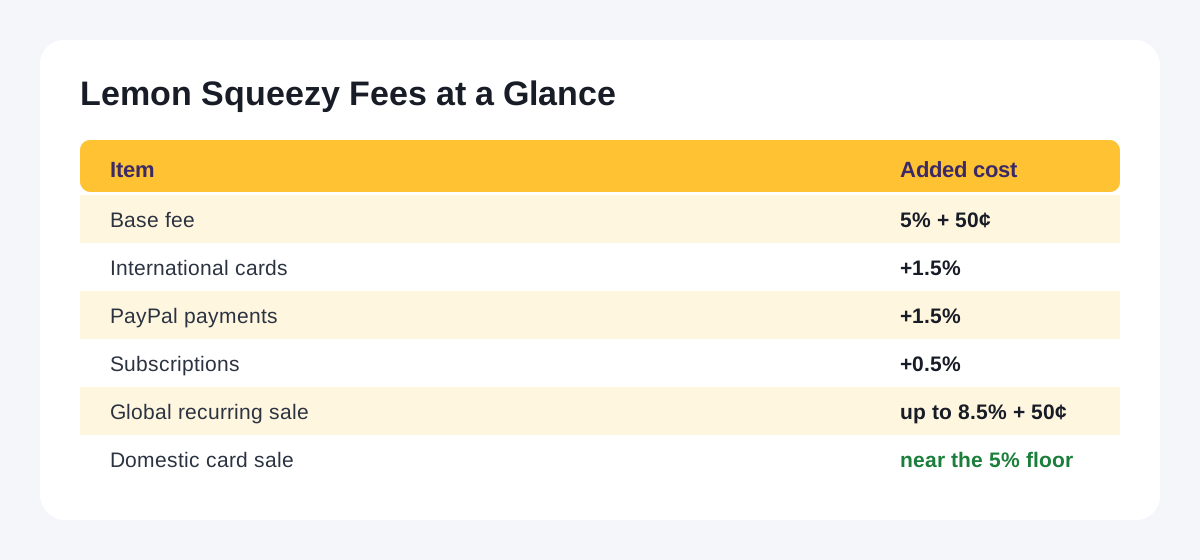
The headline, checked on the pricing page in January 2026, is 5% + 50¢ per sale as merchant of record. No monthly plans, no feature gates. That is genuinely simple, right up until you read the surcharges that stack on top:
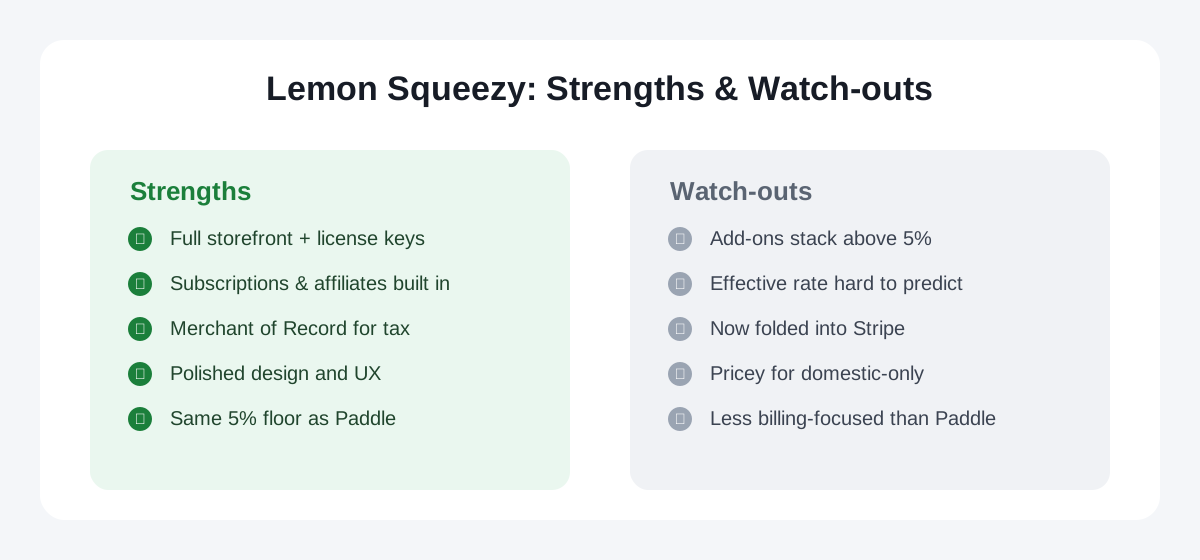
Do the arithmetic on a realistic sale. An overseas customer paying by PayPal for a subscription hits 5% + 1.5% + 1.5% + 0.5%, which is 8.5% + 50¢ before the money reaches you. That is not a gotcha exactly, since each add-on maps to a real cost, but it means the "5%" you plan around is a floor, not the number. For a domestic card sale you stay near the floor; for a global subscription business you will not.
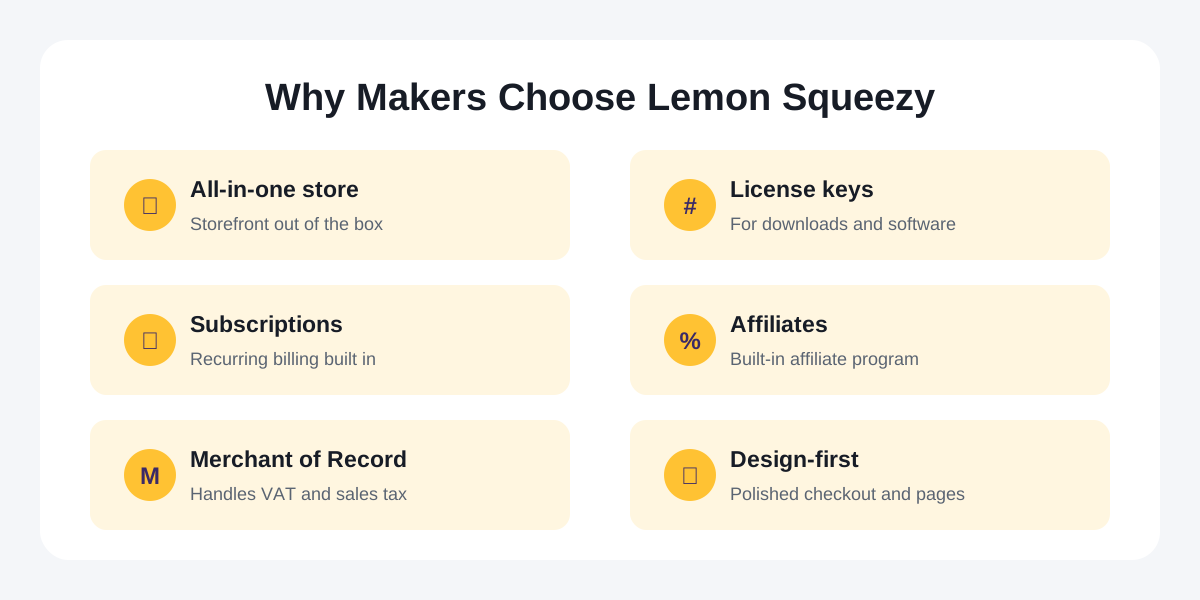
The reason people pay the premium is that the fee replaces a stack of separate subscriptions. Out of the box you get:
The whole thing is pleasant to use, which sounds trivial and is not. The signup-to-first-product path is short, and the design does not fight you. That polish is a real part of what the extra points buy.
You cannot review Lemon Squeezy in 2026 without naming the elephant. Stripe acquired it, and the two are converging into Stripe's own merchant-of-record offering. For a maker choosing a platform today, that cuts both ways.
On the upside, it is not going to vanish overnight, and it inherits Stripe's payment reliability underneath. On the downside, the roadmap is now Stripe's, the product's independent identity is being absorbed, and features you rely on could move, change price or fold into a broader Stripe product on a timeline you do not control. If long-term certainty about the exact tool matters to you, factor that in rather than assume today's Lemon Squeezy is the one you will use in three years.
Both are merchant-of-record platforms and both start at 5% + 50¢. The split is about shape. Paddle is billing-first: cleaner for a subscription SaaS, one flat rate with fewer add-ons, and negotiable at volume. Lemon Squeezy is store-first: better if you sell discrete digital products, want license keys and a storefront out of the box, and value the design.
The fee models diverge exactly where the surcharges live. Paddle's 5% stays 5% for most sales; Lemon Squeezy's climbs with international, PayPal and subscription add-ons. If your customers are global and paying monthly, price both against your actual mix before deciding, because the sticker rate is identical and the effective rate is not.
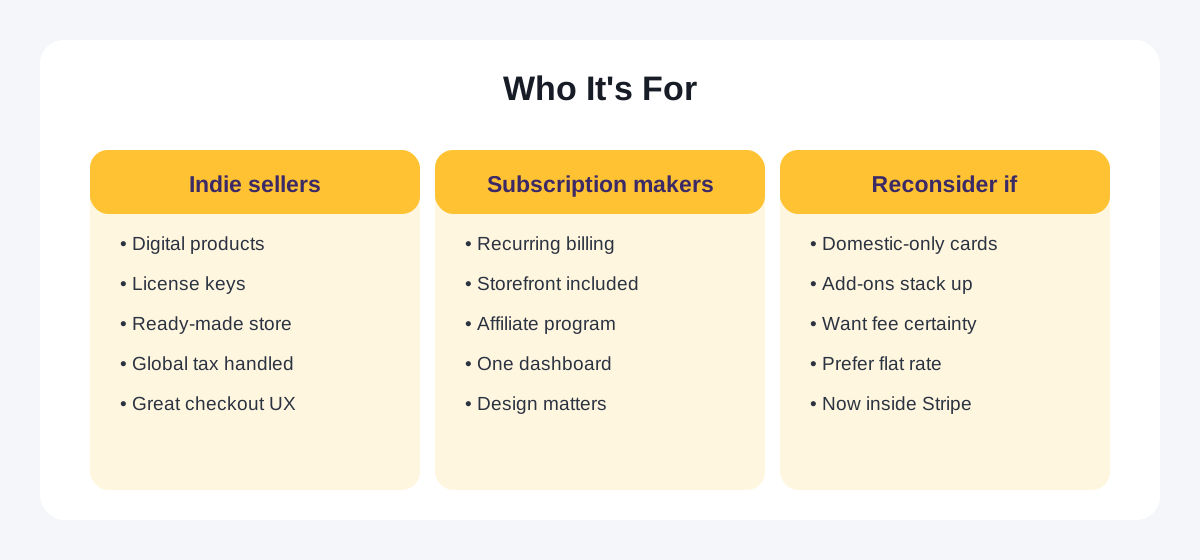
Lemon Squeezy is right for the indie maker selling a handful of digital products or a small SaaS who wants a storefront, license keys and tax compliance in one place, without assembling them. For that person it is the fastest path from "I built a thing" to "people can buy it," and the polish earns its keep.
Skip it if most of your sales are plain domestic card payments, where the stacking surcharges and store features are overkill and a simpler Paddle flat rate or raw Stripe costs less. Skip it too if you need long-term certainty about the platform, given it is being folded into Stripe. High-volume subscription businesses in particular should model the real effective rate first, because 5% is only where it starts.
See current Lemon Squeezy pricing here.
Visit the official website to see the latest plans, pricing, and special offers.
Get Started — Lemon Squeezy* Affiliate link — we may earn a commission at no extra cost to you.