Payoneer vs Stripe vs Revolut vs Kraken: Which Fintech Do You Actually Need?
Payoneer vs Stripe vs Revolut vs Kraken compared: fees, features, payments, banking, and crypto. See what each platform does best and which one fits your needs.
Expert Review
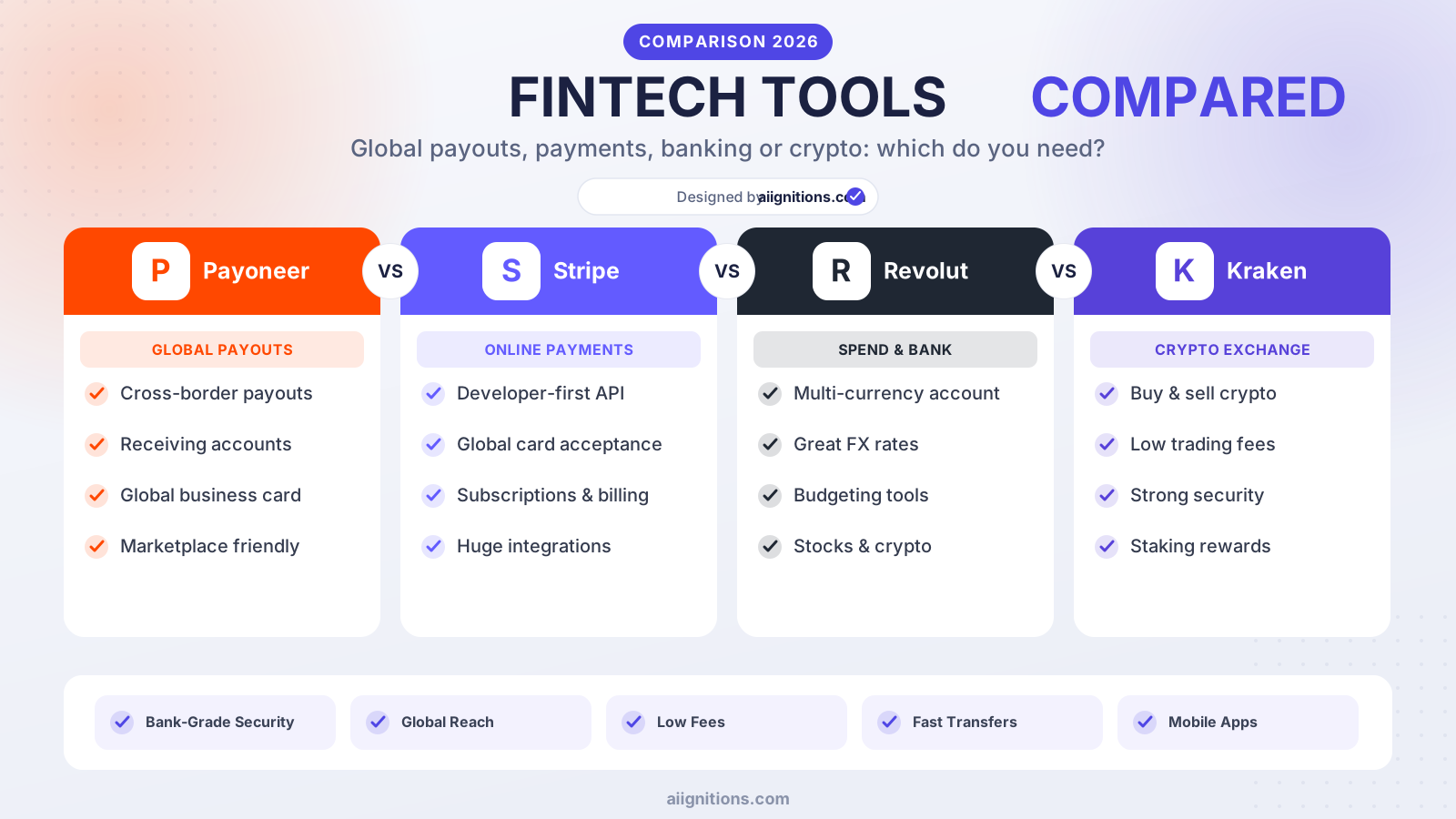
Payoneer vs Stripe vs Revolut vs Kraken: Quick Verdict
Short on time? Here is the honest bottom line: these four are not really rivals — they solve different money problems, and the "best" one is simply the one that matches your job. Payoneer is for getting paid across borders (freelancers, sellers, and agencies). Stripe is for businesses that need to accept card payments online. Revolut is the all-in-one money app for everyday spending, travel, saving, and even light investing. Kraken is a dedicated crypto exchange for buying, selling, and trading digital assets.
| Payoneer | Stripe | Revolut | Kraken | |
|---|---|---|---|---|
| Core purpose | Cross-border payouts | Accept online payments | All-in-one money app | Crypto exchange |
| Best for | Freelancers & sellers | Online businesses | Everyday users | Crypto traders |
| Entry cost | Low, pay-as-you-go | 2.9% + 30¢/charge | Free plan | 0.16%/0.26% (Pro) |
| Debit card | Prepaid Mastercard | No | Yes | No |
| Crypto | No | No | Yes (built-in) | Yes (200+ coins) |
Want the fast answer? If you want one app to handle everyday banking, cards, currencies, and a bit of investing, Revolut is the most versatile pick for most people. Read on for the full breakdown, or jump to the final recommendation.
Overview of Each Platform
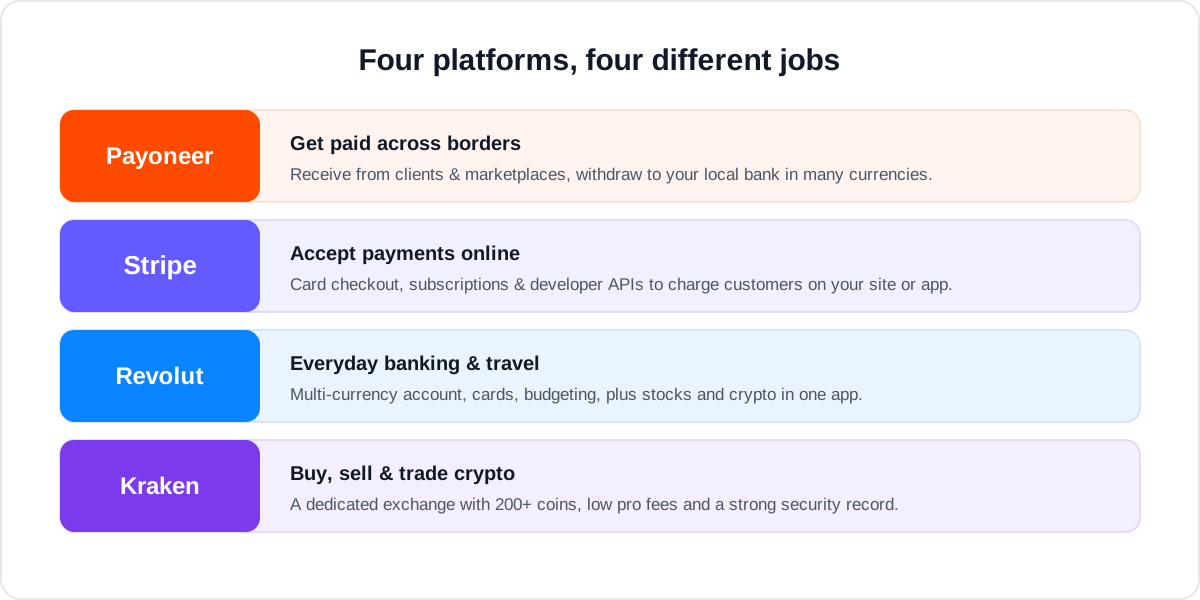
The quickest way to understand this line-up is to see the distinct role each one plays. Here is what each is and who it is built for.
Payoneer — get paid across borders
Payoneer is a cross-border payments platform built for freelancers, online sellers, and businesses that earn money internationally. It gives you receiving accounts in multiple currencies (USD, EUR, GBP, and more), so marketplaces and clients such as Amazon, Upwork, Fiverr, and Airbnb can pay you as if you had a local bank account. You can then withdraw to your own bank, pay other Payoneer users for free, settle supplier invoices, or spend with a prepaid Mastercard. Its edge is reach: it turns messy international transfers into something that feels local.
Read our full Payoneer review →
Stripe — accept payments online
Stripe is the developer-favourite payment processor that lets businesses accept card and wallet payments on a website or app. It handles checkout, subscriptions, invoicing, marketplaces (Stripe Connect), fraud protection, and reporting through clean, well-documented APIs. It is not a bank account and it is not for consumers — it is the plumbing that charges your customers and settles the money to your business bank account. If you run an online store, SaaS, or platform, Stripe is likely the engine behind the "Pay" button.
Revolut — your everyday money app
Revolut is an all-in-one financial "super app" aimed at individuals (and small businesses via Revolut Business). One account gives you a multi-currency balance, physical and virtual cards, fee-free currency exchange up to a limit, budgeting and savings tools, international transfers, plus built-in access to stocks, commodities, and crypto. It holds banking licences in the EU and UK, so for many users it functions as a primary or secondary bank. Its appeal is breadth and polish in a single mobile app — especially for travellers and multi-currency lifestyles.
Read our full Revolut review →
Kraken — buy, sell & trade crypto
Kraken is one of the longest-running and most respected cryptocurrency exchanges, founded in 2011. It supports 200+ digital assets with a simple "Instant Buy" flow for beginners and a low-fee Kraken Pro interface for active traders, plus staking, futures, and margin in supported regions. It is best known for its security track record and strong regulatory posture. If your goal is specifically to invest in or trade crypto rather than manage everyday money, Kraken is the specialist of this group.
Fees & Pricing
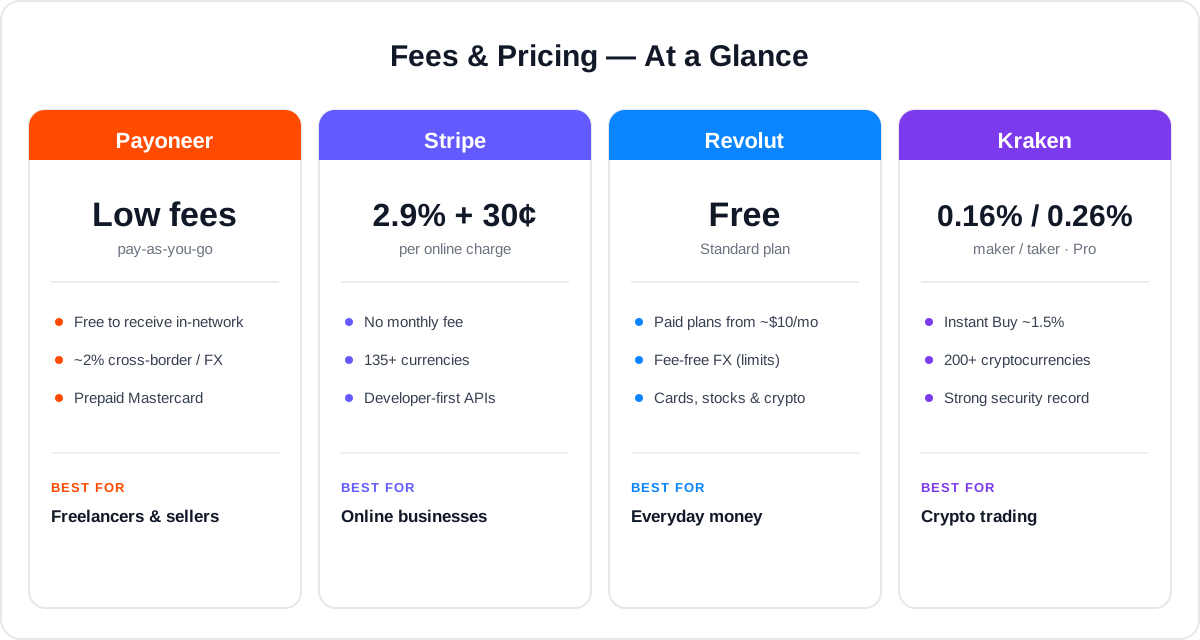
Because each platform charges for a different service, comparing prices is about matching the fee model to your use case, not finding the single "cheapest" one. Rates change with promotions, region, and plan, so always confirm the current schedule before you commit.
- Payoneer: pay-as-you-go. It is free to receive from other Payoneer accounts and typically free to receive into your currency receiving accounts; you pay when converting currencies (around 0.5%–2% depending on flow), on some card payments, and a small annual card/inactivity fee may apply. No monthly subscription for the basics.
- Stripe: the classic online rate is 2.9% + 30¢ per successful card charge (varies by country and card type), with no monthly fee and no setup cost. International cards, currency conversion, and premium products like Radar or Billing add extra percentages. You only pay when you get paid.
- Revolut: a genuinely usable free Standard plan, with paid tiers (Plus, Premium, Metal, Ultra) from roughly $10/month that raise fee-free FX limits and add perks. Watch for weekend FX markups and out-of-allowance ATM/exchange fees.
- Kraken: "Instant Buy" convenience purchases cost around 1.5%, while Kraken Pro uses a maker/taker model starting near 0.16%/0.26% and falling with 30-day volume — among the more competitive fees for active traders.
Payments & Payouts
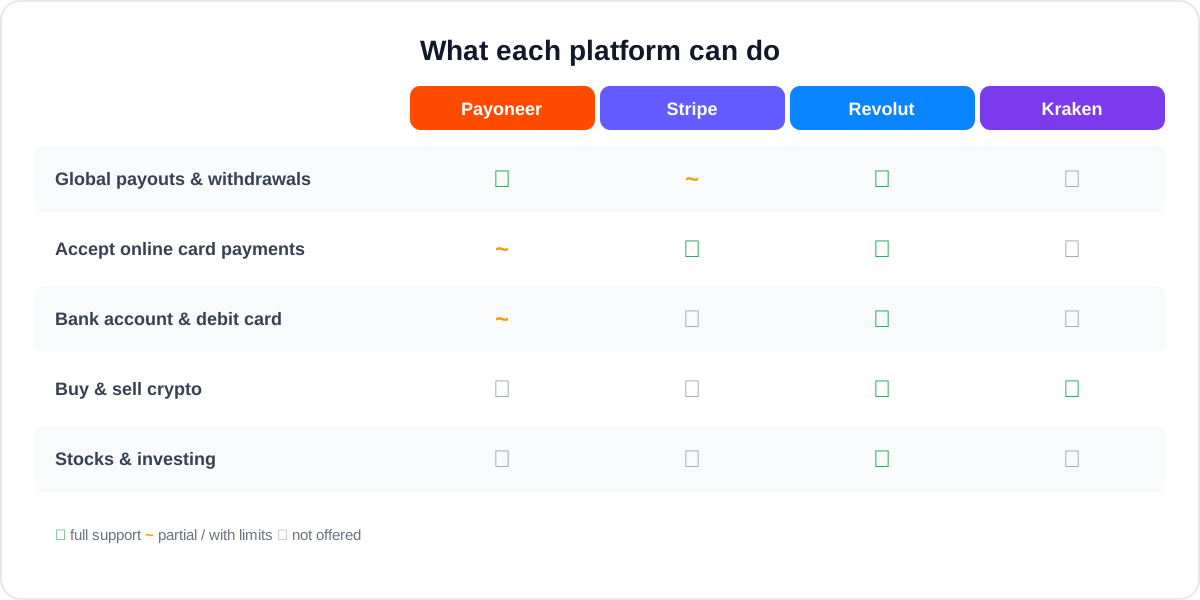
This is where Payoneer and Stripe shine, from opposite ends of the same flow. Payoneer is about receiving money — collecting earnings from global marketplaces and clients, then getting that money to your bank in the currency you want. It is the go-to for freelancers and cross-border sellers who need local receiving details without opening foreign bank accounts.
Stripe is about charging customers — it is the checkout and billing engine that takes a card payment on your site and deposits the proceeds into your business account. It also does payouts to third parties through Stripe Connect, which is why marketplaces and platforms lean on it. Revolut sits in between for individuals and small businesses: fast peer-to-peer transfers, international transfers, and Revolut Business for invoicing and accepting payments. Kraken is not a payments tool at all — it moves crypto and fiat in and out for trading, not for paying suppliers or customers.
Banking, Cards & Everyday Money
If you want something that feels like a bank account you carry in your pocket, Revolut is the clear leader here. It offers a multi-currency account, physical and virtual debit cards, instant spending notifications, budgeting, savings vaults, and fee-free currency exchange within plan limits — all in one polished app, backed by EU/UK banking licences.
Payoneer provides a prepaid Mastercard and multi-currency receiving accounts, which cover spending and holding balances, but it is built around business/freelance cash flow rather than day-to-day personal banking. Stripe does not give consumers an account or card at all — it settles to your existing bank (Stripe does offer business banking-style features like Treasury and Issuing to platforms, but that is for companies, not everyday users). Kraken has no everyday banking or spending card; funds live on the exchange for trading. For personal, travel, and multi-currency money management, Revolut wins comfortably.
Crypto & Investing
Two of the four touch crypto, in very different ways. Kraken is a full-blown exchange: 200+ coins, deep liquidity, low Pro trading fees, staking, futures, and margin where available. If you are serious about buying, trading, or earning yield on crypto, Kraken gives you the tools, order types, and asset range a dedicated platform should.
Revolut includes crypto inside its app, which is perfect for casual buyers who want to grab some Bitcoin alongside their everyday banking — but the coin selection is narrower and fees are higher than a specialist exchange, and self-custody/withdrawal options are more limited. Revolut also adds fractional stocks and commodities, which Kraken does not focus on. Payoneer and Stripe do not offer consumer crypto investing at all (Stripe supports crypto-related payments for businesses, which is a different thing). Bottom line: casual crypto → Revolut; serious crypto → Kraken.
Security & Trust
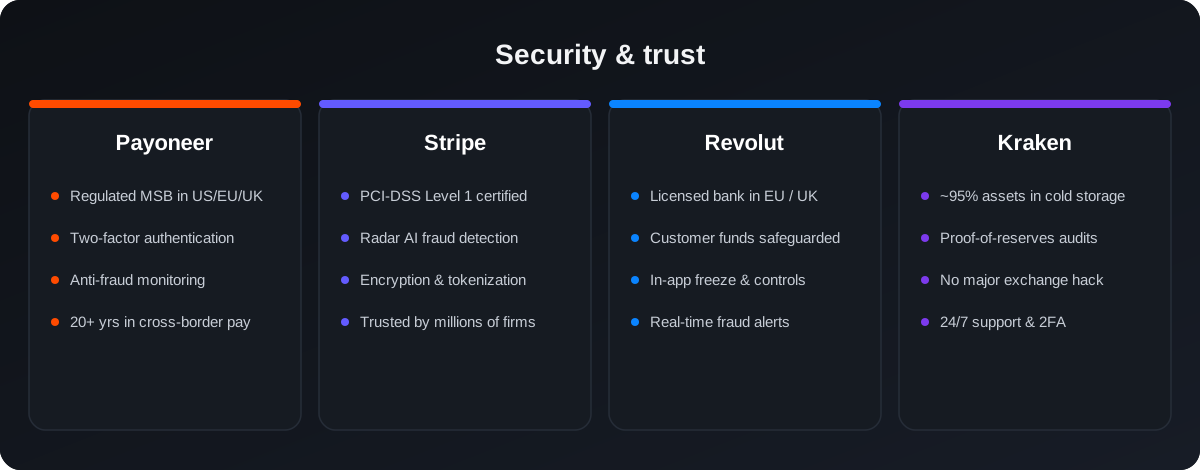
All four are established, regulated, and widely used, but their safeguards reflect their roles:
- Payoneer: a regulated money services business licensed across the US, EU, and UK, with two-factor authentication and anti-fraud monitoring, plus 20+ years of cross-border payments experience.
- Stripe: PCI-DSS Level 1 certified (the highest tier), with encryption, tokenization, and its Radar machine-learning fraud engine protecting millions of businesses.
- Revolut: holds banking licences in the EU and UK, safeguards/protects customer funds under regulation, and layers on in-app card freezing, spending controls, and real-time fraud alerts.
- Kraken: famous for its security record — roughly 95% of assets held in cold storage, proof-of-reserves audits, no major exchange breach in its history, and mandatory 2FA options.
None is meaningfully "unsafe"; the right question is whether the platform's regulatory framework fits what you are using it for — payments, banking, or crypto.
Pros & Cons
Payoneer
- Pros: excellent for cross-border earnings, local receiving accounts in many currencies, integrates with major marketplaces, prepaid card, free network transfers.
- Cons: not a true everyday bank, occasional annual/inactivity fees, support and account-review processes can be slow.
Stripe
- Pros: best-in-class developer tools and documentation, powerful billing/subscriptions/marketplaces, strong fraud protection, no monthly fee.
- Cons: for businesses only (not consumers), flat 2.9% + 30¢ adds up at scale, requires some technical setup, payout holds/reviews can frustrate new accounts.
Revolut
- Pros: all-in-one app, multi-currency account and cards, fee-free FX limits, budgeting/savings, plus stocks and crypto; generous free tier.
- Cons: weekend FX markups, feature caps push you to paid plans, support is mostly in-app, crypto/stock features are lighter than dedicated platforms.
Kraken
- Pros: strong security and reputation, 200+ assets, low Pro fees, staking and advanced trading, good for beginners and pros alike.
- Cons: crypto-only (no everyday banking or card), some products restricted by region, Instant Buy convenience fees are higher than Pro.
Which Should You Choose?
Because they rarely overlap, the choice is really about your primary need — and many people use two or three together:
- Choose Payoneer if you earn from international clients or marketplaces and need to receive money in multiple currencies and withdraw locally.
- Choose Stripe if you run an online business, store, or platform and need to accept card payments and subscriptions on your site or app.
- Choose Revolut if you want one modern app for everyday banking, cards, travel, multi-currency spending, and light investing. For the widest set of personal-finance needs, it is the most versatile pick here.
- Choose Kraken if your goal is specifically to buy, sell, or trade cryptocurrency with low fees and strong security.
A common winning combo: Payoneer to collect global income, Stripe to charge your own customers, Revolut for day-to-day spending and FX, and Kraken for crypto. If you can only pick one all-purpose account for personal use, Revolut covers the most ground.
Get Started
Ready to set up the right account? Pick the platform that matches your job — Revolut is our most versatile all-round pick for individuals.
Want the full breakdown first? Read our in-depth reviews of Payoneer, Stripe, Revolut, and Kraken — or explore more in our Crypto & Finance hub.
Ready to try Revolut?
Visit the official website to see the latest plans, pricing, and special offers.
Get Started - Revolut* Affiliate link - we may earn a commission at no extra cost to you.