
Aiignitions
AIVPN & SecurityCrypto & FinanceSaaSTech NewsComparisonsMore
AI
VPN & Security
Crypto & Finance
SaaS
Tech News
Comparisons
Aiignitions

Your trusted source for expert reviews of AI tools, VPN services, and software solutions. We help you make informed tech decisions.

Browse

  • SaaS
  • AI
  • Tech News
  • VPN & Security

Company

  • About Us
  • Contact Us
  • Privacy Policy
  • Terms of Service
  • Affiliate Disclosure

Follow

ยฉ 2026 Aiignitions. All rights reserved.

Some links are affiliate links โ€” we may earn a commission at no extra cost to you.

Homeโ€บCrypto & Financeโ€บStripe
Crypto & Finance

Stripe Review: The Developer-First Payments Platform for Online Business

Stripe review: fees, features, products, and security of the developer-first online payments platform โ€” plus its pros, cons, and who it is best for.

July 23, 2026Expert Review
Stripe Review: The Developer-First Payments Platform for Online Business
Visit Stripe Official Website

Table of Contents

  1. What is Stripe?
  2. Key Features
  3. Products & Ecosystem
  4. Pricing
  5. Security & Trust
  6. Pros & Cons
  7. Verdict: Who Should Use Stripe?

1. What is Stripe?

Stripe is an online payment processing platform founded in 2010 by brothers Patrick and John Collison. Its founding idea was deceptively simple: accepting payments on the internet was far too hard for developers, so Stripe set out to make it possible to charge a card with just a few lines of code. That developer-first philosophy turned it into one of the most valuable private technology companies in the world.

Today Stripe is the payments infrastructure behind millions of businesses, from side projects and startups to public companies like Amazon, Shopify, and Salesforce. Rather than a consumer app or a bank account, Stripe is a toolkit that sits behind your website or app and handles the messy parts of money โ€” accepting cards and wallets, moving funds, managing subscriptions, fighting fraud, and reporting on it all through a single unified platform.
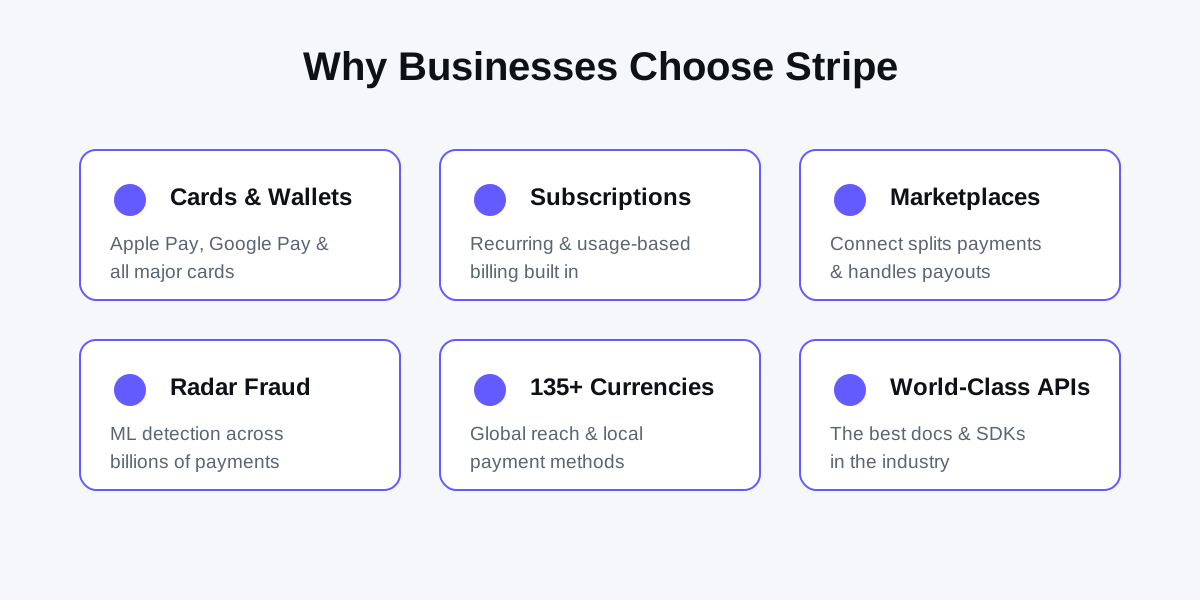
Key reasons businesses choose Stripe: global card and wallet acceptance, subscriptions, marketplaces, fraud protection, and world-class APIs

2. Key Features

Stripe's strength is depth. It is not a single checkout button but a broad set of building blocks that cover almost every payment scenario an online business will hit:

  • Card & wallet acceptance: Take all major credit and debit cards plus digital wallets like Apple Pay and Google Pay out of the box.
  • Checkout & Payment Links: A prebuilt, Stripe-hosted checkout page and shareable payment links let you start selling without building a form yourself.
  • Billing & subscriptions: Recurring billing, tiered and usage-based pricing, free trials, proration, and automatic retries for failed payments.
  • Invoicing: Create and send branded invoices that customers can pay online in a click.
  • Connect: Split payments and pay out to sellers, creators, or drivers โ€” the backbone of marketplaces and platforms.
  • Radar fraud protection: Machine-learning fraud detection trained on data from billions of transactions across the network.
  • Terminal: In-person card readers and SDKs so online and offline sales live in one system.
  • Issuing & Treasury: Create physical and virtual cards and embed financial accounts into your own product.
  • 135+ currencies: Charge customers in their local currency and settle in yours, with built-in support for local payment methods.
  • World-class APIs & docs: Clean, well-documented APIs and SDKs that developers consistently rate the best in the industry.

3. Products & Ecosystem

Stripe is best understood as a suite of products that share one account and one dashboard rather than a single tool. The main pieces include:
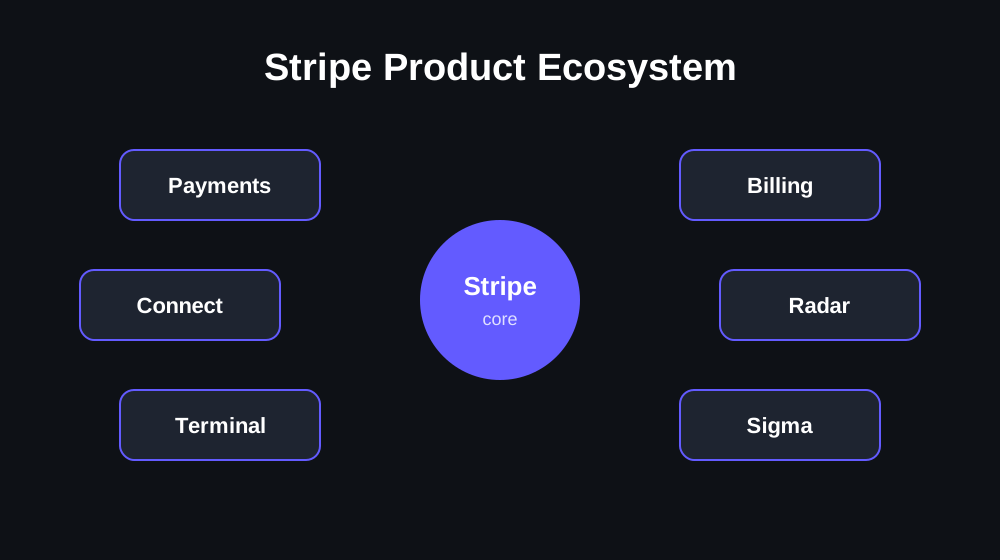
  • Payments: The core engine for accepting cards, wallets, and 100+ local payment methods online.
  • Billing: Subscriptions, metered usage, and invoicing for recurring-revenue businesses.
  • Connect: Onboarding, compliance, and payouts for marketplaces and software platforms.
  • Radar: Adaptive, machine-learning fraud protection with customizable rules.
  • Terminal: Unified in-person payments with certified card readers.
  • Sigma & reporting: Query your payments data with SQL and build custom financial reports.
  • Atlas: Incorporate a US company, get a tax ID, and open a bank account โ€” aimed at founders anywhere in the world.
Stripe product ecosystem: Payments, Billing, Connect, Radar, Terminal, and Sigma reporting

This modular design is powerful, but it also means Stripe rewards businesses that are willing to compose several products together โ€” and that usually implies some engineering effort or a compatible platform.

4. Pricing

Stripe's headline pricing is refreshingly simple and pay-as-you-go: there is no monthly fee, no setup fee, and no long-term contract. You are charged a flat rate only when you make a sale:

  • Standard online cards: 2.9% + 30ยข per successful card charge โ€” the well-known benchmark rate.
  • International cards: Roughly an extra 1% when the customer's card is issued outside your country.
  • Currency conversion: Around an additional 1% when a payment is converted into your settlement currency.
  • Premium add-ons: Advanced products such as Billing and Radar's fraud teams carry their own extra per-transaction or percentage fees on top of the base rate.

The flat, transparent model is easy to reason about and ideal for smaller businesses, but the effective cost climbs once you add international sales, currency conversion, and premium modules. High-volume merchants can negotiate custom interchange-plus pricing. The table below shows representative rates rather than a full contract.
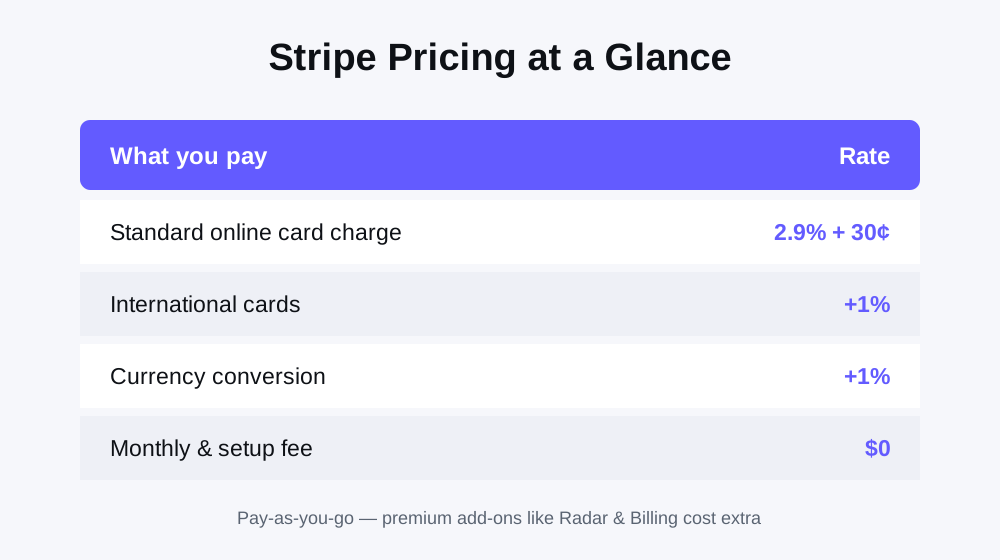
Stripe fee table: standard online cards 2.9% plus 30 cents, international cards plus 1%, currency conversion plus 1%, no monthly fee

5. Security & Trust

Security is one of Stripe's strongest arguments. It is certified as a PCI-DSS Level 1 service provider โ€” the most stringent level in the payments industry โ€” and handles the sensitive card data so your own systems never have to touch a raw card number. Card details are encrypted and replaced with tokens, dramatically shrinking your compliance burden and your exposure in a breach.

On top of that, Radar applies machine-learning fraud detection trained on data from the billions of transactions flowing across Stripe's network, blocking suspicious payments while letting legitimate ones through. The platform is trusted by some of the largest companies in the world, which is a meaningful vote of confidence in its reliability and uptime.

There is a real downside to be aware of, though. Because Stripe underwrites risk on your behalf, it can place holds on payouts or freeze accounts during a review โ€” especially for new businesses, sudden spikes in volume, or higher-risk industries. These reviews are usually resolved, but they can be stressful when cash flow is tight, and support during a hold is a common complaint. Read the terms for your industry before relying on Stripe as your only processor.

6. Pros & Cons

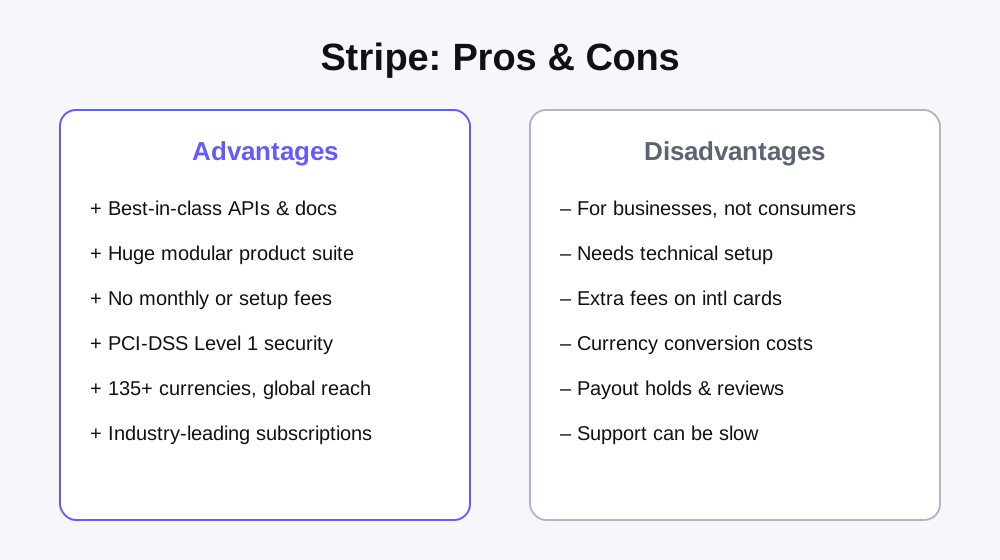
No platform is perfect. Here is the balanced picture:
Advantages

  • Best-in-class APIs and documentation โ€” the reason developers reach for it first.
  • A huge, modular product suite covering payments, subscriptions, marketplaces, and in-person sales.
  • Transparent, pay-as-you-go pricing with no monthly or setup fees.
  • Strong security: PCI-DSS Level 1, tokenization, and network-scale fraud protection.
  • Global reach with 135+ currencies and local payment methods.

Disadvantages

  • Built for businesses, not consumers โ€” this is not a personal payment app.
  • Getting the most out of it usually requires technical setup or developers.
  • Effective fees rise with international cards, currency conversion, and premium add-ons.
  • Payout holds and account reviews can disrupt cash flow, and support during them can be slow.
Stripe pros and cons summary

7. Verdict: Who Should Use Stripe?

Stripe is the default choice for internet businesses that want serious payments infrastructure without building it from scratch. If you run a SaaS product, an online store, a marketplace, or any app that charges customers โ€” and you have access to even a little engineering help โ€” Stripe gives you a level of flexibility, reach, and reliability that is very hard to match. Its subscription tooling and marketplace payouts in particular are industry-leading, and the pay-as-you-go pricing means you can start today with no upfront cost. You can get started with Stripe here.

The caveats are worth remembering. Stripe is aimed at businesses and developers, not everyday consumers, so a completely non-technical seller may find a simpler all-in-one solution easier. The flat rate is competitive but grows with international and premium features, and the risk of payout holds is a genuine consideration for new or higher-risk merchants. But for online-first businesses that value great tooling and global scale, Stripe remains the benchmark that every other payment platform is measured against.

Related comparison: See how Stripe compares in Payoneer vs Stripe vs Revolut vs Kraken: Which Fintech Do You Actually Need? โ€” or browse all comparisons & best-of guides.

Ready to try Stripe?

Visit the official website to see the latest plans, pricing, and special offers.

Get Started โ€” Stripe

* Affiliate link โ€” we may earn a commission at no extra cost to you.

Stripe Review: The Developer-First Payments Platform for Online Business

Stripe

Stripe is the payments infrastructure behind millions of online businesses, turning a few lines of code into card acceptance, subscriptions, marketplaces, and fraud protection. Here is what it does well, what it costs, where it falls short, and who it is really built for.

Visit Website โ†’
More Crypto & Finance Reviews
Payoneer Review: The Cross-Border Payments Platform for Freelancers & Sellers

Payoneer Review: The Cross-Border Payments Platform for Freelancers & Sellers

Jul 2026
Kraken Review: A Secure, Low-Fee Crypto Exchange for Every Level

Kraken Review: A Secure, Low-Fee Crypto Exchange for Every Level

Jul 2026
Payoneer vs Stripe vs Revolut vs Kraken: Which Fintech Do You Actually Need?

Payoneer vs Stripe vs Revolut vs Kraken: Which Fintech Do You Actually Need?

Jul 2026
Revolut Review: The All-in-One Money Super App

Revolut Review: The All-in-One Money Super App

Jul 2026