Payoneer Review: The Cross-Border Payments Platform for Freelancers & Sellers
Payoneer review: multi-currency receiving accounts, a global Mastercard, mass payouts, fees, and security — plus the pros, cons, and who it is best for.
Expert Review

1. What is Payoneer?
Payoneer is a cross-border payments platform founded in 2005 and headquartered in New York. It was built to solve a specific, stubborn problem: getting paid across borders when you work with clients, marketplaces, or suppliers in other countries. Rather than wiring money through slow, expensive bank transfers, Payoneer gives you local receiving accounts and a global card so international money moves more like a domestic payment.
Today Payoneer serves more than 5 million customers worldwide — freelancers, e-commerce sellers, agencies, and small-to-medium businesses in almost every country. It is publicly listed and has spent nearly two decades wiring itself into the platforms people actually earn on, from Upwork and Fiverr to Amazon and Airbnb. If you invoice overseas clients or sell on a global marketplace, there is a strong chance Payoneer is already one of your payout options.
If you want to explore the platform yourself, you can open a free Payoneer account and see which currencies and marketplaces it supports for you.
2. Key Features
Payoneer's value is in the plumbing it hides — the accounts, cards, and payout rails that let money cross borders without friction. The features that matter most to real users:
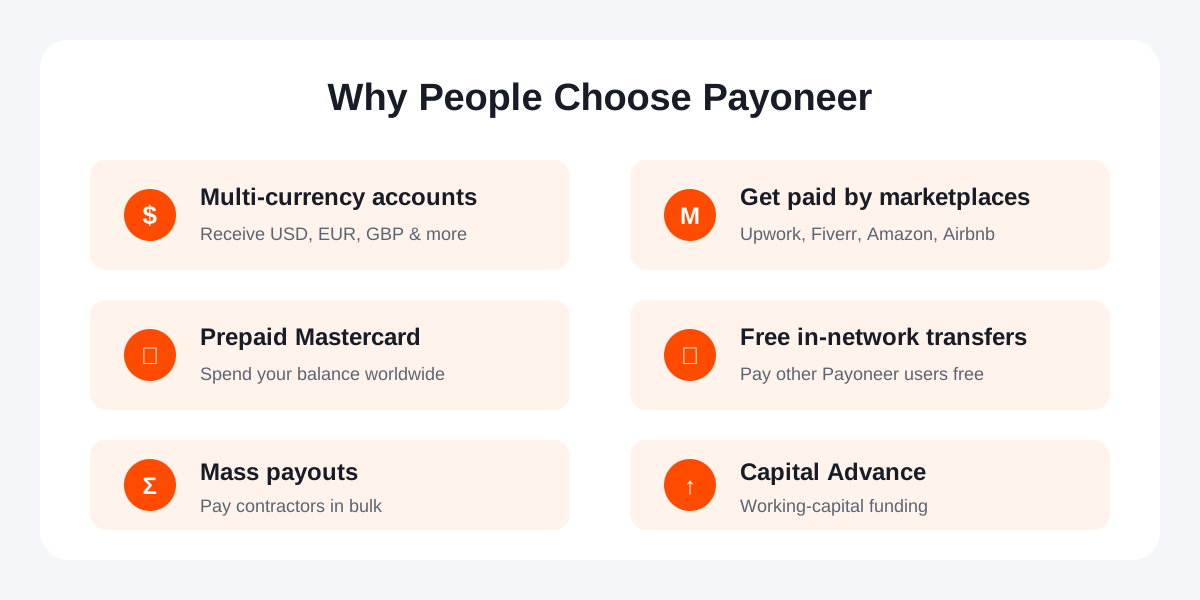
- Multi-currency receiving accounts: Get local bank details in USD, EUR, GBP, and other currencies so clients and marketplaces can pay you as if you were local.
- Get paid by marketplaces & clients: Direct integrations with Amazon, Upwork, Fiverr, Airbnb, Walmart, and hundreds more, plus custom payment requests for direct clients.
- Prepaid Mastercard: Spend your balance online and in stores worldwide, or withdraw at ATMs, without first moving money to a bank.
- Pay other Payoneer users free: Send funds to any other Payoneer account instantly and at no cost — handy for paying contractors on the network.
- Mass payouts for businesses: Pay dozens or thousands of freelancers and suppliers in a single batch, a favorite of agencies and marketplaces.
- Capital Advance: Access working-capital funding based on your marketplace sales or expected receivables.
- Billing service & payment requests: Invoice clients and collect card or bank payments directly into your Payoneer balance.
- Integrations: Connect Payoneer to accounting tools, e-commerce platforms, and its API to automate payouts.
3. Products & Services
Payoneer is best understood as a suite of products sharing one account rather than a single payments screen. The main ones include:
- Receiving accounts: Local account details in multiple currencies, the core way you collect money from clients and platforms.
- Payoneer card: A prepaid Mastercard tied to your balance for spending and ATM withdrawals worldwide.
- Payoneer for marketplaces & enterprises: Payout infrastructure that platforms embed to pay their sellers and partners at scale.
- Mass payouts: Bulk-pay contractors and suppliers from a single upload — useful for payroll, affiliate programs, and marketplaces.
- Capital Advance: Short-term working-capital funding for sellers, repaid from future sales.
- Tax form services: Collect and manage tax documents (such as W-9/W-8 forms) from the freelancers and vendors you pay.
- Billing & payment requests: Send invoices and accept card or ACH payments directly from your clients.
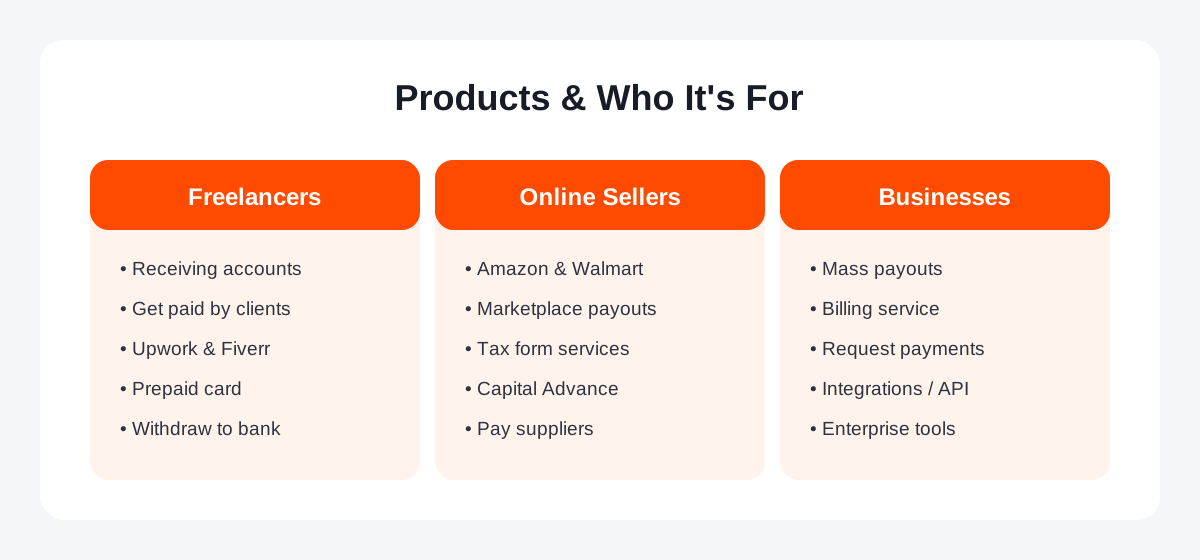
This breadth is what makes Payoneer more than a transfer app — but it also means the dashboard carries a lot, and newcomers may only ever touch two or three of these products.
4. Fees
Payoneer's pricing is a mix of free rails and small percentage fees, and understanding which is which is the key to using it cheaply. The good news is that the most common actions cost nothing:
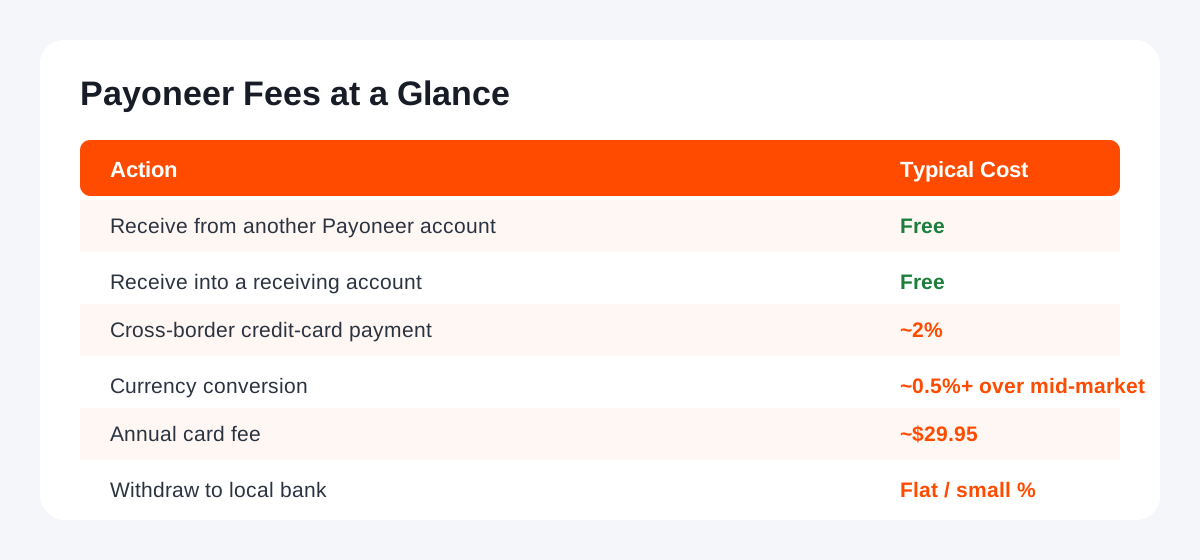
- Free to receive in-network: Getting paid from another Payoneer account is free, as is receiving into your own receiving accounts from most marketplaces.
- Cross-border card payments: Accepting a credit-card payment from a client typically costs around 2% of the amount.
- Currency conversion: Converting between currencies carries a fee of roughly 0.5% or more above the mid-market rate — noticeably steeper than a specialist like Wise on many routes.
- Card fees: The prepaid Mastercard has an annual fee of about $29.95, plus ATM and inactivity charges in some cases.
- Account fee: An annual account fee may apply if your incoming volume falls under a set receiving threshold.
- Withdrawals to bank: Moving your balance to a local bank account carries a flat or small percentage fee, depending on currency and destination.
The table below summarizes the typical costs. Exact figures vary by country and account type, so always confirm the current schedule for your region before relying on it.
5. Security & Trust
Payoneer is a regulated money-services business across its major markets. It is a licensed money transmitter in the United States, an authorized electronic money institution in the EU and UK, and holds equivalent licenses in other regions. On the technical side it uses two-factor authentication, device and login monitoring, and anti-fraud systems that watch for unusual activity, along with the compliance and KYC checks its licenses require.
Nearly two decades of operation and a public listing add a layer of accountability that many newer fintech apps lack. That said, trust is not only about certificates. Payoneer's most common criticism is around account reviews and holds: because it must satisfy strict anti-money-laundering rules, it can freeze funds or request documentation while it verifies a transaction, and some users report frustrating delays when that happens. It is also worth remembering Payoneer is a payments platform, not a bank — balances are held for the purpose of making payments rather than covered by deposit insurance — so it is best treated as money in transit rather than a place to park large long-term savings.
6. Pros & Cons
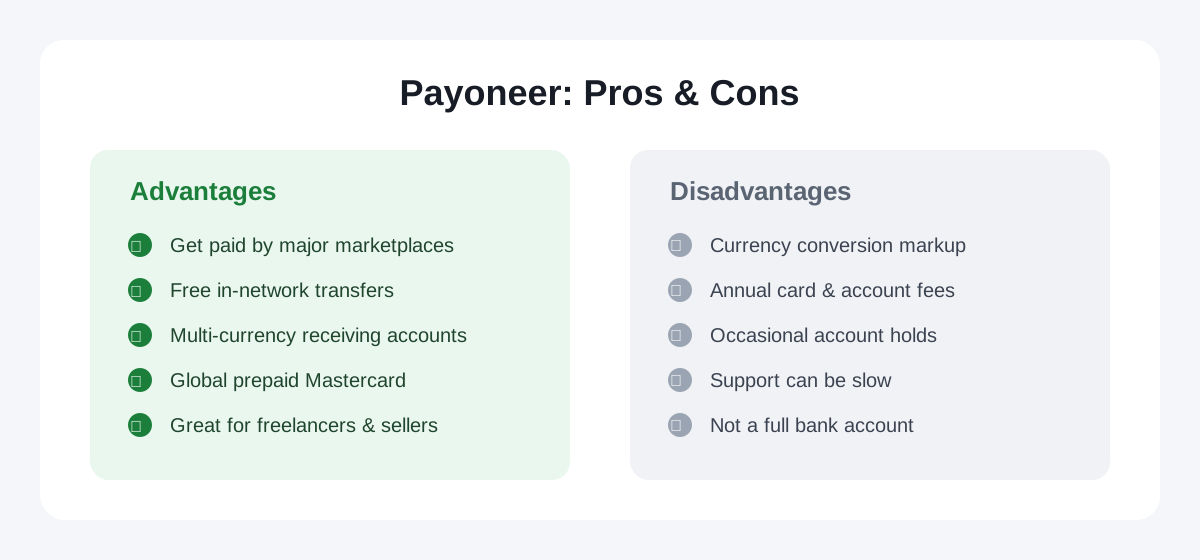
No platform is perfect. Here is the balanced picture:
Advantages
- Get paid directly by major marketplaces like Amazon, Upwork, Fiverr, and Airbnb.
- Multi-currency receiving accounts that work like local bank details.
- Free, instant transfers to other Payoneer users.
- A global prepaid Mastercard and powerful mass-payout tools for businesses.
Disadvantages
- Currency conversion carries a markup that specialists often beat.
- Annual card and possible account fees add up for low-volume users.
- Occasional account reviews and fund holds can delay access to money.
- It is a payments platform, not a full bank, and support can be slow.
7. Verdict: Who Should Use Payoneer?
Payoneer earns its place through reach. If you are a freelancer paid through global marketplaces, an e-commerce seller collecting payouts from Amazon or Walmart, or a business that needs to pay contractors around the world in bulk, few services plug into as many platforms as smoothly. The free in-network transfers, local receiving accounts, and mass payouts solve exactly the problems that cross-border earners face, and the prepaid card means you can spend without waiting on a bank transfer.
The trade-offs are cost and control. Currency conversion is pricier than a dedicated transfer service, low-volume users can get nibbled by annual fees, and the occasional account review can be stressful when your income is on the line. If your priority is simply the cheapest possible currency conversion, a specialist may serve you better — but if your priority is actually getting paid by the platforms you work with, and paying others across borders at scale, Payoneer remains one of the strongest options available. You can sign up for Payoneer and check your specific marketplaces and currencies before committing.
Related comparison: See how Payoneer compares in Payoneer vs Stripe vs Revolut vs Kraken: Which Fintech Do You Actually Need? — or browse all comparisons & best-of guides.
Ready to try Payoneer?
Visit the official website to see the latest plans, pricing, and special offers.
Get Started - Payoneer* Affiliate link - we may earn a commission at no extra cost to you.