Revolut Review: The All-in-One Money Super App
Revolut review: multi-currency account, fee-free FX, cards, stocks and crypto in one super app — plus plans, fees, security, pros, cons and who it suits.
Expert Review

1. What is Revolut?
Revolut is an all-in-one financial "super app" founded in 2015 by Nikolay Storonsky and Vlad Yatsenko. What began as a simple travel card for spending abroad without punishing exchange-rate markups has grown into one of the world's largest fintech companies, serving more than 45 million customers across dozens of countries.
The idea is to replace a wallet full of separate apps — bank, currency exchange, budgeting tool, stock broker, and crypto wallet — with a single account you manage from your phone. Revolut holds full banking licences in the EU (via Lithuania) and the UK, and it keeps adding products, from savings and loans to insurance and eSIM data plans. For anyone who travels, shops internationally, or simply wants their money in one place, it is one of the most complete apps available.
Open a free Revolut account and you can be spending in minutes, then upgrade later only if the paid perks pay for themselves.
2. Key Features
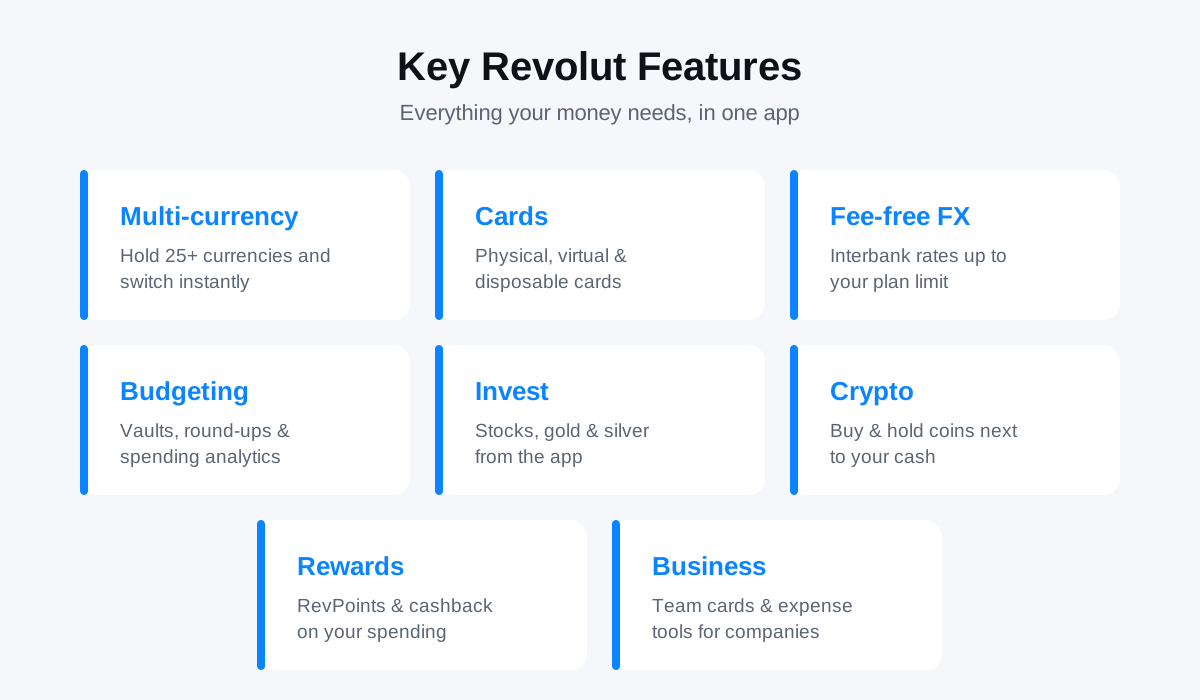
Revolut's strength is breadth: it does a lot of jobs competently inside one clean interface. The features that matter most to everyday users:
- Multi-currency account: Hold and manage 25+ currencies in one balance and switch between them instantly.
- Physical & virtual cards: A contactless debit card plus unlimited virtual and single-use disposable cards for safer online shopping.
- Fee-free currency exchange: Convert money at the interbank rate up to your plan's monthly limit, ideal for travel and overseas spending.
- International transfers: Send money abroad in-app, including instant free transfers to other Revolut users.
- Budgeting & savings vaults: Set spending budgets, round up spare change, and lock money away in interest-earning savings vaults.
- Stocks & commodities: Buy fractional shares and exposure to gold and silver directly from the app.
- Crypto: Buy, hold, and sell a wide range of cryptocurrencies alongside your everyday money.
- RevPoints & rewards: Earn points and cashback on spending, plus partner offers and perks.
- Revolut Business: A separate multi-currency account for companies, with team cards, expense management, and payment tools.
- Spending analytics: Automatic categorisation, instant notifications, and clear breakdowns of where your money goes.
3. Plans & Pricing
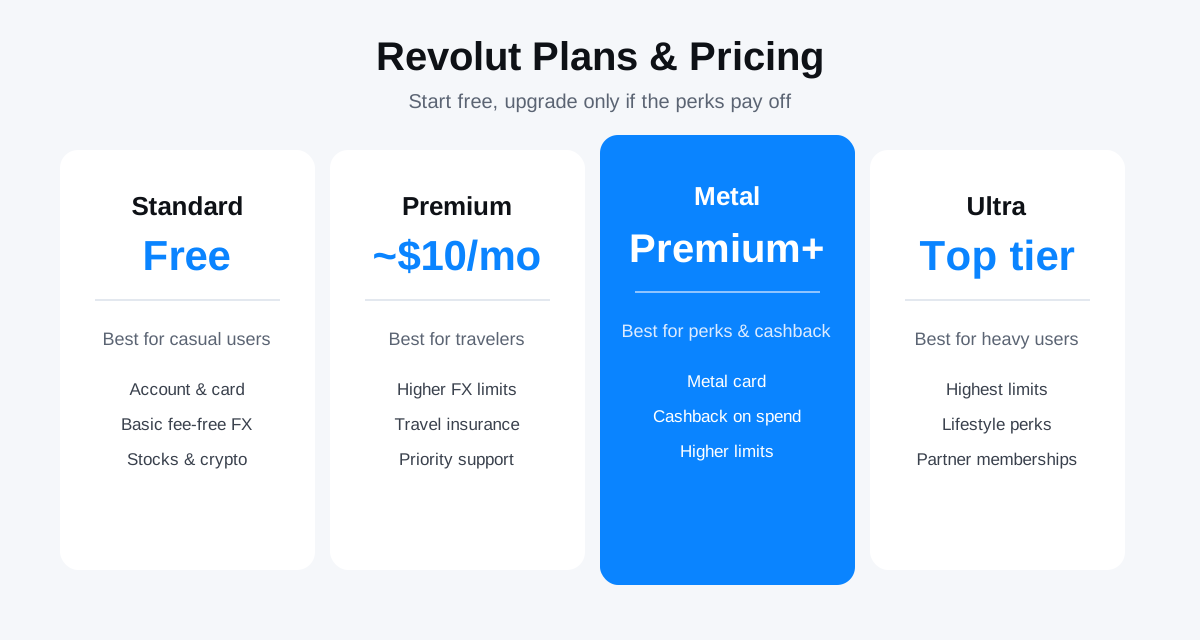
Revolut uses a tiered subscription model. The free Standard plan covers the essentials, and each paid tier raises your fee-free limits and adds better cards and perks. Exact prices vary by country, but the structure is consistent:
- Standard (free): Multi-currency account, a card, basic fee-free exchange, and access to stocks and crypto — enough for many casual users.
- Plus: A low monthly fee that adds purchase protection, higher limits, and a nicer card.
- Premium (from around $10/mo): Higher fee-free exchange and ATM limits, priority support, overseas medical insurance, and a metal-look card.
- Metal: A genuine metal card, cashback on spending, higher limits again, and more lounge and travel perks.
- Ultra: The top tier, bundling the highest limits with premium lifestyle perks and partner memberships for frequent travelers and heavy users.
The honest way to choose is to add up the perks you would actually use — airport lounge passes, travel insurance, and higher FX limits — and check whether they exceed the monthly fee. Many people are perfectly served by Standard.
4. Fees & Exchange Rates
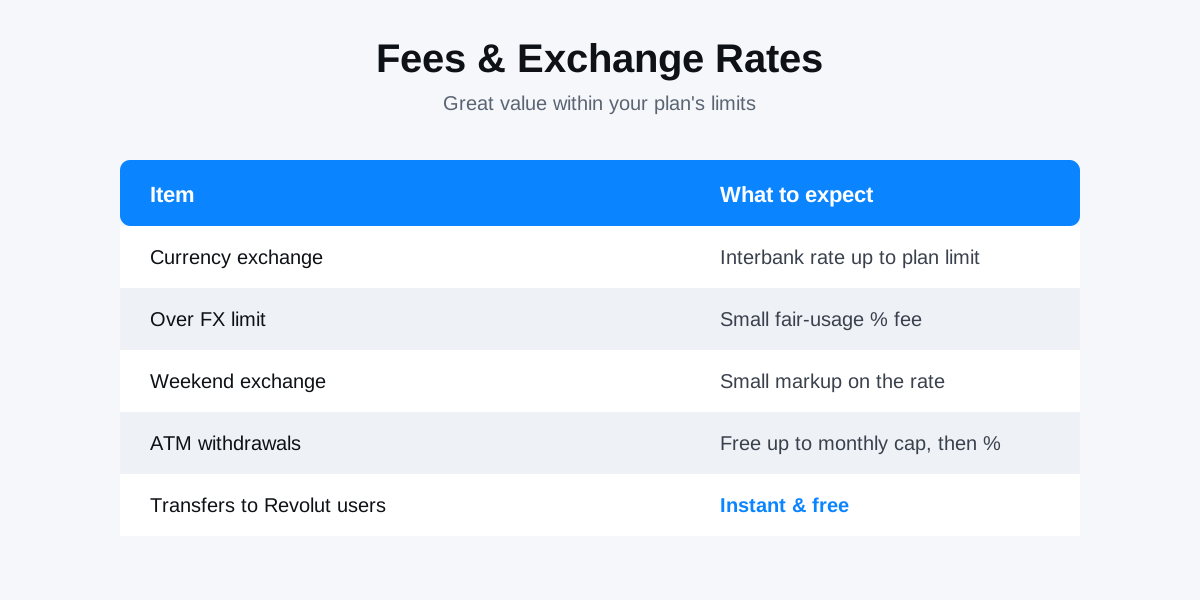
Fee-free currency exchange is Revolut's headline feature, but it comes with limits worth understanding before you rely on it:
- Fee-free FX within your limit: Convert currencies at the interbank rate up to a monthly cap set by your plan; above that cap a small percentage fair-usage fee applies.
- Weekend markup: Because currency markets are closed, exchanges made over the weekend carry a small markup on top of the rate.
- ATM withdrawals: Free up to a monthly limit, after which a percentage fee kicks in — higher plans get larger allowances.
- Out-of-allowance fees: Extra transfers, card deliveries, and some premium features can incur charges once you pass a plan's included quota.
In practice Revolut is excellent value for typical travel and overseas spending, but the caps mean heavy users of exotic currencies or weekend traders should read their plan's limits carefully. The panel below summarises what sits inside the app and where fees can appear.
5. Security & Trust
Revolut holds full banking licences in the EU and the UK, which means eligible customer deposits are protected under the relevant deposit-guarantee scheme up to the local limit — a meaningful step beyond the safeguarding-only model of many fintech apps. Money held in e-money or investment products is protected under the applicable rules for those services rather than as bank deposits, so it is worth knowing which product your balance sits in.
On the app side, Revolut gives you strong day-to-day control: freeze and unfreeze your card instantly, toggle specific payment types (online, contactless, ATM), set per-transaction limits, and receive real-time notifications on every payment. Its fraud-monitoring systems flag suspicious activity as it happens, and disposable virtual cards generate a fresh number for each online purchase so your real details are never exposed. Combined with biometric login and two-factor authentication, it is a genuinely security-conscious setup.
6. Pros & Cons
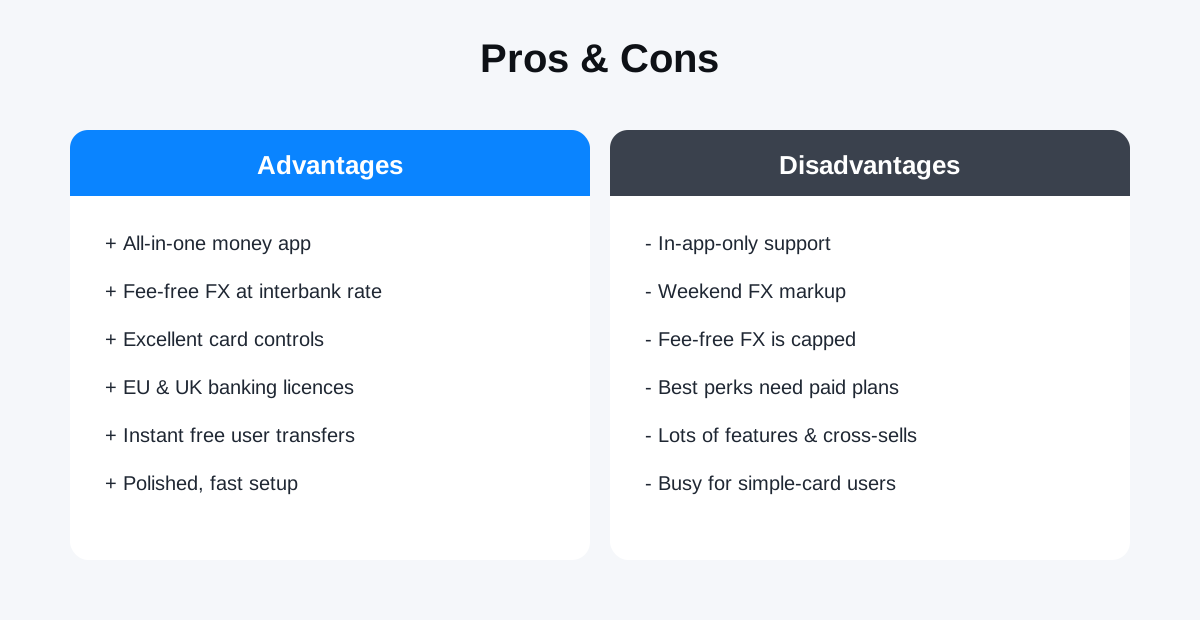
No app is perfect. Here is the balanced picture:
Advantages
- A genuine all-in-one app: banking, cards, FX, budgeting, stocks, and crypto in one place.
- Fee-free currency exchange at the interbank rate for travel and overseas spending.
- Excellent card controls and security, including instant freeze and disposable virtual cards.
- Full EU and UK banking licences, with deposit protection on eligible balances.
- Fast setup, a polished interface, and instant free transfers between users.
Disadvantages
- Support is in-app only, with no phone line or branches, and can be slow at busy times.
- Weekend FX carries a small markup, and fee-free exchange is capped by plan.
- The best limits and perks are locked behind paid plans, nudging heavy users to upgrade.
- The sheer number of features and cross-sells can feel busy for people who just want a simple card.
7. Verdict: Who Should Use Revolut?
Revolut is one of the most useful money apps you can install, and for a lot of people it can replace several separate services at once. Frequent travelers, online shoppers, and anyone who deals in more than one currency get the most obvious value from the fee-free exchange and superb card controls, while the built-in budgeting, savings vaults, stocks, and crypto make it a capable financial hub even when you are at home.
The trade-offs are the in-app-only support, the weekend FX markup, and the way the best limits sit behind paid tiers. Start on the free Standard plan, use it for a month, and only upgrade if the higher limits and perks clearly earn their keep. If you want one polished app that handles almost everything money-related, Revolut is an easy recommendation.
Related comparison: See how Revolut compares in Payoneer vs Stripe vs Revolut vs Kraken: Which Fintech Do You Actually Need? — or browse all comparisons & best-of guides.
Ready to try Revolut?
Visit the official website to see the latest plans, pricing, and special offers.
Get Started - Revolut* Affiliate link - we may earn a commission at no extra cost to you.