Magical Review: The Text Expander That Became a Healthcare AI-Agent Company
Magical review: the Chrome text expander and autofill extension vs its new healthcare AI agents - hidden pricing, billing quirks, data policy and better alternatives.
Expert Review

Two products, one name
Install Magical from the Chrome Web Store and you get a text expander and autofill tool. Visit getmagical.com and you will not find that product at all. The homepage, checked on 2026-09-28, is titled "AI Agents for Healthcare Operations" and sells software that "deploys specialized AI agents that execute real operational work across healthcare systems - from patient access to revenue cycle." The footer's Pricing link loops back to the homepage, and so does getmagical.com/pricing.
Nobody announced the change. The trail is dated anyway: a healthcare landing page on explore.getmagical.com built in March 2025, a HLTH podcast with CEO Harpaul Sambhi that same month called "Agentic AI: Revolutionizing Healthcare Workflows", and in May 2025 a help-centre note that the extension's AI writing buttons were gone. HeyAutofill, Inc., the company behind Magical, raised $41M on the extension: a $6M seed from Greylock and Bain, then a $35M Series A led by Coatue that TechCrunch covered in June 2022. The agents are where it now spends its marketing.
Which half you are shopping for decides the verdict.

The Chrome extension today
The extension is not abandoned. Its store listing, now called "Magical: Text Expander & Autofill", shows version 3.119.1 updated April 4, 2026, a Featured badge, 4.4 stars from 3.5K ratings and a counter of 300,000 users. The description on the same page says "Join 950,000 users at 100,000+ companies". Trust the counter. It is also the figure TechCrunch reported back in 2022, so the install base has not visibly grown in four years.
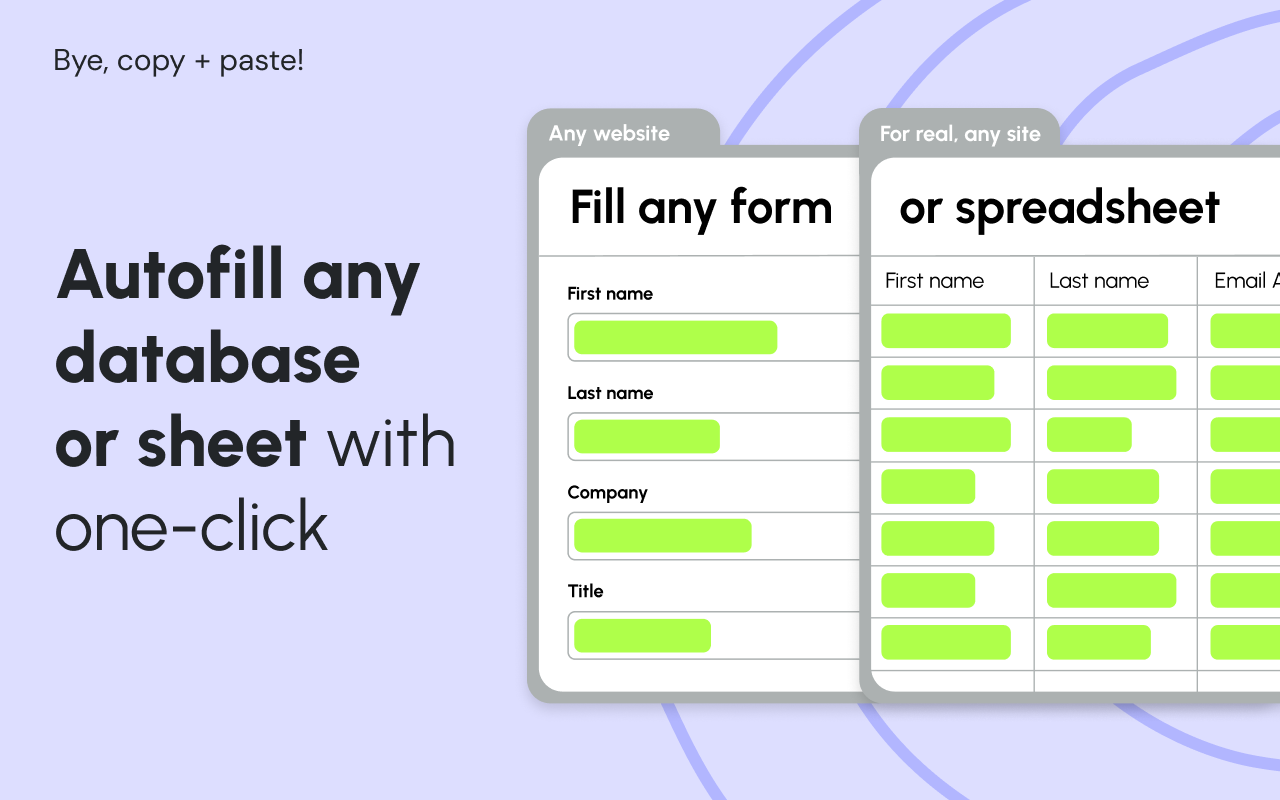
It does two jobs. Text expansion inserts saved templates that pull a contact's name and details from the page you are on. Autofill copies fields from one tab - a LinkedIn profile, a patient record, a CRM entry - into a form or spreadsheet in another "with a single click". The listing names official integrations with Epic, Medhost and Allscripts, which is where the healthcare business grew from.
The usage accounting is fiddly. Each text expansion is one "Template Action". Transfers, personalisation, enrichment and AI actions draw on a separate monthly "Automations" allotment, and pulling data from several tabs at once still counts as one. Neither the free plan's template-action limit nor the size of the monthly allotment appears in any help article checked on 2026-09-28; the only trace is a June 2025 line about hitting "your free plan limit of template actions". You find out where the ceiling is by reaching it.
What you no longer get is AI writing. Magical AI launched on 22 February 2023 with the line "You can now bring ChatGPT with you to work": AI Reply, Yes, No and Custom buttons in the compose box. The help article now opens with "Update May 2025 These particular AI features are no longer available in the Magical extension" and sends anyone who wants AI to the agent sales team. Store screenshots and some software directories still show it; both are out of date. No current Magical page names a model at all.
The complaints that recur in G2 reviews match that picture: pricing, the privacy of the sign-up and tracking, and autofill that works on some sites and desktop apps but not others.
Pricing: sign up to see it
Magical publishes no price list. The help article for the Advanced plan (updated 2026-06-30) says: "You'll need an account and the extension installed to view plans." The only price Magical itself shows is a checkout screenshot inside that article reading "Magical Advanced Plan / Seats $120.00 per year", one seat, billed annually. The screenshot is undated.
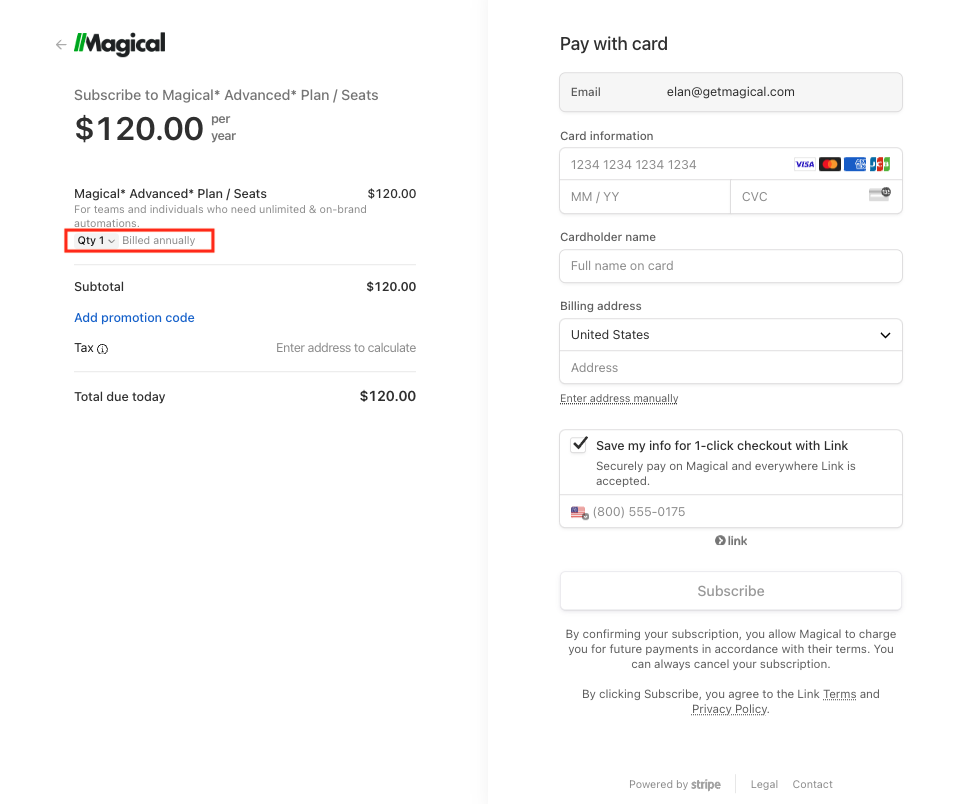
Text Blaze, a direct competitor, listed Core at $6.50/month or $66/year and Advanced at $12/month or $120/year in a comparison post dated 13 January 2026. The Advanced figure matches Magical's screenshot; the Core figure has only a rival behind it. Core is pitched at individuals who "want unlimited text expansion", Advanced is sold per seat, and both carry a 16% discount on annual billing. Enterprise is sales-only, recommended for teams "that plan to grow over 40 seats".
The billing rules are what the plan cards would not tell you anyway. Paying requires, in Magical's words, "a personal email domain", so check which address your account sits on before a company card comes out. Stripe handles payment from every eligible country except India. Monthly fees are non-refundable. An annual plan is refunded in full only within 7 days; after that you get account credit, not money, unless you live in the EU or Turkey, where the law gives you 14 days. Referrals can earn up to 12 months of Core free.
The healthcare agents have no public price whatsoever. There is a demo form.
The healthcare agents
This is where Magical is putting its effort. The homepage names six agents: Prior Authorization, Referrals, Benefits Verification, Records Request, Revenue Integrity and Payment Posting. They run "entirely on virtual machines", working the same payer portals and EHR screens a billing clerk would, and Magical says "hundreds of thousands of agents can run concurrently". A case study dated September 9, 2026 is headlined on a client that "Replaced an RPA Vendor", so the pitch is aimed at teams already paying for scripted bots.
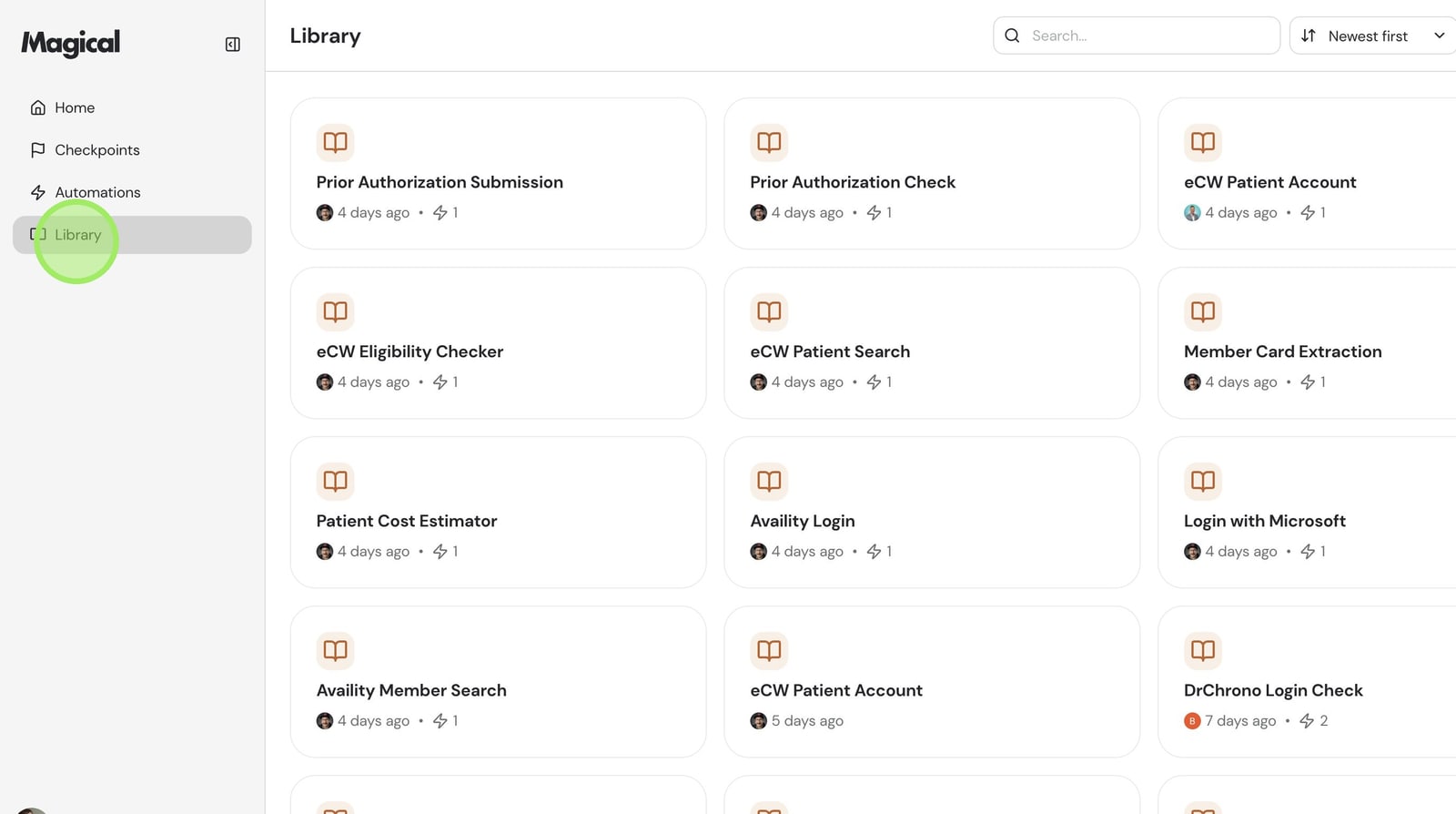
The help centre, updated 2026-04-13, shows what an operator actually sees: Home for runs, Checkpoints, Automations and a Library. The Library gives the game away. Its reusable blocks are named "Prior Authorization Submission", "eCW Eligibility Checker", "Availity Login", "Availity Member Search", "Member Card Extraction", "Patient Cost Estimator" and "DrChrono Login Check". The agents already drive eClinicalWorks, DrChrono and the Availity payer portal, not only Epic.
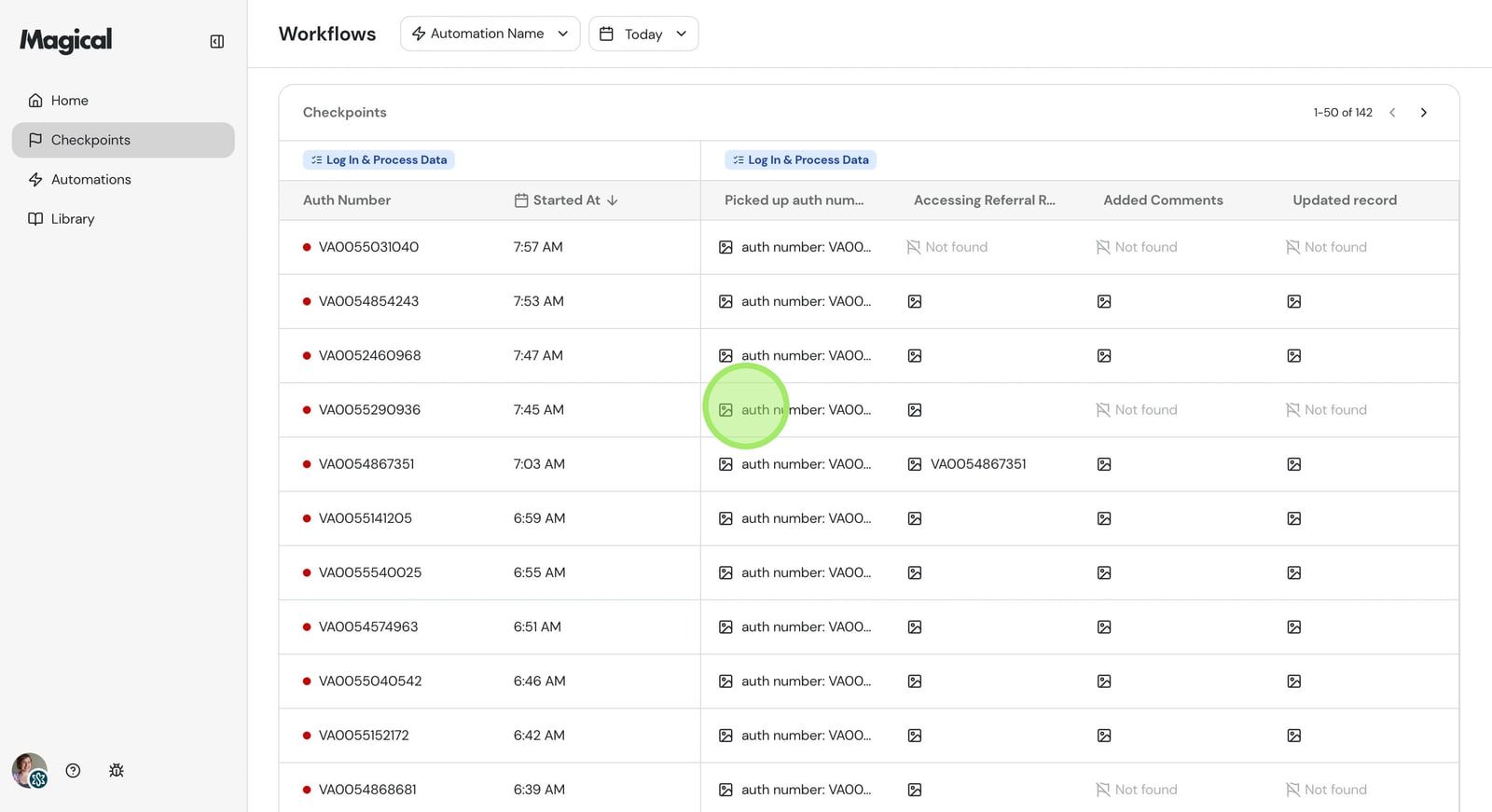
Checkpoints matter more to a buyer. Each run is split into steps - auth number picked up, referral accessed, comments added, record updated - and a step that failed shows "Not found" rather than passing silently. That per-step trail is what a revenue-cycle manager needs before letting software touch authorizations.
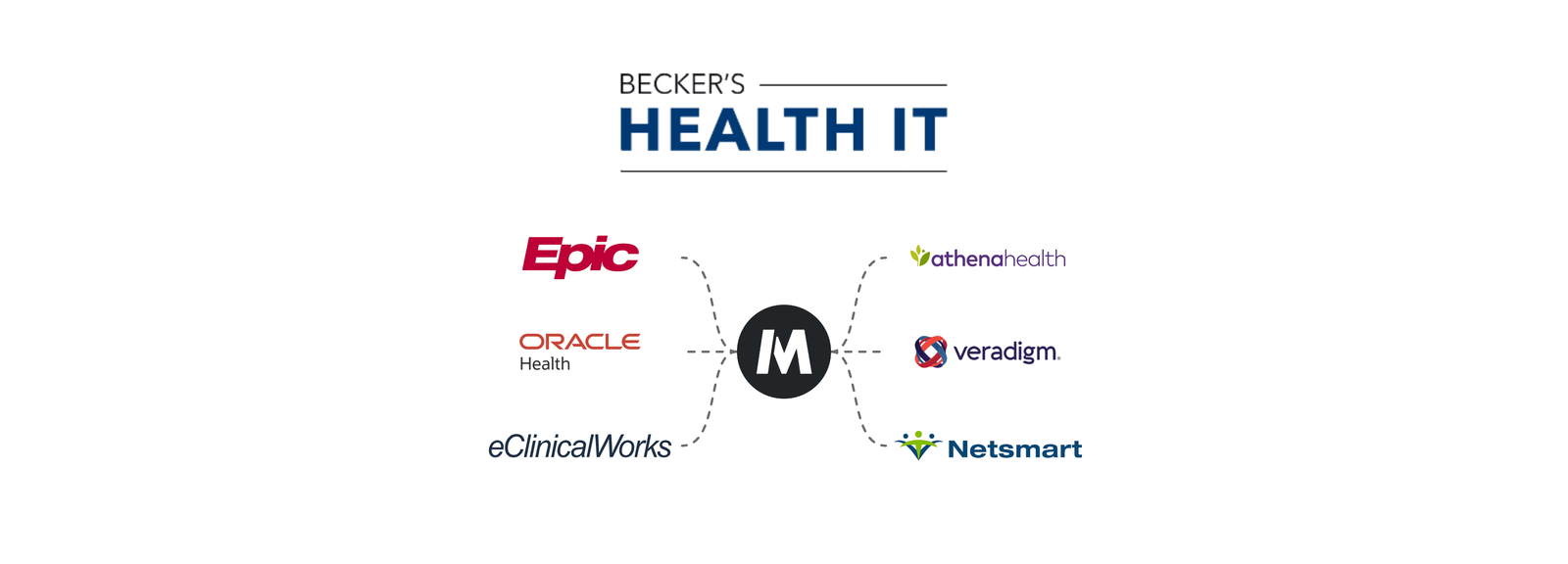
On September 17, 2026 Magical announced a SMART on FHIR architecture spanning Epic, Oracle Health/Cerner, eClinicalWorks, athenahealth, Veradigm and Netsmart. Veradigm and Netsmart are still pending approval. That gives the agents a sanctioned route into those EHRs instead of relying only on driving the screen.
Two sets of numbers, two data policies
Get the performance figures in writing, because Magical's own pages disagree. The homepage promises "over 90% coverage in the first six weeks on average, with successful automations running at over 95% accuracy." The trust page on the same site lists deployment time 12 weeks, coverage 80%+ and accuracy 90%+. That is twice the rollout time and a lower bar on both rates. Budget on the trust page.
Data use splits the same way. The trust page says "our use of large language models prevents any training based on prior runs." The privacy policy, last updated November 8, 2023, lets HeyAutofill use data to "develop, train, optimize and improve artificial intelligence or machine learning algorithms, systems, models". It says copied "Variable Content" is processed to "enhance the product experience" unless you opt out, and a few lines later that Variable Content "is not stored by us." A healthcare buyer should write the no-training promise into the business associate agreement rather than trust either page.
The compliance basics are in place: HIPAA compliance, a SOC 2 Type II report announced in November 2023 and audited by Prescient Assurance, TLS 1.2 in transit, AES-256 at rest, and a promise that keystrokes on websites never leave your computer. Even backups get two answers, though. The trust page keeps template backups for 7 days; a 2024 help article says 14.
If you only want a text expander
These rivals publish their prices without asking for an account. All three checked on 2026-09-28.
| Tool | Individual plan | Team plan | Prices public? |
|---|---|---|---|
| Magical | Core: $66/year (competitor-reported) | Advanced: $120/year per seat | No - account and extension required |
| Text Blaze | Pro: $2.99/month billed yearly ($3.49 monthly) | Business: $6.99/user/month billed yearly | Yes, with a free plan |
| TextExpander | Pro: $60/year | Business: $120/year per user | Yes |
Text Blaze is the straight swap. Its free plan's terms are readable before you install anything, and Business works out at $83.88 per user per year, $36 a seat less than Magical Advanced. TextExpander costs the same as Advanced at team level, but it is a company whose whole business is snippets, and it runs on Mac and Windows as well as in the browser - the gap G2 reviewers keep hitting with Magical.
Verdict
Buy Magical if you run patient access or revenue cycle at a practice or health system, your staff lose days to prior auths and eligibility checks in Availity, eClinicalWorks, athenahealth or Epic, and you want finished agents rather than an RPA toolkit to script yourself. Book the demo, put the trust page's 12 weeks, 80% and 90% into the contract instead of the homepage's numbers, and get the no-training clause into the BAA.
Skip it if you want a text expander. The extension still works and still ships updates, but it is the side product of a company whose homepage no longer mentions it, its AI features were removed in May 2025, and you cannot see the price until it is installed. Text Blaze does the same job with a public free plan and cheaper seats; pick TextExpander if you need snippets outside Chrome.
Ready to try Magical?
Visit the official website to see the latest plans, pricing, and special offers.
Get Started - Magical* Affiliate link - we may earn a commission at no extra cost to you.