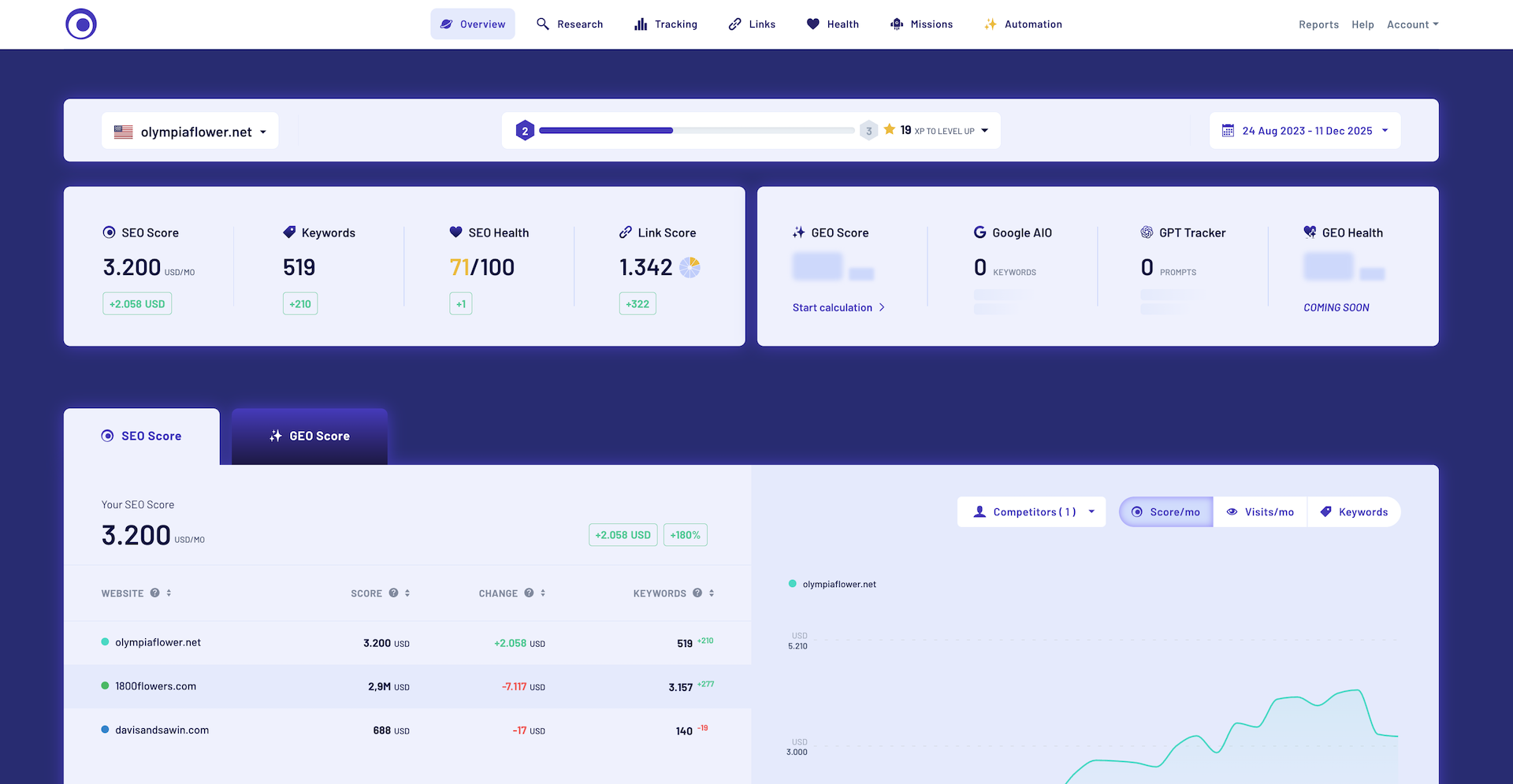
A hands-on Morningscore review: the gamified missions system, AI search tracking, real 2026 pricing, and where its smaller keyword database costs you.
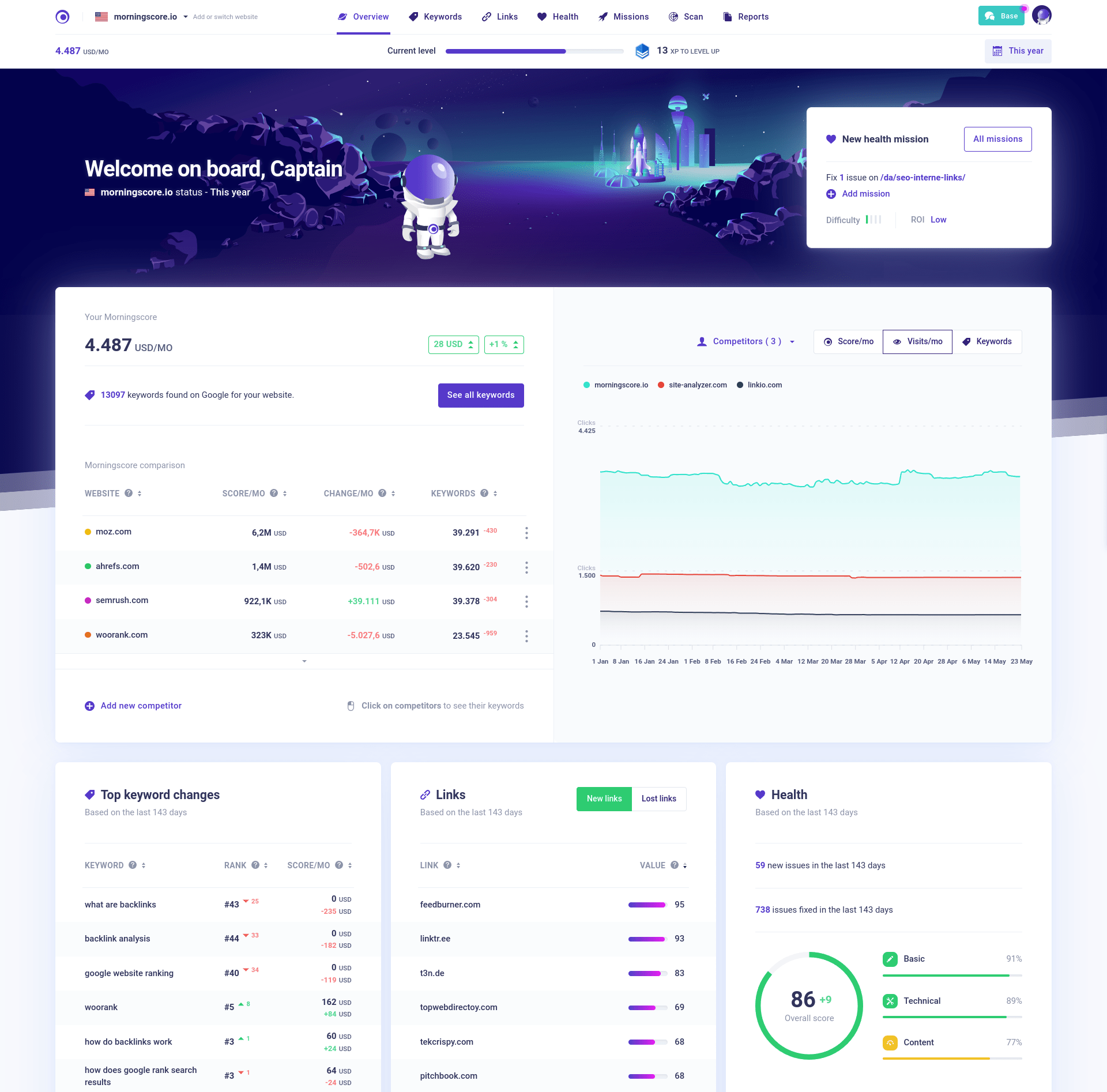
Most SEO tools open on a wall of tables. Morningscore opens on a to-do list. Sign up for the 14-day trial (no card required, verified in August 2026), point it at a domain, and within a minute it has scanned the site and handed you a queue of "missions": fix this broken link, add a title tag here, chase this keyword that sits at position 12. Finish one and you earn XP, level up, and watch a "market share" score climb. It is SEO dressed as a role-playing game, and for the audience it targets that framing is the whole product.
Morningscore was built in Odense, Denmark, and launched in 2019 by a small team who were tired of watching clients bounce off Ahrefs. The premise has not changed since: take the four or five things a small site genuinely needs to do, hide the firehose of data behind them, and tell the owner what to click next. That is a real design decision, not a marketing line, and it is the first thing you notice.
Under the gamified skin sits a competent all-in-one SEO suite. The core modules are the ones you would expect, and they are wired together so a problem found in one becomes a mission in another.
The competitor view lets you drop in a rival domain and see where they outrank you, which keywords they hold that you do not, and roughly how much that traffic is worth. It is the same idea Semrush and Serpstat sell, scaled down to what a one-person marketing team can act on in an afternoon.
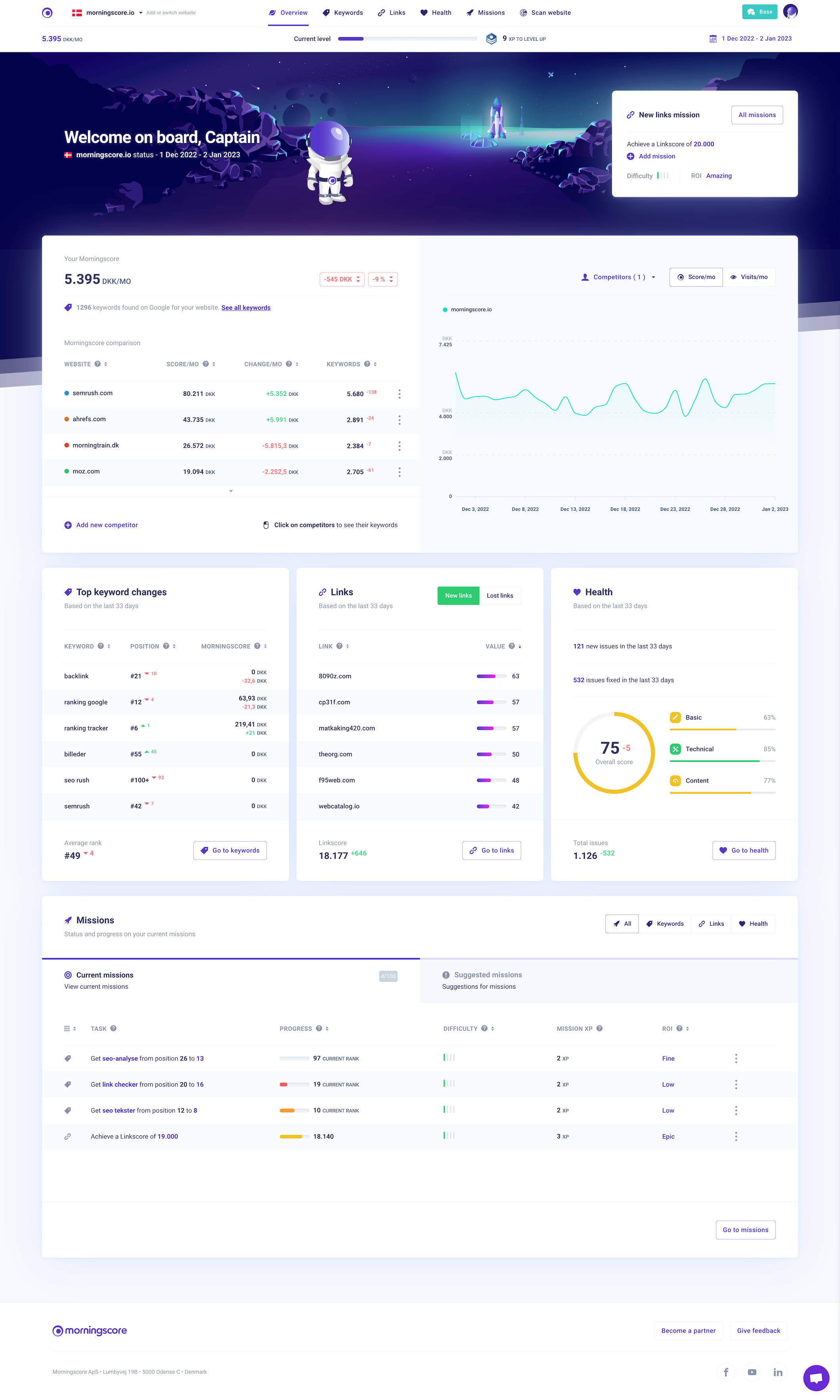
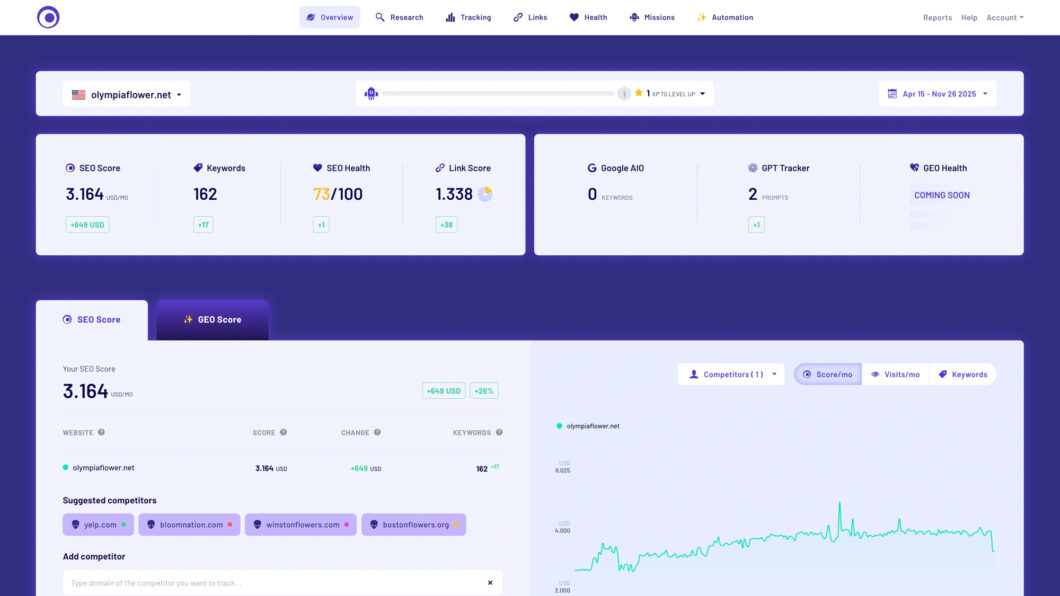
The most current part of Morningscore is the one that did not exist two years ago. It now tracks whether your pages get cited inside Google's AI Overviews and whether ChatGPT surfaces your brand when someone asks about your category. For a small business watching classic blue-link traffic soften, that is the question that actually keeps them up at night, and Morningscore answers it on every plan rather than gating it behind a top tier.
There is also a "Rank AI" side to the product: a one-click action that asks the tool's AI to rewrite or improve a page against a target keyword, plus article generation that draws down a pool of monthly AI credits. Treat these the way you would any auto-generated copy: a first draft to edit, not a publish button. The tracking is the genuinely useful half; the generation is a convenience I would not lean on.
Four plans, all billed monthly or annually, with the annual option giving two months free (an effective 16.7% off). Prices read from the pricing page on 13 August 2026:
On annual billing the entry plan works out near $57.50 a month. That undercuts a full Semrush seat by a wide margin, and it sits close to trimmed-down rivals like SpyFu. The catch worth flagging before you commit: the 100-keyword cap on Lite is real. Track one small site properly (its money pages, a handful of blog posts, three competitors) and you will brush against it. The plan ladder is priced to push a growing site toward Business faster than the headline $69 suggests.
The friendliness has a cost, and it is the data underneath. Morningscore runs its own keyword and backlink index, and that index is smaller than the ones Ahrefs and Semrush have spent a decade and a fortune building. In practice you will meet long-tail keywords with no volume figure, and independent reviewers have noted occasional gaps between the rank Morningscore reports and what they see in the SERP by hand. For a small site chasing a few dozen commercial terms this rarely bites. For an agency auditing a 40,000-page catalogue, the missing coverage is disqualifying.
Two smaller limits are worth knowing up front. Third-party integrations are thin, so do not expect it to slot into a big martech stack the way the incumbents do. There is no mobile app either, so a client who wants to glance at rankings on a phone is stuck with the browser. None of these are dealbreakers for the target user. They are exactly the corners a lean Danish team cut to keep the tool simple and the price low.

Morningscore is the SEO tool to buy when the tool itself is the obstacle. A solo founder, a small-business owner, or a marketer who does SEO as one of six jobs will get further with a prioritised mission list and daily rank tracking than with a Semrush dashboard they open twice and abandon. The AI-search tracking on every plan is a real reason to look now rather than a year ago, and the 14-day no-card trial costs nothing to test against your own domain.
Skip it if you are an SEO specialist or an agency who lives in keyword data all day. The smaller index and thin integrations that a beginner never notices will slow you down, and the money is better spent on Ahrefs or Semrush, where the database depth is the whole point. Morningscore wins on guidance and price; it does not win on raw data, and it does not pretend to.
Start a free 14-day Morningscore trial and run it against your own site before you decide: the mission list on your real domain tells you more than any review can.
Visit the official website to see the latest plans, pricing, and special offers.
Get Started - Morningscore* Affiliate link - we may earn a commission at no extra cost to you.