monday CRM Review: Visual Pipelines, AI Agents and the 3-Seat Catch
monday CRM review, checked November 2026: $12-$28 per seat yearly with a 3-seat minimum, no free plan, 250 automations on Standard, Pro-only sequences and forecasting, one-time AI credits, and what export leaves behind.
Expert Review

What monday CRM is now
monday CRM used to be "monday sales CRM", a set of sales boards on top of the same Work OS we covered in our monday.com review. It is now sold as its own product, with its own price list, its own plan names and its own rules for AI. The product page leads with "AI revenue execution, live in minutes" and claims 35,000+ customers. The business behind it is not small either: monday.com said its CRM passed $100M in annual recurring revenue back in Q3 2025.
Underneath, it is still boards. A Deals board holds one item per opportunity, with a Kanban view for dragging deals between stages. Contacts and Accounts sit on their own boards and link to deals through a Connect Boards column. Leads live on a fourth board and convert to contacts once qualified. If you have used monday for project work, you already know it. If not, picture a spreadsheet that thinks it is a database.
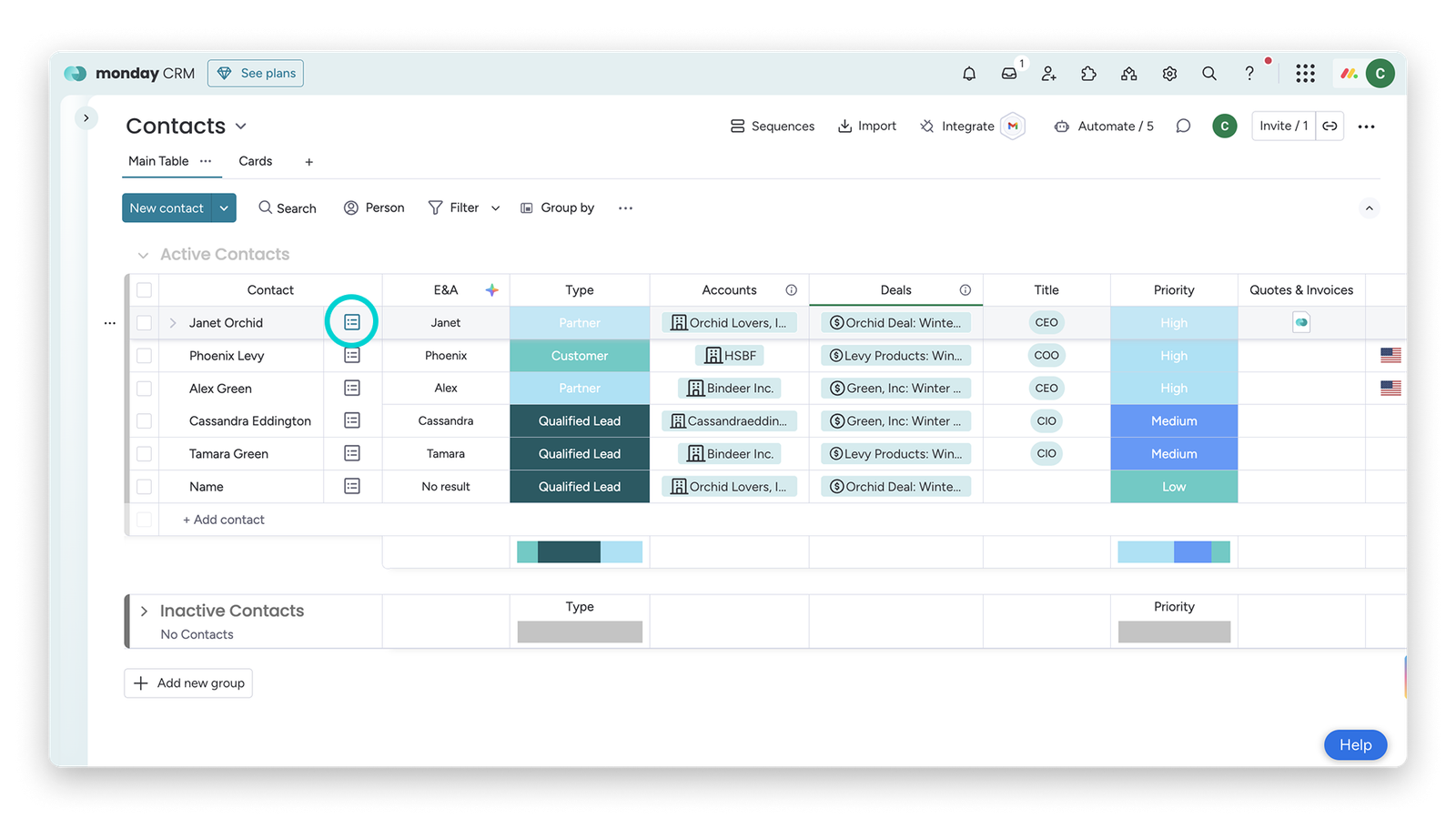
Everything below was checked in November 2026 against monday's pricing page and help center. We did not run a paid account; interface details come from monday's own documentation and screenshots.
Pricing and the 3-seat minimum
Prices are per seat per month in USD, before tax, as shown on monday.com/crm/pricing on November 11, 2026:
| Plan | Billed yearly | Billed monthly | Contacts | Automation actions / month |
|---|---|---|---|---|
| Basic | $12 | $18 | 1,000 | None |
| Standard | $17 | $25 | 10,000 | 250 |
| Pro | $28 | $41 | Unlimited (pricing page says 100,000) | 25,000 |
| Ultimate | Custom | Custom | Unlimited | Unlimited |
Those per-seat figures hide the real price. monday sells seats in buckets: plans start at 3 seats and then climb in steps of 5. A solo consultant on Pro pays for three seats anyway, which is $84 a month billed yearly ($1,008 a year) or $123 a month billed monthly. A team of four buys the 5-seat bucket. A team of six buys ten. Six people on Standard yearly therefore cost $170 a month, not the $102 the per-seat price suggests. Above 40 seats you talk to sales.
There is no free CRM plan. monday's help center is explicit that "the Free plan is only available on monday AI work platform". What you get instead is a 14-day trial of Pro with no credit card, which cannot be extended; when it ends the account deactivates unless you pay.
The pricing page contradicts itself: the yearly toggle says "SAVE 33%" (which matches $12 against $18), the FAQ below says 18%, and the meta description still advertises "starting from $10 per user". Trust the plan cards. The third-party tracker Costbench logged monthly prices rising from $15/$20/$33 to $18/$25/$41 around July 4, 2026, with the top tier renamed from Enterprise to Ultimate; monday has not announced either change, and some help articles still say Enterprise.
Where each plan runs out
Basic is a contact list with a pipeline view. It has no automations at all, no two-way Gmail or Outlook sync (Emails & Activities starts on Standard), one dashboard, five columns per board and an activity log that remembers only the past week. For a sales team, Basic is hard to recommend at any seat count.
Standard is where most small teams will land, and its ceiling is 250 automation actions a month. monday's own automation documentation says 250 actions "is typically exhausted within days". Hit the cap and you get 72 hours of grace before your automations pause, and only Enterprise customers can buy extra actions. So on Standard, the "when a deal moves to Proposal, notify the owner and create a follow-up task" recipe you built in week one quietly stops in week two. The 250 integration actions run out the same way if you sync deals to Slack or QuickBooks.
Pro is the plan the product is really designed around. It lifts automations to 25,000 actions a month, and it is the first tier with email sequences, mass email, email tracking and templates, plus forecasting. It also gets 10,000 API calls a day against 1,000 on Basic and Standard, and a year of activity log instead of six months. If your team sends outbound email from the CRM, Standard is a trial version of the product and Pro is the product.
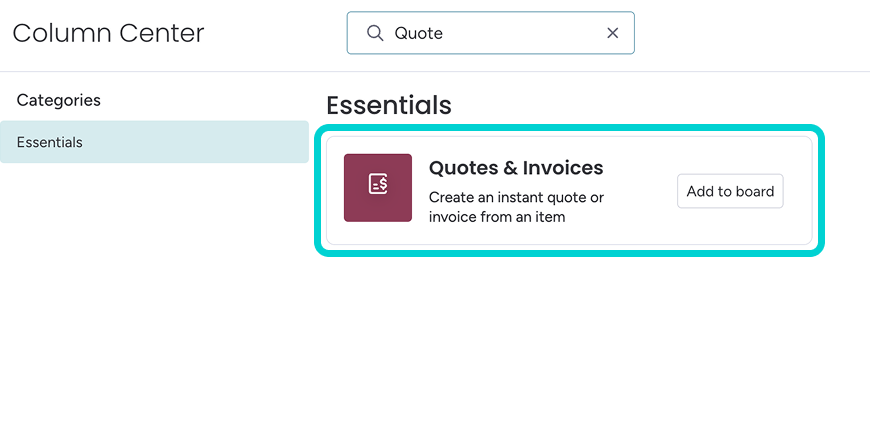
Quotes and invoices are capped at 20, 50 and 250 a month on Basic, Standard and Pro. AI lead scoring and 24/7 prioritised support are Ultimate only, and the only published response times are in the Enterprise SLA (critical tickets within 30 minutes); the lower tiers get no figure at all.
The AI agents, and the credits they burn
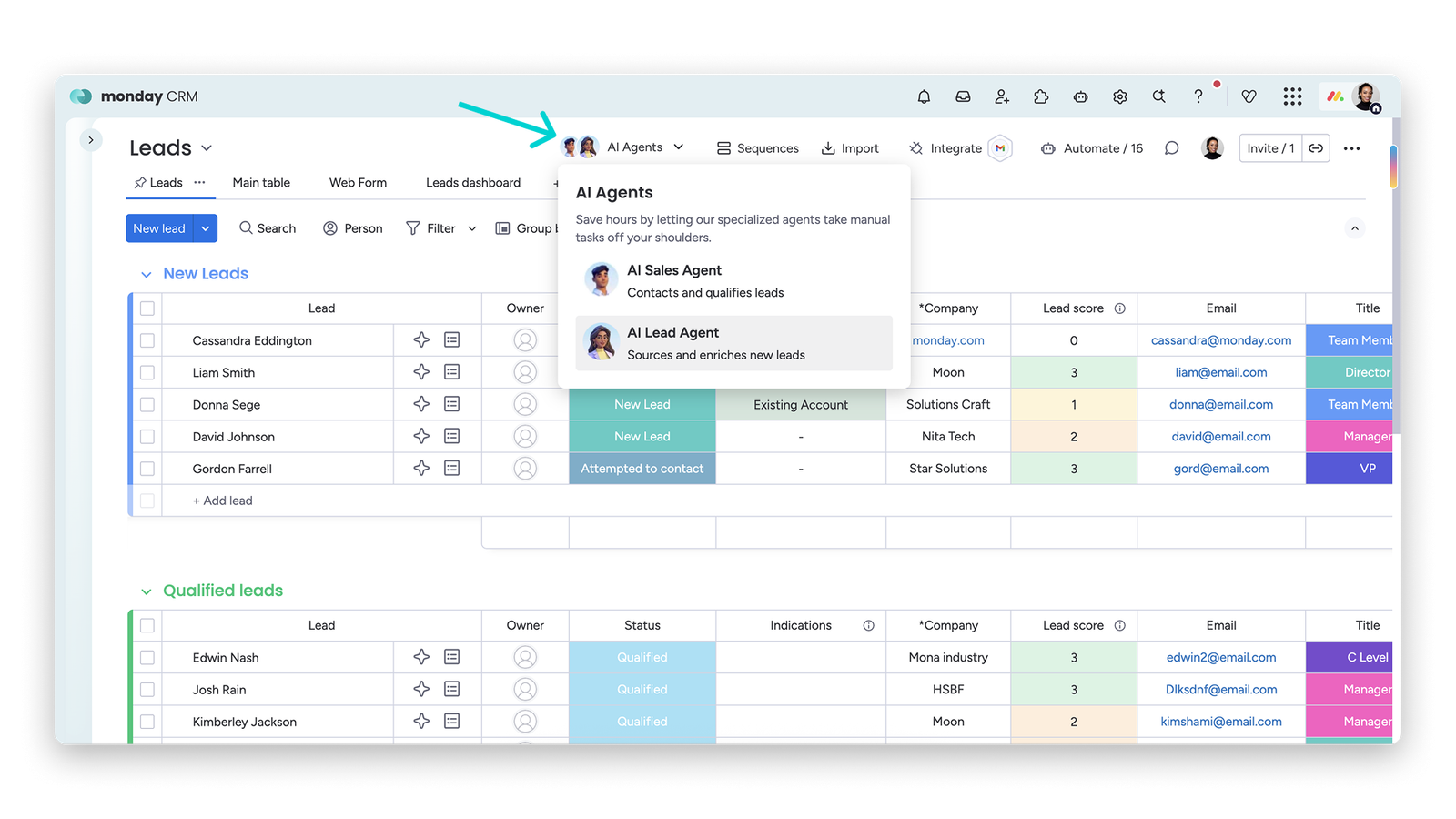
The Leads board now has an "AI Agents" menu with two entries. The AI Lead Agent "sources, adds, and enriches prospects based on your ideal customer profile". The AI Sales Agent contacts and qualifies leads by call and SMS. The product page lists more agents beyond those two (Lead Sourcing, Calling, Pipeline Monitor, Meeting Prep and custom agents), plus an AI notetaker, an email composer and timeline summaries. All of it needs Standard or above and an admin to switch AI on. monday says customer data is not used to train its models.
The part worth reading twice is how AI is paid for. In May 2026 monday moved its work platform to seats bundled with a monthly pool of AI credits, but that change "does not affect monday CRM". CRM plans get a one-time trial of 6,000 AI credits (12,000 on Ultimate), and that is it. There is no monthly refill.
Put that in meeting hours. The notetaker costs 120 credits per meeting hour, so the whole trial allowance covers 50 hours of recorded calls across the entire account, not per seat. Smart Call uses 5 credits per connected minute, which is 20 hours of calling. A complex agent run costs 250 credits or more, so 24 of those empty the pool. After that you buy top-ups, and they expire at the end of your billing cycle with no rollover. We could not find the dollar price of a credit pack on any official page, which makes the AI side of the bill impossible to forecast before you sign. The Sales Agent is in beta and its setup costs no credits; the Lead Agent does.
Pipeline, contacts and email in daily use
The visual side is where monday CRM earns its price. Every board is a table you can reshape: add a column for deal source, a formula for weighted value, a status colour per stage, then flip the same data to Kanban, a sales report or a forecast view. With 5 columns per board on Basic against 15 on Standard and 75 on Pro, the shaping really starts on Standard.
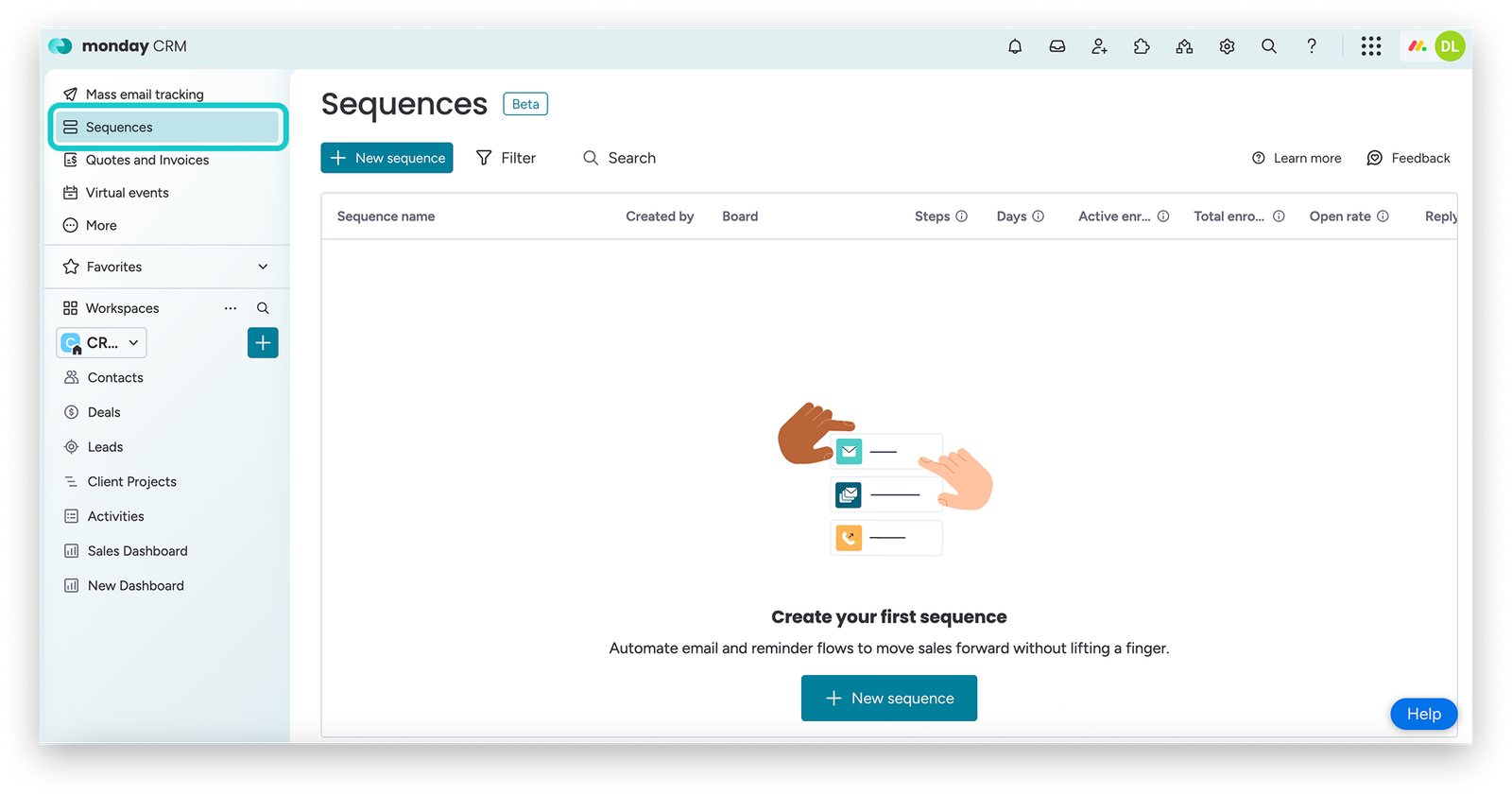
Contacts carry an Emails & Activities column that collects synced mail, calls and notes into a timeline. Native integrations cover Gmail, Outlook, Slack, Zoom, Google Workspace, QuickBooks and DocuSign. Sequences, the automated multi-step email and reminder flows, are still marked Beta in the interface and are Pro only.
The trade-off is that nothing is opinionated. Pipedrive tells you how a pipeline should work; monday gives you a board and lets you decide. Teams with a sales ops person love that. A three-person team can spend its trial building columns instead of selling.
What leaving looks like
Board export goes to Excel, from table views only, up to 100,000 items at a time. A full account export arrives as a zip, once every 24 hours, and it leaves out two things: dashboards and the Emails & Activities timeline. That second gap matters. Two years of email history attached to your contacts does not come with you in the standard export, so moving to another CRM means rebuilding that history from your mailbox or pulling it through the API. On Basic and Standard the API allows 1,000 calls a day, and monday counts actions through its MCP connections against the same limit, so a large migration on a cheap plan takes days.
What users complain about
We could not fetch the big review sites directly, so these come from secondary sources and are framed that way. The 3-seat minimum is the complaint competitors most like to quote; Pipeline CRM's comparison page calls it "the single most-cited pricing complaint". Billing disputes and support dominate monday.com's Trustpilot reviews, reported at 3.1 out of 5 across about 3,300 reviews (for the company as a whole, not the CRM alone). The third theme is automation limits, and monday's own "exhausted within days" line backs that one up. Capterra's monday CRM listing was reported at 4.7 out of 5 in April 2026, so the people who stay are happy.
Verdict
Buy monday CRM if your company already runs projects or delivery on monday Work Management and you want deals on the same platform as the work they turn into, or if you are a team of roughly 5 to 40 people that wants a pipeline shaped exactly to its process and has someone willing to build it. Budget for Pro. Standard's 250 automation actions are a demo, and the features that make a CRM a sales tool (sequences, email tracking, forecasting) all start at $28 a seat.
Skip it if you sell alone or in a pair. You will pay for three seats, and Pipedrive or Capsule CRM price per actual user. Skip it if your team lives in outbound email and needs sequences without paying Pro rates; HubSpot gives you a free CRM to start on, and Close is built around calling and sequences from the first screen. And skip the AI agents as a reason to buy until monday puts a price on credit top-ups: a one-time 6,000-credit allowance is a trial, not a feature. For the wider field, see our best CRM software roundup.
Ready to try monday CRM?
Visit the official website to see the latest plans, pricing, and special offers.
Get Started - monday CRM* Affiliate link - we may earn a commission at no extra cost to you.