New Relic Review: 100 GB Free, Then the Seat Price Is the Bill
New Relic review with pricing checked October 2026: 100 GB free, $0.40/GB, $349 Pro seats, the AI add-on meter, 8-day retention and who should pick Datadog or Grafana instead.
Expert Review

The bill has two meters, and the expensive one is people
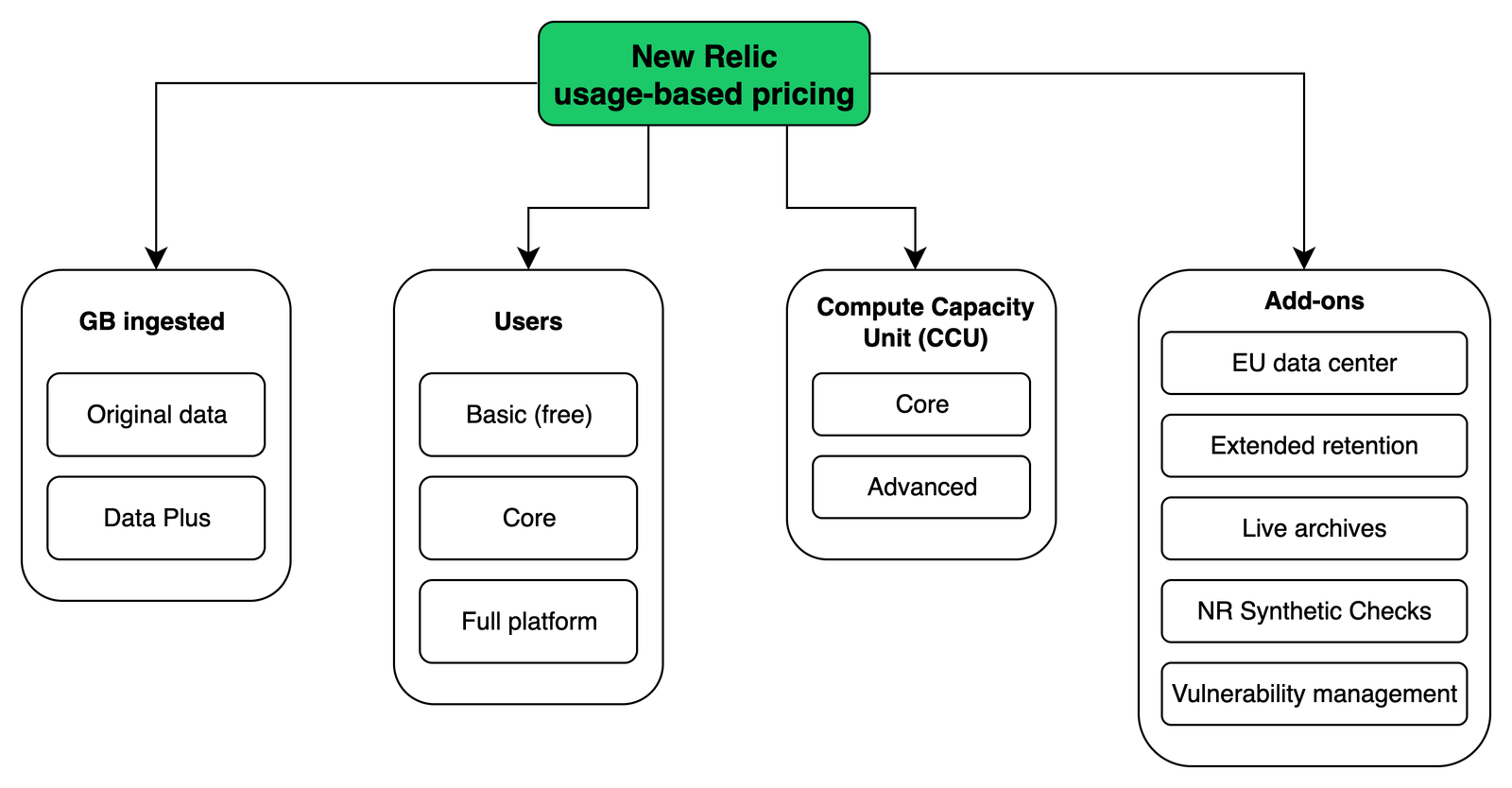
Most observability vendors bill you for machines. Datadog charges per host, Dynatrace per host sized in 8 GiB units. New Relic doesn't. It bills for the gigabytes of telemetry you send and for the people who log in with a full seat, and it lets you run as many hosts as you like on top of that. That one decision sets who New Relic is cheap for and who it hurts.
The data meter is mild: $0.40 per GB after 100 free GB a month. The seat meter is not. A Pro full platform user costs $349 a month on an annual commitment. Ten engineers with full seats is $3,490 a month before a single byte of data, and on most real accounts the seats, not the data, turn out to be the bill.
New Relic has been private since November 2023, when Francisco Partners and TPG completed a $6.5 billion buyout. Its product covers APM, infrastructure, logs, browser and mobile monitoring, synthetics and AI monitoring under one query language, NRQL.
The free tier: 100 GB, then a wall
The free plan is the most generous in the category on paper. You get one full platform user with access to all 50+ capabilities, unlimited basic users, 100 GB of ingest a month, at least 8 days of default retention and 500 synthetic checks. No credit card is asked for at signup.
The catch is what happens at 101 GB. New Relic does not bill you and it does not sample. In its own words, "Data ingest will cease and you will lose access to the platform" until you upgrade or the first day of the next month. You get a warning email at 85%. A debug logger left on from the 12th means you are blind until the 1st, including during the incident that logger was part of. Cap log verbosity at the agent before you need to.
Two smaller limits matter too. Basic users are free but cannot open the curated APM, browser or mobile UIs, so "unlimited users" in practice means one person can use the product and everyone else can view dashboards. And the free tier is not covered by the support plan at all.
Pricing, checked on 1 October 2026
These are list prices from newrelic.com/pricing and New Relic's published usage plan, checked on 1 October 2026.
| Standard | Pro | Enterprise | |
|---|---|---|---|
| Full platform user | $10 first user, $99 each after (max 5) | $349 annual, $390.88 monthly billing, $418.80 pay as you go | Contact sales on the pricing page; usage plan lists $549 annual, $658.80 pay as you go |
| Core user | $49 | $49 | $49 |
| Basic user | $0 | $0 | $0 |
| Data, original | 100 GB free, then $0.40/GB (+$0.05/GB in the EU region) | ||
| Data Plus | 100 GB free, then $0.60/GB | ||
| Synthetic checks/month | 10,000 | 1 million | 10 million |
Here is what that means in practice. These are our own sums from the list prices, not quotes:
- Solo developer, one full user, under 100 GB: $0.
- Small team on Standard, 5 full users, 300 GB: $10 + 4 × $99 + 200 × $0.40 = $486/month.
- Ten engineers on Pro annual, 500 GB: 10 × $349 + 400 × $0.40 = $3,650/month. Seats are 96% of it. Moving to Data Plus adds only $80.
- Same team, six moved to core seats: 4 × $349 + 6 × $49 = $1,690 in seats, less than half.
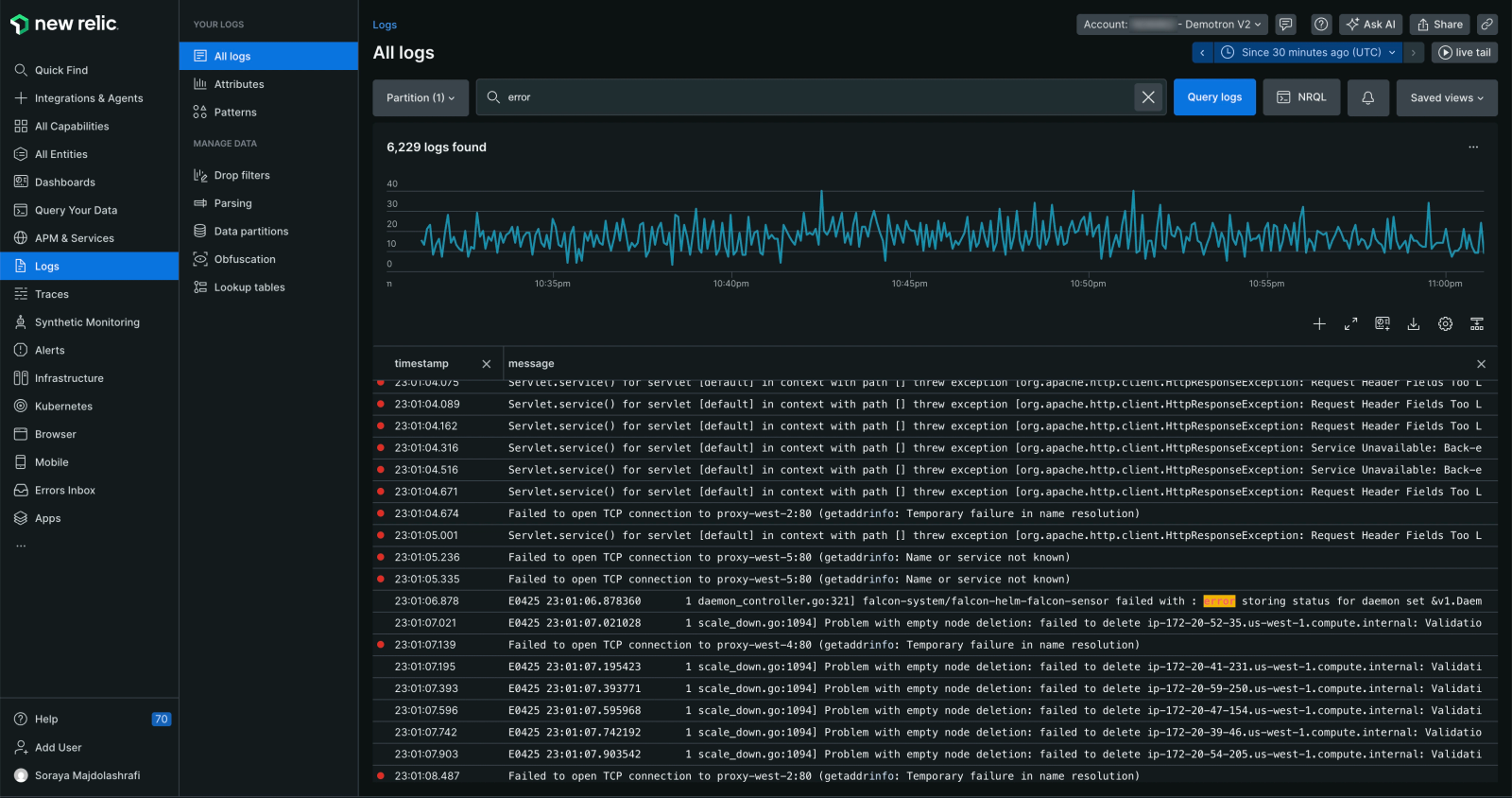
That last line is the single most useful thing to know before signing. A core user ($49) gets errors inbox, the log management UI and CodeStream, which is enough for an engineer who triages but doesn't live in APM. Audit user types monthly, because the billing rules are strict: anyone set as a full user at any point in a calendar month is billed as full for the whole month, and "even if a billable user has never logged in," they are still billable. Monthly GB is rounded up to the next whole number.
Standard also stops at five full users. Your sixth engineer means Pro, and Pro means $349 each, not $99. That jump is where teams most often get surprised.
New Relic also lists a Core Compute model with no user fees, billed per compute unit spent on queries, alerts and page loads. It is in public preview and has no published price, so budget on seats until a sales rep puts a number in writing.
What the seat buys: unlimited hosts and short memory
A full seat opens APM with distributed tracing, infrastructure and Kubernetes monitoring, browser and mobile monitoring (session replay included), synthetics, log management and 780+ integrations, with no host count anywhere on the invoice. For a team running 200 hosts and five engineers, that is the whole appeal: Datadog APM at $31 per host per month (annual) would be $6,200 before logs, while New Relic Standard would be $406 in seats plus data.
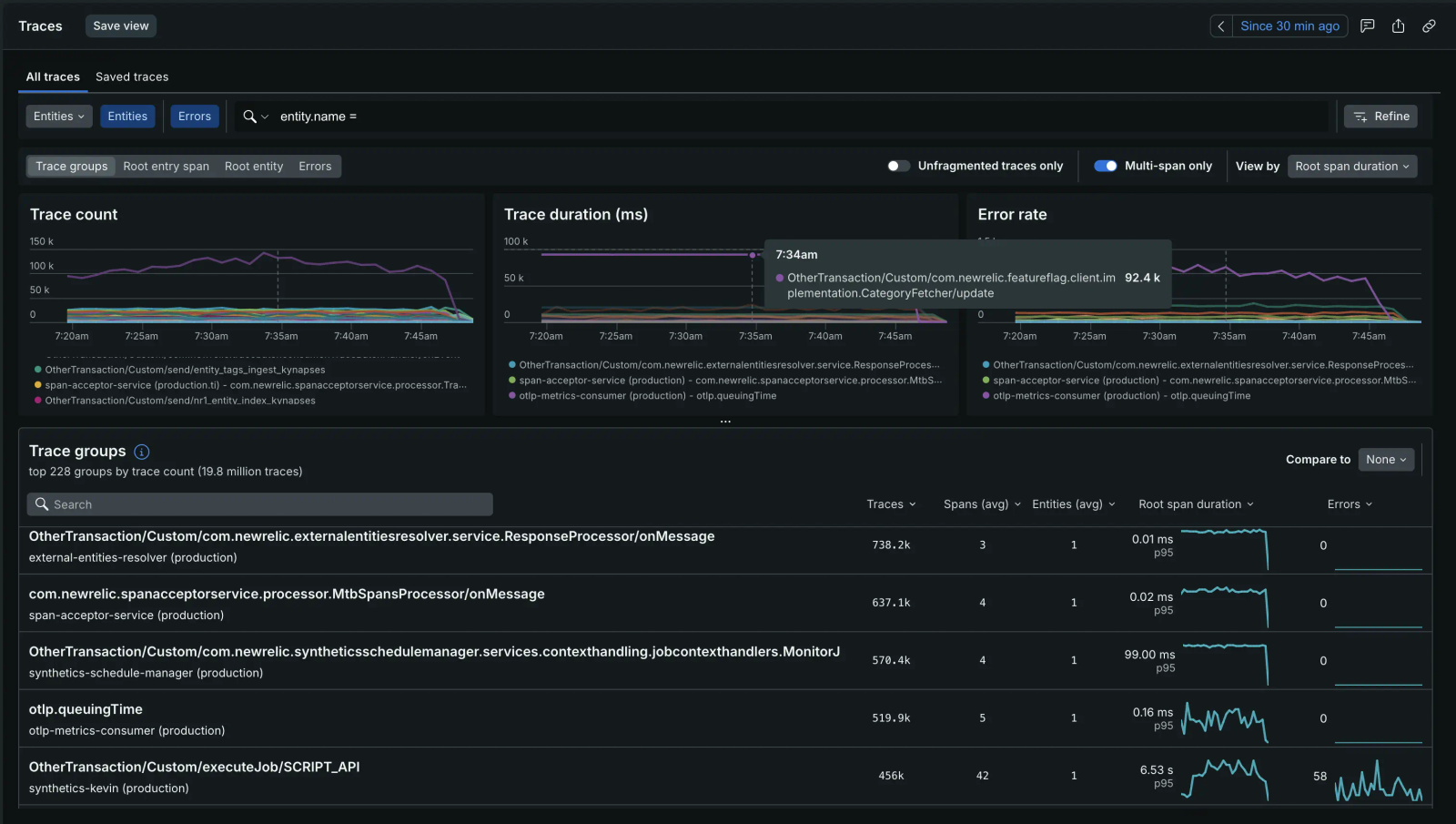
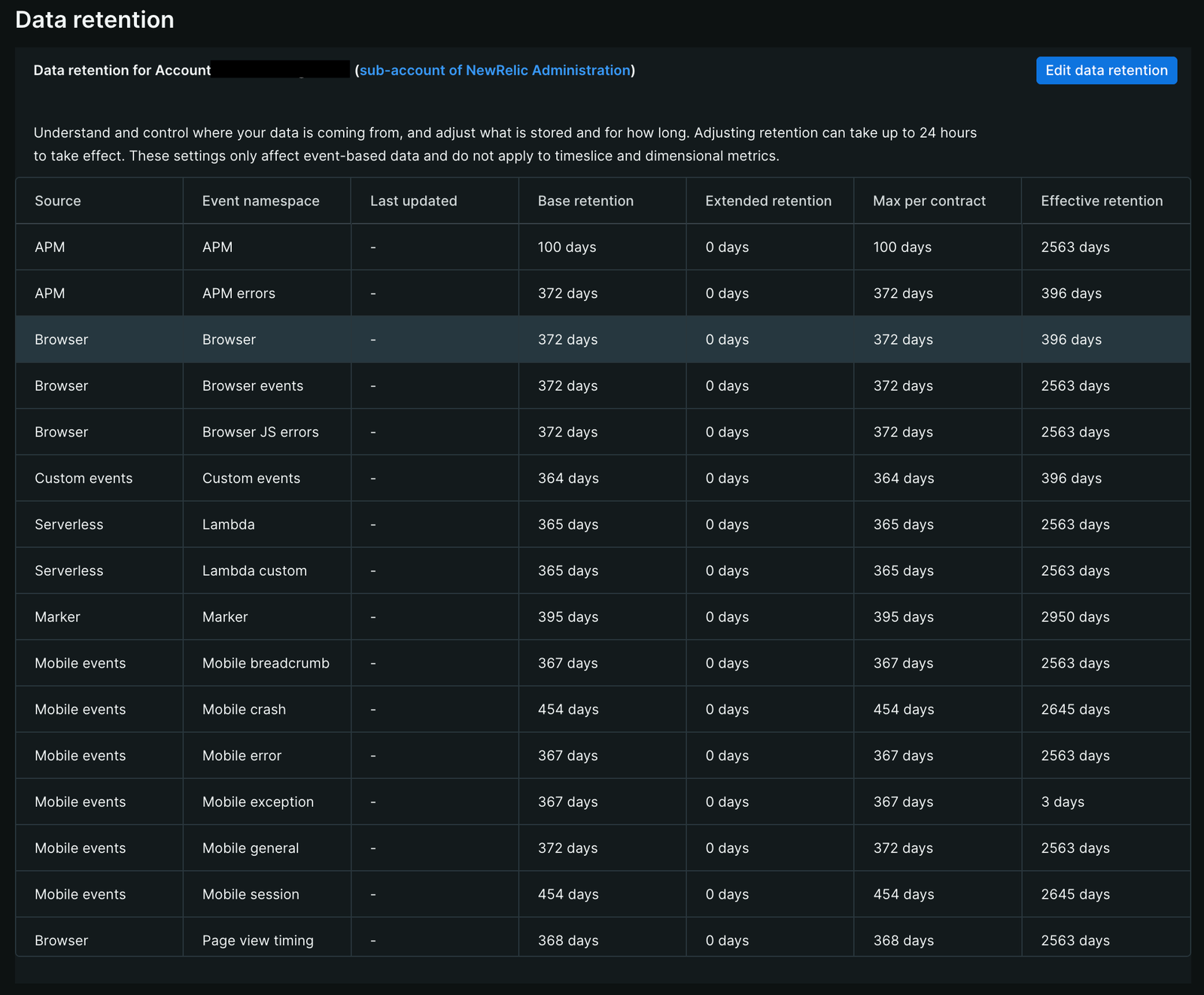
What the marketing page leaves out is how short the default memory is. On the original data option, APM data, browser data, distributed traces and Lambda data are kept for 8 days. Logs and custom events get 30 days. Only infrastructure integrations (13 months) and synthetics (395 days) are long. If you want to compare this week's latency with last month's release, you need Data Plus (98 days for APM, 120 for logs) or extra retention at $0.05 per GB per month for each 30 days, applied to every data type at once, not just the one you care about.
The AI features are a third meter
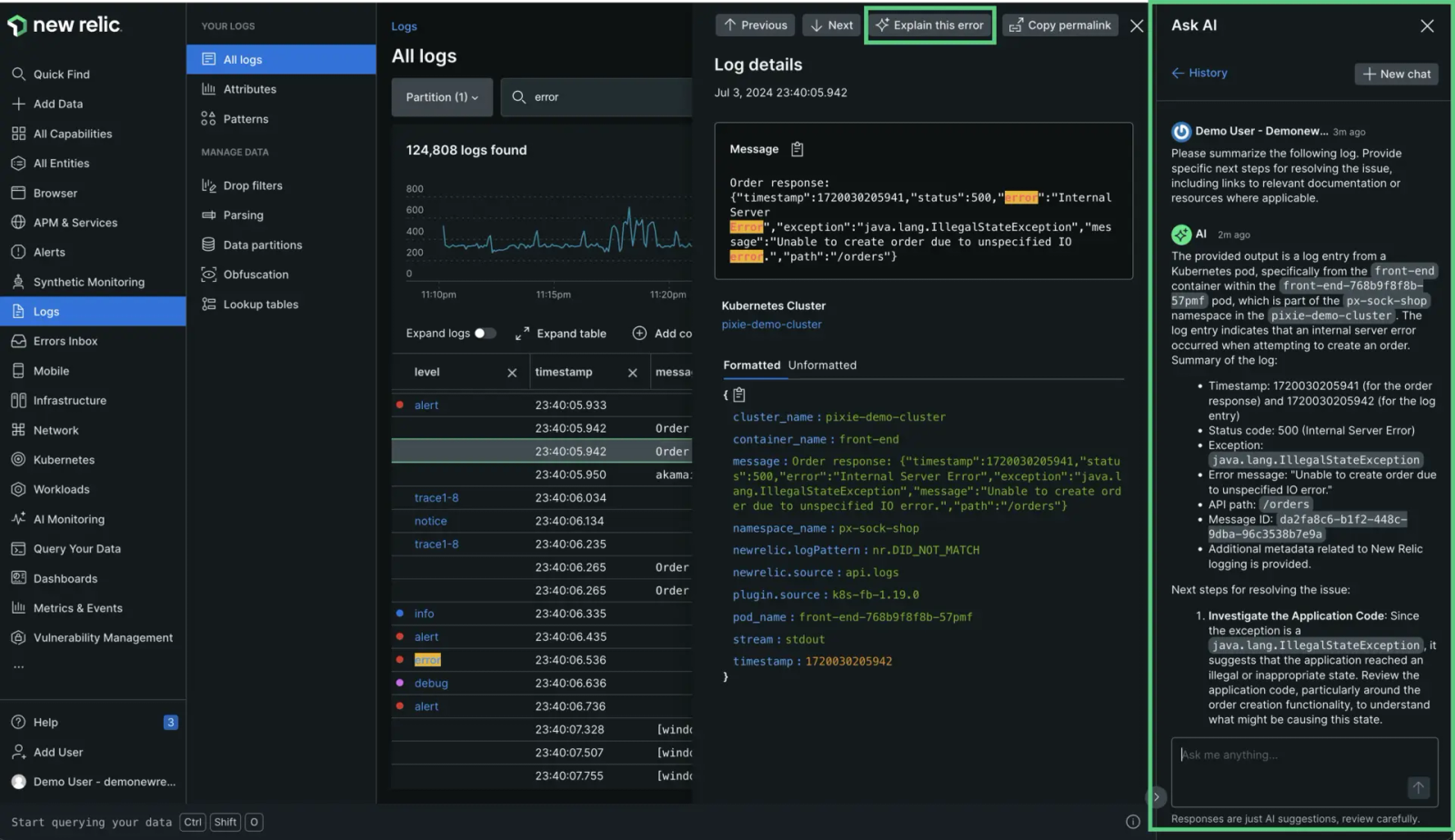
This is the change in 2026 that most reviews haven't caught up with. New Relic AI (the assistant that explains errors and writes NRQL), Agentic AI, Transaction 360, Security RX, Live Archives and pipeline control all require the Advanced Compute add-on, billed at $0.60 per Advanced Compute Capacity Unit (EU accounts pay 1.15 times that). None of it is included in the $349 seat.
The detail to watch: New Relic's docs say basic users, the $0 ones, "can access Advanced Compute features and incur charges." A free viewer asking the assistant twenty questions a day costs real money. If you turn Advanced Compute on, set a budget alert first.
On the agent side, New Relic launched its Agentic Platform in preview on 24 February 2026, built on the Model Context Protocol, and an MCP server (called Ground Truth) that lets Claude Code, VS Code and Kiro query your telemetry directly. The MCP server is available on every pricing model.
Lock-in, leaving and support
Egress is free, and New Relic says so plainly. Getting your data out in bulk is another matter. Streaming export to Kinesis Firehose, Event Hub or Pub/Sub requires Pro or Enterprise and Data Plus. Historical export also requires Data Plus and caps each job below 200 million events, two jobs at a time. So a clean exit plan costs 50% more per GB for as long as you keep it running.
Commitments are stricter than the pay-as-you-go option suggests. Unused annual commitment funds lapse at the end of each year on the usage plan (the pricing page mentions rollover for up to 12 months on some contracts, so check which you signed), volume plans auto-renew at the same rates, and a commitment fee stays owed even if you stop using the product. Standard and Pro on pay as you go can be cancelled at the end of any month.
Support is tied to the tier. Standard gets the community forum and a two-business-day first response for everything, despite the pricing page's mention of ticketed support. Pro adds cases and chat, with a 2-hour response for P1 incidents. Enterprise adds phone and Slack and a 1-hour P1. Only P1 is covered around the clock on any plan.
Data can live in the US, the EU (+$0.05/GB) or Japan. FedRAMP Moderate and HIPAA eligibility are Enterprise-only and need Data Plus.
Verdict: who should buy it, who should skip it
Buy New Relic if you have many hosts and few people. A startup with one or two engineers pays nothing up to 100 GB and gets full APM, tracing and session replay that competitors charge for per host. A team of five on Standard, running a large container fleet, pays a few hundred dollars where Datadog would charge thousands.
Skip it if everyone in a big engineering team needs the full UI. Forty full Pro seats is nearly $14,000 a month before data, and at that point Datadog's per-host model is usually cheaper for a fleet of modest size. If you are happy with open-source tooling, Grafana Cloud has a free tier with 3 users and 14-day retention, and Pro starts at $19 a month. If all you really need is error tracking, Sentry does that for far less, and Better Stack covers uptime and logs on one bill. Raygun is the closer APM alternative on smaller budgets.
Whichever way you go, the rule is the same: the free tier stops cold at 100 GB, AI features bill separately, and every full seat left on a colleague who only reads dashboards is $349 a month thrown away.
Ready to try New Relic?
Visit the official website to see the latest plans, pricing, and special offers.
Get Started - New Relic* Affiliate link - we may earn a commission at no extra cost to you.