Raygun Review: Error Tracking, RUM and APM on Three Separate Meters
Raygun review: crash reporting from $40/mo for 100K errors, RUM and APM priced separately, unlimited seats, no free plan. Prices checked Sep 2026, plus Raygun vs Sentry.
Expert Review

Three meters, one invoice
Most error trackers sell you one thing and bolt the rest on. Raygun sells three products - Crash Reporting, Real User Monitoring (RUM) and APM - and each one runs on its own meter: errors, sessions and traces. You can buy one, two or all three, and every plan throws in a few thousand free units of the other two so you can see what they would show you.
The company behind it is based in Wellington, New Zealand, with a US entity in Cary, North Carolina. It says it has processed more than 50 billion errors for over 100,000 developers in 120+ countries, and its customer stories include Olo, Pushpay, Schneider Electric and Carnival. It is not a newcomer chasing the AI wave, though it has added some AI features, covered below.
The question this review answers is narrow: is Raygun worth $80 a month for 200,000 errors when Sentry's Team plan starts at $26 for 50,000? For some teams, clearly yes. For a solo developer, clearly no.
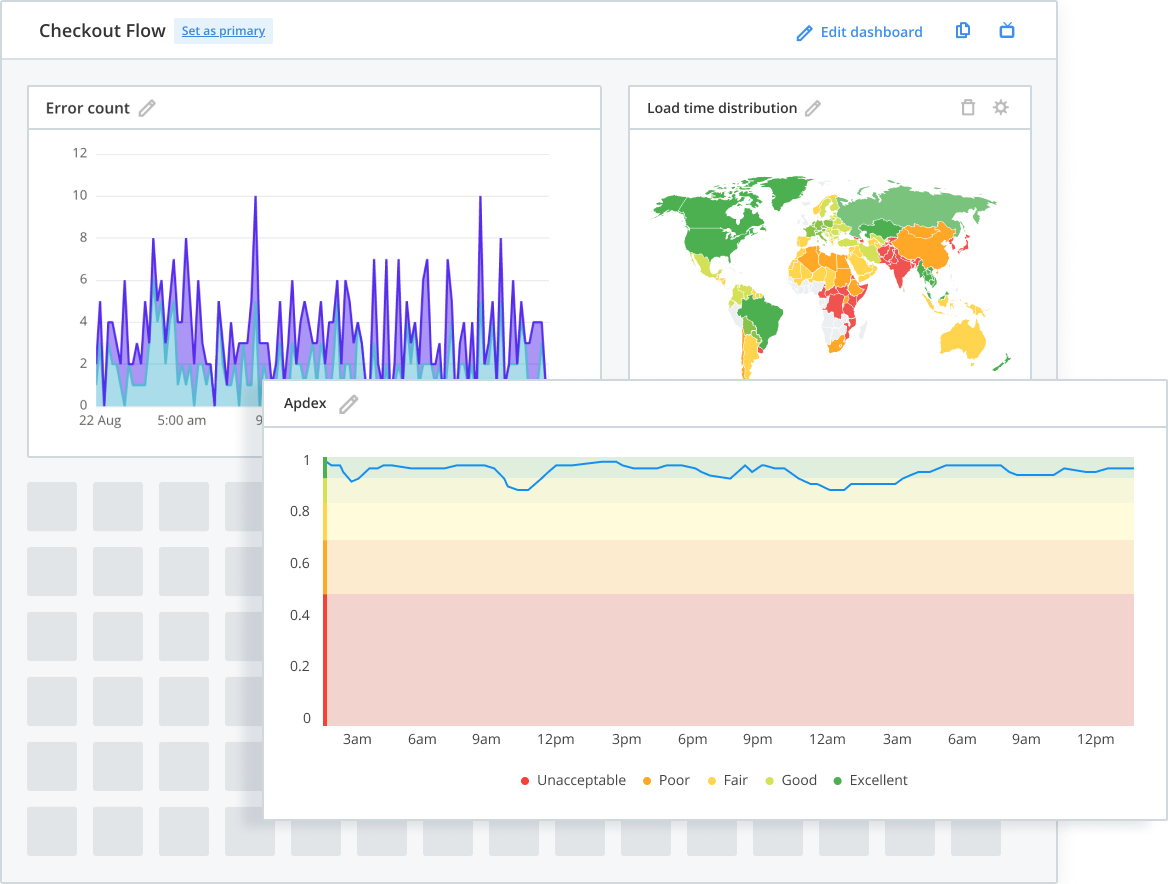
Pricing, meter by meter
All prices below are USD, checked on raygun.com/pricing on 29 Sep 2026. Annual billing is advertised as "save 33%", and the gap is real: $40 versus $60 a month on the entry plan.
| Plan | Crash Reporting | Real User Monitoring | APM |
|---|---|---|---|
| Basic | $40/mo annual ($60 monthly), 100K errors | $80/mo annual ($120 monthly), 100K sessions | $80/mo annual ($120 monthly), 100K traces |
| Team | $80/mo annual ($120 monthly), 200K errors | $160/mo annual ($240 monthly), 200K sessions | $160/mo annual ($240 monthly), 200K traces |
| Business | $400/mo annual ($600 monthly), 1M errors | $800/mo annual ($1,200 monthly), 1M sessions | $800/mo annual ($1,200 monthly), 1M traces |
| Enterprise | Custom quote | ||
| Overage | $0.001 per error | $0.002 per session | $0.002 per trace |
| Retention | 180 days | 60 days | 30 days |
The overage line is where the budget goes wrong. On the Team plan your reserved errors cost $0.40 per thousand. Anything past 200,000 is billed on demand at $1.00 per thousand - two and a half times the reserved rate. One bad deploy that throws an extra 300,000 errors adds $300 to that month. Raygun sells Usage Capping to stop this, but it is a $40/month add-on and only offered on Team, Business and Enterprise, so the Basic plan has no cap at all. Reserved volume can be topped up in blocks of 50,000, and the pricing page states plainly that refunds for unused subscriptions are not available.
The free cross-product units scale with the plan: a Crash Reporting subscription includes 5,000 APM traces and 5,000 RUM sessions on Basic, 10,000 each on Team and 50,000 each on Business. RUM and APM plans each include 5,000 errors and 5,000 units of the other product. Enough to evaluate, not enough to run production RUM on anything with real traffic.
Two things every plan gets that competitors often meter: unlimited apps and unlimited team members. There is no per-seat charge anywhere on the page. SAML SSO is included on Business and Enterprise and costs $50/month as an add-on below that.
There is no free plan. The trial is 14 days of unlimited monitoring with no credit card, and data sent between the trial ending and the account being activated is not processed - so a lapsed trial is a gap in your error history, not a grace period.
Crash Reporting is the core
Error tracking is what Raygun started with, and it shows in the SDK list. There are official clients for JavaScript (React, Vue, Angular, Next.js, Nuxt, Svelte and more), Node.js, Python, Ruby, PHP with Laravel, Java and Spring Boot, Go, Elixir, Android, Apple platforms, Flutter, React Native, Unity, C++ and even ColdFusion and PowerShell. The .NET coverage is the deepest of the lot: .NET 6+, Framework, ASP.NET, Blazor, MAUI, Aspire, WPF and WinForms.
Symbolicated stack traces and source maps are unlimited on every plan, including Basic, as are deployment tracking and search by customer ID. That last one matters more than it sounds: when a support ticket comes in from a named user, you can pull up every error that user hit, and on RUM, the pages they visited in order. Raygun's open-source CLI (MIT-licensed, written in Dart, 1.0 in February 2025) handles uploading source maps, symbols and ProGuard mappings from a build pipeline.
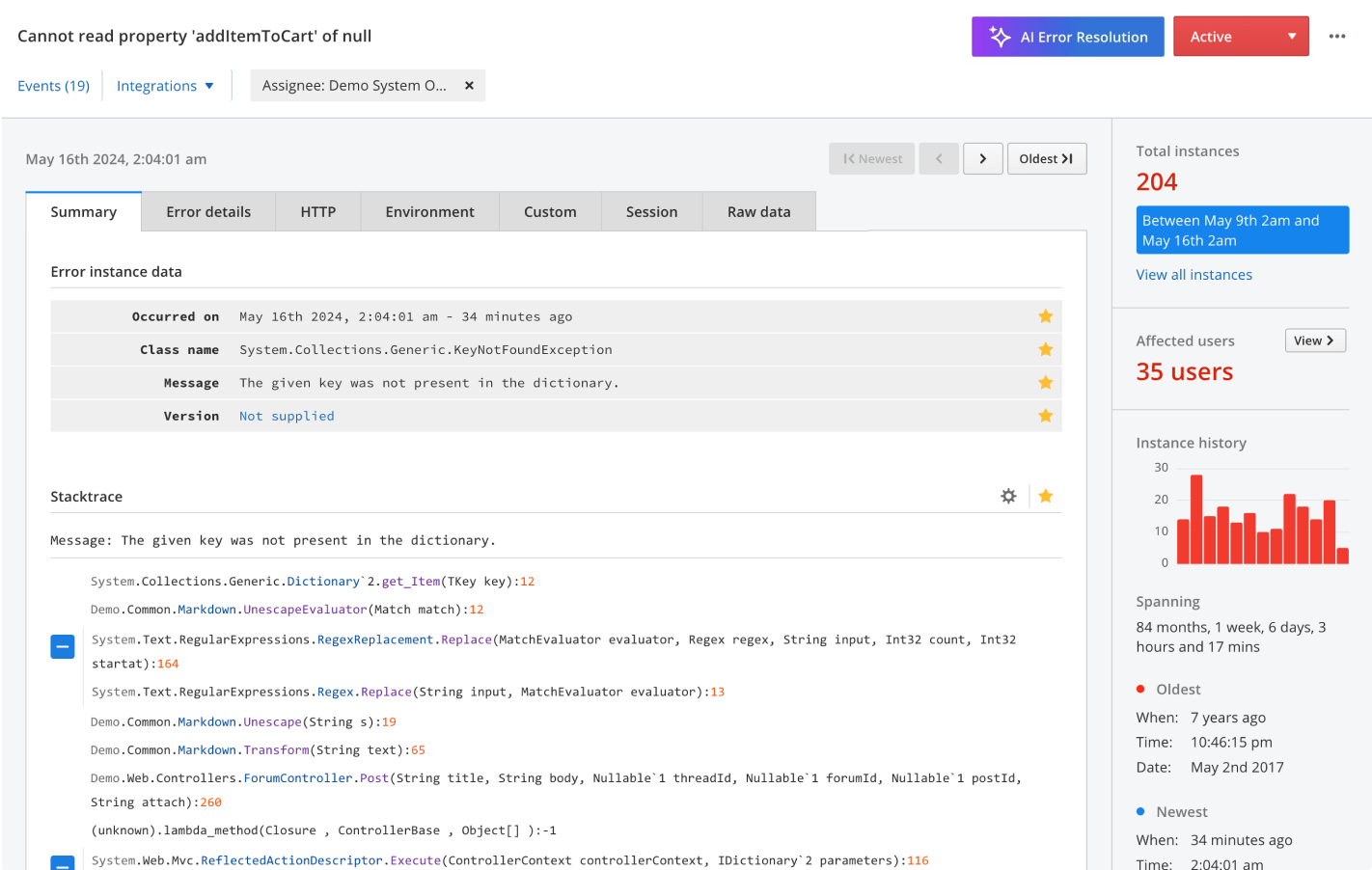
AI Error Resolution and the MCP server
AI Error Resolution sends a detailed prompt about an error to an LLM with one click and returns a suggested fix. The catch is in the setup: it connects to your own OpenAI or Azure OpenAI account with your own API key. Raygun makes one API call per request and your provider bills you for it, so the feature is listed on every plan but is never free to use. Raygun says it does not train models on your data.
More useful for teams already working in AI editors is the remote MCP server, announced in October 2025. It lives at https://api.raygun.com/v3/mcp, authenticates with a personal access token, and Raygun's April 2026 setup guide covers Cursor and Codex. With it connected, an agent can read live error groups and stack traces instead of you pasting them in.
APM and RUM: where coverage stops
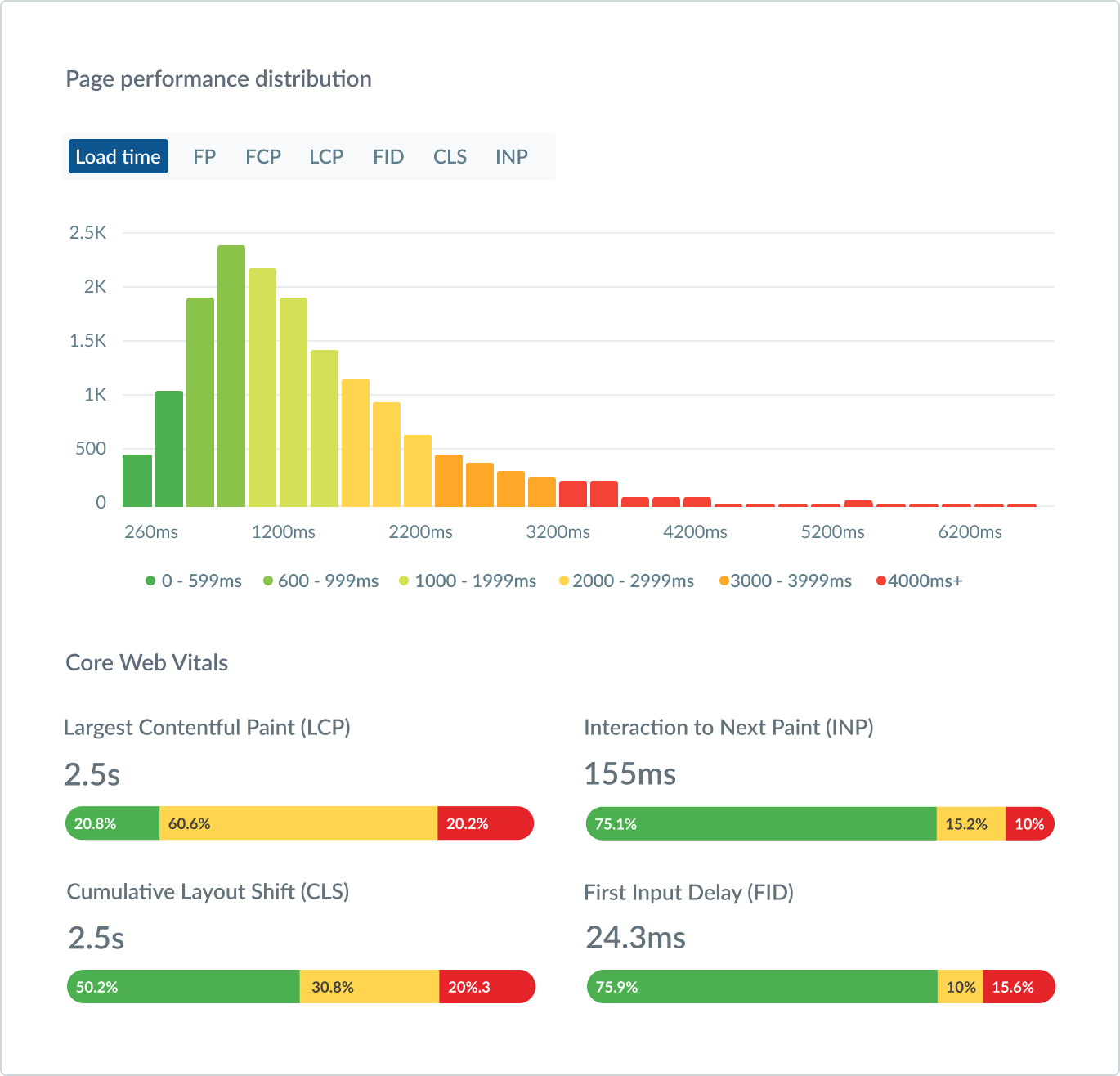
Real User Monitoring tracks page load times, sessions and the page-by-page path each user took, tied to the same customer IDs as your errors. For a front-end team it closes the loop between "this user reported it was slow" and "this is the request that was slow".
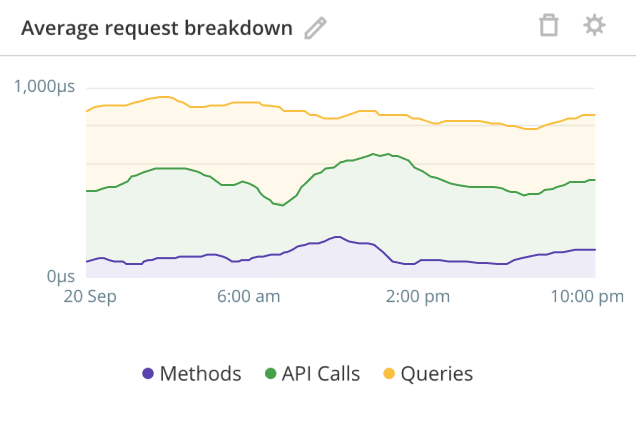
APM is the product with the sharpest limit. Agents exist for .NET, Node.js and Ruby - nothing for Python, Java, Go or PHP. If your backend is Django or Spring, Raygun can catch its errors but cannot trace its requests, and you will need a second tool for that. On the stacks it does support, the work is current: APM Agent 3.0.14 added ARM64 support in August 2026, and Agent 3.1, released 8 September 2026, added async traces and ASP.NET Core async request correlation. The request breakdown splits response time between your own methods, outbound API calls and database queries, and an issues list flags patterns such as N+1 queries.
A small detail that tells you where to look for news: Raygun's public changelog stopped at November 2024. Releases are now announced on the company blog.
What the pricing page does not lead with
Integrations beyond chat start at Team. Basic gets Slack and Microsoft Teams. Jira, GitHub, GitLab, Azure DevOps, PagerDuty and plain webhooks all require Team or higher. A two-person team on the $40 plan that wants errors to open GitHub issues is really looking at the $80 plan.
Your data lives in one US region. Raygun's GDPR page states that all data is stored in AWS US-EAST-1, and I found no EU region option. Raygun claims GDPR, HIPAA, CCPA and PCI compliance and will sign a HIPAA BAA, but an EU company with a data-residency requirement has nowhere to put its data except Virginia. I also found no SOC 2 report mentioned on its security pages, which some procurement teams will ask for.
Reviewers mention cost and search. On Capterra, Raygun averages about 4.4 out of 5 from roughly two dozen reviews. The complaints that recur are price for small businesses, an error list that becomes hard to search at high volume, and an interface some reviewers found slow to learn.
Raygun vs Sentry
Sentry is the comparison almost every buyer makes, and we cover it in our Sentry review. Per error at the entry level, the two are close. Raygun Basic works out to $0.40 per thousand errors ($40 for 100K, annual). Sentry Team, checked on sentry.io/pricing in September 2026, is $26/month annual for 50K errors, or $0.52 per thousand. Sentry Business is $80/month annual, the same money as Raygun Team.
The differences are elsewhere. Sentry has a $0 Developer plan for one user; Raygun has no free tier, only the 14-day trial. Raygun includes unlimited members on every plan, so a team of fifteen pays the same as a team of two. Sentry's APM-style tracing covers far more languages than Raygun's three. And Raygun's per-product pricing means you can buy error tracking alone without paying for tracing you will not use.
Verdict
Buy Raygun if you run .NET or Node.js, have more than a handful of developers who all need access, and want errors, real-user data and traces from one vendor on a meter you can predict. The Team Crash Reporting plan at $80/month annual is the sensible entry point, because it is the first tier with Jira and GitHub integrations and the first where Usage Capping is available. Add the $40 cap if your error volume spikes.
Skip it if you are a solo developer or a side project: Sentry's free Developer plan costs nothing and Raygun's cheapest plan is $480 a year. Skip it too if your backend is Python, Java or Go and you want tracing, or if your data must stay in the EU. For those, start with Sentry.
Ready to try Raygun?
Visit the official website to see the latest plans, pricing, and special offers.
Get Started - Raygun* Affiliate link - we may earn a commission at no extra cost to you.