Jensen Huang Resigns as Nvidia CEO: Colette Kress Steps In as Interim Chief
Jensen Huang resigned as Nvidia CEO on November 12. What the 8-K says, who runs Nvidia now, what it means for GPU buyers and neoclouds, and what comes next.
News Report

What happened
Nvidia has had one chief executive since it was founded in 1993. After 33 years, it now has an interim one. Jensen Huang resigned as president, CEO and member of the board, effective immediately, according to the company's 8-K filing, which records that the board accepted his resignation on Wednesday, November 11, 2026. Nvidia announced it the next day.
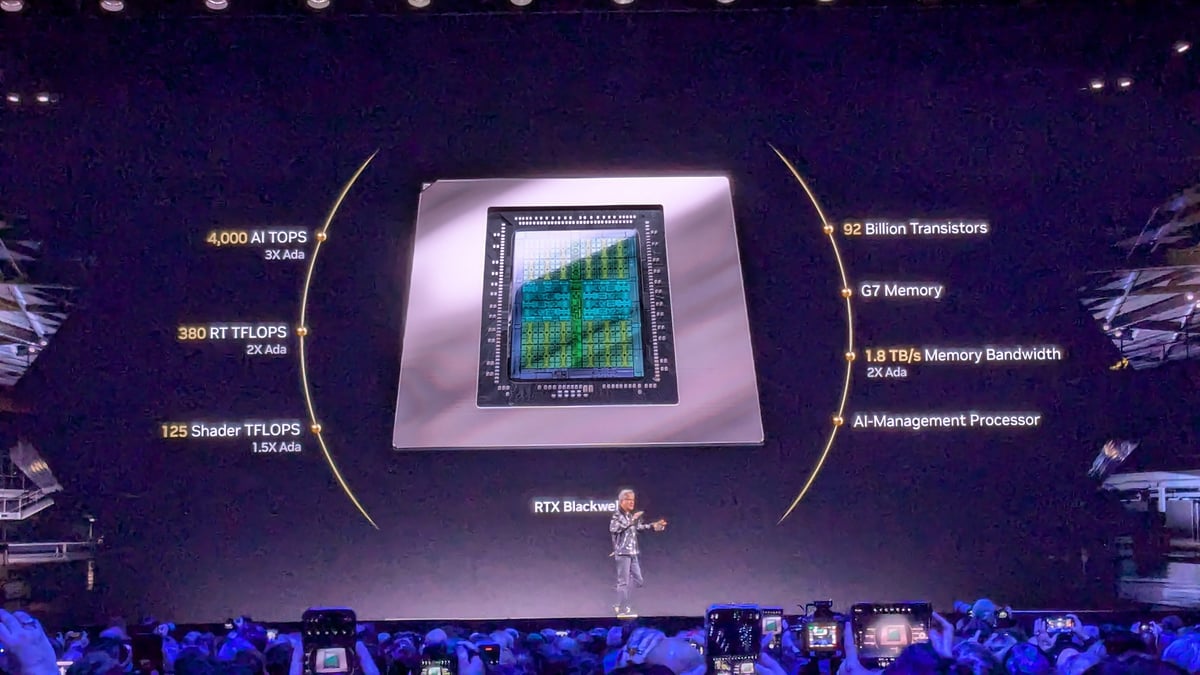
Huang presenting RTX Blackwell at Nvidia's CES 2025 keynote in Las Vegas.
The filing gives no reason. It contains no language about a disagreement with the company and says nothing about severance, equity or any continuing role for Huang, advisory or otherwise. He gave up his board seat too. The company's only words on him were brief: "The Board and the company thank Jensen for his immeasurable contributions to the company and the industry."
The market said more. Nvidia shares opened down more than 13% on November 12, briefly taking the company below $4 trillion in market value, then closed down 4.3% after touching a 52-week low, CNBC reported. Wednesday's close of $173.73 was already far below the $239.24 closing high of October 6, about $2 trillion of value gone from the peak, in what CNBC counted as a sixth straight weekly drop and the longest slump since 2012.
Who runs Nvidia now
Colette Kress, 59, executive vice president and CFO, is interim CEO. She keeps the CFO job as well until a permanent successor is named, and the filing mentions no change to her pay. Kress has run Nvidia's finances since September 2013, a period in which annual revenue went from $4.13 billion in fiscal 2014 to $215.9 billion in fiscal 2026, per Al Jazeera.

Colette Kress in a 2017 interview. Photo: SiliconANGLE theCUBE / Wikimedia Commons, CC BY 4.0.
The board also created a post it had never had. Harvey C. Jones, 73, a director since 1993 and a former CEO and executive chairman of Synopsys, becomes Nvidia's first board chair, and TechCrunch reports he will lead the search for a permanent CEO. Insiders and outsiders are both in the running.
Splitting the work two ways is a bigger change than it sounds. TechCrunch describes Huang's Nvidia as a flat organization with about 60 direct reports and no clear successor. Until this week he was one of 11 directors on a board with no chair at all.
"Our focus remains on serving our customers, partners, developers and shareholders," Kress said. Analysts have floated internal names, among them Ian Buck, Bryan Catanzaro, Michael Kagan and Bill Dally, but that is speculation and Nvidia has named no one. Wedbush's Dan Ives backs Kress for now ("To steady the ship, she's the one") but expects the permanent pick to be "probably someone from the outside", after roughly a year with an interim CEO.
What it changes for people buying compute
In the short run, the board says nothing changes. "The Board has full confidence in Colette and the leadership team, and we expect the company's operations, customer commitments and product roadmap to continue without interruption," Jones said in the company's release. Analysts mostly agree about the next two years. "We think the product roadmap is solidified through 2028," Jeremiah Buckley of Janus Henderson told CNBC, adding that "visibility is extremely high for 2027."
The doubt is about what comes after that. Cantor Fitzgerald's CJ Muse said the real question is how Nvidia keeps its technology roadmap on track over five years, and cut his price target from $350 to $250 while keeping an overweight rating. KeyBanc's John Vinh pointed to "a material increase in strategic, organizational, and execution risk."
The exposure is sharpest at the GPU clouds. Nvidia's July filing showed $36 billion in off-balance-sheet backstops for neoclouds and another $20 billion tied to data center leases, according to CNBC, and the company put $2 billion into CoreWeave in January and $2 billion into Nebius in March. It also has a deal to supply Thinking Machines Lab with at least 1 GW of Vera Rubin systems. On November 12, CoreWeave fell nearly 12%, Nebius 17% and Super Micro 12%, while AMD rose about 3% and Broadcom more than 5%. A multi-year capacity contract signed with a neocloud this month is, in part, a bet that Nvidia's commitments to that provider outlast the change at the top. It is fair to ask the provider how those commitments are written.
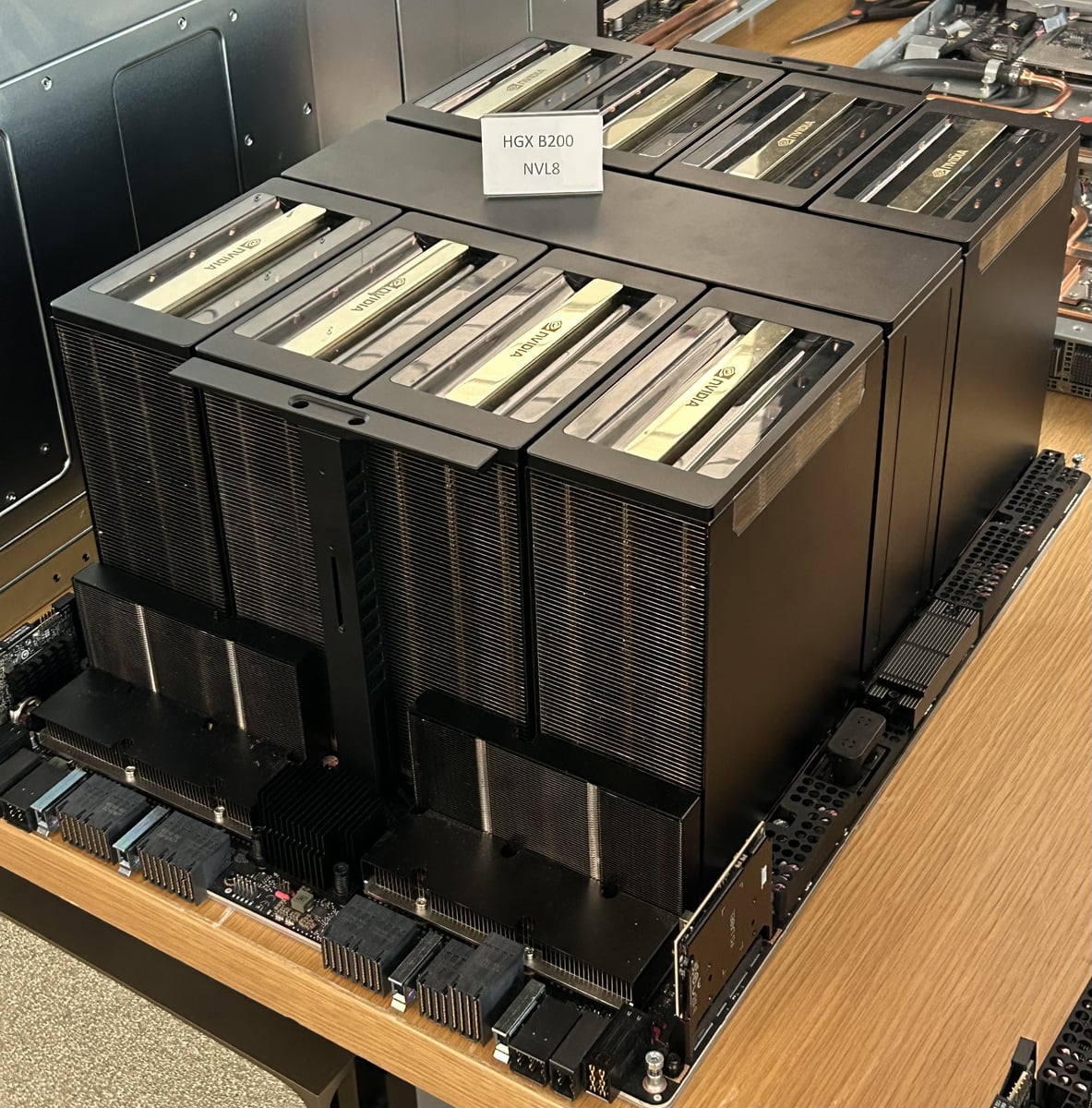
An Nvidia HGX B200 board, the kind of hardware neoclouds rent out by the hour. Photo: Pokiiri / Wikimedia Commons, CC BY-SA 4.0.
Switching suppliers is not a quick way out. AMD's Helios racks are already deployed at Anthropic, Meta, Microsoft, OpenAI and Oracle, but Futurum's Daniel Newman said AMD "couldn't supply" a sudden swing in demand. Teams with Blackwell or Vera Rubin orders in flight have nothing in the filings telling them to change course. Teams already weighing a second supplier can add governance risk to the list.
The reports behind the resignation
Nvidia has not said why Huang left. Press reports have filled the gap, and they are reports, not findings. According to the reported timeline, Huang told staff in an internal message on Sunday, November 8, that he had been "unfaithful to my wife" and apologised. The board said it still had confidence in him and opened an independent investigation into reports that he had been the target of a foreign intelligence effort. On November 10 the independent directors said they had hired Joon H. Kim, a former acting U.S. Attorney for the Southern District of New York, and the law firm Wachtell, Lipton, Rosen & Katz to run it. On November 11, Reuters and the New York Times reported a relationship with a senior executive who reported to him. The board met that day and accepted his resignation.
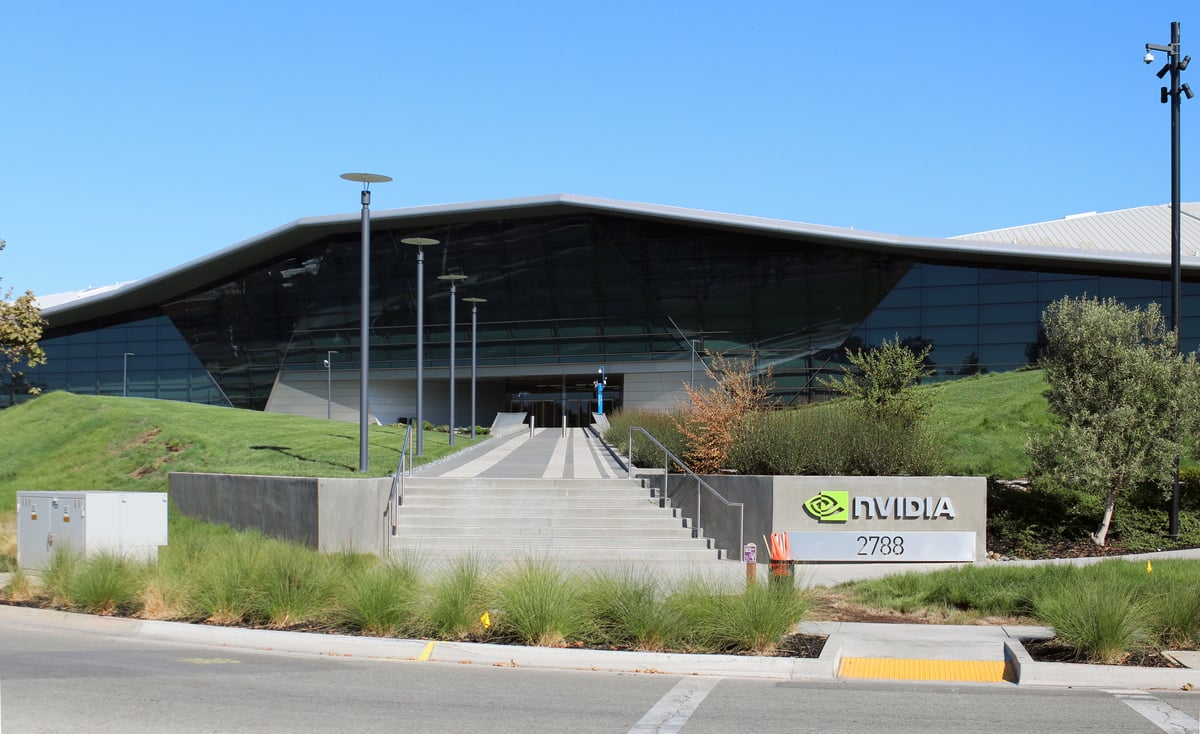
Nvidia's headquarters in Santa Clara, California. Photo: Coolcaesar / Wikimedia Commons, CC BY-SA 4.0.
The intelligence question concerns a woman whom U.S. officials reportedly believe worked for Chinese intelligence. Those claims come from unnamed officials via the press. Al Jazeera notes that "there is no established evidence he knowingly assisted Beijing or that company secrets were compromised," and Nvidia's board has said it has no reason to believe national security was compromised. Chinese customers were about $7.9 billion of Nvidia's $96.22 billion in second-quarter revenue, roughly 8%, according to TechCrunch.
What's next
Nvidia reports third-quarter fiscal 2027 results on Tuesday, November 17, at about 1:20 p.m. PT, with the conference call at 2 p.m. PT, so Kress will present as both CFO and interim CEO. Most of that quarter's revenue was settled by orders placed months ago, so it says little about the change. What is worth listening for is whether management repeats the roadmap dates on the record.
House Foreign Affairs Chair Brian Mast says Huang "has agreed to come", with the date still being negotiated and the hearing likely under oath and before Thanksgiving. Senate Banking Chair Tim Scott has asked Huang to testify on December 3 and Commerce Secretary Howard Lutnick on December 10. Senator Ron Wyden and Representative Richard Neal have opened an investigation into the approvals for H200 chip exports.
Rosen Law has filed a proposed shareholder class action. Huang's stake, worth roughly $140 billion, is mostly held in trusts co-owned with his wife, which lawyers told CNBC makes a fast sale harder. It amounts to about 3.5% of shares with no supervoting rights, per TechCrunch, so he has no say over who succeeds him.
As of November 14, 2026, the board has named no candidates and set no timeline for the search.
Lead photo: Jensen Huang at Stanford on April 30, 2026, by Anders Eidesvik / Wikimedia Commons, CC BY 4.0.