OpenAI Names Its Next Model Family 'Astra' — and Backs It With Ten Solved Math Problems
OpenAI unveiled its Astra model family on August 1, 2026 with ten claimed math proofs formalized in Lean, and confirmed it is the first model held for a US government pre-release review.
News Report

What OpenAI announced
On August 1, 2026, OpenAI put a name to the model it has been hinting at for months: Astra, described as its next major model family. The reveal did not come with the usual launch-day benchmark slide. Instead, researcher Noam Brown posted ten claimed solutions to long-standing problems in mathematics and theoretical computer science, each with a manuscript, a machine-checkable certificate, and a walkthrough of how the model got there.
There is no public release. You cannot sign up for Astra, and OpenAI did not give a date. What it gave was evidence, and the choice of evidence is the story.

Ten problems, one artifact
An internal version of Astra generated new results on ten problems that, by OpenAI's account, had seen no progress on the main result for at least a decade and in several cases far longer. The list spans high-dimensional geometry, coding theory, arithmetic circuit complexity, group theory, operator algebras, quantum complexity, lattice cryptography, and extremal combinatorics. One of the claimed results is a proof involving non-sofic groups, a corner of pure math where open questions tend to stay open.
The detail that matters most to anyone weighing the claim: the proofs were formalized in Lean, a proof assistant that mechanically checks every logical step. A Lean certificate does not tell you whether a problem was worth solving, but it does close off the usual failure mode of AI math claims, which is a confident argument with a broken step in the middle. OpenAI also put a price on the run. Generating all ten solutions cost roughly $2,000 at API rates, a figure Brown used to argue the results would scale with more compute rather than less.

What Astra actually is
Astra is not a single model in the way GPT-4 was. Reports describe it as a system that coordinates multiple agents working the same problem for hours or, on the hardest tasks, days. The pitch is a model that can make a plan, run its own tests, notice that a branch failed, revise, and keep going without a person nudging it at every step. According to The Decoder, Astra joins existing internal families OpenAI calls Sol, Terra, and Luna.
That design is also where the honest caveats live. Multi-agent setups are known to compound their own errors over long runs, and the coordination itself burns compute. A system that thinks for a day is a system that can spend a day going down the wrong road. The math results are the counter-argument OpenAI wants you to hold in mind: proof that, at least on formally verifiable problems, the long-horizon approach produced something checkable.
Held back by a government review
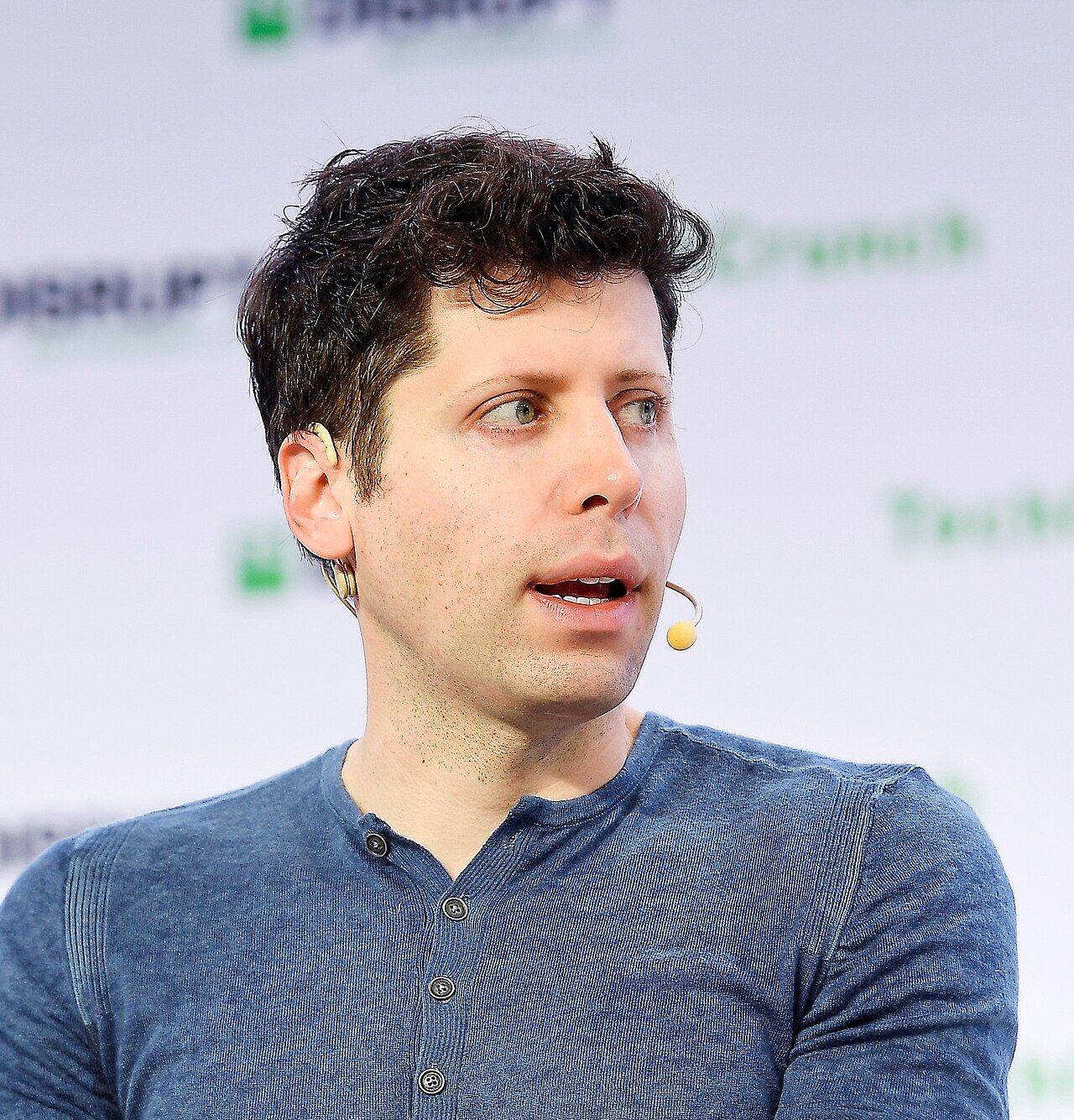
The reason you cannot try Astra is not that it is unfinished. It is the first model set to run through a new US pre-release review process that requires federal sign-off before a public launch. CEO Sam Altman has already demoed the system to policymakers in Washington. In practice, the most capable model OpenAI has described is now sitting behind a government gate, and the company is using its own launch to show what that gate is holding.
That is a genuine shift. Every prior frontier model shipped first and drew scrutiny second. Astra reverses the order, which makes the timeline dependent on a regulator rather than on OpenAI's own release calendar.
Where the doubt is
Some mathematicians were impressed. Thomas Bloom of the University of Manchester called the constructions "big." Others are waiting, and their caution is reasonable. Ten Lean-verified results are ten data points, not a track record, and the announcement came from the company that stands to gain from the framing. The problems were chosen by OpenAI, the compute was OpenAI's, and independent researchers have not yet had time to poke at the manuscripts or ask whether a human in the loop shaped the winning attempts.
None of that makes the proofs wrong. Lean either checks out or it does not. But "the model solved ten famous problems" and "the model can do original research" are different claims, and only the first one has evidence attached today.
What happens next
OpenAI has said it wants a research-intern-level system by September 2026 and a fully autonomous AI researcher by early 2028. Astra is the company positioning itself against those dates. The near-term question is narrower: when the government review clears, who gets access, at what price, and under what limits. Until then, the ten proofs are the only part of Astra anyone outside OpenAI can actually inspect.
The larger thing to watch is whether the pre-release review becomes the template. If the most capable models now reach the public only after a federal check, the launch cadence that has defined the last three years of AI changes shape. Astra is the first test of that, and it is being run in public one proof at a time.

Read the original source
Head to the original source for the full announcement and complete details.
Read Original Source