Paddle Review 2026: Is the Merchant of Record Worth 5%?
A 2026 review of Paddle's merchant-of-record billing: the 5% + 50¢ fee, what global tax handling actually removes from your plate, and when Stripe is cheaper.
Expert Review

What Paddle actually sells you
Most payment companies sell you a card processor. Paddle sells you a legal buffer. When a customer in Berlin buys your app, they are not buying from you: they are buying from Paddle, which then pays you. That single reversal is the whole product.
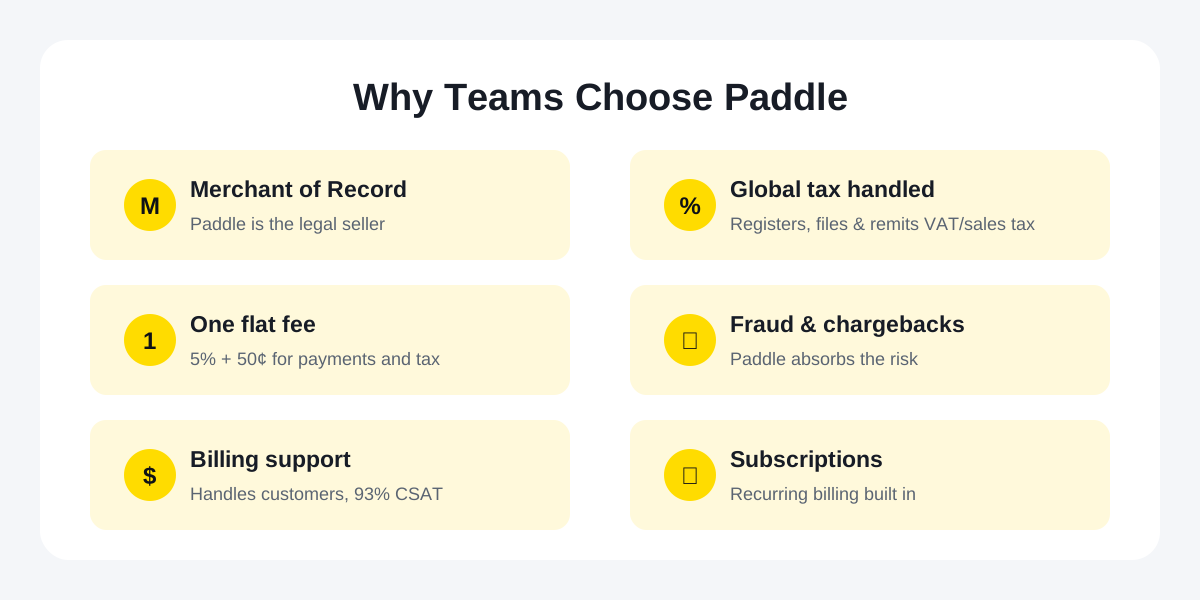
Because Paddle is the seller of record, it owns the messy parts of an international sale. It collects the money, applies the right VAT or sales tax, files the returns, handles the chargebacks, and answers the "where is my invoice" emails. You get a payout and a dashboard. It is built for software and SaaS, not physical goods, and that focus shows in the billing engine, which does subscriptions, trials, proration and dunning without an add-on.
The fee, and what it swallows
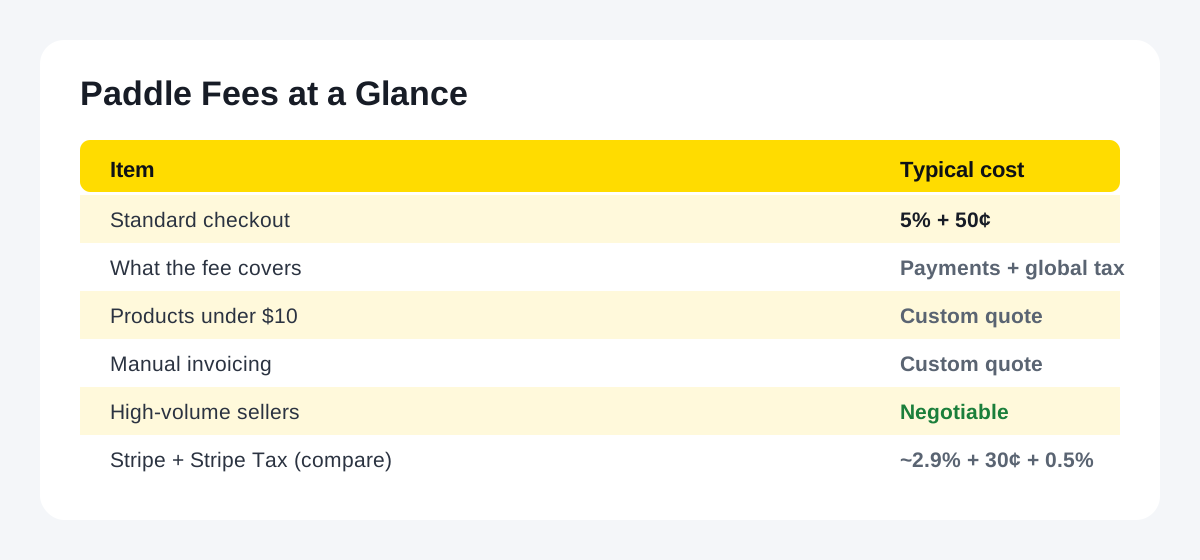
Checked on Paddle's pricing page in January 2026, the standard rate is 5% + 50¢ per checkout transaction. There is no monthly fee, no migration fee, and no separate charge for tax filing or fraud tools. Everything is folded into that one line.
That "everything" is the part worth reading twice. The 5% covers:
- Payment processing across cards, PayPal, Apple Pay and local methods.
- Global tax registration, calculation, filing and remittance in every jurisdiction you sell to.
- Subscription billing with trials, upgrades, proration and failed-payment recovery.
- Fraud and chargeback handling, since the disputes are legally Paddle's, not yours.
- Buyer support for billing questions, with a stated 93% CSAT.
Two caveats hide in the fine print. Products priced under $10, and anything needing manual invoicing, fall outside the flat rate and require a custom quote. High-volume sellers can negotiate down from 5%. If you are doing seven figures, you should.
The tax problem it removes
Here is the thing a first-time SaaS founder learns too late. The moment you sell software to a consumer in the EU, you owe VAT there, from the first euro, with no registration threshold. The UK, Australia, Canada, Norway, dozens of countries and a growing list of US states all run their own digital-tax rules. Handling that yourself means registering in each, tracking rate changes, and filing returns in currencies and languages you may not read.
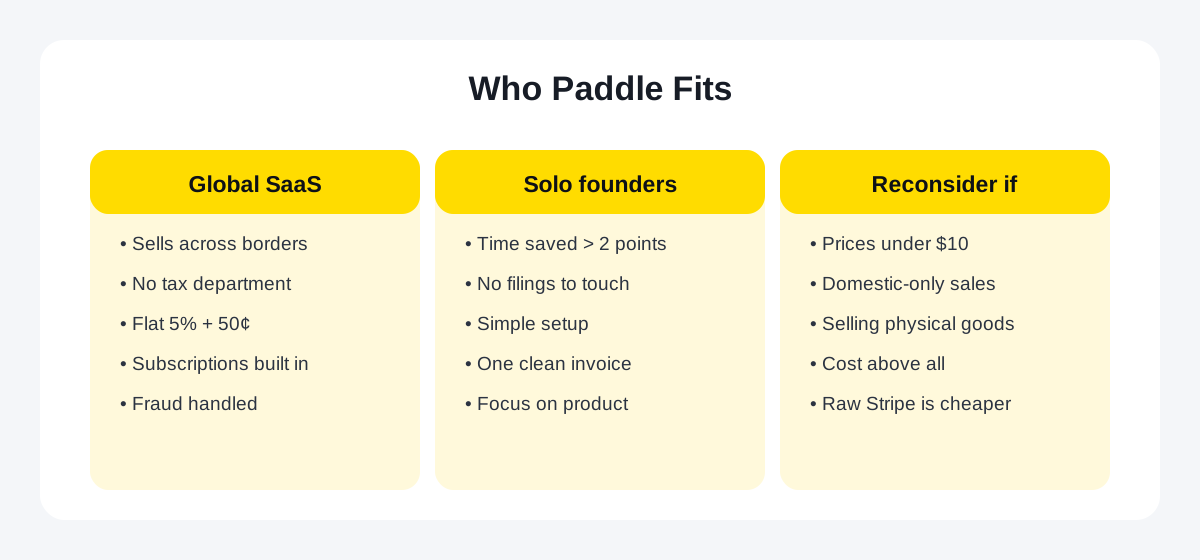
Paddle makes that entire column disappear. It is registered where it needs to be, it applies the correct rate at checkout, and it remits on your behalf. For a two-person company selling globally, this is not a convenience feature. It is the reason to be on Paddle at all, because the alternative is either ignoring the law or hiring someone to manage it.
The catch: you never see the raw customer relationship. Paddle is on the invoice, Paddle's name can appear on the card statement, and refunds route through its rules. If your brand needs to own every pixel of that flow, this is a real cost.
Paddle vs Stripe: the real trade
Stripe charges roughly 2.9% + 30¢ on US cards. Paddle charges 5% + 50¢. On a $50 sale that is about $1.75 to Stripe versus $3.00 to Paddle, so Paddle costs you an extra $1.25, or 2.5 points, on that transaction.
The honest comparison is not fee against fee, though. Stripe is a processor: brilliant, cheap, and it hands you the tax problem. To match what Paddle bundles you would bolt on Stripe Tax (0.5% per transaction on the low tier), then still register, file and remit in each jurisdiction yourself, or pay an accountant to. Once your sales are genuinely international, the gap narrows, and for a solo founder the time saved can be worth more than the two points.
Flip it around when your volume is high and your customers are mostly domestic. A US company selling to US buyers gains little from a merchant of record and pays a steep premium for it. That business should be on Stripe.
Where Paddle hurts
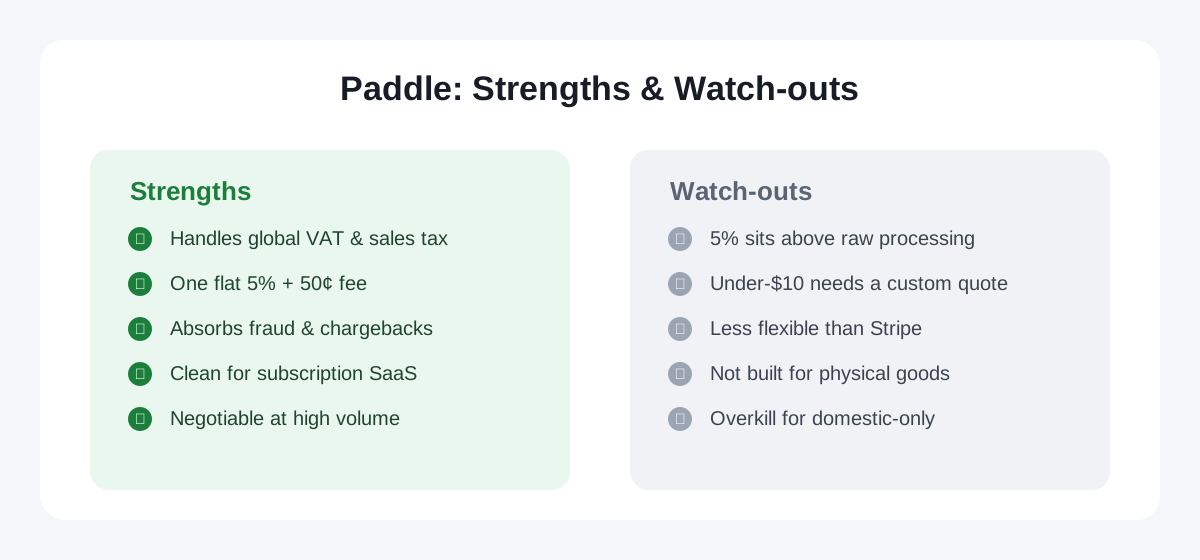
The 5% is the obvious pain and the fair one. The less obvious ones:
- Approval is not automatic. Paddle vets what you sell and rejects categories it deems high-risk. Some legitimate businesses get turned away or offboarded, and you only find out after building on it.
- You do not own the checkout data the way you would with Stripe. Customer records, dispute handling and refund timing follow Paddle's policies.
- Payout timing is Paddle's schedule, not instant settlement. For cash-flow-tight teams that matters.
- It is software-only. Selling physical products, services or anything needing shipping? Paddle is the wrong tool; look at Stripe or Airwallex.
Verdict
Paddle is right for a software or SaaS business that sells across borders and does not want a tax department. If you are a small team watching EU VAT and US sales-tax rules pile up, the 5% + 50¢ buys back the single most tedious part of running a global product, and it is worth it. The premium pays for itself in filings you never touch.
Skip it if your sales are high-volume and mostly domestic, where a merchant of record solves a problem you do not have and the two-point premium is pure cost. Skip it too if you sell physical goods or need total control of the customer relationship. For those, Stripe plus Stripe Tax, or a global account like Airwallex, will serve you better and cheaper.
Check current Paddle pricing and terms here.
Ready to try Paddle?
Visit the official website to see the latest plans, pricing, and special offers.
Get Started — Paddle* Affiliate link — we may earn a commission at no extra cost to you.