Platform.sh Review: Now Upsun Fixed - Git-Branch Environments, Euro Pricing and the Backups You Can't Download
Platform.sh review: the PaaS is now Upsun Fixed. Euro pricing from EUR 12.25, per-branch production clones, non-downloadable backups, support uplifts and who should pick Render or Railway instead.
Expert Review

You can no longer buy something called Platform.sh
Type platform.sh into a browser and you land on upsun.com. The redirect is permanent (a 301, checked on 2 October 2026), and it has been that way since 23 September 2025, when CEO Fred Plais announced that "Platform.sh is evolving and will become Upsun." Most of what search engines still show under "Platform.sh pricing" was written before that day.
Nothing was switched off. The Platform.sh product is still sold, "delivered by the same experienced team you rely on; Now called Upsun Fixed." Existing customers were told their "account, billing, and contract terms are unchanged," and the Fixed pricing FAQ says the plans "will remain fully supported, and nothing will change unless you choose to migrate." There is no end-of-life date.

The catch sits in the same FAQ. New features go to the usage-billed product, Upsun Flex (listed in the site menus and developer docs as Upsun Cloud), and the FAQ names three that Fixed will not get: autoscaling, zero-downtime deploys and AI config. So a Platform.sh review in 2026 is really a review of two products from one French company, Platform.sh SAS, which now trades as Upsun from Paris. It started as The Commerce Guys in 2009, spun out as Platform.sh in 2015, bought the Blackfire profiler in 2021 and says it has raised over $180 million.
What it does that Heroku doesn't: a full copy of production per Git branch
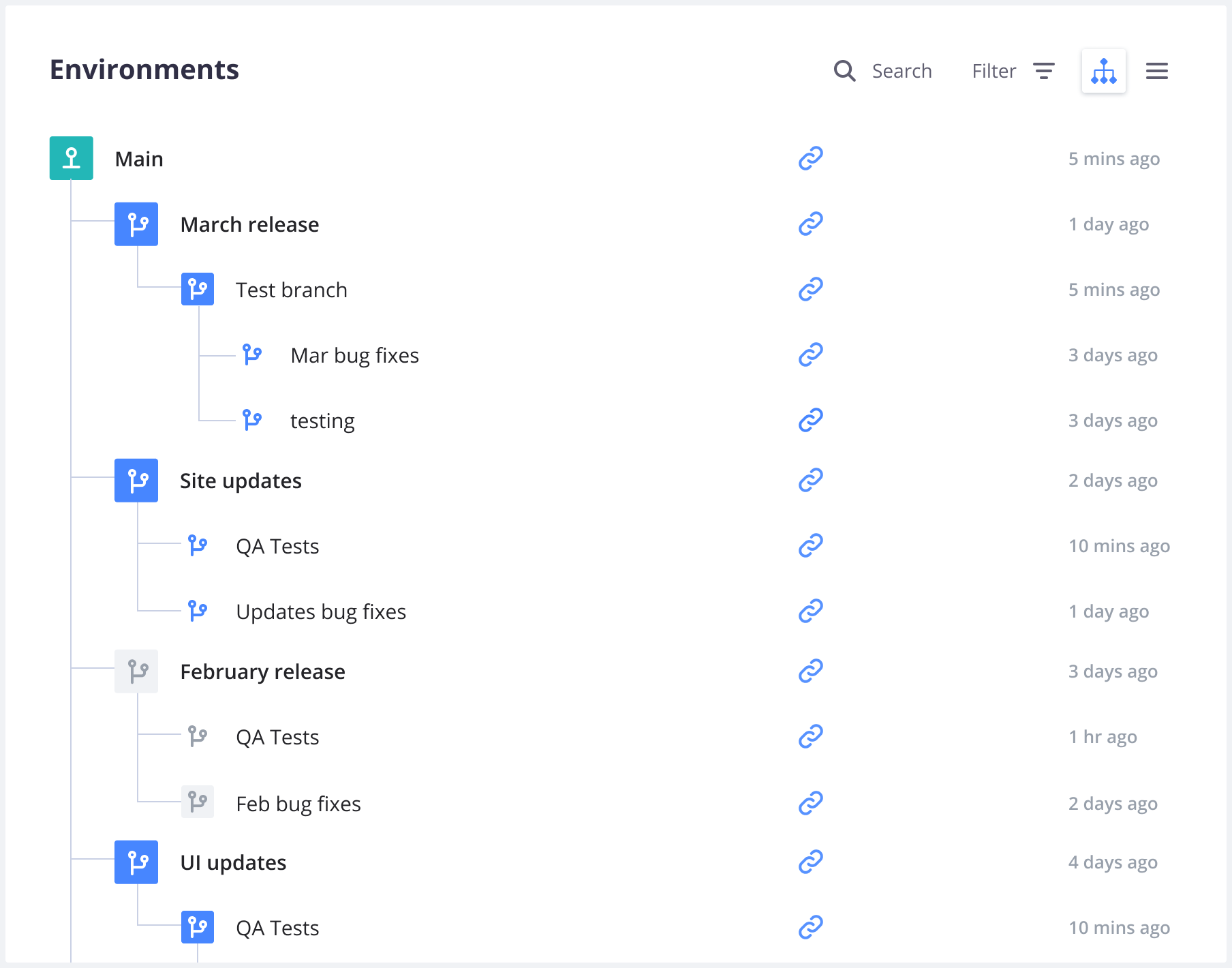
The reason agencies chose Platform.sh still holds. In Upsun's own words, "Each environment is linked to a Git branch and contains a replica of your applications and data." Push a branch and you get a running environment with a clone of the production database and uploaded files, not an empty schema waiting for seed scripts. For a Drupal, Magento or Symfony site, where the bug usually lives in the data, that is the feature you pay for.
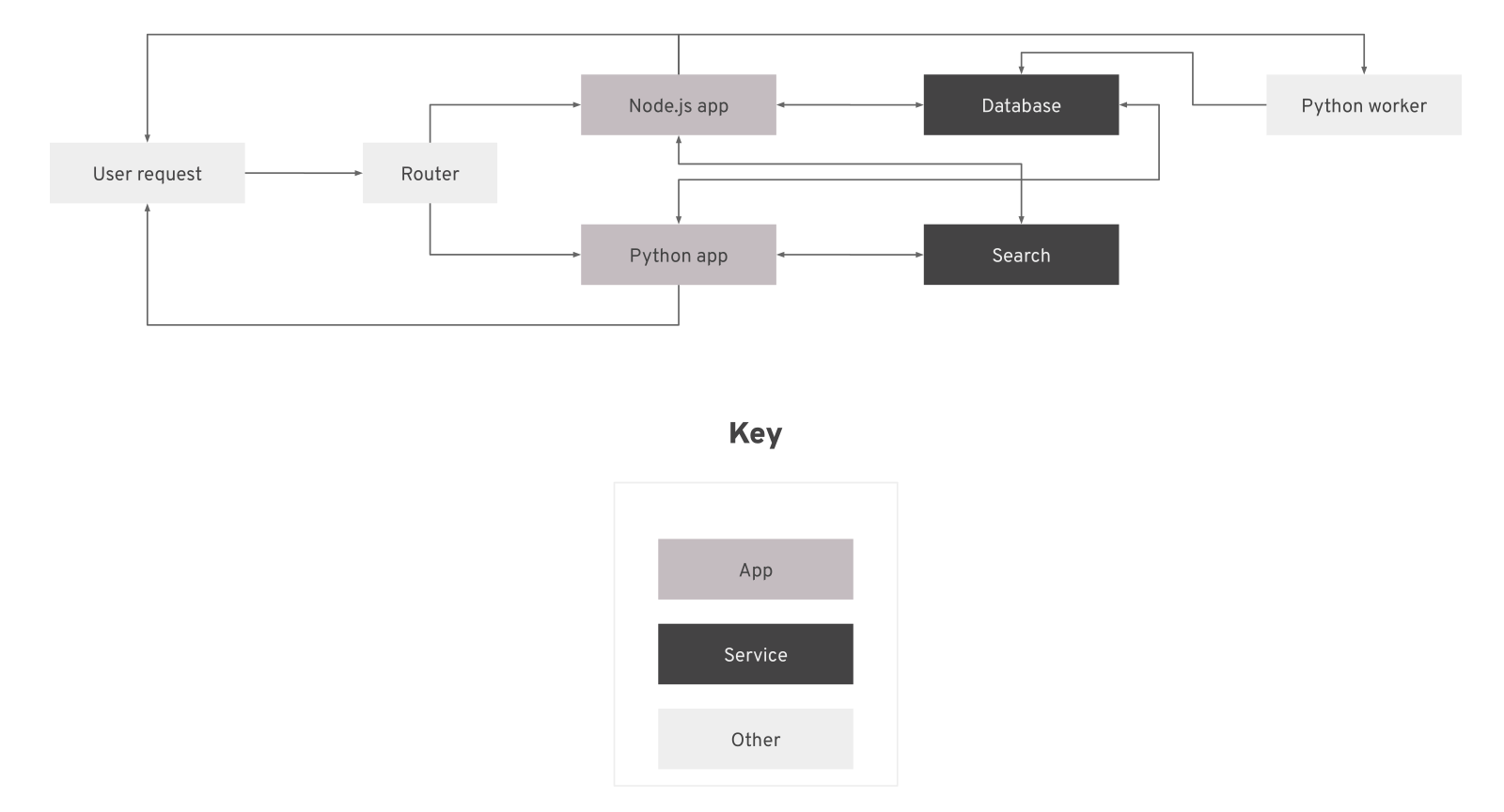
Everything is declared in YAML committed to the repository. On Fixed, services go in .platform/services.yaml, and the containers are rebuilt from those files on every push, with build and deploy hooks for the steps in between. One project can hold several apps behind a router: a Node.js front end, a Python API and a worker sharing one database and one search index.
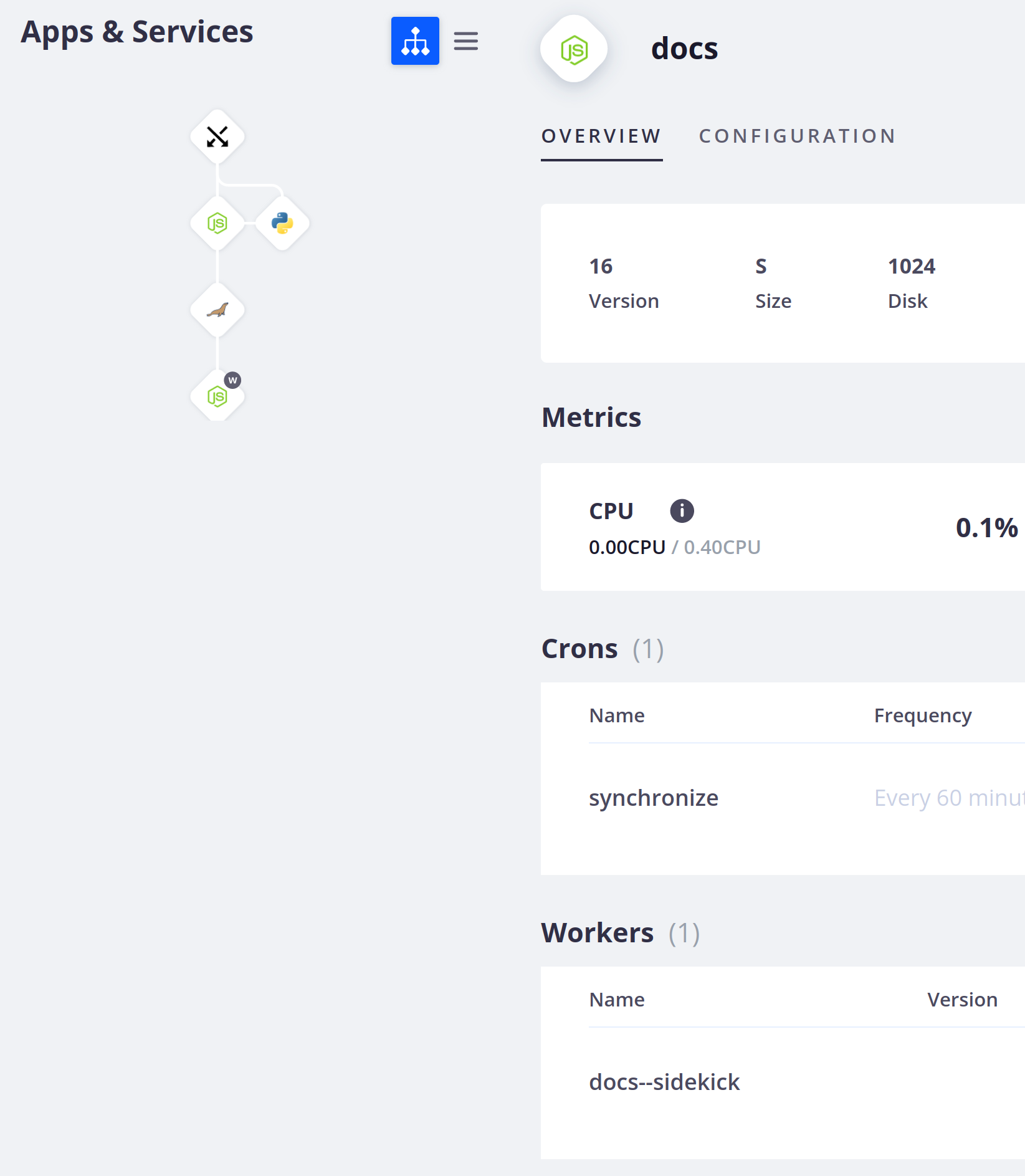
The catalogue is broad. PostgreSQL, MariaDB/MySQL, Redis, Valkey, OpenSearch, Solr, Kafka, RabbitMQ, Varnish, Memcached, InfluxDB, Headless Chrome and Vault KMS are standard; MongoDB and Elasticsearch are premium. Runtimes cover PHP, Python, Node.js, Ruby, Go, Java, Rust, Elixir and C#/.NET Core. Blackfire profiling for PHP and Python is built in.
Fixed deploys to AWS, Azure, Google Cloud and OVHcloud: 14 regions across Europe, the US, Canada and Australia. The Fixed region list has no Asia region at all, so for users in Singapore or Tokyo every uncached request travels to Australia, the US or Europe.
Pricing: two models, both in euros
All prices below were checked on upsun.com in October 2026. Upsun quotes in EUR first; Fixed prices exclude VAT.
Upsun Fixed (the old Platform.sh plans)
You buy a box of a set size per site, and every plan includes 5 GB of storage and 3 development environments.
| Plan | vCPU / RAM | EUR / month |
|---|---|---|
| Development (dev environments only) | - | 12.25 |
| Essential | 0.65 / 0.65 GB | 22.00 |
| Standard | 0.96 / 0.75 GB | 45.00 |
| Medium | 2.09 / 3 GB | 112.50 |
| Large | 4.11 / 6 GB | 224.75 |
| X-Large | 8.22 / 12 GB | 449.75 |
| 2X-Large | 16.44 / 24 GB | 899.25 |
High-memory variants add RAM for a few euros more (Standard High Memory is 2 GB for EUR 54). Extras: EUR 11 per user, EUR 16.50 per 3 more environments, EUR 2.20 per 5 GB of storage per environment, EUR 1 per GB of automated backups. Read one line in the docs before picking a tier: "Useful multi-app projects start at Medium." The multi-app feature that defines the product effectively costs EUR 112.50 a month.
Upsun Flex / Cloud (pay per second)
Here you pay a EUR 9 project fee and EUR 10 per user each month, then for what you allocate. Application containers cost EUR 0.033 per shared CPU-hour and EUR 0.013 per GB of RAM per hour; service containers cost EUR 0.049 and EUR 0.020. Disk is EUR 0.49 per GB per month, billed per environment. Each project gets 10 GB of egress and 500,000 requests a month, then EUR 0.03 per GB and EUR 1 per 100,000 requests.
My own arithmetic for a small production app, using those rates over 732 hours: 0.5 CPU and 1 GB for the app, 0.25 CPU and 0.5 GB for PostgreSQL, 5 GB of disk. That comes to roughly EUR 40 of resources, plus EUR 19 in project and user fees, plus the default 10% support uplift: about EUR 65 a month. Every preview branch adds its own disk and compute on top. The 15-day trial needs no card, but object storage is off on trial projects (Upsun's help centre says trials run 30 days; the pricing page says 15).
The limits the pricing page doesn't put in bold
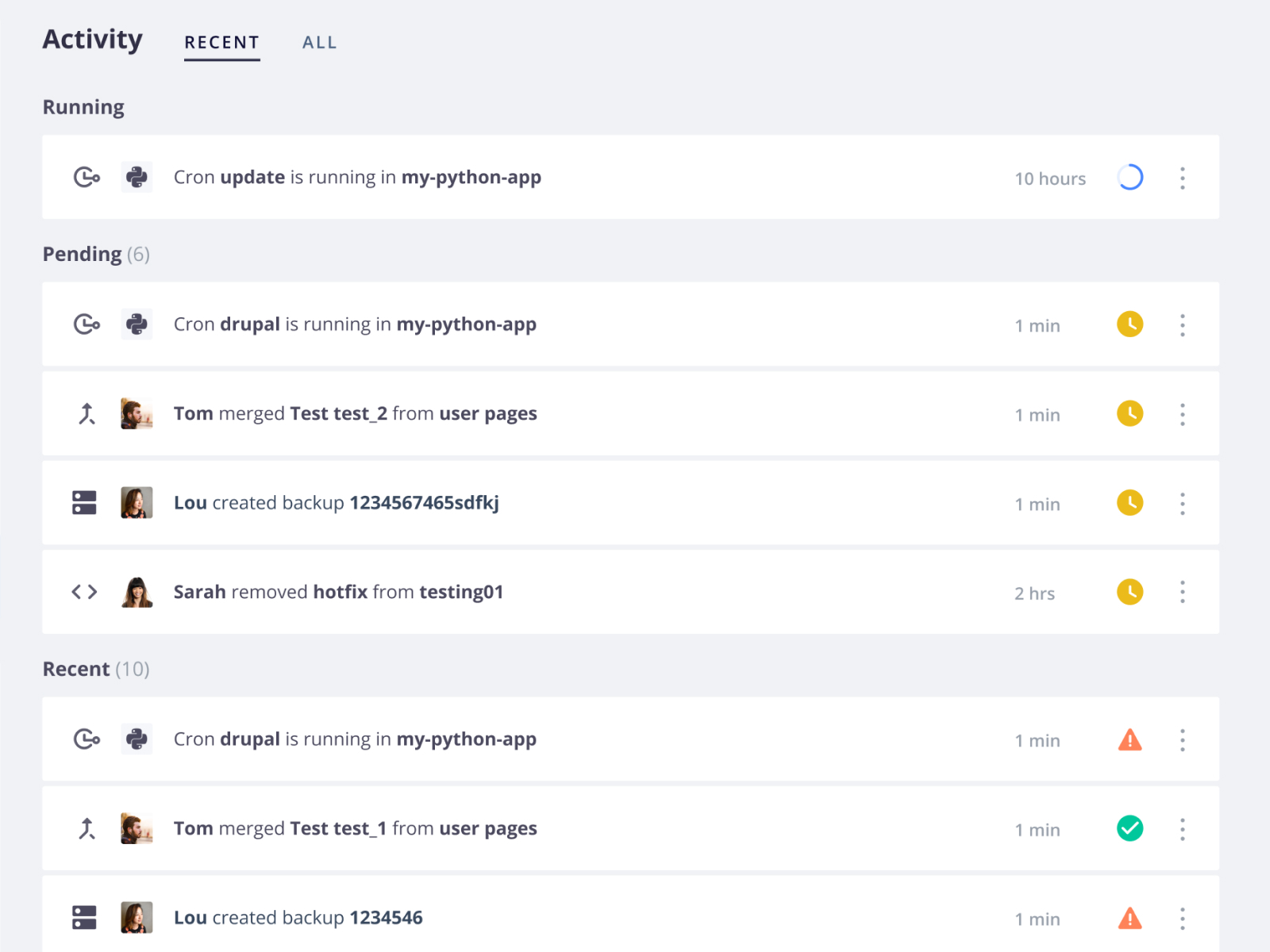
You cannot download a backup on Fixed. The docs are blunt: a backup "can be applied to environments on Upsun Fixed, but it can't be downloaded." Automated backups cover production only; preview environments get up to two manual ones, and taking one pauses the environment for 15 to 30 seconds. On Professional the default schedule keeps two daily backups. Flex/Cloud defaults to one a day with two-day retention. If your disaster-recovery plan needs a copy outside Upsun, you script pg_dump or mysqldump and mount downloads yourself.
Support is a tax on everything you spend, not a flat fee. On Flex/Cloud, Standard support is a mandatory +10% with a 4-hour best-effort urgent response. Advanced (+15%, one-hour guaranteed) carries a 12-month term; Premium is +19% for 30 minutes. An uptime SLA is another uplift: 99.9% adds 20% of project value, 99.99% adds 45%, and both need Advanced support and a 12-month commitment. HIPAA is +25%. On Fixed, SLAs exist only on the Enterprise and Elite tiers, and the managed Fastly CDN is limited to those same two tiers.
Smaller traps: you can grow storage to 100 GB yourself but "can't reduce your storage on your own," and a new customer whose first payment fails has their projects deleted on the 13th of the month. On the upside, Flex environments pause after 15 days of inactivity, which stops idle branches burning compute, though their disk is still billed.
Users on G2 (syndicated to AWS Marketplace, 4.6 from 166 ratings) mostly praise it and complain about the same three things. One called it a "pretty high price for single devs to go online with personal, non-commercial projects" and noted "slow response on low-priority support tickets." Two separate reviewers in 2024 and 2025 said the documentation is thin for specific configurations and for newcomers.
Leaving: your data is portable, your config is not
"Your code and data belong to you," the export guide says, and the steps are ordinary: platform get for the repository, the CLI or SSH for mounted files, each database's own dump tool, and platform ssh -- env for variables. The CLI is still called platform and region hostnames still end in platform.sh, which is a reminder that the rename has not reached the plumbing yet.
The lock-in is the YAML. Routes, services, hooks and relationships are written in a format no other host reads, so moving a multi-app project means rewriting that layer as Docker Compose, a Render blueprint or Kubernetes manifests. One G2 reviewer put it plainly: "There are no direct competitors, so migrating to a different, uh, platform ;) would be a significant effort." Budget days, not hours, for a real stack.
Verdict: who should buy it, and who should skip it
Buy it if you are an agency or in-house team running Drupal, Magento, Symfony or a multi-app stack where testing every branch against real production data saves more than it costs. It also fits buyers who need EU hosting and paperwork: the trust centre lists PCI DSS Level 1, SOC 2 Type 2, ISO 27001 and HIPAA. New projects should start on Flex/Cloud, because that is where autoscaling and zero-downtime deploys live. If you already run Platform.sh and the bill is stable, staying on Fixed is fine; nobody is forcing a move.
Skip it if you are a solo developer or run one small app. EUR 19 a month before a single CPU-hour, plus 10% on top, is the wrong shape for a side project. Render or Railway get one service online with far less configuration; what you give up is the production-data clone per branch, which neither offers. If you want global edge regions, including Asia, look at Fly.io. If you want the simplest Git push deploy with a big add-on market, Heroku still does that.
Ready to try Upsun (Platform.sh)?
Visit the official website to see the latest plans, pricing, and special offers.
Get Started - Upsun (Platform.sh)* Affiliate link - we may earn a commission at no extra cost to you.