Render Review: Heroku-Style Deploys, No Seat Fees, and a Free Tier That Sleeps
Render review: flat $25 Pro plan with no seat fees, compute from $7/month, free tier limits, Postgres and disk catches, outages, and how it compares to Heroku and Railway.
Expert Review

The pricing change that makes Render worth a second look
For most of its life, Render charged teams by the head. That ended this year. On April 23, 2026 Render announced flat workspace plans with unlimited team members, and on August 1, 2026 it moved every workspace onto them automatically. Former Professional customers landed on the new Pro plan. Now a five-person team pays the same $25/month platform fee as one developer. On Vercel Pro, those five people would pay $20 each in seat fees, or $100/month before a single request is served.
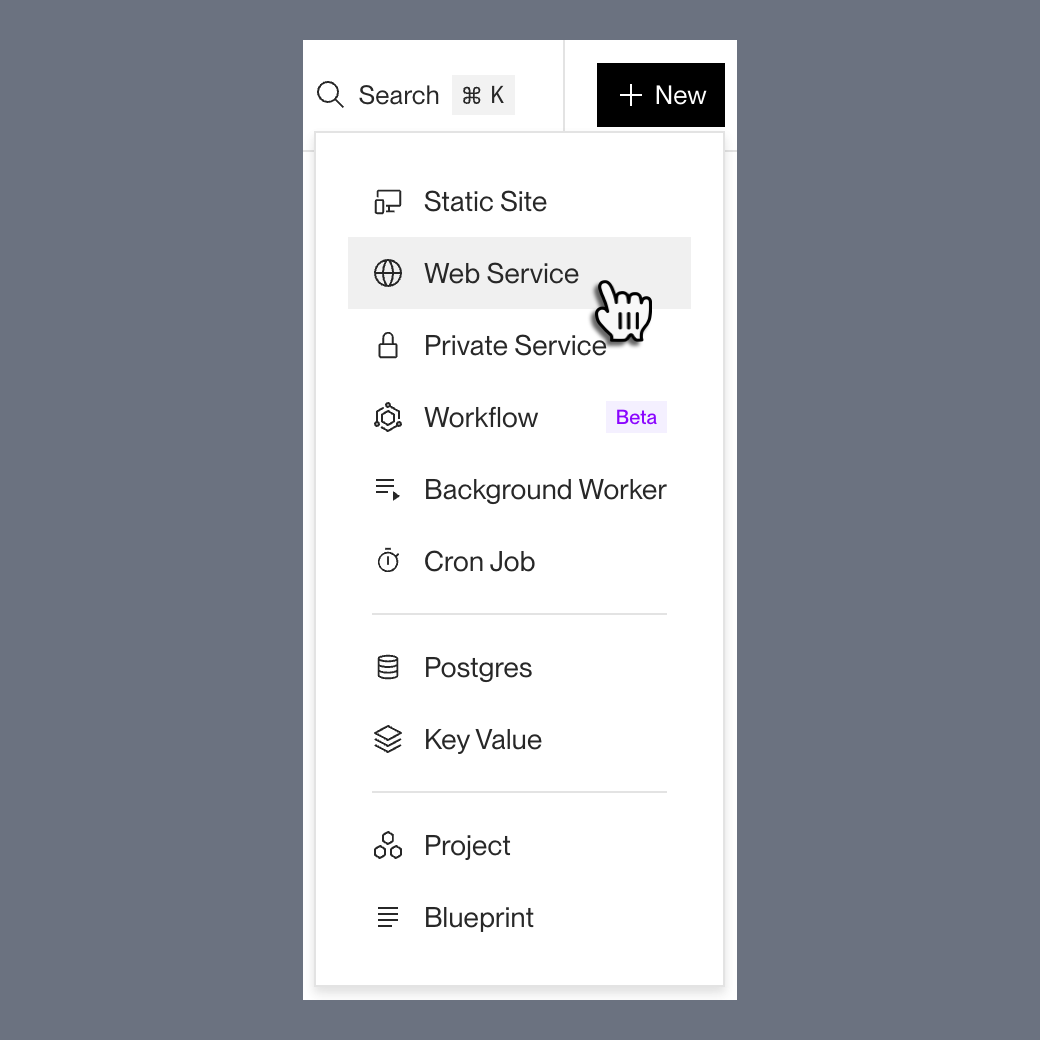
The platform itself has not changed. Render is a managed home for web services, private services, background workers, cron jobs, static sites, Postgres and a Redis-compatible Key Value store, deployed from a git push or a Docker image. Render says it has over 7 million builders on the platform. It raised a $100M Series C extension at a $1.5B valuation in February 2026, and it is small, with about 100 staff according to CNBC. That headcount matters when you get to support.
We did not run a production app for this review. What follows comes from Render's pricing page and docs, checked on October 1, 2026, its status page and user reviews.
Pricing: a workspace fee plus compute
A Render bill has two parts: a monthly fee for the workspace, then compute for each service, prorated to the second. Here are the workspace plans as listed on render.com/pricing in October 2026:
| Workspace plan | Fee / month | Seats | Build minutes | Bandwidth | Custom domains |
|---|---|---|---|---|---|
| Hobby | $0 | 1 | 500 | 5 GB | 2 |
| Pro | $25 | Unlimited | 1,000 | 25 GB | 15 |
| Scale | $499 | Unlimited | 5,000 | 1 TB | 25 |
| Enterprise | Custom | Unlimited | Custom | Custom | Custom |
Past the allowance you pay $5 per 1,000 build minutes, $0.15 per GB of bandwidth and $0.25 per extra domain each month. Hobby is capped at 25 services. If a workspace has no services and no activity in a month, Render waives the fee for that month, so a dormant Pro account costs nothing.
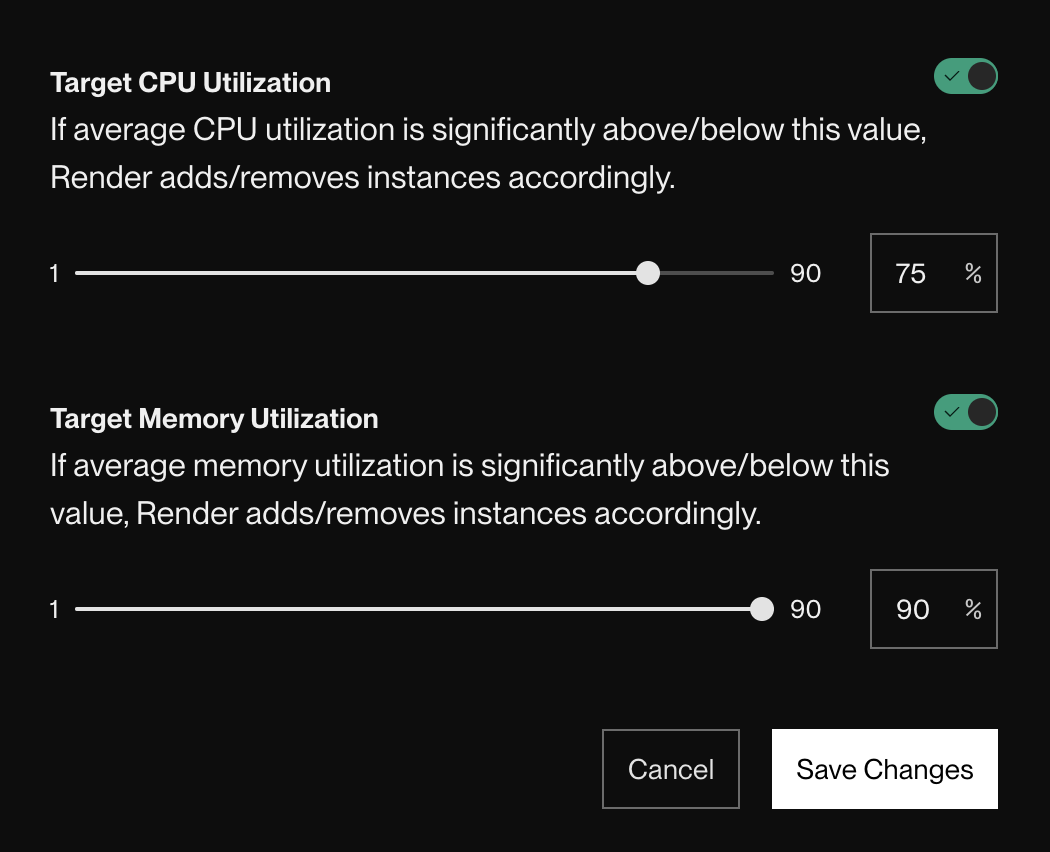
Most of what the $25 buys only shows up in the docs. Autoscaling needs Pro. So do full-stack preview environments, since Hobby gets single-service previews only. Pro also adds the faster performance build pipeline ($25 per 1,000 minutes), OIDC, seven days of Postgres point-in-time recovery instead of three, and Render's SOC 2 Type 2 report under NDA. Scale adds SAML SSO, SCIM and HIPAA workspaces.
Compute
Instance plans for web services, private services and background workers now carry spec-style IDs. Renamed plans kept their specs and prices.
| Plan ID (old name) | CPU / RAM | Price / month |
|---|---|---|
| free (Free) | 0.1 / 512 MB | $0, web services only |
| 0.5c-512mb (Starter) | 0.5 / 512 MB | $7 |
| 1c-2g (Standard) | 1 / 2 GB | $25 |
| 2c-4g (Pro) | 2 / 4 GB | $85 |
| 4c-8g (Pro Plus) | 4 / 8 GB | $175 |
| 4c-16g (Pro Max) | 4 / 16 GB | $225 |
| 8c-32g (Pro Ultra) | 8 / 32 GB | $450 |
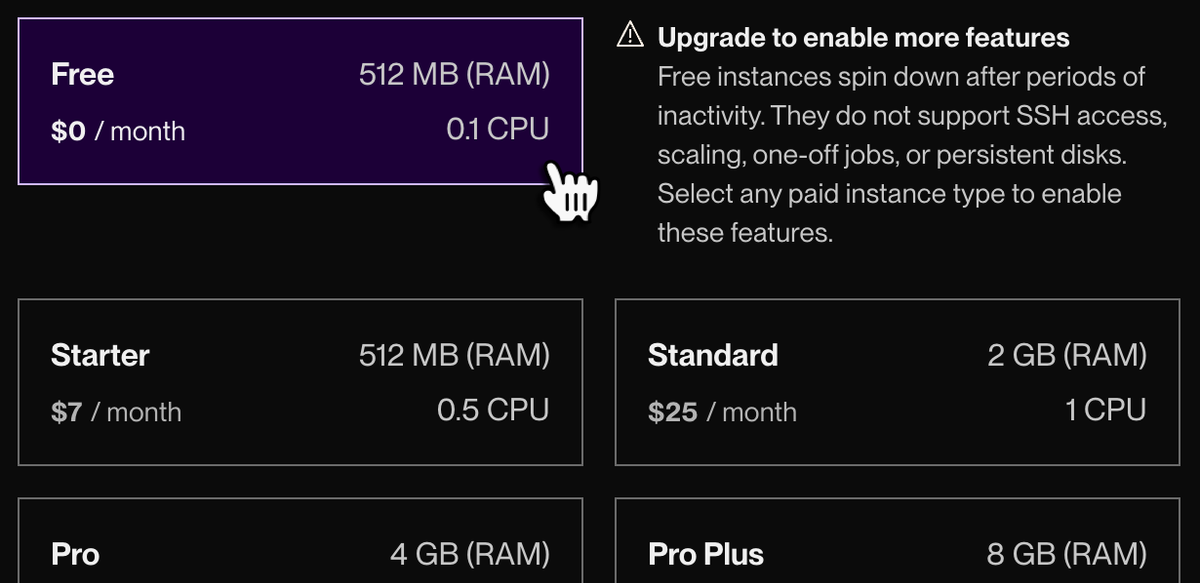
Watch the word "Pro". The $85 instance and the $25 workspace plan share it and have nothing to do with each other. On August 26, 2026 Render added memory-heavy sizes such as 2c-8g at $135 and 8c-64g at $1,000.
A worked example: a small always-on API with the smallest paid database on Hobby costs $0 + $7 (0.5c-512mb) + $6 (Postgres 0.1c-256mb) = $13/month. Switch that workspace to Pro for autoscaling and previews and it becomes $38, whether one person uses it or twelve.
Where the free tier bites
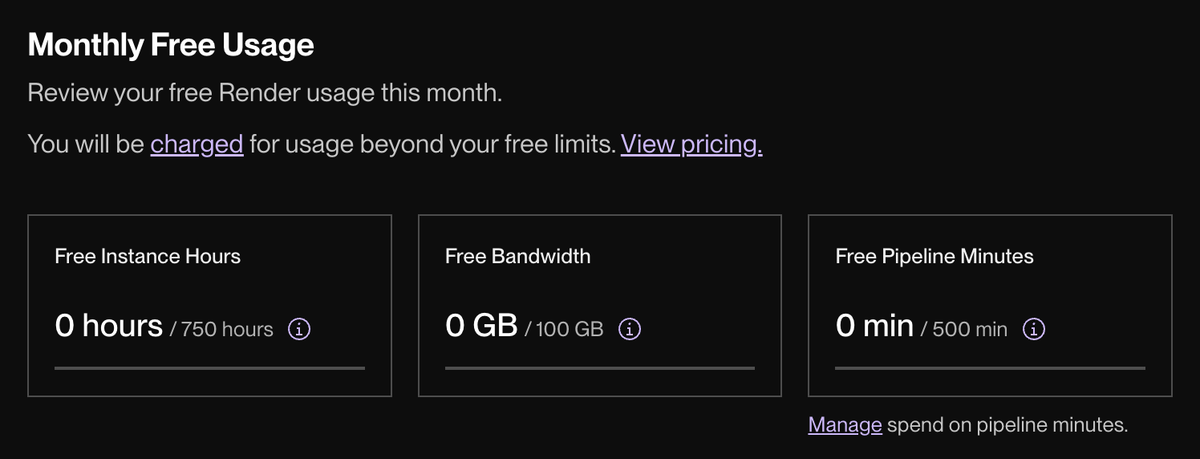
Render's free web service is a demo tier, not a place to leave a side project running. It spins down after 15 minutes without inbound traffic, and Render's docs say waking it back up "takes about one minute". That means your first visitor after a quiet spell stares at a loading page for most of a minute. Each workspace also gets 750 free instance hours per calendar month. When those run out, Render suspends every free web service until the next month starts.
The quieter restrictions cause more trouble. A free service cannot send outbound traffic on ports 25, 465 or 587, so an app that sends password-reset mail over SMTP simply fails. You need an email provider's HTTP API instead. Free services also cannot scale past one instance, attach a disk, run one-off jobs, open a shell or receive private-network traffic, and Render may restart them at any time.
The free database is the harshest limit. Free Postgres has 1 GB of storage and no backups of any kind. It expires 30 days after creation, and after a 14-day grace period it is deleted unless you upgrade. You can have only one per workspace. Free Key Value gives you 25 MB and does not persist to disk.
Postgres, Key Value and disks
Managed Postgres is the main reason teams pick Render over a bare VPS. Plans start at $6 for 0.1c-256mb, then $19 (0.5c-1g), $40 (1c-2g), $55 (1c-4g) and $100 (2c-8g), with storage at $0.30 per GB. Paid databases get point-in-time recovery, three days on Hobby and seven on Pro and above, and logical backups kept for seven days.
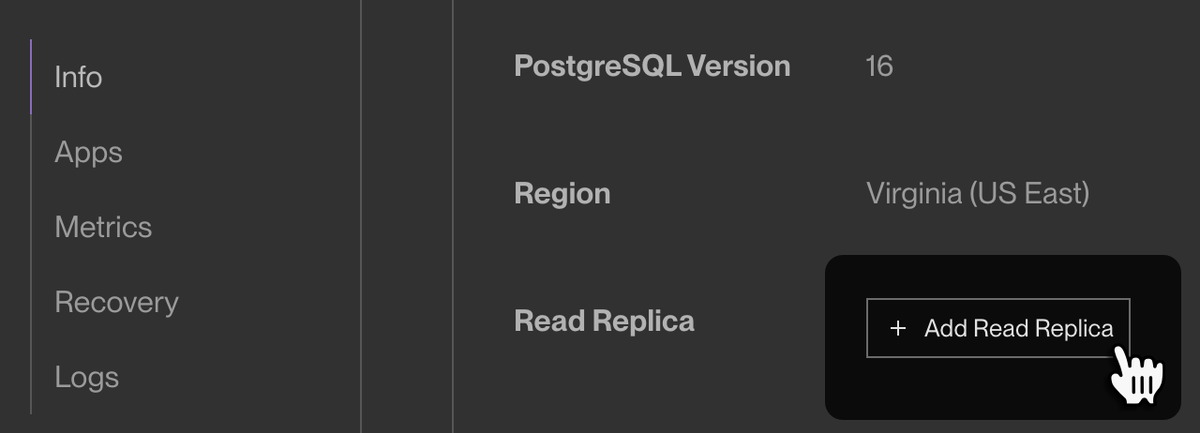
High availability costs more than it first appears. It needs a plan with at least one CPU and PostgreSQL 13 or newer, and the standby runs on the same compute and storage as the primary and is billed the same. A $40 database becomes $80. Read replicas, up to five of them, need at least 10 GB of storage and 0.5 CPU. Key Value starts at $10 for 256 MB and 250 connections, then $32 for 1 GB and $135 for 5 GB, with disk persistence on paid plans.
Persistent disks are the constraint to design around. SSD storage is cheap at $0.25 per GB, but attaching a disk to a service costs you two things. The service can no longer scale to more than one instance. It also loses zero-downtime deploys: Render stops the old instance before it starts the new one, so every deploy takes you offline for a few seconds. Cron jobs cannot have a disk at all. If your app writes to local files, whether SQLite, user uploads or a CMS media folder, you have to move that state into Postgres or object storage before Render can scale it.
Regions, compliance and scaling limits
Render has five regions: Oregon, Ohio and Virginia in the US, Frankfurt, and Singapore. It has nothing in South America, Africa, India or Australia. Static sites sit on a global CDN, but every dynamic request from Sydney or São Paulo crosses an ocean.
Compliance is on the expensive tiers only. HIPAA workspaces need Scale or Enterprise, add 20% to all usage, and cannot run in Singapore. Render dropped the old $250/month HIPAA minimum, but the math is still steep: $1,000 of monthly compute in a HIPAA workspace costs $499 + $1,200. Contractual uptime SLAs and support-response SLAs are listed only on Enterprise.
Render Workflows, for durable background tasks, went generally available on September 1, 2026 at $0.20 per active CPU-hour and $0.05 per GB-hour, with 20 concurrent runs on Hobby, 50 on Pro and 100 on Scale.
Reliability and what users complain about
Render's status page had a busy summer in 2026. On July 15 the dashboard was unavailable, rated critical. GitHub-related deploy failures followed on July 16 and July 19, and a critical service disruption hit Oregon on July 24. Singapore had instability on July 9 and August 31. Builds and deploys were degraded on September 2 and failing in Oregon on September 25. Most blocked shipping new code rather than taking running apps down; July 24 was the exception.
On Trustpilot, Render scores 2.2 out of 5 from only 60 reviews (checked October 1, 2026). That is a small sample, and review sites attract people with complaints, but the same three themes keep coming up. Free instances go to sleep and sometimes fail to wake when pinged. Users are surprised by bandwidth charges. Support is described as curt and unhelpful. Hobby gets chat support; premium support and a private Slack channel are paid add-ons on Pro and Scale.
Render vs Heroku, Railway, Fly.io and Vercel
| Platform | Small always-on app | How teams pay | Catch |
|---|---|---|---|
| Render | $7 (0.5 CPU / 512 MB) | Flat $25 Pro, unlimited seats | Egress $0.15/GB past the allowance |
| Heroku | $7 Basic dyno (512 MB) | Per dyno | $5 Eco dyno sleeps after 30 minutes |
| Railway | $5 minimum, includes $5 of usage | $20 Pro minimum | Usage-based, so harder to predict |
| Fly.io | About $3.89 (shared-cpu-1x, 512 MB, Ashburn) | Per second of machine time | More infrastructure to manage yourself |
| Vercel | $0 Hobby for frontends | $20 per developer seat on Pro | Built for frontends, not workers or databases |
Against Heroku, Render matches the $7 entry price and adds preview environments and flat team pricing. Against Railway, the loss is bandwidth: $0.15 per GB of egress against $0.05, so a media-heavy app costs three times as much to serve. Our Railway review covers that side. Fly.io is cheaper per megabyte and runs in more places, but you configure more yourself.
If you need persistent disks and horizontal scaling at the same time, no PaaS here handles it well, and a VPS from DigitalOcean running your own Docker containers is the honest answer. For a wider comparison, see our hosting roundup.
Verdict
Render is now the easiest recommendation for a small team, three people or more, that wants Heroku-style git-push deploys, managed Postgres, preview environments and autoscaling without per-seat billing. A realistic small stack on Pro starts around $38 a month.
Skip it in five cases. If you want a free app that stays awake, choose Railway's $5 Hobby plan or Fly.io instead. If you serve heavy bandwidth, Railway's egress costs a third as much. If your users are in Australia, India or South America, Render has no region near them. If your app depends on a local disk and still needs to scale, rent a DigitalOcean droplet. If you need HIPAA on a small budget, $499 a month plus 20% on all usage is hard to justify.
Ready to try Render?
Visit the official website to see the latest plans, pricing, and special offers.
Get Started - Render* Affiliate link - we may earn a commission at no extra cost to you.