WalkMe Review: SAP's Digital Adoption Platform Now Wants to Drive Your Apps for You
WalkMe review: the $150,000 AWS list price, what Vendr says buyers really pay, SAP's UI-native agent claims, the 30-day export window and auto-renewal, and who should pick Userpilot or Pendo instead.
Expert Review

Table of Contents
What changed after SAP bought it
For a decade WalkMe was the company that drew pop-up balloons over other people's software: a tooltip on the Salesforce field everyone fills in wrong, a step-by-step flow through a Workday expense claim. SAP agreed to pay roughly $1.5 billion for it in June 2024 - $14.00 a share in cash, a 45% premium - and closed the deal on 12 September 2024.
At SAP's Transformation Excellence Summit on 22 September 2026, SAP described WalkMe's "UI-native agent" as something that "solves the connectivity problem by operating the interface itself", extending Joule agents into "legacy systems, heavily customized ERP environments, and third-party applications". Put plainly: WalkMe used to show employees where to click. SAP now wants it to do the clicking.
That is a claim, not a tested feature. Nothing here was run hands-on. This review works from WalkMe's and SAP's own documents, the contract terms, the one public list price and what customers write in reviews, all checked on 27 November 2026.
What you actually get
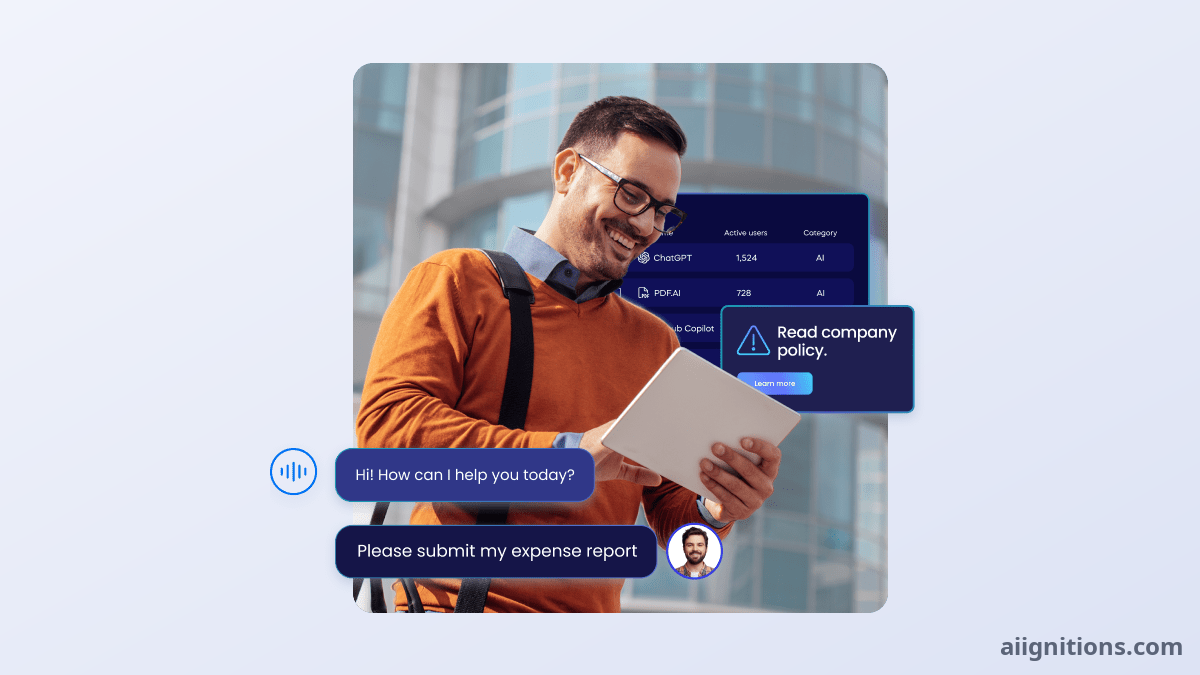
WalkMe now sells four things: the Digital Adoption Platform, WalkMe AI, WalkMe Learning Arc and a free tool called Haiku. The platform is the one that costs money. It comes in two editions - WalkMe for employees, laid over the internal apps your staff use, and WalkMe for customers, laid over your own product or website.
The employee edition is where WalkMe is strongest. A script or browser extension puts guidance on top of any web app: walkthroughs, tooltips, launchers, surveys and onboarding tours, built in a no-code editor and targeted by role, department or behaviour. Three pieces go beyond what most rivals ship:
- Discovery maps "company-wide web app usage and adoption - down to the user level". That makes it a licence audit as much as an adoption tool. If 400 people hold a seat and 90 ever open the app, you will see it.
- ActionBot builds chatbots that run multi-step processes for the employee instead of explaining them - request leave, change a cost centre.
- DeepUI, from a 2018 acquisition, models how an app's interface is built and is meant to keep guidance working after the vendor ships a redesign.
The AI layer sits across all of it. AI Authoring is pitched as "Describe your content needs in plain language, WalkMe builds it", and the Q3 2026 release (31 August) added AI that "creates and edits content alongside you, and answers questions about your data".
The agent pitch, and how much of it is proven
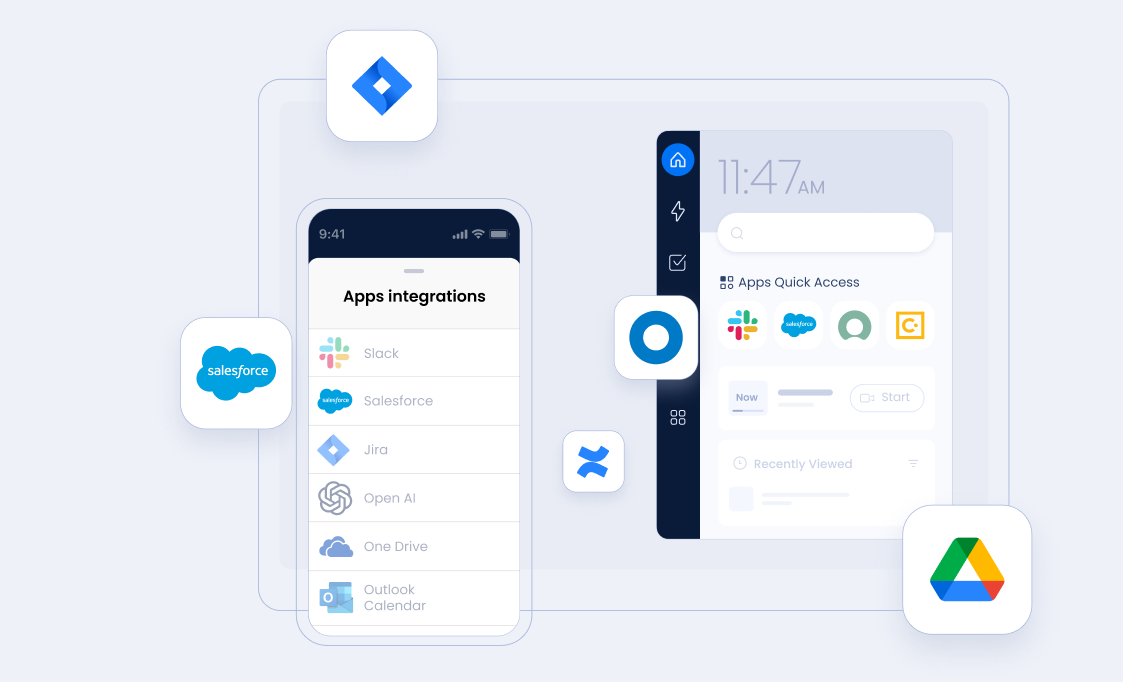
The September announcement has two halves. The first is contextual assistance that "proactively surfaces AI tools, including Joule Agents, assistants, and skills, directly where people are already working, across SAP and non-SAP applications." The second, the UI-native agent, goes further and drives the screen itself.
For an SAP customer with a heavily customised ERP, or a procurement step that lives in a supplier's portal, this is the interesting part. Building an API integration for every legacy screen is why most agent projects stall. An agent that works through the interface like a person sidesteps that. It also inherits the weakness screen-scraping RPA always had: the screen changes, the automation breaks.
Futurum's Keith Kirkpatrick wrote on 24 September 2026 that WalkMe brings Joule Agents into workflows "with controls over access and execution", but noted the announcement carried no WalkMe-specific customer results and no independent verification. His test is "whether employees use these capabilities consistently in their daily work". Treat the agent as a roadmap item to ask a reference customer about, not a reason to sign.
One part is settled in writing. WalkMe's AI terms, revised September 2026, say it uses only "commercially available, third-party Stateless LLMs" and that "neither WalkMe nor its licensors train or refine" them. The terms do not say which models those are.
Learning Arc and Haiku: the parts you can try
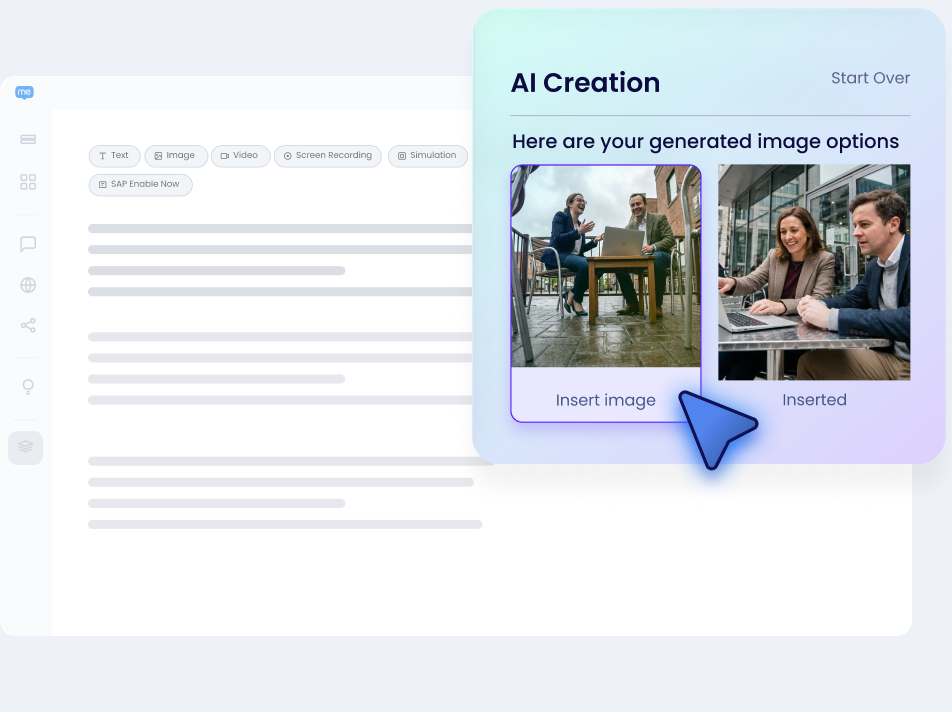
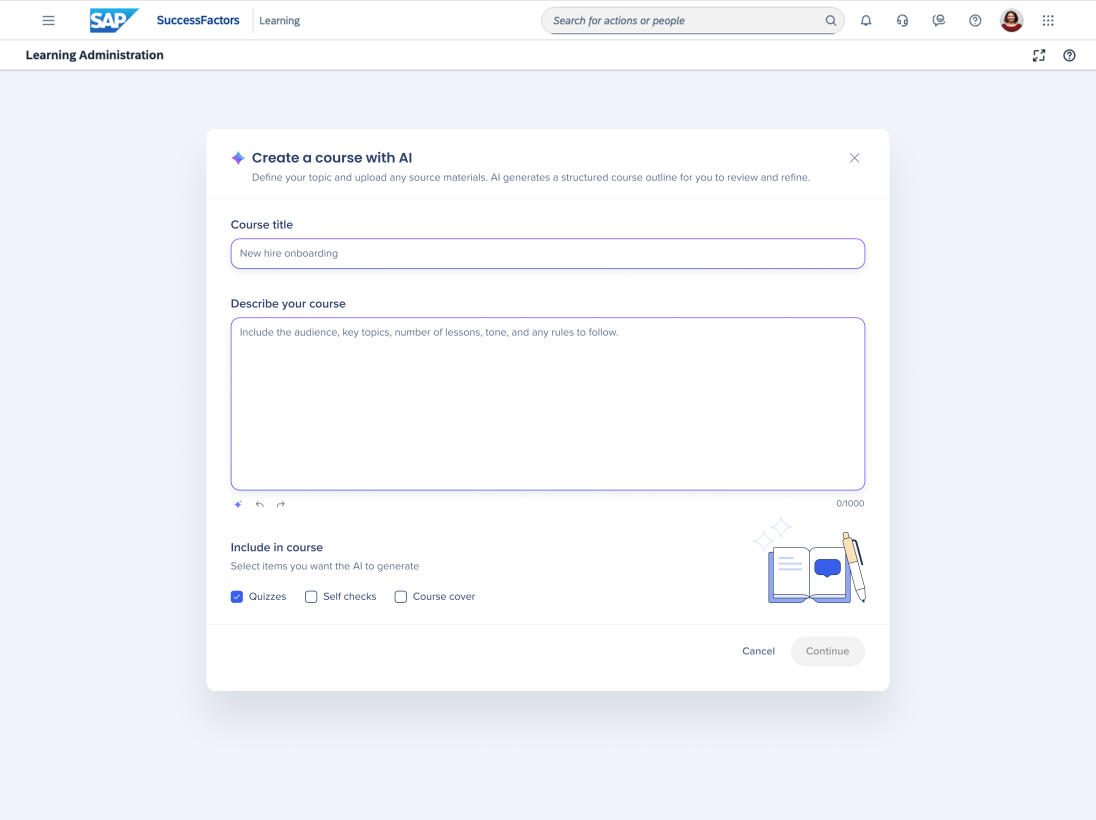
The platform has no free trial and no free plan. Two side products do. Learning Arc is an AI course builder that turns prompts and existing documents into courses, microlearning and application simulations, each approved by a human author before it ships. It works on SAP and non-SAP apps, is sold on its own and has a 30-day trial. At SAP Connect on 6 October 2026, SAP said one-click course transfer into SuccessFactors Learning arrives in Q4 2026, with authoring embedded inside SuccessFactors in 2027.
Haiku by WalkMe is free. It is a Chrome extension that records you doing a task and turns it into a step-by-step guide with annotated screenshots, shared by link or exported, with a count of who opened and finished it. For a ten-person team that only needs written how-tos, Haiku is the whole answer and the rest of this review does not apply. Existing WalkMe customers get Haiku Enterprise at no extra cost.
Pricing: one list price, and it is $150,000
The WalkMe pricing page lists two editions, a feature grid and three buttons - "Request a quote", "Get a quote", "Request a demo". It shows no figure, checked on 27 November 2026. The only public list price is on AWS Marketplace, where WalkMe sells "WalkMe for Employees" at $150,000.00 for 12 months. The 24- and 36-month terms carry no price, and the refund policy reads "Non-refundable".
Most buyers sign for less than that. Vendr, which negotiates software contracts, reports these figures from its customers' deals:
| Deployment (Vendr's labels) | Per user, per month | Annual contract |
|---|---|---|
| "Base" tier, 300-500 users | $12-$25 | about $43,000-$150,000 |
| "Enterprise" tier, 500-1,500 users | $18-$35 | $108,000-$630,000 |
| 2,000+ users, several apps | negotiated | $400,000-$800,000+ |
| Average contract value | - | $39,000 |
Vendr's numbers do not agree with each other - a $39,000 average sits below its own tier bands, and its observed range runs from $14,400 to $197,118 a year - so read them as a direction, not a quote. The tier names are Vendr's shorthand too; WalkMe sells editions, not plans called "base" or "Enterprise".
The shape is still clear. Vendr puts the minimum annual commitment at $30,000 to $50,000 even for a small rollout. Add-ons are priced on top: Insights often at $10,000 to $50,000+ a year, ActionBot at $15,000 to $40,000+. Implementation services run from $20,000 to past $200,000.
The contract terms to read before you sign
Three clauses in WalkMe's Master License and Services Agreement (revised May 2026) matter more than the feature grid. When a term ends, the order form "shall automatically be renewed or replaced by a new Ordering Document", so the notice date goes in a calendar on day one. After termination you get account access "at no additional fees, for a period of thirty (30) days" for "the sole purpose of exporting any stored Content". And what you export is WalkMe content: flows are built in WalkMe's editor and run on WalkMe's player, so none of them move into Whatfix or Pendo. Leaving means rebuilding every walkthrough you own.
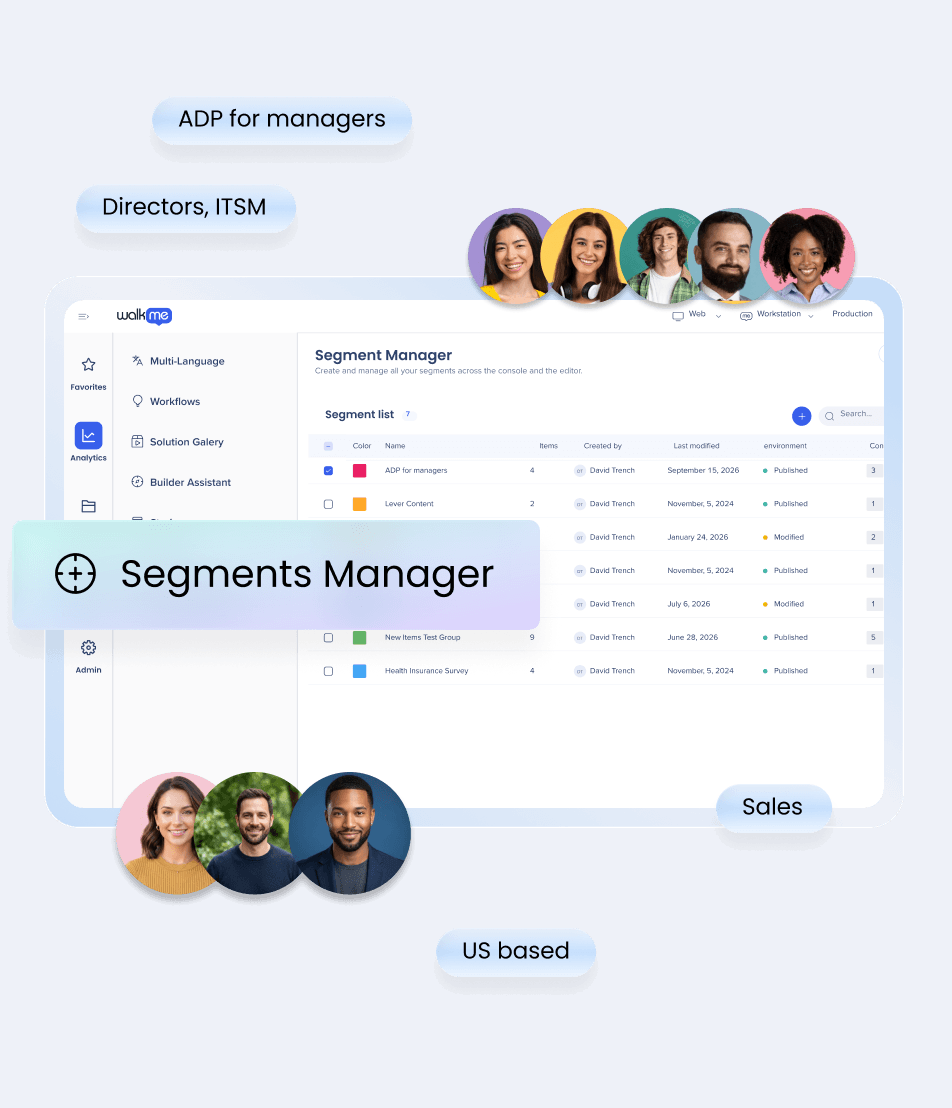
The pricing page also carries a limit the marketing does not repeat. Behavioral Segments "supports up to 10 segments per system and segment sizes of up to 50,000 users". A 60,000-person company that wants to target guidance by behaviour hits both numbers at once.
Security is where WalkMe earns enterprise money. Its support site, updated 28 September 2026, lists SOC 2 Type II (under NDA) plus a public SOC 3, ISO 27001:2022 with 27701, 27017 and 27018, HIPAA/HITECH, PCI DSS v4.0.1 as a service provider and Germany's BSI C5. Data stays in the US or EU region picked at setup, and the two regions are "each supporting different features and capabilities" - ask which ones yours lacks.
What customers complain about
WalkMe holds 4.6 from 592 ratings on its AWS Marketplace listing, most of them pulled in from G2 and PeerSpot. The complaints repeat, and they are about upkeep.
G2 reviewer Phanil A. wrote on 6 November 2026 about "licensing costs, and the need for dedicated administration and testing" and "sensitivity to application changes (especially Oracle Redwood pages)". An anonymous reviewer two days earlier: "setting up and maintaining the paths can take time, especially when tools and processes evolve."
The Oracle Redwood line matters because it is exactly what DeepUI promises to prevent. Interface-aware tech cuts the breakage after a vendor redesign. Customers say it does not end it. At enterprise scale, budget for a dedicated DAP admin who rebuilds and re-tests flows each time Oracle, Workday or Salesforce ships a new interface. That salary belongs in the comparison next to the licence fee.
Who should pick something else
Onboarding users into your own SaaS product, rather than staff into other people's, is the job WalkMe for customers does at the highest price on the market. Userpilot publishes self-serve prices and Appcues is built for the same product-led work. Pendo brings deeper product analytics, though its paid plans are a sales call as well. For employee-side guidance without WalkMe's contract, Compass covers similar ground. Even if WalkMe is the plan, get a Whatfix quote: a competing bid is the main lever on a price that is never published.
Verdict
Buy WalkMe if you are a large organisation - roughly 1,000 staff and up - running a dozen web apps, especially SAP ones like SuccessFactors or S/4HANA, and you can staff a DAP admin. Discovery can pay part of the bill by exposing licences nobody uses, the certification list clears most procurement desks, and this is the product SAP intends to route its agents through. Get the renewal notice period in writing, and ask for a reference customer running the UI-native agent in production before paying for it.
Skip it if you have a few hundred people or fewer, nobody to maintain flows, or customers rather than employees to onboard. Userpilot or Appcues will be live before WalkMe's sales cycle ends, and Haiku costs nothing for written guides.
Ready to try WalkMe?
Visit the official website to see the latest plans, pricing, and special offers.
Get Started - WalkMe* Affiliate link - we may earn a commission at no extra cost to you.